MindMap Gallery history
An overview of history for grade 9, including capitalist countries (revolution), reform (top-down), war, development, etc. Detailed content and exam preparation materials!
Edited at 2024-01-13 22:35:50This Valentine's Day brand marketing handbook provides businesses with five practical models, covering everything from creating offline experiences to driving online engagement. Whether you're a shopping mall, restaurant, or online brand, you'll find a suitable strategy: each model includes clear objectives and industry-specific guidelines, helping brands transform traffic into real sales and lasting emotional connections during this romantic season.
This Valentine's Day map illustrates love through 30 romantic possibilities, from the vintage charm of "handwritten love letters" to the urban landscape of "rooftop sunsets," from the tactile experience of a "pottery workshop" to the leisurely moments of "wine tasting at a vineyard"—offering a unique sense of occasion for every couple. Whether it's cozy, experiential, or luxurious, love always finds the most fitting expression. May you all find the perfect atmosphere for your love story.
The ice hockey schedule for the Milano Cortina 2026 Winter Olympics, featuring preliminary rounds, quarterfinals, and medal matches for both men's and women's tournaments from February 5–22. All game times are listed in Eastern Standard Time (EST).
This Valentine's Day brand marketing handbook provides businesses with five practical models, covering everything from creating offline experiences to driving online engagement. Whether you're a shopping mall, restaurant, or online brand, you'll find a suitable strategy: each model includes clear objectives and industry-specific guidelines, helping brands transform traffic into real sales and lasting emotional connections during this romantic season.
This Valentine's Day map illustrates love through 30 romantic possibilities, from the vintage charm of "handwritten love letters" to the urban landscape of "rooftop sunsets," from the tactile experience of a "pottery workshop" to the leisurely moments of "wine tasting at a vineyard"—offering a unique sense of occasion for every couple. Whether it's cozy, experiential, or luxurious, love always finds the most fitting expression. May you all find the perfect atmosphere for your love story.
The ice hockey schedule for the Milano Cortina 2026 Winter Olympics, featuring preliminary rounds, quarterfinals, and medal matches for both men's and women's tournaments from February 5–22. All game times are listed in Eastern Standard Time (EST).
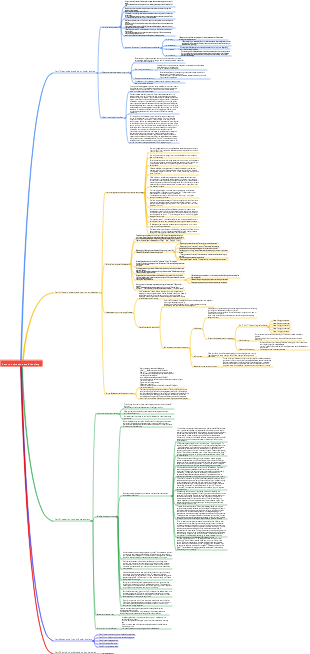
history
Capitalist countries (revolution)
U.K.
1640~1689. In 1989, the Glorious Revolution ended. A Bill of Rights was enacted. established a constitutional monarchy
Overthrew the feudal autocratic monarchy and opened the way for the development of British capitalism.
France
In 1789, the people of Paris captured the Bastille. The French Revolution begins. The Constituent Assembly adopts the Declaration of Human Rights. Founding of the First French Republic
Destroyed the French monarchy. Spread bourgeois liberal democratic ideas. Have worldwide influence
USA
war of independence
In 1775, the gunfire at Lexington marked the beginning of the American Revolution
The Declaration of Independence was promulgated on July 4, 1776, announcing the birth of the United States of America.
1787 Established the Constitution and implemented federalism
Overthrew British colonial rule and achieved national independence. The American War of Independence was a war of national liberation and a bourgeois revolution
American Civil War
In 1862, Lincoln promulgated the Homestead Act and the Emancipation Proclamation.
In 1861, the southern army provoked a war and the American Civil War broke out. In 1865, the North won
This was the second bourgeois revolution in American history, which safeguarded national unity and abolished slavery. Create conditions for rapid economic development in the future and promote the development of capitalism
Reason: The contradictions between the different economic systems between the North and the South hinder the development of American capitalism
The Great Economic Crisis and Roosevelt's New Deal
The direct cause of the Great Economic Crisis (1929-1933): a serious lack of purchasing power, leading to overproduction. The root cause, the basic contradiction of the capitalist system, ultimately led to the outbreak of the great economic crisis
Roosevelt's New Deal used state intervention to reverse the economic situation
The U.S. economy has begun to recover slowly, with industry and production recovering, the number of jobs gradually increasing, and people's lives improving.
The New Deal enhanced the government's macro-control capabilities, restored the confidence of the American people, and had a profound impact on the capitalist world.
Germany
Reform (top down)
Japan
Dahua Reform (646): Learn from the Tang Dynasty of China and enter feudal society
The Meiji Restoration ended the shogunate rule in 1868. Promote civilization and learn from the West
A major turning point in Japan's history, it embarked on the path of developing capitalism. But there are still a lot of remnants of the old system
Strong militarism and embarked on the path of foreign aggression and expansion
Tsarist Russia∽Russia∽Soviet Russia∽Soviet Union∽Russia
Tsarist Russia Feudal Rule
Serfdom prevails, isolation and backwardness
Russian capitalism
Peter I's reforms (feudal) [started the modernization process of Russia]
Establish a centralized administrative system to further strengthen the autocratic power of the tsar. Promote talents, set up handicraft factories, and promote cultural education
Alexander II's reforms
abolition of serfdom
Serfdom hindered the development of capitalism in Russia
Serfdom reform was an important turning point in Russian history. Push Russia onto the path of developing capitalism
Soviet Russia (Soviet Russia)
February Revolution. March 1917. Overthrew the Tsarist autocratic rule and established a bourgeois provisional government
October Revolution
November 6, 1917. Lenin leads the armed uprising in Petrograd
Established the world's first proletarian government-----Soviet power
The Peace Decree was passed and the Soviet government was established. Establish socialist public ownership. Abolish all unequal treaties. Exit World War I
The October Revolution was the first victorious socialist revolution in human history. It established the first country with proletarian power, promoted the international proletarian revolutionary movement, and inspired the liberation struggles of colonial and semi-colonial peoples.
USSR (Union of Soviet Socialist Republics)
New Economic Policy (1921)
Soviet Russia. The economy is extremely difficult and social conflicts are intensifying. To change the policy of wartime communism. implement new economic policies
The new economic policy mobilized the enthusiasm of producers, alleviated the crisis, consolidated the alliance of workers and peasants, and promoted the steady development of the national economy.
In 1922, the Union of Soviet Socialist Republics was established, referred to as the Soviet Union
From 1928 to 1937, the Soviet Union completed the first and second five-year plans and transformed from a backward agricultural country into a powerful industrial country.
Industrialization of the Soviet Union. Characteristics, high concentration (Stalin)
Collectivization of agriculture. movement to eliminate kulaks
Soviet model
In 1936, the Soviet Union promulgated a new constitution. Marked the formation of the Soviet model
Soviet model, characteristics: high concentration
① Promoted the rapid economic and social development of the Soviet Union ② Without respecting economic laws, the shortcomings of the Soviet model were increasingly exposed and became a serious institutional obstacle to economic and social development
Khrushchev's reforms
It did not fundamentally solve the shortcomings of the highly centralized economic system of the Soviet model, and there were serious deviations. Light industrial products and emerging industries are obviously lagging behind
disintegration of the soviet union
Gorbachev caused the collapse of the Soviet Union
Gorbachev. Abandon the guiding ideology of Marxism, abolish the leadership position of the Communist Party of the Soviet Union, and implement a multi-party system. Advocating openness and political pluralism, giving up the party’s leadership of news and public opinion, confuses people’s minds. Anarchy spread and the situation quickly spiraled out of control. The trend of secession among the Union republics also intensified.
reason
Serious political and economic problems have arisen, and social conflicts have become increasingly acute. Western countries have stepped up their efforts to pursue the strategy of peaceful evolution. Eastern European countries began to implement political pluralism
At the end of 1991, the Soviet Union collapsed
Russia
War (root cause: uneven political and economic development of imperialism)
World War I [Allied Powers (Germany, Italy, Austria) & Entente Powers (Britain, France, Russia)]
Cause: Sarajevo incident
Time: 1914-1918
Nature: unjust imperialist predatory war
An imperialist war launched by Western powers to redivide the world and compete for hegemony
Major Battle: Battle of Verdun (France)
Meetings: ① Paris Peace Conference "Treaty of Versailles" (nature: sharing of spoils; aimed at Germany) ② Washington Conference "Nine-Power Convention" (aimed at China)
Postwar System: Versailles---Washington System
Significance: It weakens the power of Europe, fundamentally shakes Europe's dominant position, weakens the colonial power of imperialism, and further promotes the national awakening of colonial and semi-colonial countries.
World War II [Axis Power Group (Germany, Italy, Japan) & World Anti-Fascist Alliance]
Cause: Great economic crisis
Time: 1931.9.18--1945.9.2
Nature: Just World Anti-Fascist War
Meetings: ① Yalta Conference (Yalta Big Three: Roosevelt, Churchill, Stalin. Decided to establish the United Nations) ② Potsdam Conference ("Potsdam Proclamation")
Major battles: Defense of Moscow (shattered the myth of German invincibility) Pearl Harbor Incident (Japanese attack on Pearl Harbor in the United States, the largest scale of World War II) Battle of Stalingrad (the turning point of World War II) Normandy landing (opened up the second battlefield in Europe)
Postwar system: bipolar structure (Yalta system)
Significance: It completely shattered the ambition of fascism and militarism to dominate the world through war, and completely ended the history of the great powers carving up the world through fighting for colonies. It promoted the disintegration of the world colonial system and had a significant and far-reaching impact on maintaining world peace and promoting common development.
Factors affecting world peace: hegemonism, power politics, regional conflicts, terrorism
develop
first industrial revolution
In the 1860s, Britain dominated
Watt improved the steam engine, Stephenson invented the train and used coal, which greatly improved the level of social productivity and mankind entered the steam age.
second industrial revolution
1860s and 1970s. United States, Germany. leading
Main symbol: The invention and widespread application of electricity. The means of transportation are cars, airplanes, etc. Use generators and internal combustion engines
Edison (USA), invented the incandescent light bulb and is known as the King of Inventions. Carl Benz. Invented the automobile. The Wright brothers invented the airplane and Bell invented the telephone.
The second industrial revolution promoted the development of productivity. The transition from capitalist liberal capitalism to monopoly capitalism and the strengthening of capitalist external expansion. Humanity enters the electrical age
The third technological revolution
After World War II. Developed capitalist countries dominate
Significance: It has improved the level of social productivity, accelerated the recovery and development of the post-war world economy, and had a profound impact on all aspects of human production and lifestyle. Humanity has entered the information age.
Application: Atomic energy, solar energy. widespread use of electronic computers