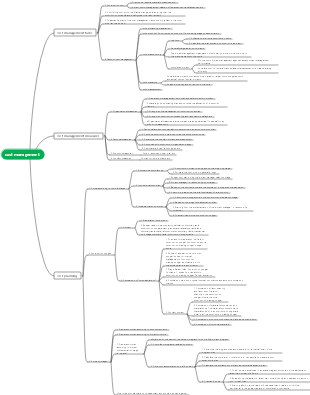
MindMap Gallery Financial management mind map
The financial management outline is organized and summarizes financial cost management, financial statement analysis and financial forecasting, and the basis of value assessment.
Edited at 2024-01-12 20:30:45Avatar 3 centers on the Sully family, showcasing the internal rift caused by the sacrifice of their eldest son, and their alliance with other tribes on Pandora against the external conflict of the Ashbringers, who adhere to the philosophy of fire and are allied with humans. It explores the grand themes of family, faith, and survival.

This article discusses the Easter eggs and homages in Zootopia 2 that you may have discovered. The main content includes: character and archetype Easter eggs, cinematic universe crossover Easter eggs, animal ecology and behavior references, symbol and metaphor Easter eggs, social satire and brand allusions, and emotional storylines and sequel foreshadowing.
[Zootopia Character Relationship Chart] The idealistic rabbit police officer Judy and the cynical fox conman Nick form a charmingly contrasting duo, rising from street hustlers to become Zootopia police officers!
Avatar 3 centers on the Sully family, showcasing the internal rift caused by the sacrifice of their eldest son, and their alliance with other tribes on Pandora against the external conflict of the Ashbringers, who adhere to the philosophy of fire and are allied with humans. It explores the grand themes of family, faith, and survival.
This article discusses the Easter eggs and homages in Zootopia 2 that you may have discovered. The main content includes: character and archetype Easter eggs, cinematic universe crossover Easter eggs, animal ecology and behavior references, symbol and metaphor Easter eggs, social satire and brand allusions, and emotional storylines and sequel foreshadowing.
[Zootopia Character Relationship Chart] The idealistic rabbit police officer Judy and the cynical fox conman Nick form a charmingly contrasting duo, rising from street hustlers to become Zootopia police officers!
2
Chapter 1 Financial Cost Management
Enterprise organizational form
Personal owned enterprises
partnership
corporate enterprise
Limited Liability
The shareholders of a corporate enterprise can be from one to fifty people
Double taxation - only corporate enterprises are legal persons
Raising money is easy
Financial management content
invest
Long-term investment
The investment subject is the company, and the object is operating long-term assets (long-term equity investments in subsidiaries, joint ventures, and associates are operating long-term assets)
The core of investment analysis methods - the principle of net present value
It is a direct investment - it is easier to succeed if you understand the industry
Indirect investment entities are individuals or professional institutions, and investment objects are current assets and financial assets (stocks, bonds, various financial derivatives), with the purpose of earning dividends and interest
The core of the investment analysis method of financial assets is the principle of investment portfolio
The purpose of investment is to obtain physical resources required for business activities
Short-term investments
raise funds
short term financing
long term financing
The investment subject is a company (legal person), and the object is long-term capital (including long-term debt capital and equity capital)
Financing can be done directly or indirectly through financial institutions.
The purpose of investment is to meet the long-term capital needs of the enterprise
The topic is capital structure and dividend distribution
working capital management
Working capital = current assets – current liabilities
The topic is cash flow and turnover
Financial management goals (financial management goals should be consistent with the company’s overall goals)
Viewpoint 1: Profit Maximization
insufficient
time factor not considered
Failure to consider risk issues
The input-output relationship is not considered and there is a lack of comparability.
Viewpoint 2: Maximizing earnings per share (maximizing net interest rate on equity capital)
insufficient
time factor not considered
Failure to consider risk issues
Maximize shareholder wealth
Increasing shareholder wealth is the basic goal of wealth management
Increase in shareholder wealth = market value of shareholders’ equity – shareholders’ investment capital = market value added of shareholders’ equity
Maximize stock price
Premise: shareholders’ investment capital remains unchanged and the capital market is efficient, which is equivalent to maximizing shareholder wealth.
Sometimes stock prices fall, but shareholder wealth remains unchanged because invested capital decreases
Capital markets are not completely efficient
Maximize Enterprise Value
Premise: shareholders’ investment capital remains unchanged and debt value remains unchanged, which is equivalent to shareholder financial maximization.
Enterprise value = Debt market value Equity market value = Debt market value Shareholders’ investment capital Shareholders’ equity market value added
Stakeholder requirements
The interest requirements of operators (the first type of agency costs - shareholders and operators, the second type of agency costs - large shareholders and small and medium shareholders)
Low risk, high reward, plenty of free time
Manager’s words: deviation from shareholders’ goals
Moral hazard (not working hard enough)
Adverse selection (deviation from goals)
Coordination approach
Find solutions that minimize the sum of monitoring costs, incentive costs and losses from deviations from shareholder objectives
supervise
excitation
Creditor Interest Claims and Conflicts
Creditor’s goal: safety of principal and interest, recovery of principal upon maturity
Conflict with shareholders
Default investments in high-risk projects - such as increasing the asset-liability ratio and increasing the guarantees provided to other companies
Issuing new debt devalues old debt
coordination method
deed restrictions
Termination of cooperation and early recovery of loan
other stakeholders
The interests of shareholders are ranked second to those of other stakeholders. Only when the interests of other stakeholders are satisfied will there be interests of shareholders. Therefore, maximizing shareholder wealth will not ignore the interests of other stakeholders.
contract stakeholders
major client
supplier
staff
Abide by contracts, meet basic requirements, abide by social ethics and coordinate conflicts
non-contractual stakeholders
consumer
Community residents, etc.
Social responsibility policies have a significant impact on non-contractual stakeholders
Financial Instruments and Financial Markets
Classification of financial instruments
Fixed income securities - bonds with a stated interest rate and bonds that float with a certain benchmark interest rate
fixed rate bond
floating rate bonds
preferred stock
perpetual bond
Equity securities - represent a share of ownership in a specific company, the most basic form of corporate financing
Highly relevant to the issuer’s operating results
common stock
Derivative securities - options, futures, interest rate swaps, etc. Derivative securities are tools used by companies to hedge or transfer risks.
forward contract
futures contract
swap contract
options contract
convertible bonds
Types of financial markets
According to whether the period of the trading instrument exceeds one year
currency market
Short-term financial instrument trading market (no more than one year)
short term treasury bonds
Commercial paper
Large negotiable certificate of deposit
short-term bond
bank acceptance draft
Low interest rate remuneration requirements
less risky
capital market
Bank medium and long-term inventory market and securities market
stock
long term corporate bonds
long term government bonds
Bank long-term loan contract
more than one year
Interest rates remain demanding
Riskier
Classification by security attributes
debt market
Transaction objects are debt instruments: corporate bonds and mortgage notes
equity market
The trading object is stocks
Stock holders are the last claimants in the queue. Unlike creditors who receive fixed income at a fixed interest rate, the risk of stocks is higher than that of debt instruments.
According to whether it is issued for the first time
IPO primary market
Secondary market, also known as circulation market or secondary market
The secondary market provides liquidity to securities generated in the primary market
According to transaction procedure
floor market
OTC market
financial market participants
Residents - the main provider of inferiority complex in financial markets
Corporations—the largest demanders of capital in financial markets
Government - the demander of funds
financial intermediaries
bank
Non-bank financial institutions: non-depository financial institutions, such as insurance companies, investment funds, and securities market institutions
financial market functions
Basic functions: financial financing function, risk allocation function
Additional functions: price discovery function, economic adjustment function, information cost saving
Capital market efficiency - the ability to provide financial resources to fund demanders at the lowest transaction cost, and the ability of fund demanders to use financial resources to provide effective output to society.
efficient capital market
That is, market prices can simultaneously and completely reflect all available information.
external identification
Relevant information can be fully disclosed and evenly disclosed
Prices can change sequentially based on relevant information
The basic conditions for the capital market to be effective - (the existence of one of the three means it is effective)
Rational investors - all investors are rational
Independent rational behavior - the irrationality of some people cancels each other out
Arbitrage - Arbitrage by professional investors controls speculation by amateur investors
Small price fluctuations are rational markets - milk tea
The significance of effective capital market to financial management
Managers cannot increase stock value through accounting techniques
Managers cannot profit from financial speculation
It’s helpful to pay attention to your own company’s stock price
The degree of capital market efficiency
Market information classification
history information
public information
inside information
Capital market efficiency classification
Weak form efficient market - historical information
Testing method
Random walk model - the correlation coefficient is 0, and the stock prices of the two days before and after have nothing to do with it
Filter test model - the average return from an investment strategy that utilizes any historical information will not exceed the average return from a simple buy and hold strategy
Technical analysis is useless
Semi-Strong Form Efficient Market-Historical Information Public Information
Testing method
Event research – only relevant to events disclosed on that day
Mutual Fund Performance Research - Various Investment Funds Cannot Earn Excess Returns
Technical analysis and fundamental analysis are useless
Strong form efficient market - historical information, public information, internal information
Testing method
Insider trading - the return on insider trading cannot exceed the return on the market as a whole
Portfolio management is passive and conservative, while others are aggressive
Chapter 2 Financial Statement Analysis and Financial Forecast
Purpose of financial statement analysis - convert financial data into more useful information
Strategic Analysis
accounting analysis
financial analysis
Prospect analysis
Financial statement evolution
Cash Flow Statement - Cash Basis
Balance sheet, income statement - accrual basis
Balance sheet type investment and financing statement
Financial Statement Analysis Methods
comparative analysis
Trend analysis-the company's historical comparison
Horizontal comparisons - industry averages or competitor comparisons
Budget variance analysis - comparison of actual execution results and planned indicators
Compare content
Total accounting elements
constitute
Financial Ratios
factor analysis
Serial substitution method-ABC serial substitution
Gap analysis
Issues that need attention
Determine the financial indicators for analysis, compare their actual amounts with standard amounts, and calculate the difference between the two
Determine the driving factors for changing financial indicators and establish a functional relationship model between financial indicators and each driving factor.
Determine an alternative order of drivers, i.e. rank them according to their importance
Sequentially calculate the impact of each driver's deviation from the standard on financial indicators
Limitations of Financial Statement Analysis
Disclosure issues of financial statement information-accounting environment flaws and accounting strategies lead to failure to disclose all company information
Reliability of financial statement information - limitations of financial statements themselves, reliability issues of financial statements, and basic comparison issues
Comparative basic issues of financial statement information
financial ratio analysis
short term solvency ratio
Stock balance comparison
Working capital = current assets - current liabilities = long-term capital - long-term assets
The greater the amount of working capital, the more stable the financial situation
Working capital is positive, and some current assets are funded by long-term capital.
Working capital is negative, and some long-term assets are funded by current liabilities.
Disadvantages of working capital analysis: working capital is an absolute number, which is inconvenient for comparison between different periods and between enterprises.
Comparative Analysis of Working Capital
Working capital allocation rate = working capital/current assets
stock ratio comparison
Current ratio = current assets/current liabilities
Assuming that all current assets can be turned into cash and used to repay debts, all current liabilities need to be paid off. In fact, the book amount of some current assets is significantly different from the realized amount, and operating current assets are necessary for operations and cannot All used to pay debts. Operating payables can be rolled over without the need to use cash to settle them all.
Issues to note when analyzing
Industry standards for business cycles
Inventory turnover
Accounts receivable turnover ratio
Inventory is a current asset
Quick ratio = quick assets/current liabilities
Quick assets = monetary funds, trading financial assets and various accounts receivable/non-quick assets = inventories, prepaid accounts, non-current assets due within one year
Things to note: Quick ratios vary greatly across industries
Factors affecting credibility: Liquidity of accounts receivable
Cash ratio = monetary funds/current liabilities
Compare net cash flow from operating activities to short-term debt
Cash flow ratio = net cash flow from operating activities/current liabilities
The net cash flow in the formula is in the cash flow statement
The current liabilities used here are the closing amounts rather than the average amounts.
Other factors affecting short-term solvency (off-balance sheet factors)
Enhance
Available bank loan indicators
Non-current assets that are ready to be liquidated quickly
reputation for solvency
reduce
Contingent liabilities related to guarantees
Payments promised in an operating lease contract
The significance of maintaining adequate solvency for different stakeholders
creditor
shareholder
management authority
suppliers and consumers
long term solvency ratio
stock ratio
Asset-liability ratio = total liabilities/total assets
Also known as the broad capital structure, it reflects the proportion of total assets obtained through liabilities and can be used to measure the degree of protection of creditors when a company is liquidated.
The lower the asset-liability ratio, the safer the loan
Equity ratio and equity multiplier are two other forms of expression of asset-liability ratio.
Asset-liability ratio analysis
Creditors want as low as possible
Shareholders only care about whether the capital profit rate exceeds the interest rate on borrowed money. The larger the asset-liability ratio, the better; otherwise, the opposite is true.
Operators weigh expected profits against increased risk
Equity ratio = Total liabilities/Shareholders’ equity
Equity multiplier = total assets/shareholders’ equity
The asset-liability ratio, equity ratio and equity multiplier move in the same direction. The higher the indicator, the greater the financial risk and the greater the degree of financial leverage.
Equity multiplier = 1 equity ratio
Equity multiplier = 1/1-asset-liability ratio
Long-term capital gearing ratio = non-current assets/non-current liabilities Shareholders’ equity = non-current assets/long-term capital
traffic ratio
Interest coverage ratio = profit before interest and tax / interest expense = net profit interest expense income tax expense / interest expense
The larger the interest coverage ratio, the more buffer the company has to repay interest.
=Net profit, expensed interest, income tax expense/actual total interest
Profit before interest and tax (EBIT) = profit before tax, interest (financial expenses), interest = interest in financial expenses, capitalized interest = actual interest payable
The interest coverage ratio is slightly greater than 1. The income generated by the company's own operations can barely support the current scale of debt. Because of the operational risks, the company's EBIT is uncertain, and the interest on the debt is contracted and is a fixed payment, so The company's solvency is weak
Cash flow interest coverage ratio = net cash flow from operating activities/interest expense
More reliable than profit-based interest coverage because cash is actually used to pay interest, not earnings.
Cash flow to debt ratio = net cash flow from operating activities/total debt
The total liability here is the ending amount
Other factors affecting long-term solvency (off-balance sheet)
Reduce debt solvency
Long-term lease (long-term or recurring will reduce the company's solvency)
finance lease
Classified as long-term liabilities and eventually acquired property rights
operating lease
Classified as short-term liabilities and unable to obtain property rights
debt guarantee
Potential long-term liability issues
pending litigation
Contingent liabilities
Operating Capacity Ratio (a financial ratio that measures the efficiency of an enterprise's asset management)
Number of turnovers of XX = turnover amount/number of XX
Ratio of so-and-so and income = so-and-so number/operating income
So-and-so turnover days = 365/ So-and-so turnover times = 365 × So-and-so and income ratio
Accounts receivable turnover ratio
Accounts receivable turnover = sales revenue/accounts receivable
Accounts receivable to revenue ratio = accounts receivable/sales revenue
Accounts receivable turnover days = 365/accounts receivable turnover times
Issues that should be noted
Sales revenue credit ratio issue
Sales revenue should be credit sales
Reliability issues of year-end contracts for accounts receivable
The off-season will make the accounts receivable balance lower than the average and overestimate the accounts receivable turnover rate.
Impairment provisions for accounts receivable
Should be before deducting bad debt provisions
Notes receivable should be included in the accounts receivable turnover rate, named accounts receivable, that is, receipts receivable turnover rate
The fewer the days of receivables turnover, the better.
Should be linked to credit sales analysis and cash analysis
Inventory turnover
Inventory turnover times = sales revenue/inventory
Inventory to revenue ratio = inventory/sales revenue
Inventory turnover days = 365/inventory turnover times
Pay attention to whether you use sales revenue or cost of sales to evaluate inventory management performance - use cost of sales
The shorter the inventory turnover days, the better. Too high inventory is a waste of money, and too little inventory cannot meet circulation needs.
Pay attention to the relationship between payables, inventory and accounts receivable
For large orders, inventory is increased first, and inventory turnover days increase.
Sales volume shrinks, which is reflected in a decrease in inventory turnover days, which is not good
Attention should be paid to the relationship between finished products, qualified semi-finished products, raw materials, work in progress and low-value consumables that constitute inventory
If there is a large backlog of finished products, sales will be sluggish.
The increase in the proportion of front-end inventory such as raw materials indicates future sales growth.
Current asset turnover ratio
working capital turnover ratio
Non-current asset turnover ratio
total asset turnover ratio
Total assets are composed of various assets. When sales revenue is given, the driving factor of total asset turnover rate is various assets.
Analyze drivers, typically using days on assets and assets to revenue ratio metrics
Total asset turnover days =
Ratio of total assets to sales revenue = Sum of the ratios of each asset to sales revenue
profitability ratio
Net sales profit margin = net profit/sales revenue
Net profit rate on total assets = net profit/total assets = net sales profit rate × total asset turnover times
On the surface, the comprehensive effect of enterprise asset utilization shows that the higher the asset utilization efficiency, the enterprise has achieved good results in increasing revenue and saving funds.
Driving factors: Use the serial substitution method to analyze whether the net sales profit margin or the number of total asset turnovers caused the decline.
Net interest rate on net assets = net profit/net assets, that is, net interest rate on equity or rate of return on equity, which reflects the return on investment of owners’ equity and has the strongest comprehensiveness
Net interest rate on equity = net profit/shareholders’ equity
DuPont System of Analysis
This indicator only involves normal business conditions and excludes abnormal business conditions.
After-tax operating net profit margin = after-tax operating net profit/sales revenue
market price ratio
P/E ratio = market price per share/earnings per share
Earnings per share = Net profit - Preferred stock dividends / Weighted average number of outstanding ordinary shares
Changes in the number of shares that cause changes in total owners' equity need to be weighted by month, such as additional issuance and repurchase of shares, issuance of stock dividends that do not cause changes, stock splits, etc., and do not need to be calculated based on the actual increase month.
Indicates the price common shareholders are willing to pay for each dollar of net profit.
The price-to-earnings ratio reflects investors' expectations for the company's future prospects and is equivalent to the capitalization of earnings per share.
Forecast huge earnings growth, high P/E ratio
Forecast earnings fall sharply from current levels, and P/E ratios are low
Price-to-book ratio = market price per share/net assets per share
The only thing that does not require weighting to calculate
Net assets per share = common stockholders’ equity (= owners’ equity – preferred stock equity) ➗ Number of ordinary shares outstanding
The price that shareholders of apparent common stock are willing to pay for each dollar of net assets.
Price-to-sales ratio = market price per share/sales revenue per share
U.S. stock sales revenue = sales revenue ➗weighted average number of common shares outstanding
The price that surface common shareholders are willing to pay for each dollar of sales revenue
DuPont Analytical Ratio
Core formula: Net interest rate on equity = Net sales interest rate × Asset turnover rate × Equity multiplier
Net interest rate on equity = Net interest rate on assets × Equity multiplier
Net asset interest rate = net sales interest rate × asset turnover rate
The basic framework of the DuPont analysis system
The net interest rate on equity is mainly affected by three factors: asset utilization efficiency (asset turnover rate), profitability (net sales interest rate), and capital structure (equity multiplier).
Equity Multiplier
It is mainly affected by the asset-liability ratio. The greater the debt ratio, the higher the equity multiplier, which brings more leverage effects and more risks to the company.
Sales margin
It reflects the profitability level of sales revenue. The ways to improve this indicator are: increasing sales revenue and reducing sales costs. It is difficult for outsiders to obtain relevant information.
asset turnover rate
An indicator that reflects the ability to use assets to generate sales revenue. Asset turnover can be improved by increasing revenue, reducing asset occupation, and improving the utilization efficiency of accounts receivable, inventory, current assets, etc.
Limitations of the DuPont System of Analysis
Total assets and net profit for calculating total asset profit margin do not match
No distinction between profits and losses from operating activities and profits and losses from financial activities
No distinction is made between financial liabilities and operating liabilities
Working capital allocation ratio = working capital/current assets
Preparation of financial statements for management
Financial management classification of business activities
Business activities (enterprises perform in product and factor markets)
It has a different meaning from the term operating activities in the accounting cash flow statement
包含了生产性资产投资活动,而会计现金流量表不包含
Sales of goods or provision of services and other business activities
Investment activities in productive assets related to business activities
Long-term equity investments are operating assets
Financial activities (carried out in capital markets)
Fundraising activities and utilization of excess funds
Correspondingly, the balance sheet, income statement and cash flow statement need to be distinguished
balance sheet for management
Operating assets and liabilities
It is the assets and liabilities involved in the process of selling goods or providing services.
financial assets and liabilities
Assets and liabilities involved in using excess funds from operating activities to invest during the financing process
Preferred shares, interest and dividends payable, lease liabilities arising from leases
Net operating assets = net financial liabilities Owner’s equity = net invested capital
Operating working capital = operating current assets – operating current liabilities
Operating liabilities refer to liabilities incurred by an enterprise due to its operating activities, such as notes payable, accounts payable, accounts received in advance and employee compensation payable, etc.
Net financial liabilities = financial liabilities – financial assets = net operating assets – owners’ equity
Net operating long-term assets = Operating long-term assets – Operating long-term liabilities
Net operating assets Net financial assets = Owners’ equity
Income statement for management
Operating profit and loss
financial gains and losses
Interest expenses after deducting interest income, gains from changes in fair value, etc., due to the existence of income taxes, should be calculated to change the interest expense after-tax results, that is, net financial profits and losses
Net profit = operating profit and loss Financial profit and loss = net operating profit after tax - interest expense after tax = operating profit before tax × (1-income tax rate) - interest expense × (1 - income tax rate)
Net operating profit after tax = Net profit After tax interest expense
financial liabilities
Interest payable and dividends payable among other payables (including ordinary shares and preferred shares) as well as liabilities arising from leases
Financial Analysis Core for Management
Net interest rate on equity = Net interest rate on net operating assets (Net interest rate on net operating assets – After-tax interest rate) × Net liabilities/Owner’s equity
Net operating assets, net profit margin = after-tax operating net profit/net operating assets
Operating variance rate = net operating assets net interest rate - after-tax interest rate
After-tax interest rate = after-tax interest expense/net debt
Net liabilities = financial liabilities – financial assets
Net financial leverage = net debt/shareholders’ equity
Leverage contribution rate = operating difference rate × net financial leverage
Steps and methods of financial forecasting
The meaning of financial forecasts
Forecasting a company's financing needs can help improve investment decisions and help respond to changes
Financial Forecasting Steps
Sales Forecast
Estimated operating assets and operating liabilities
Estimated expenses and retained earnings
Estimated financing required
financial forecasting methods
Percent of sales method (assuming a stable percentage relationship between assets, liabilities and operating income) (assuming the planned sales profit margin can cover the increase in borrowing interest)
Net operating assets = Net financial liabilities Owner’s equity
Total capital requirements = Estimated net operating assets – Base period static operating assets
Leverage existing financial assets
Utilization of retained earnings = Estimated operating income × Estimated operating net profit rate (1-dividend payout rate)
increase financial liabilities
Issuance of new shares
When forecasting using the percentage of sales method, note that there is no necessary connection between financial assets and operating income.
Use regression analysis techniques
Forecast financial needs by preparing a cash budget
Using computers for financial forecasting
Calculation of Growth Rate and Capital Requirements
How businesses achieve growth
Mainly relies on internal funds for growth
Mainly relies on external funds for growth
balanced growth
Embedded growth rate (zero external financing results in sales growth rate)
When the percentage of external financing in sales growth is zero, just find the sales growth rate
Embedded growth rate = operating net profit margin × net operating asset turnover rate × profit retention rate/1 - operating net profit rate × net operating asset turnover rate × profit retention rate
Sales growth rate = internal growth rate, external financing = 0
Sales growth rate > internal growth rate, external financing > 0
Sales growth rate <intrinsic growth rate, external financing <0
Calculation of external funding requirements
External financing sales growth ratio = additional external financing required for every 100 million yuan increase in sales = external financing/sales revenue growth
Increased external funds = increased sales revenue × sales percentage of operating assets - increased sales revenue × sales percentage of operating liabilities - available financial assets - estimated sales × planned sales net interest rate × (1 - dividend blessing rate)
The increase in retained earnings is based on total operating income, which is total sales.
Assuming that the operating net interest rate can cover the increased interest on new debt
Total financing needs are estimated total net operating assets - total net operating assets in the base period
Available financial assets = financial assets in the base period
Divide both sides by the new revenue to get the external financing sales growth ratio = operating asset sales percentage - operating liability sales percentage - planned sales net profit margin × [(1 sales growth rate) ➗ sales growth rate] × (1 - dividend payout rate)
Assume the financial asset does not exist
If there is inflation, then sales growth rate = (1 + inflation rate) × (1 + sales growth rate)
Sensitivity analysis of external financing
Factors affecting external financing needs: sales growth, dividend payout ratio, net sales interest rate, available financial assets
Dividend payout ratio is negatively correlated
When the dividend payout ratio is 100%, the net sales interest rate has no impact on external financing needs
Positive correlation with sales net profit margin
Increasing the inventory turnover rate can reduce the amount of external financing because it can reduce the funds occupied by inventory and then reduce the funds occupied by operating assets.
The extension of the turnover days of net operating assets will increase the funds occupied by net operating assets, resulting in an increase in the sales percentage of net operating assets, thereby increasing the amount of external financing
Increasing the equity multiplier will have no impact on the company’s external financing amount
Similarly, the asset-liability ratio has no impact
External financing does not include natural liabilities. External financing of enterprises includes borrowings and equity financing, and does not include the natural growth of liabilities, such as accounts payable, prepayments, expenses payable, etc.
Sustainable growth rate (the maximum rate at which the company's sales can grow without issuing new shares and maintaining current operating efficiency and financial policies)
and the difference in embedded growth rate
Assume different premises
Equity multiplier or gearing ratio remains unchanged
Dividend payout ratio remains unchanged
Increased owner's equity = increased retained earnings
Net sales profit margin remains unchanged
Asset turnover rate remains unchanged
External financing possible through debt
actual growth rate and sustainable growth rate
One or more indicators increase
Actual growth rate > Sustainable growth rate
Sustainable growth rate for this year>Sustainable growth rate for the previous year
If the four indicators are full, only the issuance of new shares can increase the sales growth rate.
The sustainable growth rate can be calculated based on the beginning shareholders' equity.
Sustainable growth rate = net sales interest rate × total asset turnover rate × earnings retention rate × beginning equity and ending total asset multiplier = beginning equity net interest rate × current period profit retention rate
Beginning Equity = Closing Equity - Increase in Retained Earnings
Equity at the beginning of the period Total assets multiplier at the end of the period = Total assets at the end of the period / Shareholders’ equity at the beginning of the period
Sustainable growth rate = increase in retained earnings/beginning owners’ equity
Sustainable growth rate = net interest rate on equity × profit retention rate/1 – net interest rate on equity × profit retention rate
Sustainable growth rate = operating net profit margin × asset turnover rate × profit retention rate × equity multiplier/1-numerator
The asset turnover rate remains unchanged, so sales growth rate = total asset growth rate
The capital structure remains unchanged, so the growth rate of total assets = the growth rate of owners’ equity
No new shares will be issued, so the growth rate of owners’ equity = increase in retained earnings during the period/beginning shareholders’ equity
That is, sales growth rate = asset growth rate = shareholder equity growth rate
Estimation that the planned growth rate is greater than the sustainable growth rate
constant financial ratios
Sustainable growth rate formula calculation
It can only be used to calculate operating net profit margin and profit retention rate.
External equity financing projections
Asset turnover rate remains unchanged, equity multiplier remains unchanged, owner's equity increases = sales growth rate
External equity financing = increase in shareholders’ equity – increase in retained earnings
Under sustainable growth, the amount of external financing is external long-term liabilities, which can be directly calculated by using financial liabilities × sustainable growth rate.
financial policy
Equity multiplier, financial leverage, profit retention rate
operating efficiency
Operating net profit margin, total asset turnover times
Chapter 3 Basis of Value Assessment
interest rate
Marketization
basic
Transitivity
The term structure of interest rates
split market interest rate
liquidity premium
deadline priority theory
Factors affecting interest rates
Interest rate = pure interest rate risk premium (inflation premium, default risk premium, liquidity risk premium, term risk premium)
The term risk premium, also known as the market interest rate risk premium, is the price drop caused by an increase in market interest rates.
time value of money
annuity
Ordinary annuity future value F and present value P
prepaid annuity
Find the future value and present value of an ordinary annuity multiplied by (1 i)
deferred annuity
Only related to the continuous revenue and expenditure period n
perpetuity
sinking fund
Just asking for A
simple interest and compound interest
Simple interest: interest is calculated only on the principal
F=P×i×n
Compound Interest: Calculation of interest on principal and interest
F=P×(1 i) to the nth power
Quoted interest rate and actual interest rate
bond value
Bond Classification
Is there any property guarantee?
mortgage bonds
Bonds issued as collateral for corporate real estate
debenture
bond not secured by property
bond value
Quiet bonds
Note that the future value is calculated the same as the coupon interest
pure discount bond
A bond that does not accrue interest during the term and is paid at face value on the maturity date
perpetual bond
A bond that has no maturity date and never stops paying interest
PV=coupon interest/i
Pay attention to the i and coupon rates as well as the timing.
outstanding bonds
Bonds circulating in the secondary market
The maturity time is less than the bond issuance time
Produces non-integer interest calculation problem
Sometimes you have to discount once after calculation
Factors affecting bond value
Face value - the greater the face value, the greater the value
Coupon interest rate - the higher the coupon rate, the greater the value
Discount rate - the greater the discount rate, the smaller the value
Maturity time - the maturity time is shortened, and the bond value gradually approaches the face value
Quiet bonds
Issuing at a premium - the bond interest rate is higher than the discount rate
Bond value drops
At-the-money issue - the bond interest rate is equal to the discount rate
The value of a bond is always equal to the coupon rate
Issued at a discount - the interest rate on the bond is lower than the discount rate
The value of the bond increases until it equals the par value
The value of calming bonds also fluctuates
As the time to maturity shortens, changes in the discount rate have less and less impact on the value of the bond.
outstanding bonds
Shows cyclical changes between two interest payment dates
zero coupon bond
The value gradually rises and approaches the face value
subtopic
Interest payment frequency
Bonds issued at a discount will increase the frequency of interest payments and decrease in value.
Bonds issued at a premium speed up review frequency and increase in value
For bonds issued at par, interest payments will be accelerated and the value will remain unchanged.
bond yield
That is to find the discounted i, and use the interpolation method after bringing it in
For bonds issued at par, the yield is equal to the coupon rate
Bonds issued at a premium, with a yield lower than the coupon rate
Bonds issued at a discount have a yield higher than the coupon rate
stock value
Stock Classification
holder
National shares
Legal person shares
individual stocks
Shareholder equity and risk
common stock
preferred stock
stock value
Zero Growth Stocks
Equivalent to perpetuity stock value = dividend/r
fixed growth stocks
Stock value=D1/r-g
g is the dividend growth rate
Note that it is D1 and cannot be calculated directly using the current dividend.
To estimate the stock price for the next year, multiply it by the dividend growth rate
non-constant growth stocks
Count separately
Dividend yield=D1/p
Dividend growth rate = g = stock price growth rate = stock capital gains rate of return
chapter Five
Chapter 5 Section 2 Investment Project Evaluation Methods
1. Types and evaluation of investment projects
Evaluation methods for investment projects
Net present value method NPV
Net present value = present value of future cash inflow - present value of original investment
When the net present value is greater than 0, the project is feasible, that is, the return on investment is greater than the capital cost, but it does not mean that the profit is negative.
Disadvantages: It is an absolute value indicator and has limitations when comparing different investment amounts.
Present value coefficient PI = present value of future cash inflow ➗ present value of original investment
When PI>1, the project is feasible, otherwise the project is not feasible
The return on investment is greater than the cost of capital
Disadvantages: Eliminates the difference in investment amount, but does not eliminate the difference in project duration
Internal rate of return method IRR
The discount rate that makes the present value of future cash inflows equal to the present value of future cash outflows, or the discount rate at which the net present value of the investment project is 0
When the internal rate of return is higher than the cost of capital, the project is feasible
The value of the net present value method will be affected by the discount rate, but the internal rate of return is not affected by the discounted value. Therefore, it can be said that the conclusions of the present value index and the net present value method may be inconsistent with the conclusions of the internal rate of return method.
Payback period method PP
Payback period = original investment amount ➗ annual net cash inflow
That is, the time required for the future net cash flow of an investment project to offset the original investment amount.
static payback period
shortcoming
Not considering the value of time
Failure to consider benefits after the payback period prompts companies to accept short-term projects and abandon strategically important long-term projects
The payback period must be added to the construction period
Dynamic payback period
time value considered
Still does not take into account the income after the payback period
Accounting rate of return method ARR
Average annual net income/original investment×100%
Advantages: Considers all profits over the entire project life
Disadvantages: Using book income instead of cash flow ignores the impact of depreciation on cash flow and the impact of the time distribution of net income on the economic value of the project.
Not taking into account the time value of money
Sorting of mutually exclusive items
When the lives of capital projects are the same
Use the net present value method to make judgments
When capital projects have different lives
common years method
Reset the project so that both projects reach a common age
equal annuity method
Calculate the equal annuity of the project's net present value, then calculate the perpetuity, and choose the project with the largest perpetuity.
factors not considered
inflation
Technological progress cannot be copied
Competition leads to projects being eliminated
Capital allocation when total amount is limited
The net present value of the combination is the largest
When the total amount is not affected by the present value, all projects with a net present value greater than 0 are invested
Chapter 5 Section 3 Investment Project Cash Flow Estimation
Investment project cash flow composition
cash inflow
operating cash income
Income from scrapped or sold equipment
Hand drawn operating costs
cash outflow
Increase the price of equipment
Advance working capital
Net cash flow = cash inflow - cash outflow
Investment project cash flow estimation method
Influencing factors
Relevant costs and non-relevant costs
Relevant costs are related to decisions, such as: difference cost, future cost, replacement cost, opportunity cost
Non-relevant costs have nothing to do with decision-making, such as sunk costs and past costs.
opportunity cost
Consider the impact of the investment plan on other projects of the company
Impact on working capital
That is, the difference between the increase in operating current assets and the increase in operating current liabilities.
Estimated example
Cash flow analysis for updating decisions
Calculated by average annual cost
The premise of average annual cost is that when the equipment is replaced in the future, replacement equipment can be found based on the original average annual cost.
When equipment replacement does not change the production capacity and does not increase the company's cash inflow, and when the future useful life is different, the average annual cost method is used
average annual cost of fixed assets
Calculate the annual cost directly without considering the present value.
Consider time value, i.e. consider discounting, etc.
Total present value of cash outflow/(P/A,i,n)
The economic life of a fixed asset is the period in which the average annual cost is the smallest.
Impact of income taxes and depreciation on cash flow
For items that can be tax exempted, the income tax deduction should be deducted, that is, after-tax cost = expenditure amount (1-tax rate)
After-tax income = income amount × (1-income tax rate)
Business income subject to tax according to tax laws
Depreciation tax deduction = depreciation × income tax rate
Fixed asset depreciation
Amortization of long-term assets
Calculation of after-tax cash flow
Gross cash flow from operations = operating income – cash costs – income tax
Operating cash flow = net profit after tax depreciation
Operating cash flow = after-tax income - after-tax cash cost Depreciation tax deduction = income (1-tax rate) - cash cost (1-tax rate) + depreciation tax deduction
Income tax on sale of assets
Tax deduction below book value
Taxes paid above book value
Advance working capital
Working capital = current assets - current liabilities, working capital is recycled
Cash flow calculation summary
initial construction period
-Acquisition expenses
-Advance working capital
-Realizable value of original assets
-The impact of the realizable value of original assets on income tax
Operating period cash flow
Operating income - cash costs - income tax
Net profit after tax Depreciation
Operating income × (1-tax rate)-cash cost (1-tax rate) Depreciation tax deduction
Cash inflow during payback period
Recovery of advanced working capital
Recovery of net residual value of investment projects
The difference between the net residual value and the book value of fixed assets affects income tax
Capitalization vs Expenditure
Expensed
Include all current costs incurred in current period expenses, thereby reducing current period profits
Capitalization
Only part of the costs incurred in the current period are included in expenses, and the remaining part is recorded in the balance sheet for annual amortization, thereby reducing current expenses and increasing profits.
Cash basis vs accrual basis
cash basis
The recognition of income and expenses is based on cash receipts and payments. The occurrence of interest before unpaid interest expenses will not affect expenses and profits.
cash flow statement
accrual basis
All income and expenses incurred in the current period, regardless of whether the money has been received or paid, will be treated as income and expenses of the current period, thus increasing expenses and reducing profits.
Balance sheet and income statement