MindMap Gallery Chapter 8 Cost Management
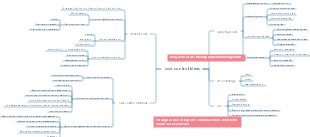
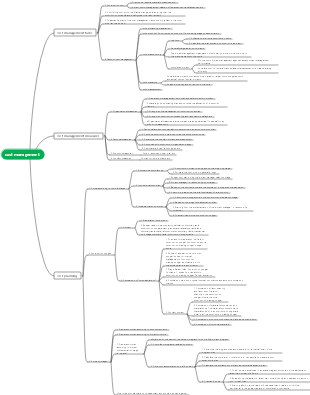
This is a mind map about Chapter 8 Cost Management. The main contents include the meaning of cost, cost objectives, cost principles, cost sequence, cost calculation formula, etc.
Edited at 2022-06-25 10:46:30This is a mind map about bacteria, and its main contents include: overview, morphology, types, structure, reproduction, distribution, application, and expansion. The summary is comprehensive and meticulous, suitable as review materials.

This is a mind map about plant asexual reproduction, and its main contents include: concept, spore reproduction, vegetative reproduction, tissue culture, and buds. The summary is comprehensive and meticulous, suitable as review materials.
This is a mind map about the reproductive development of animals, and its main contents include: insects, frogs, birds, sexual reproduction, and asexual reproduction. The summary is comprehensive and meticulous, suitable as review materials.
This is a mind map about bacteria, and its main contents include: overview, morphology, types, structure, reproduction, distribution, application, and expansion. The summary is comprehensive and meticulous, suitable as review materials.
This is a mind map about plant asexual reproduction, and its main contents include: concept, spore reproduction, vegetative reproduction, tissue culture, and buds. The summary is comprehensive and meticulous, suitable as review materials.
This is a mind map about the reproductive development of animals, and its main contents include: insects, frogs, birds, sexual reproduction, and asexual reproduction. The summary is comprehensive and meticulous, suitable as review materials.
Chapter 8 Cost Management
Section 1
The meaning of cost
Reduce costs and increase profits
cost target
cost principle
Integrative Principle
cost-benefit principle
importance principle
objectivity principle
cost sequence
Forecast, decision-making, planning, control, accounting analysis, assessment
Section 2 Formula
basic formula
Profit = (unit price - single change) × sales volume - fixed cost
contribution margin
(Unit price - single variable) × sales volume
contribution margin
(unit price - single change) ÷ unit price
Break-even point (breakeven point)
breakeven amount (Unit price - single variable) × sales volume - fixed cost = 0 or Fixed cost ÷ (unit price - single variable) × sales volume Sales volume is generally an unknown parameter x
Operation rate
1-Safety margin contribution rate
Break-even volume ÷ sales volume
Safety margin contribution: profit exceeding the breakeven point
Safety margin contribution evaluation index
Less than 10% dangerous 10-20 Average 20-30 Safe 30-40 Safe More than 40 Very safe
special formula
1-Unit variable cost = unit contribution margin
1-Break-even operation rate = safety margin contribution rate
Sensitivity coefficient analysis
Basic formula: % of profit ÷ % of factor
The result is positive and is sensitive to changes in the same direction, such as unit price and sales volume.
The result is negative, reverse change, such as single change, fixed cost
Problem-solving ideas: First find the growth percentage of profit. Generally, the growth rate of the default factor is 10%.
target profit
(Unit price - single variable) × sales volume - fixed cost = target profit is similar to a single target
Section 3
Cost-volume-profit analysis chart
Section 4
Multiple project costs
Combined units (finding the lowest common factor)
1. Add up the marginal contribution of each project to get the total unit marginal contribution
2. Then the total unit contribution margin × business volume
3. Find the break-even point business volume of the joint unit
4. Allocate the break-even amount of the portfolio to each project
5. Find the cost that each project should bear
average
Section 5
Job Costing: Better allocation of manufacturing overhead (more accurate)
driving factors
Resource-Activity (Resource Driver)
Activity - Cost Object (Activity Driver)
Main products (last step is done or not)
Secondary products (intermediate processes)
Classification of assignments
pieces
batch
kind
special customers
all proceeds
Value-added operations (customers are willing to pay for them)
Value-added work (3 conditions)
change state
Subsequent improvements can be made
value added cost
non-value-added costs
Such as packaging, assembly, etc.
Non-value-added operations Any activities that do not qualify as value-added operations are non-value-added operations.
transportation
Detection
Non-value-added operations can only generate non-value-added costs
Rework of defective products
Responsibility center
Cost Center
Only responsible for costs
3 assessment indicators
Marginal contribution - the controllable fixed cost of the person in charge of the center = controllable marginal contribution (also known as the department manager's marginal contribution assessor)
Controllable marginal contribution - uncontrollable fixed costs of the person in charge of the center = departmental contribution margin (also known as departmental gross profit assessment department)
Profit center is responsible for costs, revenue and profits
Classification
natural profit center
Income from direct sales of products and provision of services
Artificial Profit Center Obtained from Internal Transactions
Price-based internal transfer prices: applicable to internal profit centers
Cost type: internal cost center
Negotiable type: Enterprises with a high degree of decentralization, upper limit market price and lower limit unit variable cost
investment center
Responsible for all costs, income, profits, and investment funds Evaluation indicators
Return on investment (taking into account size relative indicators)
Earnings before interest and taxes ÷ average operating assets
(Income ÷ Investment)
Applicable to various departments, eliminating the impact of scale, maximizing profits and optimizing resource allocation, but prone to short-term behavior
Residual income (can make up for the shortcomings of investment rate of return). Absolute indicators. Not flexible enough to adapt to various sizes. Prone to short-term behavior.
Earnings before interest and taxes - average operating assets × minimum investment rate of return (capital cost)
Average operating assets = (operating assets at the beginning of the period operating assets at the end of the period) ÷ 2
Section 6
Three factors (as the name suggests) × price scalar real unit is yuan
direct material
Price difference (actual unit price – standard unit price) × actual usage
Mainly the purchasing department is responsible for
Volume difference (actual dosage - standard dosage under actual circumstances) × standard unit price
Mainly the workshop department is responsible for
Direct labor
Difference in quantity (poor efficiency)
spread (wage rate difference)
wage rate as unit price
Mainly the human resources department is responsible for
variable manufacturing overhead
Difference in quantity (poor efficiency)
Price difference (consumption rate difference)
Distribution rate as unit price (yuan/hour) working hours as quantity
(Actual allocation rate - standard allocation rate under actual conditions) × actual usage (number of hours)
Unit price × quantity = total amount, so total variable manufacturing overhead ÷ total working hours = allocation rate
Mainly the workshop department is responsible for
Three factors (321 method) usage × unit consumption (amount consumed for one product) × unit price
① Actual usage × actual unit consumption × actual unit price (3 actual) = actual total cost
②Actual usage × actual unit consumption × standard unit price (2 actual)
③Actual usage × standard unit consumption × standard unit price (1 unit) = standard total cost
①-②=price difference ②-③=volume difference ①-③=overall difference
Two factors fixed manufacturing overhead (3021 method) 0 has no actual meaning energy consumption
① Actual usage × actual unit consumption × actual unit price (3 actual) = actual total cost
② Estimated usage × standard unit consumption × standard unit price (0 actual) = estimated total cost
③Actual usage × actual unit consumption × standard unit price (2 actual)
④Actual usage × standard unit consumption × standard unit price (1 unit) = standard total cost
①-②=Consumption difference ②-③=Output difference ③-④=Efficiency difference ②-④=Energy difference ①-④=Overall difference
Reduce consumption, increase production, improve efficiency, and satisfy the boss