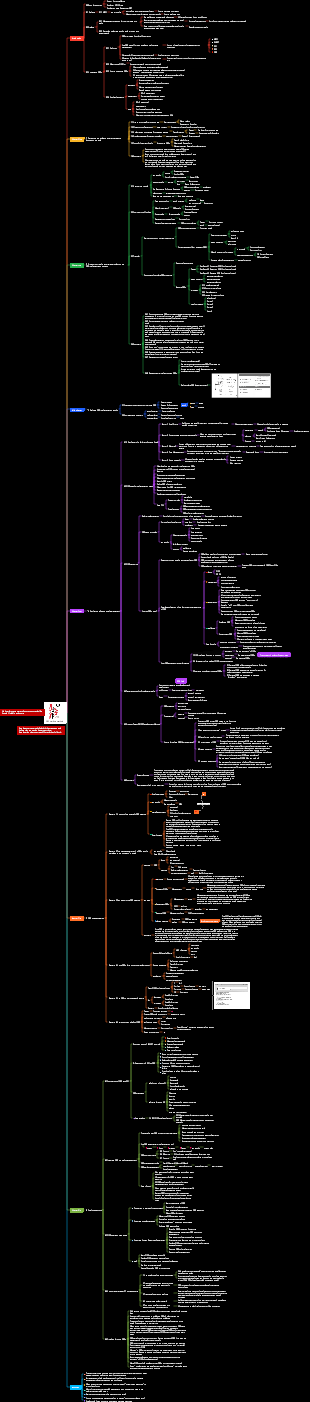
MindMap Gallery DAMA-CDGA Data Governance Engineer-7. Data Security
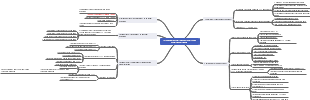
Data security management refers to supporting appropriate access and preventing inappropriate access to corporate data assets, supporting compliance with privacy, protection and confidentiality systems and regulations, and ensuring that the privacy and confidentiality requirements of stakeholders are met.
Edited at 2024-03-05 20:23:35This Valentine's Day brand marketing handbook provides businesses with five practical models, covering everything from creating offline experiences to driving online engagement. Whether you're a shopping mall, restaurant, or online brand, you'll find a suitable strategy: each model includes clear objectives and industry-specific guidelines, helping brands transform traffic into real sales and lasting emotional connections during this romantic season.
This Valentine's Day map illustrates love through 30 romantic possibilities, from the vintage charm of "handwritten love letters" to the urban landscape of "rooftop sunsets," from the tactile experience of a "pottery workshop" to the leisurely moments of "wine tasting at a vineyard"—offering a unique sense of occasion for every couple. Whether it's cozy, experiential, or luxurious, love always finds the most fitting expression. May you all find the perfect atmosphere for your love story.
The ice hockey schedule for the Milano Cortina 2026 Winter Olympics, featuring preliminary rounds, quarterfinals, and medal matches for both men's and women's tournaments from February 5–22. All game times are listed in Eastern Standard Time (EST).
This Valentine's Day brand marketing handbook provides businesses with five practical models, covering everything from creating offline experiences to driving online engagement. Whether you're a shopping mall, restaurant, or online brand, you'll find a suitable strategy: each model includes clear objectives and industry-specific guidelines, helping brands transform traffic into real sales and lasting emotional connections during this romantic season.
This Valentine's Day map illustrates love through 30 romantic possibilities, from the vintage charm of "handwritten love letters" to the urban landscape of "rooftop sunsets," from the tactile experience of a "pottery workshop" to the leisurely moments of "wine tasting at a vineyard"—offering a unique sense of occasion for every couple. Whether it's cozy, experiential, or luxurious, love always finds the most fitting expression. May you all find the perfect atmosphere for your love story.
The ice hockey schedule for the Milano Cortina 2026 Winter Olympics, featuring preliminary rounds, quarterfinals, and medal matches for both men's and women's tournaments from February 5–22. All game times are listed in Eastern Standard Time (EST).
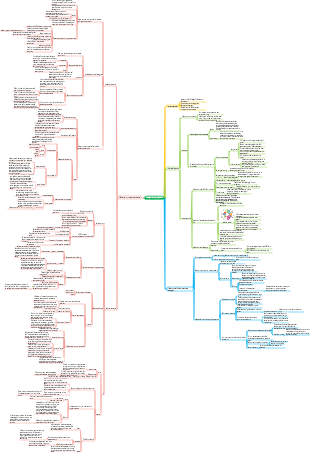
7.Data security
introduction
Source of security requirements
Stakeholders
government regulations
Specific business focus
Every organization has proprietary data that needs to be protected
Legitimate access requirements
Business processes require people with different roles to access, use and maintain different data
Contractual obligations
business drivers
reduce risk
Data security is best done at the enterprise level
Without a collaborative effort, business units individually seek solutions to their security needs, resulting in increased overall costs while potentially reducing security due to inconsistent protection measures.
Ineffective security architecture or processes can cause organizations to incur breach costs and reduce productivity
Start by classifying your organization's data to identify what needs to be protected
process
1. Identify and classify sensitive data assets
There are some data assets and sensitive data that need to be classified and classified according to the industry and organization type to which they belong.
2. Find sensitive data in the enterprise
Depending on where the data is stored, its security requirements may differ
A large amount of sensitive information is stored in a single location, creating an extremely high risk if this location is compromised
3. Determine ways to protect each asset
Implement targeted security measures based on data content and technology type
4. How to identify information and business processes interact
Business processes need to be analyzed to determine under what conditions those accesses are allowed
In addition to classifying and grading the data itself, external threats and internal risks also need to be assessed.
Promote business growth
Strong information security drives transactions and builds customer confidence
Security as an asset
Metadata is one way to manage sensitive data
Information classification and compliance sensitivity can be marked at the data element and collection levels
Leverage data tagging technology to enable metadata to flow with information throughout the enterprise
goals and principles
Target
Support appropriate access and prevent inappropriate access to enterprise data assets
Support compliance with privacy, protection and confidentiality systems and regulations
Ensure that stakeholder privacy and confidentiality requirements are met
in principle
Collaboration
Data security is a collaborative effort involving IT, data management specialists, internal and external audit, legal and other departments
Enterprise planning
Organizational consistency must be ensured when applying data security standards and policies
Active management
Clear responsibilities
Clearly define roles and responsibilities
Metadata driven
Data security classification and classification are an important part of data definition
Reduce exposure to reduce risk
Minimize the proliferation of sensitive and confidential data, especially in non-production environments
basic concept
vulnerability
Weaknesses and flaws in a system that are vulnerable to attack, essentially holes in an organization’s defenses
Certain vulnerabilities are called vulnerability exposures
For example, network computers with outdated security patches, web pages that are not protected by reliable passwords, users receiving email attachments from unknown senders, company software that is not protected by technical orders
threaten
is a potential offensive action that may be taken against an organization
Threats include virus-infected email attachments sent to an organization, processes that overwhelm network servers to the point where they are unable to perform business, and exploitation of known vulnerabilities
Can be internal or external
risk
Refers to both the possibility of loss and the things or conditions that constitute potential loss
Risks can be calculated from the following aspects:
The probability of a threat occurring and its likely frequency
The type and scale of damage each threat incident may cause, including reputational damage
Impact of impairment on revenue or business operations
Repair costs after damage occurs
Cost of preventing threats, including vulnerability remediation
Possible goals or intentions of the attacker
Risks can be prioritized by potential level of damage or likelihood of occurrence
Risk classification
Describes the sensitivity of the data and the potential for access to the data for malicious purposes
Classification is used to determine who can access data
The highest security classification among all data within a user's rights determines the overall security risk
include
key risk data
Because personal information has a high direct financial value, both internal and external parties may go to great lengths to seek unauthorized use of this information.
Misuse of critical risk data not only harms individuals, it can also result in significant penalties for companies and increased customer retention. The cost of employees and damage to the company's brand and reputation, thereby causing financial risks to the company
High data risk
High-risk data provides companies with a competitive advantage, has potential direct financial value, and is often actively sought for unauthorized use
If high risk is misused, the company may suffer financial losses as a result
Medium risk data
Non-public company information that has little practical value and whose unauthorized use may have a negative impact on the company
data security organization
Large enterprises often have a chief information security officer (CISO) who reports to the CIO or CEO.
security process
4A
AuthorizationAuthorization
Grant individuals access to specific views of data appropriate to their role
After obtaining permission, the access control system checks the validity of the authorization token every time the user logs in
Technically, this is an entry in a data field in the company's Active Directory, indicating that this person is authorized to access the data
PermissionEntitlement
Is the sum of all data elements exposed to the user by a single access authorization decision
AccessAcess
Provide authorized individuals with timely access to the system
VerifyAuthentication
Verify user access rights
When a user attempts to log in to the system, the system needs to verify that the person's identity is genuine
In addition to passwords, more stringent authentication methods include security tokens, answering questions, or submitting fingerprints
During the authentication process, all transmissions should be encrypted to prevent theft of authentication information
AuditAudit
Review security operations and user activities to ensure compliance with regulations and compliance with company policies and standards
Monitoring and auditing can be done continuously or periodically
Formal audits must be conducted by a third party to be considered valid
Third parties can come from within the organization or from outside the organization
monitor
Active monitoring
Systems containing confidential information often implement proactive, real-time monitoring to alert security administrators to suspicious activity or inappropriate access
is a detection mechanism
passive monitoring
Passive monitoring is tracking changes occurring in real-time by capturing snapshots of the system at regular intervals and comparing trends to a baseline or other standards.
The system sends a report to the data administrator or security administrator
It is an evaluation mechanism
data integrity
It is an overall status requirement to avoid being affected by improper additions/deletions/modifications.
encryption
Is the process of converting plain text into complex code to hide privileged information, verify the integrity of a transmission, or verify the identity of the sender
Encrypted data cannot be read without the decryption key or algorithm
Decryption keys or algorithms are usually stored separately and cannot be calculated based on other data elements in the same data set
Encryption method
Hash
is to convert any length into a fixed-length data representation
Even if the exact algorithm used and the order of application are known, the original data cannot be decrypted
MD5/SHA
Symmetric encryption
Use a key to encrypt and decrypt data
Both the sender and receiver must have the key to read the raw data
Data Standard Encryption DES, Triple DES 3DES, Advanced Encryption Standard AES, International Data Encryption Algorithm IDES
asymmetric encryption
Sender and receiver use different keys
The sender uses a publicly available public key to encrypt, and the receiver uses a private key to decrypt to reveal the original data.
RSA, Diffie-Hell-man, PGP (free public key encryption application)
confusion and desensitization
Data availability can be reduced by obfuscating (making it blurry and unclear) or desensitizing (removing, shuffling, or otherwise changing the appearance of the data) without losing the meaning of the data or its relationship to other data sets.
Data obfuscation and desensitization is a security method to solve the problem of data usage.
static desensitization
Static desensitization permanently and irreversibly changes data
Typically not used in production environments, but between production and development (test) environments
Desensitization without landing
Off-the-shelf desensitization is used when moving data between a source (usually a production environment) and a target environment (usually a non-production environment) requires desensitization or obfuscation.
is to regularly capture system snapshots through the system and compare trends with baselines or other standards to compare and track changes over time.
Since no intermediate files or databases with undesensitized data will be left behind, the off-the-shelf desensitization method is very safe.
If some data encounters problems during the desensitization process, the desensitization process can be rerun.
floor desensitization
When the data source and target are the same, floor desensitization can be used
Read the unmasked data from the data source and overwrite the original data directly after performing the masking operation.
There is a risk that if the desensitization process fails, it will be difficult to restore the data to a usable format
dynamic desensitization
Is changing the appearance of data to the end user or system without changing the underlying data
Number 123456789, displays ******789 when calling
Desensitization method
replace
shuffle
spatiotemporal variation
numerical variation
Cancel or delete
random selection
Encryption Technology
expression desensitization
Key value desensitization
Cybersecurity terminology
back door
Refers to an ignored hidden entry in a computer system or application
It allows unauthorized users to gain access by bypassing restrictions such as passwords
Backdoors are usually created by developers for the purpose of maintaining the system; others include backdoors set up by commercial software package creators.
When installing any software system or web package, the default password remains unchanged. This is a backdoor. Hackers will discover its existence sooner or later, so any backdoor is a security risk.
robot or zombie
Refers to a workstation that has been taken over by malicious hackers using Trojan horses, viruses, phishing, or downloading infected files
Remotely control robots to perform malicious tasks
Spam, network blocking, hosting fraudulent websites
Cookies
It is a small data file that a website installs on your computer's hard drive to identify regular customers and analyze their hobbies.
Sometimes exploited by spyware, causing privacy issues
firewall
Is software/hardware that filters network traffic to protect a single computer or an entire network from unauthorized access and attempted attacks on the system
Incoming or outgoing communications may be scanned for restricted or regulated information, to prevent unauthorized passage, and to restrict access to specific external websites
world
Refers to the boundary between the organizational environment and external systems
Firewall deployed between internal and external
DMZ
Demilitarized zone refers to the edge or peripheral area of an organization
Have a firewall between the DMZ and the organization
super user account
Is an account with system administrator or superuser access, used only in emergencies
Keylogger
is an attack software that records all keystrokes typed on the keyboard and then sends them to the Internet
Penetration testing
"White hat" hackers, either from the organization itself or hired by external security firms, attempt to break into the system from the outside, like malicious hackers, trying to identify system vulnerabilities.
Discovered vulnerabilities should be addressed before the application is officially released
Conduct penetration testing on all software regularly and install security patches
virtual private network
A VPN uses the unsecured internet to create a secure path, or "tunnel," into an organization's environment. The tunnel is highly encrypted.
VPNs allow communication between users and internal networks by using multi-factor authentication elements to connect to the firewall at the perimeter of the organizational environment.
VPN encrypts all transmitted data
Data security type
Overview
Data security is not only about preventing improper access but also about legitimate access to data
Access to sensitive data should be controlled by granting permissions
Users are not allowed to view data or perform operations within the system without permission
"Least Privilege" is an important security principle
Allow a user, process, or program to access only information permitted by its legitimate purpose
Facility security
The first line of defense against malicious actors
Should have at least one lock-down capable data center with access limited to authorized employees
Device security
Access policy for using mobile device connections
Store data on portable devices
Device data erasure and disposal consistent with records management policies
Anti-malware and encryption software installation
Security vulnerability awareness
Credential security
is used when assigning access to the system to each user
Most credentials are a user ID and password combination
Identity management system
Traditionally, users have different accounts and passwords for each independent resource, platform, application system or workstation
This method requires users to manage multiple sets of accounts and passwords
Organizations with enterprise user directories can establish synchronization mechanisms between heterogeneous resources to simplify user password management
In this case, the user only has to enter their password once and all subsequent authentication and authorization is performed by referencing the enterprise user directory
An identity management system that implements this functionality is called "single sign-on" and is optimal from a user perspective
User ID standard for email systems
User ID should be unique
Password standards
Passwords are the first line of defense for protecting your data
Requires sufficiently high password levels defined in security standards, often referred to as "strong" passwords
It is recommended to change passwords on a periodic basis. The specific frequency of changes depends on the nature of the system, the type of data and the sensitivity of the enterprise.
But changing passwords too frequently can also bring risks
Multiple factor identification
Some systems require additional identification procedures
Includes return calls to the user's mobile device containing code, use of hardware devices necessary for login, or biometric factors such as fingerprints, facial recognition, retina scans
Two-factor identification makes it more difficult to enter accounts or log in to user devices. Users with access to highly sensitive information should use two-factor identification technology to log in to the network.
Electronic communications security
Insecure communication methods can be read or intercepted by external parties
Social media is also considered a secure means of communication, including blogs, portals, WIKIs, forums or other social media and should not contain confidential or restricted information
Data security constraints
Confidentiality level
request source
internal
There can only be one confidentiality level for any data set: the level is based on the most sensitive (highest level of confidentiality) data item in the data set.
confidential data
open to general audience
For internal use only
confidential
restricted secret
top secret
regulatory requirements
request source
external definition
Regulation is class-additive: a single data set may restrict data according to multiple regulatory categories
regulatory data
Regulation series
personally identifiable information
Financially Sensitive Information
Medical/Personal Health Information
educational information
Industry regulations or contract regulations
Payment Card Industry Data Security Standard
Competitive advantage or trade secret
Contractual restrictions
System security risks
abuse of privilege
The principle of least privilege should be used when granting access to data
Only run users, processes, and programs to access information permitted by their legitimate purposes.
The risk is that when having privileges beyond what is required for job responsibilities, a user may abuse those privileges for malicious purposes or accidentally
Users may be granted more access rights than they should have
Lack of oversight of user rights, which is one of the reasons why many data regulations specify data management security
abuse of legitimate privilege
A user may abuse database privileges legally granted to him for unauthorized purposes
For example: a doctor with criminal tendencies has the right to view his patients' cases through a designated WEB application
Unauthorized escalation of privilege
Attackers may exploit database platform software vulnerabilities to change access rights from ordinary user rights to administrator rights
Service account or shared account abuse
Using service accounts or shared accounts increases the risk of data breaches and complicates the ability to trace the source of a vulnerability
Platform intrusion attack
injection vulnerability
In a SQL injection attack, an attacker inserts an unauthorized database statement into a vulnerable SQL statement
These injected SQL statements are passed to the database where they are typically executed as legitimate commands
When using SQL injection, the attacker has unrestricted access to the entire database
default password
Clearing default passwords is an important security step during every implementation
Backup data abuse
Hacking
white hat hacker
Committed to modifying the system, discovering vulnerabilities and patching them
black hat hacker
Deliberately damaging a system to cause damage
Phishing/Social Engineering Threats
Phishing is the process of tricking someone into unknowingly providing valuable information or personal privacy via phone calls, instant messages, or emails.
malicious software
Adware
Is a type of spyware that is downloaded to a computer from the Internet
Monitor computer usage, such as which websites are visited, and may also insert objects and toolbars into the browser
Not a violation, but it is used to collect complete profiles of users' browsing and purchasing habits and sell them to marketing companies
spyware
Any software program that infiltrates a computer and tracks online activity without consent
Different forms of spyware track different types of activity
Some programs monitor website visits, while others record user keystrokes and steal personal information.
Trojan horse
Refers to malicious programs that enter computer systems by disguising or embedding legitimate software.
Once installed, a Trojan will delete files, access personal information, install malware, reconfigure the computer, install keyloggers, and even allow hackers to use the computer as a weapon (bot or zombie) against other computers in the network
Virus
is a computer program that attaches itself to an executable file or vulnerable application, causing destructive results
worm
A program that can be copied and spread across the network
Computers infected by worms will continuously send infection messages
Mainly consumes a lot of bandwidth, causing network interruptions
Malware sources
instant messaging
social network
spam
Activity
Identify data security needs
Business needs
The organization's business needs, mission, strategic size, and industry determine the stringency of data security required.
For example: The U.S. financial securities industry is highly regulated, and large and small retailers have similar core activities but choose different types of security.
Identify security touchpoints by analyzing business rules and processes
regulatory requirements
Develop data security system
system
Is a statement of a chosen course of action and a top-level description of the behaviors expected to achieve a goal
Strategy
Describe the determined behavior
level
Enterprise security system
IT security system
Data security system
1. IT security system and data security system are part of the security system combination; 2. It is best to distinguish them; 3. The data security system is inherently more granular and requires different controls and processes for different contents;
Supervisor and maintenance
Data Management Specialist
review and approval
Data Governance Committee
Define data security rules
Overview
The system provides rules of conduct but cannot list all possible contingencies.
Bye-laws supplement the regime and provide additional details on how the intent of the regime will be met
Define data confidentiality levels
Define data governance levels
Define security roles
Data access controls can be managed at the individual user level or at the organization level, depending on your needs. That is, authorizing and updating access permissions on a user account-by-user account basis requires a lot of redundant work
Small organizations may find it acceptable to manage data access at a single level
Large organizations will benefit greatly from role-based access control, by granting permissions to role groups, thereby granting permissions to each member of the group
role assignment matrix
role assignment hierarchy
Assess current security risks
Implement controls and procedures
Assign confidentiality level
Assign regulatory category
Manage and maintain data security
Control data availability/data-centric security
Monitor user authentication and access behavior
Manage safety system compliance
Manage regulatory compliance
Audit data security and compliance activities
tool
Antivirus/security software
Antivirus software protects computers from online viruses
New viruses and other malware appear every day, so it’s important to update your security software regularly
HTTPS
If the web address starts with http://, it means that the website is equipped with an encrypted security layer
Users must provide a password or other means of authentication to access the site
Online payments or access to confidential information are protected by this encryption
Without encryption, users on the same network segment can read plain text messages
Identity management technology
Stores assigned credentials and shares them with the system upon request
Most applications use a central credential data store, but some applications still manage their own credential stores
Some companies adopt and offer enterprise-licensed "password security" products that create an encrypted password file on each user's computer. Users only need to learn a long password to open the program, and all passwords can be safely stored in an encrypted file. A single sign-on system can serve the same purpose.
Intrusion detection and intrusion prevention technology
Intrusion Detection System IDS
trigger alarm
Intrusion Prevention System IPS
automatic response
firewall
A secure and sophisticated firewall should be deployed at the enterprise gateway, with the ability to allow high-speed data transfer while also performing detailed data analysis
For web servers exposed to the Internet, a more complex firewall structure is recommended, as many malicious hacker attacks can exploit database and web server vulnerabilities through intentionally distorted legitimate traffic.
Metadata tracking
Tools that track metadata help organizations track the movement of sensitive data
Risk: External data can detect internal data from the metadata associated with the document
Tagging sensitive information with metadata is the best way to ensure your data is protected
Data desensitization/encryption
method
Apply CRUD Matrix
Common and used data-process matrices and data-role matrices (CRUD--Create, Read, Update, Delete) help map data access needs and guide data security role group, parameter and permission definitions
Instant security patch deployment
Data security attributes in metadata
Metadata repositories are critical to ensuring the integrity and consistency of enterprise data models when used across business processes
Security requirements in project requirements
System and data security issues must be addressed for every project involving data, with data and application security requirements determined in detail during the analysis phase
Identifying security requirements in advance helps guide design and avoid modifications to security processes
Efficient search of encrypted data
Searching for encrypted data obviously includes the need to decrypt the data
One way to reduce the amount of data that needs to be decrypted is to use the same encryption method to encrypt search criteria (such as strings) and then use the ciphertext to find matches
File cleaning
Refers to the process of removing metadata from files before they are shared
Implementation Guide
Readiness Assessment/Risk Assessment
Improve compliance
training
institutional consistency
Measuring security benefits
Set security requirements for suppliers
Increase sense of urgency
Continuous communication
Organizational and cultural change
Visibility of user data authorization
Each user's data authorization (i.e. the sum of all data provided by a single point of authorization) is reviewed during system implementation to determine if any controlled information is included
Data security in the outsourcing world
Everything is external, except liability
Any form of outsourcing increases organizational risk
Data security measures and processes must treat risks to external vendors as both external and internal risks
Transferring control does not mean transferring responsibilities, but requires more stringent risk management and control mechanisms.
The Responsible, Approval, Consult, Inform (RACI) matrix helps clarify the roles, segregation of duties and responsibilities of different roles, including their data security obligations
Data security in cloud environments
DaaS/SaaS/PaaS/XaaS
In cloud computing, it is especially important to share responsibility, define data governance, and define ownership and custody
Data security governance
Data Security and Enterprise Architecture
Metrics
Security implementation indicators
Security Awareness Indicators
Data protection indicators
Security incident indicators
Number of intrusion attempts detected and blocked
Return on investment in security cost savings by preventing intrusions
Proliferation of confidential data
The number of copies of confidential data should be measured to reduce proliferation
The more places confidential data is stored, the greater the risk of leakage