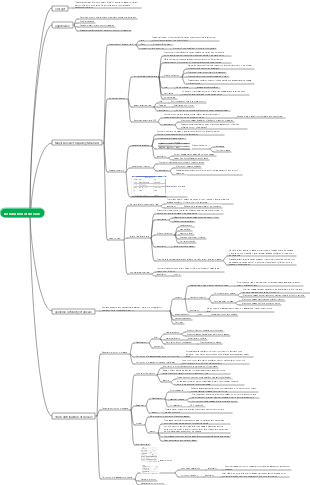
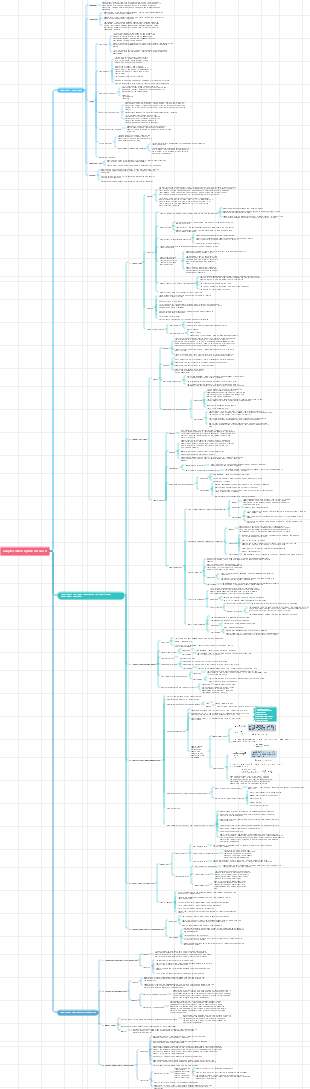
MindMap Gallery Human Health Ninth Edition Epidemiology Chapter 5 Cohort Study
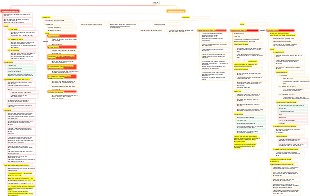
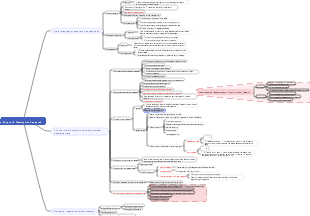
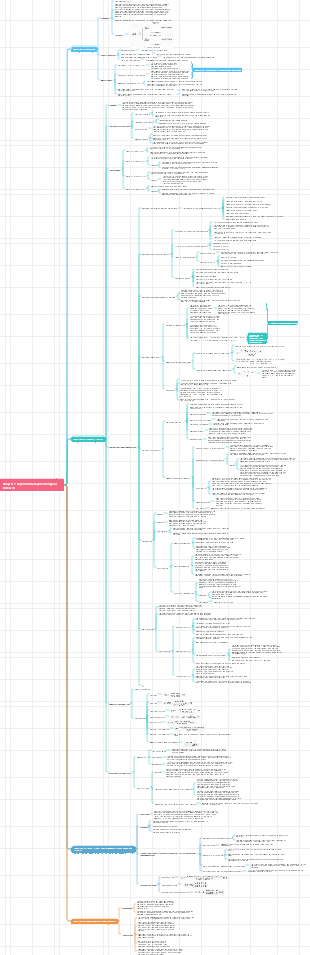
This is a mind map about the cohort study in Chapter 5 of Epidemiology, Ninth Edition of the National Health Service. It divides the research population into exposed groups and non-exposed groups according to whether they are exposed to a certain factor or the degree of exposure. Follow-up observations are made and An observational research method that compares the difference in the incidence of outcomes (such as diseases) related to exposure factors between two groups of members within a specific period of time to determine whether there is a causal association and the degree of association between exposure factors and outcomes.
Edited at 2023-12-20 23:18:40This article discusses the Easter eggs and homages in Zootopia 2 that you may have discovered. The main content includes: character and archetype Easter eggs, cinematic universe crossover Easter eggs, animal ecology and behavior references, symbol and metaphor Easter eggs, social satire and brand allusions, and emotional storylines and sequel foreshadowing.

[Zootopia Character Relationship Chart] The idealistic rabbit police officer Judy and the cynical fox conman Nick form a charmingly contrasting duo, rising from street hustlers to become Zootopia police officers!
This is a mind map about Deep Analysis of Character Relationships in Zootopia 2, Main content: 1、 Multi-layer network of relationships: interweaving of main lines, branch lines, and hidden interactions, 2、 Motivation for Character Behavior: Active Promoter and Hidden Intendant, 3、 Key points of interaction: logic of conflict, collaboration, and covert support, 4、 Fun Easter eggs: metaphorical details hidden in interactions.
This article discusses the Easter eggs and homages in Zootopia 2 that you may have discovered. The main content includes: character and archetype Easter eggs, cinematic universe crossover Easter eggs, animal ecology and behavior references, symbol and metaphor Easter eggs, social satire and brand allusions, and emotional storylines and sequel foreshadowing.
[Zootopia Character Relationship Chart] The idealistic rabbit police officer Judy and the cynical fox conman Nick form a charmingly contrasting duo, rising from street hustlers to become Zootopia police officers!
This is a mind map about Deep Analysis of Character Relationships in Zootopia 2, Main content: 1、 Multi-layer network of relationships: interweaving of main lines, branch lines, and hidden interactions, 2、 Motivation for Character Behavior: Active Promoter and Hidden Intendant, 3、 Key points of interaction: logic of conflict, collaboration, and covert support, 4、 Fun Easter eggs: metaphorical details hidden in interactions.
Chapter 5 Cohort Study
Section 1 Overview
Concepts and Fundamentals*
concept
It is to divide the research population into exposed groups and non-exposed groups according to whether they are exposed to a certain factor or the degree of exposure, and track and observe and compare the differences in the incidence rates of outcomes (such as diseases) related to the exposure factor within a specific period of time between the two groups of members, so as to An observational research method to determine whether there is a causal association and the degree of association between exposure factors and outcomes.
exposed
Generally refers to various factors that can affect outcomes (such as diseases)
Characteristics or status of the research subjects related to the outcome (such as age, gender, occupation, genetics, behavior, lifestyle, etc.) or exposure to certain factors related to the outcome (such as X-ray exposure, heavy metals, environmental factors, etc.)
exposure factors
A characteristic, state, or factor is an exposure factor
Cohort: A group of people who share certain characteristics
fixed queue
It means that the observed objects enter the queue at a certain moment or within a short period of time, and no new members will be added after that.
dynamic queue
During the entire observation period, original queue members can continue to exit, and new observation objects can enter at any time.
risk factors
Generally refers to factors that can cause a specific adverse outcome or increase the probability of its occurrence, including personal behavior, lifestyle, environment, genetics and other factors.
Basic principles and features*
Fundamental
According to whether the research subjects are exposed to a certain research factor or its different levels, the research subjects are divided into the exposed group (E) and the non-exposed group (Ē)
Follow up for a certain period of time and compare the difference in the incidence of the studied outcome (outcome) between the two groups to analyze the relationship between exposure factors and the study outcome.
Four characteristics
forward-looking in time
At the beginning of the cohort study, none of the subjects enrolled in the study has experienced the outcome studied.
is an observational study
Cohort studies are based on observing the occurrence of relevant outcomes after the study population is naturally exposed to suspicious factors.
Establish controls and group according to exposure or non-exposure
It is a study from cause to effect, consistent with chronological order, and has strong causal connection ability.
use*
Testing hypotheses about etiology (primary purpose and use)
When studying the relationship between exposure and disease, etiological clues or hypotheses are usually proposed based on the results of descriptive epidemiological studies, and then analytical epidemiological studies are conducted to verify the hypotheses.
Evaluate the effectiveness of preventive measures
The effectiveness of these factors in preventing disease can be evaluated through "natural experiments" in the population.
Study the natural history of disease
Not only can we understand the natural history of the disease in individual cohort members, but we can also comprehensively understand the entire process of disease occurrence, development and outcome in the population, including changes in exposure factors, the generation of early biological effects, changes in body structure or function, etc. Preclinical changes and manifestations, as well as clinical onset and subsequent outcomes, comprehensively reveal the natural history of the disease and provide a basis for formulating preventive strategies and measures.
Prognostic factor research and post-marketing surveillance of new drugs
type
prospective cohort study (Basic form)
At the beginning of the study, the research subjects are grouped according to the exposure of each research subject. At this time, the research outcome has not yet appeared, and it is necessary to follow up and observe for a period of time to collect information on the occurrence of the research outcome of each research subject.
Features
Determination of study cohort is now
Subjects are grouped according to their current exposure
Follow-up required*
The ending will occur at some point in the future
advantage
Chronological order enhances the credibility of etiological inferences
Direct access to exposure and outcome data, making the results credible
incidence rate
First-hand data has less bias
shortcoming
Requires a large sample size, costs a lot, and takes a long time
Research subjects are easily lost to follow-up, affecting feasibility
Application conditions
① Have clear test hypotheses
② The incidence of the disease under study is relatively high, generally not less than 5%
③ Clearly define exposure factors and outcome variables
④ Have reliable measurement methods
⑤ Sufficient observation groups and their exposure conditions can be obtained
⑥ Most people can complete the follow-up
⑦ Have sufficient human, financial and material resources
Historical (retrospective) cohort study
concept
Grouping based on historical information available to the researcher at the beginning of the study regarding the subject's exposure at some point in the past
No prospective observation is required, the outcome has already occurred when the study begins
However, its nature is still forward-looking (from past exposure to current outcome), and it is a study from "cause" to "effect"
advantage
Save time, effort, and get results quickly
Suitable for research on diseases with long induction period and long latency period
Complete data collection and analysis in a short period of time
shortcoming
The data is not under the control of the researcher when it is accumulated, and the content may not meet the requirements.
Sufficiently complete and reliable historical records or archival materials about the exposure and outcome of the research subjects during a certain period in the past are required
prone to selection bias and information bias
Difficulty controlling the interference of confounding factors
The integrity and authenticity of historical data will directly affect the feasibility of the research and the authenticity of the research results.
Historical prospective cohort study (bidirectional cohort study)
concept
Continuing prospective cohort studies based on historical cohort studies
Be applicable
Suitable for evaluating the effects of exposure factors that have both short-term and long-term effects on human health
Features
Determination of study cohort is past
Grouping research subjects based on exposure at a certain time in the past
Need follow-up
Some endings may have already occurred
advantage
It is a design model that combines prospective cohort studies with historical cohort studies, so it has the advantages of the above two categories.
Section 2 Research Design and Implementation
Identify research factors
Main exposure factors: determined on the basis of descriptions and case-control studies
Factors that may affect the outcome: confounding factors, demographic characteristics, etc.
Measurement of factors: The level of exposure, the time of exposure, and the method of exposure need to be measured. Measurement of exposure should use sensitive, precise, simple and reliable methods
Nature: qualitative, quantitative
Methods: interviews, laboratory examinations, review of records
Determine study outcomes
Refers to the expected results related to exposure factors during follow-up observation, that is, the events (such as morbidity or death) or changes in certain indicators that the researcher hopes to track and observe.
Different research purposes have different research results.
Clear and unified criteria for determining outcome variables should be defined and strictly adhered to during the entire research process.
In addition to determining the main research outcome, you can also collect multiple outcomes that may be related to exposure at the same time, analyze the relationship between one cause and multiple effects, and improve the efficiency of the research.
Determine the research site and research population
research site
There are enough qualified research subjects
Local government attention, public understanding and support
Good medical conditions and convenient transportation
Higher incidence
representative
The population is relatively stable and easy to follow up
A higher incidence of expected study outcomes
study population
People who did not experience the study outcome at the start of the study but who may have the outcome
Exposed people
professional group
To study the relationship between a suspected occupational exposure and disease or health
The exposure history of occupational groups is relatively clear, the exposure level is relatively high, and the incidence rate is also relatively high.
Historical records are more comprehensive, authentic and reliable
Specially exposed groups
People who have a higher level of exposure to a factor for some reason
Historical cohort studies or historical prospective cohort study methods are often used
general population
That is, all the people within a certain administrative area or geographical area
organized group of people
Members of certain mass organizations or professional groups, members of government agencies or social groups, members of the military, people participating in life insurance or medical insurance, etc.
non-exposed population
internal control
within a group of research subjects
general population or organized group of people
Good comparability, and can also understand the overall incidence of this group of people
external control
external group of research subjects
Occupational groups or specially exposed groups
Attention should be paid to the comparability of the two groups
total population control
Availability of morbidity or mortality data for the entire region
Occupational groups or specially exposed groups
advantage
Control group data are easily available
Save research money and time
shortcoming
Pay attention to comparability
Multiple control
Two or more contrasting forms of people
advantage
Reduce bias
Enhance the reliability of results and the basis for determining the cause of disease
shortcoming
Increase research workload
Pay attention to comparability between exposed groups and different control groups
Sample size estimate*
Factors affecting sample size
Estimated outcome incidence rate p0 in the unexposed population or the entire population
The difference in disease incidence between the exposed population and the control population p1-p0
If the outcome incidence rate p1 of the exposed group cannot be obtained, you can try to obtain the relative risk (RR) value. p1 can be obtained by the formula p1=RR×p0
RR is the ratio of morbidity or mortality in the exposed population to the unexposed population.
Statistical significance level α
Confidence: 1-β
To ensure the reliability of the study, the power level should be at least 0.80
Sample size calculation*
When the sample sizes of the exposure group and the control group are equal, the following formula can be used to calculate the sample size required for each group
P¯: the average of two incidence rates, q=1- P¯ P1: expected incidence rate in the exposed group, q1=1- P1 P0: expected incidence rate in the control group, q0=1- P0 Zα=1.96, Zβ=1.282 (critical values of standard normal distribution corresponding to α and β)
Knowing the four basic data of α, β, p0 and RR, the required sample size can be found from the corresponding appendix of some reference books.
Things to consider when calculating sample size
Ratio of exposed group to non-exposed group (1:1)
Estimate the loss to follow-up rate in advance and appropriately expand the sample size
Sampling method
Data collection and follow-up
Baseline data and collection methods
baseline information
① Demographic information (age, gender, occupation, education level, marital status, etc.) and possible confounding factor information
②Exposure factor information
Whether there is exposure, type of exposure, frequency, dose, earliest exposure time, highest exposure dose, cumulative exposure dose
③Outcome indicator information
To exclude people who already have the disease being studied when conducting etiology studies
Data collection method
Develop a uniform and detailed questionnaire
Check hospital, factory, unit and personal health records or files
Conduct relevant physical examinations, laboratory examinations and special examinations on research subjects
Conduct regular monitoring of environmental factors
Follow-up
Follow-up content
Generally consistent with the content of the baseline data
The focus is on the outcome variable
Follow-up objects and methods
All eligible subjects who completed the baseline survey (either exposed group or control group)
Observation endpoint
Research subjects experienced expected results
Normally: illness or death
Some indicators change
lost to follow-up
Due to population mobility and other reasons, some research subjects lost contact before reaching the observation endpoint, and it was impossible to obtain information on the research outcome.
Observation end time
The deadline for the entire research work
follow-up period
Influencing factors
The speed at which study outcomes occur
Strength of association between exposure and outcome
Follow-up interval
The interval is too short, which wastes manpower and material resources, and also brings unnecessary trouble and even harm to the research subjects.
If the interval is too long, it is easy to lose to follow-up, and no intermediate changes can be observed.
Generally, the follow-up interval for chronic diseases can be set at 1 to 3 years. The follow-up period for Framingham cardiovascular disease is every two years.
Follower
Then the follow-up person should be the baseline investigator to increase the comparability of follow-up and baseline surveys.
QC
Investigator choice
Investigator training
Develop an investigator manual
supervise
Section 4 Data Compilation and Analysis*
Calculation method
Calculation of person hours
Person-hour: number of observations × observation time. The time unit can be years, months, days, etc. The most commonly used is years.
Exact method: add up day by day
Approximation method: The sum of the number of people at the beginning and end of the year is divided by 2
Life table method: Individuals who enter or exit the queue during the year are calculated as 1/2 person-year
Rate Calculation*
Common indicators
Cumulative incidence (CI)
The study population is relatively large and the population is relatively stable (i.e., a fixed cohort). Regardless of the intensity of the disease and the length of observation time, the cumulative incidence of the disease under study can be calculated.
Divide the number of cases during the entire observation period by the population at the beginning of the observation period
Indicates the cumulative incidence of
The length of accumulation time must be stated, otherwise, its epidemiological significance will not be clear
Applicable conditions
Large sample
stable population
Tidy information (fixed queue)
Incidence density (ID)
When the observed population is unstable, the observation objects enter the study at different times, and are lost to follow-up for various reasons. Each observation object has a different follow-up time. Such a queue is a dynamic queue, and the total number of people is used as the unit. The calculation rate is unreasonable. The incidence rate is calculated in person-hour units, which is called incidence density.
The most commonly used unit of person-time is person-year. For example, if 10 research subjects are observed for 1 year or 1 research subject is observed for 10 years, it is 10 person-years.
Applicable conditions
Long observation time
Demographic instability
There is loss to follow-up
Standardized Ratio (SMR)
When the number of research subjects is small and the incidence of outcome events is relatively low, it is not appropriate to directly calculate the rate regardless of the length of observation time. At this time, the incidence (or death) rate of the entire population can be used as a standard to calculate the expected number of incidences (or deaths) in the observation population; then the actual number of incidences (or deaths) in the observation population and the expected number of incidences (or deaths) can be obtained Ratio of people, that is, standardized incidence (or death) ratio
Applicable conditions
outcome event rate
When it is not appropriate to calculate the rate directly
Compare the entire population
The meaning of SMR
SMR=1 The risk of disease incidence (death) in the study population = standard population
SMR>1 The risk of disease incidence (death) in the study population is greater than that in the standard population, It is SMR times that of the standard population
SMR<1 The risk of morbidity (death) of a certain disease in the study population is less than that of the standard population
Standardized Proportional Mortality Ratio (SPMR)
Applicable conditions
A certain unit cannot obtain population data over the years (no denominator)
Only number of deaths, cause, date and age
Significance test (understanding)
Comparisons of morbidity or mortality between the exposed group and the control group in cohort studies require statistical significance testing.
Estimate of the strength of the association (estimate of the effect)*
Relative risk (RR)*
Relative risk is the most commonly used indicator that reflects the strength of the association between exposure and morbidity (death). It is also called rate ratio or risk ratio; it is the ratio of morbidity (or death) rates in the exposed group and the non-exposed group.
Ie: incidence (or death) rate in the exposed group
Io: incidence (or mortality) rate in the non-exposed group
a: Number of cases in the exposed group
n1: sample size of exposure group
c: Number of cases in the control group
n0: sample size of control group
RR and correlation strength
1) RR=1 means there is no difference in morbidity or mortality between the two groups;
2) RR>1 means that the morbidity or mortality rate of the exposed group is higher than that of the non-exposed group, exposure can increase the risk of morbidity or death, and exposure factors are risk factors for diseases;
3) RR<1 means that the morbidity or mortality rate of the exposed group is lower than that of the non-exposed group. Exposure can reduce the risk of morbidity or death, and exposure factors are protective factors.
The farther the RR value is from 1, the greater the effect of exposure and the greater the strength of the association between exposure and outcome.
Correlation statistical significance calculation
Attributable risk (AR)*
It is the absolute value of the difference between the morbidity (or death) rate of the exposed group and the morbidity (or death) rate of the control group, indicating the degree to which the morbidity (or death) risk is specifically attributed to the exposure factors.
Statistical significance
RR vs. AR comparison*
From the perspective of RR, compared with non-smokers, smokers have a much greater risk of dying from lung cancer than from cardiovascular disease, indicating a strong link between smoking and lung cancer; From the perspective of AR, smoking has a greater effect on cardiovascular disease. If the smoking factor is eliminated, the mortality rate from cardiovascular disease can be reduced more significantly, that is, the social effect of prevention is greater.
Attributable risk percentage AR% (ARP)
The proportion of morbidity or mortality in the 'exposed population' that is attributable to exposure as a percentage of all morbidity or mortality; RR↑ AR%↑
Population Attributable Risk (PAR)
The portion of the total population morbidity (or mortality) rate that is attributable to exposure
Population attributable risk percentage PAR% (PARP)
It refers to the proportion of the morbidity (or mortality) rate in the total population that is attributable to exposure to the total morbidity (or mortality) rate in the total population.
Significance: PAR% is related to RR, which reflects the pathogenic effect of exposure, and is related to the proportion of exposed persons in the population, indicating the degree of harm of exposure to the entire population. If a certain exposure is an important cause of a certain disease, that is, the RR is large, but the exposure rate in the population is small, the PAR% will be small.
Example P66 (very important***)
Dose-response relationship analysis
Analytical method
List incidence rates at different exposure levels
Using the lowest exposure level group as the control, calculate the RR and risk difference (RD) of each exposure level.
If necessary, a trend test of the rate should be conducted on changes in the rate
Example question analysis*
Significance: Calculate the RR and AR of each exposure level subgroup separately. If the exposure dose is larger, the RR and AR are larger, then there is a dose-response relationship between the exposure and the effect, indicating that the possibility of the exposure as a cause increases. Results: Lung cancer mortality, RR and AR all increased with the increase in daily smoking, and there was a dose-effect relationship between them, indicating that smoking is likely to be the cause of lung cancer death.
Section 5 Bias and its Control
Selection bias*
cause
Improper method of selecting objects
Some of the subjects initially selected for the study refused to participate or were lost to follow-up
Some files in historical cohort studies are missing or incompletely recorded
Failure to detect early stage patients at the start of the study, etc.
volunteer queue
control
Focus on prevention, use correct sampling methods, and select objects strictly according to prescribed standards
Attrition bias*
Bias caused by study subjects withdrawing from the cohort due to migration, migration, death from non-endpoint diseases, or refusal to continue participating in observation. Essentially a selection bias
design*
Select a population that is convenient for follow-up
Expand calculated study sample by 10%*
implement
Strengthen the management of follow-up staff
Develop follow-up plans and monitoring measures
Interim analysis
organising materials
Conduct supplementary checks on objects with missing or omitted items
information bias
cause
Disease and exposure criteria are unclear
Inaccurate inspection instruments and unfamiliar inspection techniques
Poor questioning skills, recording errors, falsification, etc.
control
Improve clinical diagnostic technology and clarify various standards
Choose an accurate and stable measurement method
Align the instrument beforehand
Strict experimental operating procedures
Treat every research subject equally
Train investigators, improve skills, and unify standards
mixed bias
control
design phase
Limit research objects, match
analysis stage
Stratified analysis, standardized or multivariate analysis
Section 6 Advantages and Limitations
advantage
Directly obtain morbidity or mortality rates for exposed and unexposed groups
direct risk estimation
Comply with chronological order and have strong ability to verify the cause of the disease
Get an exposure with multiple endings
The data collected are complete and reliable, and there is no recall bias.
Study the natural history of disease
limitation
Not suitable for research on the causes of diseases with very low incidence
prone to attrition bias
Time-consuming, consuming manpower, material and financial resources
The design requirements are strict and data collection and analysis are difficult.
During follow-up, changes in known variables or the introduction of unknown variables increase the difficulty of analysis.