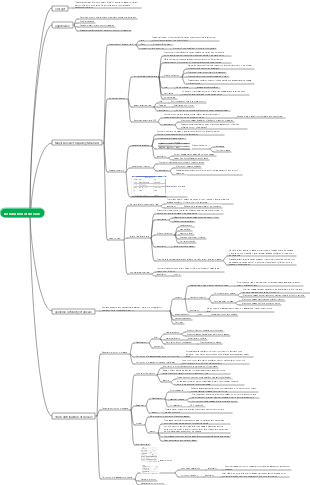
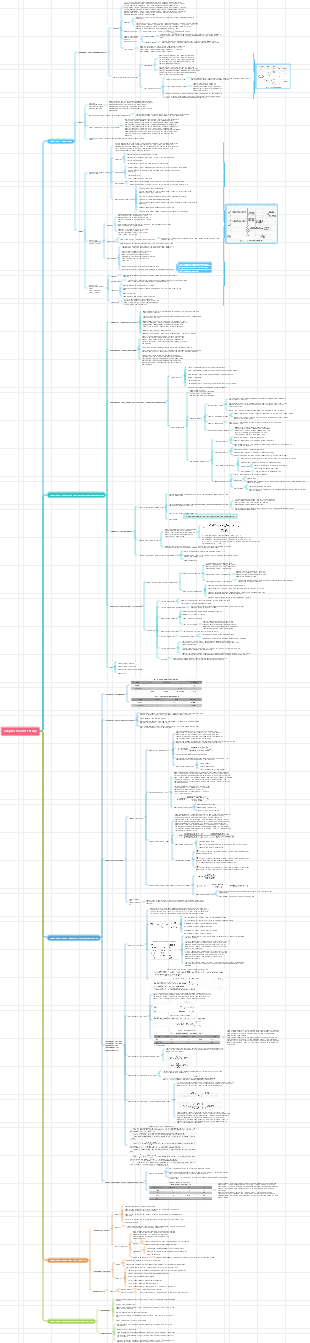
MindMap Gallery Epidemiology Ninth Edition Chapter 4 Descriptive Research
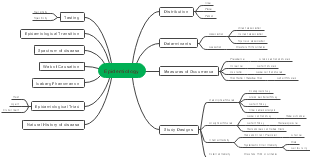
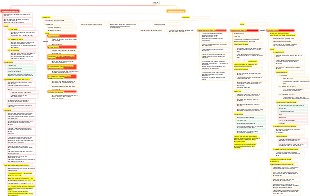
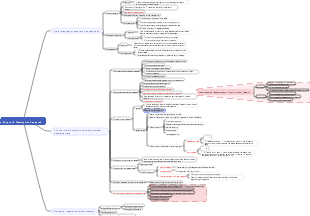
This is a mind map about descriptive research in Chapter 4 of the Ninth Edition of Epidemiology. Descriptive research refers to using existing data or data obtained through special investigations (including laboratory test results) to describe diseases or Three-dimensional distribution characteristics of health status, and then obtain etiological clues and propose etiological hypotheses.
Edited at 2023-12-19 20:28:25Avatar 3 centers on the Sully family, showcasing the internal rift caused by the sacrifice of their eldest son, and their alliance with other tribes on Pandora against the external conflict of the Ashbringers, who adhere to the philosophy of fire and are allied with humans. It explores the grand themes of family, faith, and survival.

This article discusses the Easter eggs and homages in Zootopia 2 that you may have discovered. The main content includes: character and archetype Easter eggs, cinematic universe crossover Easter eggs, animal ecology and behavior references, symbol and metaphor Easter eggs, social satire and brand allusions, and emotional storylines and sequel foreshadowing.
[Zootopia Character Relationship Chart] The idealistic rabbit police officer Judy and the cynical fox conman Nick form a charmingly contrasting duo, rising from street hustlers to become Zootopia police officers!
Avatar 3 centers on the Sully family, showcasing the internal rift caused by the sacrifice of their eldest son, and their alliance with other tribes on Pandora against the external conflict of the Ashbringers, who adhere to the philosophy of fire and are allied with humans. It explores the grand themes of family, faith, and survival.
This article discusses the Easter eggs and homages in Zootopia 2 that you may have discovered. The main content includes: character and archetype Easter eggs, cinematic universe crossover Easter eggs, animal ecology and behavior references, symbol and metaphor Easter eggs, social satire and brand allusions, and emotional storylines and sequel foreshadowing.
[Zootopia Character Relationship Chart] The idealistic rabbit police officer Judy and the cynical fox conman Nick form a charmingly contrasting duo, rising from street hustlers to become Zootopia police officers!
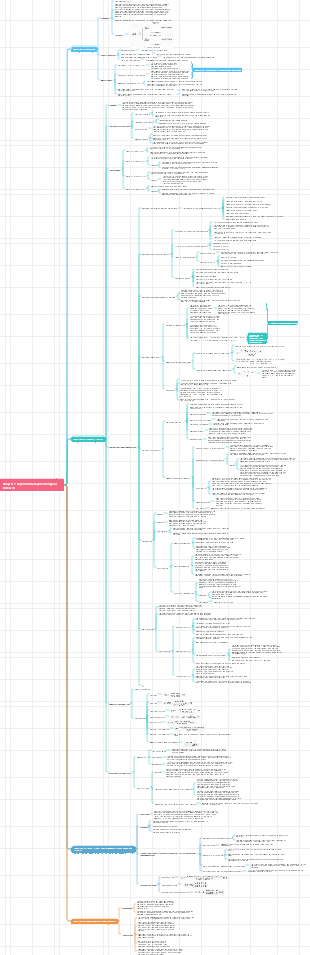
Chapter 4 Descriptive Research
Section 1 Overview
concept
Descriptive research refers to using existing data or data obtained through special investigations (including laboratory test results) to describe the distribution characteristics of diseases or health conditions, thereby obtaining clues to the cause and proposing cause hypotheses.
Features
Observation is the main research method, and no intervention measures are taken on the research subjects.
Exposures are not randomly assigned, and there is generally no control group at the beginning of the study
The temporal relationship between exposure and outcome cannot be determined, and there are certain limitations in causal inference of the relationship between exposure and outcome. However, some preliminary comparative analysis can be done to provide clues for subsequent research.
type
Case study
It refers to going to the scene of the disease to investigate the contact history of new cases, the disease or health status of family members and surrounding people, and the environmental factors that may be related to the disease.
Cases are generally patients with infectious diseases, but may also be patients with non-communicable diseases or patients with unknown causes.
It is an integral part of the daily processing of disease report registration work by the medical, health and disease prevention departments.
Case Reports
The main form of clinical research on a single case or a small number of cases of a rare disease, which belongs to the category of qualitative research
A detailed clinical report on the condition, diagnosis and treatment of a single case or the special circumstances or lessons learned in a single case or less than 5 cases
The scope of qualitative research
No need to describe the central tendency or dispersion of things
Provide researchers with clues for analysis and decision-making
case series analysis
It is to organize, count, analyze and draw conclusions from a group of clinical data (which can be several, dozens, hundreds or even thousands) of patients with the same disease.
Scope of retrospective research
Historical data analysis
Through retrospective investigation, we extract and utilize historical data such as daily work records, registrations, various daily reports, statistical tables, disease records and files of relevant institutions, further carry out statistical analysis, and finally obtain the research results.
Conventional methods for descriptive epidemiological research
It is an important source of data and information for studying the distribution characteristics of diseases, disease risk factors and evaluating the effects of disease prevention and control measures.
Current situation research
A method of investigating a certain disease or health condition and related factors among a specific range of people at a specific point in time or period.
Follow-up study
Through regular follow-up, observe the dynamic changes of diseases, health conditions or certain health events in a fixed population over time.
Differences from current research
Follow-up intervals and methods vary depending on the specific research content.
It can be used to study the natural history of a disease, provide clues to the cause of the disease, or to propose or test certain etiological hypotheses.
ecological research
application
Describe the three distributions of diseases or health conditions and the rules of their occurrence and development.
Obtain clues to the cause and propose a hypothesis of the cause
effect
Describe the distribution of diseases, grasp their patterns, provide clues to the causes and epidemic factors, and indicate research directions.
Provide scientific basis for formulating prevention and control strategies and measures
Evaluate the effectiveness of prevention and control measures
Section 2 Current situation survey (cross-sectional study)*
I. Overview
concept
Current situation investigation refers to investigating a certain disease or health status and related factors of a specific group of people at a certain point in time or within a short period of time through census or spot checks in accordance with pre-designed requirements, so as to describe the disease or health status and related factors. Distribution of health status and its relationship with related factors
In terms of time, the current situation survey is conducted within a specific period of time, that is, it is completed at a certain point in time or within a short period of time. It is like a section in the time dimension, so it is also called cross-sectional research.
Features
Control groups are generally not established during the design stage
Research purpose determines the research object
Determine the exposure and disease status of each individual in the study at a certain point in time
Compare according to exposure status or disease status, or explore the relationship between different variables at this point in time
specific time
For each individual in the group, the specific time point refers to may be different
Theoretically, the more concentrated this time should be, the better
Generally speaking, point-in-time prevalence is more accurate than period-based prevalence
Limitations in determining causation
Cause and effect coexist during investigation
Inability to determine the temporal sequence of a disease or health condition with certain characteristics or factors
Perform correlation analysis
Causal inferences can be made about exposure factors inherent to the research subjects
Conditions that use present exposures (characteristics) to replace or estimate past conditions
Exposure or exposure levels now correlate well with past conditions or have been shown to change little
The changing trend or pattern of the exposure level of the research factor is known, and this trend or pattern is used to estimate the past exposure level.
Recalling past exposure or exposure levels is highly unreliable, whereas current exposure levels can be used to estimate past exposure
Repeat regularly to obtain incidence data
The difference between the prevalence rates of the two current status studies is divided by the time interval between the two current status studies, which is the incidence rate in that period.
The time interval cannot be too long
The rate of change in incidence rates over time is modest.
The course of the disease is stable
Generally not used for diseases of short duration
Purpose
Three-dimensional distribution describing a disease or health condition at a specific time
Discover clues to the cause
It is suitable for the secondary prevention of diseases, using census or screening and other means to achieve the purpose of early detection, early diagnosis and early treatment.
Provide valuable information for evaluating the effectiveness of prevention and control measures
for disease surveillance
Provide basic information for research and decision-making
Scope of application
Applicable to
chronic disease
disease with certain detectable characteristics
health census
Not applicable to
acute illness
Research on rare diseases, such as some malignant tumors
2. Research Type
census
concept
In order to understand the health status of a certain group of people or the prevalence of a certain disease, or to establish a certain biological test standard, a survey is conducted on each member of the group of people within a certain range (a certain area or with certain characteristics) within a certain period of time, or examine
"Specific time" should be shorter, sometimes even refers to a certain point in time
"Specific scope" can refer to a certain unit or a certain residential area, or it can refer to a certain region or even the whole country.
Purpose
Early detection, early diagnosis, early treatment of certain diseases
Understand the distribution of diseases and health conditions
Understand the health level of local residents
Understand the normal value ranges of various biochemical indicators of the human body
Applicable conditions
Sufficient manpower, material resources and equipment are available for disease detection and timely treatment
The prevalence of the diseases surveyed is relatively high
The disease detection method is relatively simple and easy to implement, and the sensitivity and specificity of the test are high
Advantages and Disadvantages*
advantage
It can detect all cases in the population, detect and diagnose diseases early, comprehensively describe the distribution and characteristics of diseases, and popularize medical and health knowledge.
The distribution of multiple diseases or health conditions in the target population can be investigated simultaneously
more easily accepted by the public
There is no sampling error
shortcoming
The workload is large, the cost is high, the organization work is complicated, there are many staff members participating in the census, and the quality of the survey is difficult to control
The survey content is limited and is not suitable for diseases with very low prevalence and complex on-site diagnosis technology.
Due to the large number of census subjects and the short survey time, duplication and omissions are inevitable, and the non-response rate is high.
sample survey
concept
At a specific point in time and within a specific range of a certain group of people, a representative sample of individuals is selected according to a certain method for investigation and analysis, and the investigation of the sample reflects the overall situation.
Purpose
Sample statistics estimate the range of overall parameters, describing the distribution of a certain disease or health condition on population characteristics at a specific time and within a specific range and the factors that affect its distribution (mainly)
Measure the overall health level of the population
Assessing prevention and control effects
Checking and measuring the quality of data, that is, sampling surveys can often be used as a quality control method among other survey research methods.
Fundamental*
randomization principle
Each individual in the research population has an equal chance of being selected and forming a sample
The principle of appropriate sample size
The sample should reach a certain number. There are disadvantages if it is too large or too small.
Advantages and Disadvantages*
advantage
Save manpower, material resources and time
The survey scope is small and the survey accuracy is high.
System error is small
shortcoming
Design, implementation and data analysis are relatively complex
Duplications and omissions are difficult to detect
It is not suitable for data with large variation and situations that require census and treatment.
Not suitable for diseases with lower prevalence
Sampling method
Pure random sampling (simple random sampling)
method
From the population of N objects, use lottery or random number method to extract n objects to form a sample. Each object in the population has an equal probability of being drawn (n/N)
advantage
Simple; good representation
shortcoming
It is necessary to master the information of each individual, such as name, number, etc.
When individual differences are too large, a larger sample size is needed
Difficulty surveying large groups of people - survey subjects are scattered
Systematic sampling (mechanical sampling)
method
According to a certain order, one unit is mechanically selected every few units; assuming that the number of overall units is N and the number of samples to be investigated is n, the sampling ratio is n/N and the sampling interval is K=N/n
advantage
No need to know each individual information in advance; can be used for larger population surveys
Easy to carry out in crowds
Samples are drawn from units distributed in various parts of the population, and the distribution is relatively even.
Sampling error is smaller than pure random sampling
Better representative
shortcoming
May encounter errors caused by "cyclical" changes (the cause of bias)
cluster sampling
Directly select several groups (such as villages, neighborhood committees, classes, workshops, etc.) from the population as observation units to form samples.
What is drawn is not an individual, but a collective (that is, a group) composed of individuals. All individuals in the drawn group are included in the survey.
advantage
Easy to organize and implement, can save manpower and material resources
The smaller the difference between groups, the more groups are extracted, and the higher the accuracy.
shortcoming
The sampling error is large, so the sample size estimate is usually increased by 1/2 based on simple random sampling.
stratified sampling
First divide the population into several sub-populations (layers) based on certain characteristics, and then conduct simple random sampling from each layer to form a sample. This sampling method is called stratified sampling
advantage
Improve the accuracy of overall metric estimates
The error is smaller when the samples are the same
Classification
be divided in portion
The proportion of extraction in each layer is the same
optimal allocation
The sampling ratio of each stratum is different. The sampling ratio of strata with small content variation is small, and the sampling ratio of strata with large internal variation is large.
The sample mean or sample rate has the smallest variance
multi-stage sampling
The above methods are combined with each other
Implementation process: hierarchical sampling
advantage
Suitable for large population surveys
Good representativeness
shortcoming
Design and implementation are relatively complex
Before sampling, it is necessary to understand the demographic information and characteristics of survey units at all levels.
3. Investigation methods
Interview
The oldest and most commonly used data collection method
higher response rate
It costs a lot of manpower, material and financial resources, and is also time-consuming.
Letters and visits
advantage
Save manpower, material and financial resources
shortcoming
The response rate is not as high as face-to-face interviews, and quality control is difficult
Internet Survey
extremely low cost
telephone interview
Advantages of flexibility in face-to-face interviews
Advantages of saving effort and time in writing letters and visits
shortcoming
Limited by telephone penetration rate, simplified survey content, etc.
self-administered questionnaire
advantage
The investigator can provide necessary explanations for the questionnaire, the survey is centralized, it is easy to implement, and it saves time and effort.
shortcoming
The survey objects are relatively concentrated in a certain place
Have a certain level of education
Physical examination and laboratory tests
advantage
Obtain quantitative data
Pay attention to medical ethics issues and the impact of selection bias, measurement bias (observer, observed, instrument) and other factors
4. Design and Implementation*
Clarify the purpose of the investigation
Determine the objects of investigation
Determine investigation type and method
type
Census, sample survey
method
Face-to-face interviews, letters and visits, etc.
Estimated sample size*
Expected prevalence rate (p): positivity rate, infection rate, etc.
Allowable error (d): The allowable error between the positivity rate obtained from the survey and the expected positivity rate
Significance level (α): Determine the level of statistical significance
→Sample size (The sample size should be appropriate, neither too large nor too small is appropriate)
Simple random sampling to estimate the sample size formula of the population from the sample
Measurement data
counting data
When the prevalence rate is too small, such as <1%, you can refer to the Poisson distribution and check the Poisson distribution expected value confidence limit table to directly estimate the sample size required for the sampling survey.
Determine study variables and design questionnaire
Basic structure of questionnaire
Cover letter, instructions, questions and answers, coding and other materials
Key points of questionnaire design
Basic requirements for problem design
Number and structure of questions
question form
answer design
Pre-survey correction
data collection
Data compilation, analysis and interpretation of results
Double check original information for completeness and accuracy
Organize original data according to professional needs of health statistics and epidemiology
Understand the distribution type of data and perform appropriate data transformations
Calculate various rates, and calculate averages for quantitative data
Description, sample inference to the population
Calculate standardized rate
Apply the principles and methods of epidemiology, use classification, analysis, synthesis, comparison and various inductive reasoning methods to find differences, use single-factor and multi-factor analysis techniques to explore the regularity of diseases or health conditions, and propose etiological hypotheses.
5. Bias and its control
common bias
selection bias
non-response bias
The respondent is uncooperative or unable or unwilling to participate for various reasons
Selection bias (sampling bias)
Failure to strictly follow the randomization principle in sampling or subjective selection of research subjects, resulting in the sample deviating from the population
survivorship bias
The survey subjects are all survivors, and the subjects who died cannot be surveyed, so they cannot fully reflect the actual situation.
information bias
Bias caused by respondents
When asking survey respondents relevant questions, their answers are inaccurate due to various reasons.
Investigator bias
The investigator consciously investigates objects with certain characteristics while paying little attention to or carelessly investigating other objects that do not possess certain characteristics.
measurement bias
Refers to inaccurate measurement tools and inspection methods, non-standard inspection technical operations, etc., or measurement bias caused by careless work.
Control Method
Strictly comply with the sampling method requirements and ensure the principle of randomization
Improve the compliance, examination rate, and response rate of research subjects
Correct selection of measurement tools and detection methods
Train investigators, unify standards and awareness
Carry out review and review of information
Choose the right statistical analysis method to identify confounding factors
6. Advantages and Disadvantages
advantage
The research results have strong promotion significance
There is a naturally occurring contemporaneous control group from the same population so that the results are comparable
Able to observe multiple factors simultaneously
shortcoming
Estimating exposure and disease status at the same time point makes it difficult to determine the time-phase relationship between antecedents and consequences.
Incidence data not available
It is difficult to provide a correct distribution for acute non-fatal or rapidly fatal diseases.
Research subjects may be in the preclinical or remission stages and be misjudged as normal.
Section 4 Ecological Research
1. Concepts and basic principles
concept
It uses groups as the basic unit to collect and analyze data, describe the exposure of certain factors and the frequency of certain diseases in different groups at the group level, and study the relationship between certain factors and certain diseases.
Features
The most basic characteristic: group as unit
Can initially explore the relationship between exposure to certain factors and diseases in the population
Unable to know the relationship between individual exposure and effects
It is a way to explore clues to the cause of the disease
2. Purpose and methods
Purpose
Generate etiological hypotheses based on comparison and analysis of the exposure to a certain factor and the frequency of a certain disease in the population
Comparatively analyze the implementation of a certain intervention measure and the frequency of a certain disease in the population, and evaluate the effect of a certain intervention measure in the population
method
ecological comparative study
Observe the distribution of a certain disease or health condition in different groups or regions, and then explore the reasons for the differences based on the differences in the distribution of diseases or health conditions in different regions or groups during the same period, and propose etiological hypotheses.
Ecological Trend Research
Continuously observe the relationship between changes in the average exposure level (or intervention) and changes in the frequency of a certain disease or health condition in a group, understand its change trend, and judge the exposure by comparing changes in the frequency of the disease or health condition before and after the change in exposure level association with a disease or health condition
3. Main uses
Provide clues to the cause and generate hypotheses about the cause
By studying the frequency of a certain disease or health condition and the exposure status of a certain factor in the population, we can provide clues to the cause, thereby providing a basis for the establishment of etiological hypotheses.
Evaluate the effectiveness of an intervention or field experiment
monitor
Estimating the prevalence trend of a certain disease or health condition to provide a basis for formulating countermeasures and measures for disease prevention and control
4. Advantages and Limitations
advantage
Use conventional or ready-made data for research, saving time, manpower, material and financial resources
Providing clues for etiological research on diseases of unknown etiology (most significant advantage)
Ecological research is the only way to study variables where individual exposure doses cannot be measured (such as the relationship between air pollution and lung cancer) and exposure studies where the variability in the population is small and difficult to measure (such as the relationship between fat intake and breast cancer). Alternative research methods
Suitable for evaluation of population-based interventions
When the exposure factor under study has a small range of variation in a population, ecological studies comparing multiple populations are suitable.
Can estimate the incidence trend of a certain disease
limitation
ecological fallacy
Unable to know the relationship between individual exposure and effect (disease or health condition)
Unable to control for suspected confounders
Lack of data on joint distribution of exposures and outcomes
The exposure levels in the relevant information are only approximations or average levels and do not represent the actual exposure of individuals.
Lack of ability to control for suspected confounders
When there is a non-linear relationship between exposure factors and disease, it is difficult for ecological studies to draw correct conclusions