MindMap Gallery Market competition strategy market challenger strategy
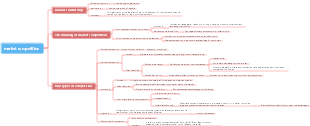
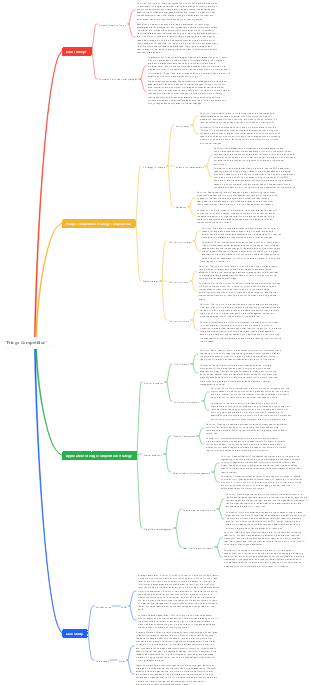
This is a mind map about market competition strategy: market challenger strategy. Market challengers refer to companies that occupy the second and subsequent positions in the industry, have the ability to take offensive actions against market competitors and other competitors, and hope to seize the market leader position.
Edited at 2022-10-13 10:40:51This Valentine's Day brand marketing handbook provides businesses with five practical models, covering everything from creating offline experiences to driving online engagement. Whether you're a shopping mall, restaurant, or online brand, you'll find a suitable strategy: each model includes clear objectives and industry-specific guidelines, helping brands transform traffic into real sales and lasting emotional connections during this romantic season.

This Valentine's Day map illustrates love through 30 romantic possibilities, from the vintage charm of "handwritten love letters" to the urban landscape of "rooftop sunsets," from the tactile experience of a "pottery workshop" to the leisurely moments of "wine tasting at a vineyard"—offering a unique sense of occasion for every couple. Whether it's cozy, experiential, or luxurious, love always finds the most fitting expression. May you all find the perfect atmosphere for your love story.
The ice hockey schedule for the Milano Cortina 2026 Winter Olympics, featuring preliminary rounds, quarterfinals, and medal matches for both men's and women's tournaments from February 5–22. All game times are listed in Eastern Standard Time (EST).
This Valentine's Day brand marketing handbook provides businesses with five practical models, covering everything from creating offline experiences to driving online engagement. Whether you're a shopping mall, restaurant, or online brand, you'll find a suitable strategy: each model includes clear objectives and industry-specific guidelines, helping brands transform traffic into real sales and lasting emotional connections during this romantic season.
This Valentine's Day map illustrates love through 30 romantic possibilities, from the vintage charm of "handwritten love letters" to the urban landscape of "rooftop sunsets," from the tactile experience of a "pottery workshop" to the leisurely moments of "wine tasting at a vineyard"—offering a unique sense of occasion for every couple. Whether it's cozy, experiential, or luxurious, love always finds the most fitting expression. May you all find the perfect atmosphere for your love story.
The ice hockey schedule for the Milano Cortina 2026 Winter Olympics, featuring preliminary rounds, quarterfinals, and medal matches for both men's and women's tournaments from February 5–22. All game times are listed in Eastern Standard Time (EST).
Market Challenger Strategy
concept
1. Market challengers and market followers refer to those enterprises that are in a secondary position (second, third or even lower position) in the market.
2. Enterprises in a secondary position can adopt two strategies:
① Market challenger: Strive for market leadership and challenge competitors.
②Market followers: Be content with a secondary position and seek as much profit as possible in a state of "coexistence".
Determine strategic goals and challenges
1. Challengers can choose between three situations:
① Attack the market leader:
a. This kind of attack is risky, but also very attractive.
b. Challengers need to carefully investigate the weaknesses and mistakes of the leading industry; what are the unmet needs and what dissatisfies customers.
c. Find the weaknesses and mistakes of the leader and use them as targets for your own attacks.
② Attack those whose strength is equal to one's own: For some enterprises that are evenly matched with one's own, challengers can choose those that are poorly managed and suffer losses to attack and try to seize their market position.
③ Attack local small businesses: For some local small businesses that are poorly managed and have financial difficulties, challengers can seize their customers or even the small businesses themselves.
2. The strategic goal depends on the target of the attack. If the target is a dominant player, the target may be to capture certain market shares; if the target is small businesses, the target may be to drive them out of the market.
3. If you want to launch an offensive or challenge, you must abide by a military principle: every military operation must be directed toward a clear, certain and attainable goal.
Choose an offensive strategy
1. Type of offensive strategy:
① Frontal attack:
a. A frontal attack means concentrating all efforts to launch an attack on the opponent's main market position, that is, attacking the opponent's strengths rather than weaknesses.
b. In this case, the attacker must greatly surpass the opponent in major aspects such as product, advertising, price, etc. to be successful, otherwise this offensive strategy cannot be adopted.
c. The outcome of a frontal attack depends on the balance of strength between the two sides.
d. Another measure of frontal attack is to invest a large amount of research and development funds to reduce product costs, thereby launching an attack on opponents by lowering prices. This is one of the most reliable foundations for a sustained frontal attack strategy.
e. This frontal attack strategy involving price and cost reduction is widely used by Japanese and Korean companies.
②Flanking attack:
a. A flank attack is to concentrate superior forces to attack the opponent's weaknesses. Sometimes, a strategy of "attacking in the east and attacking in the west" can be adopted, pretending to attack the front, and actually attacking the side or rear.
b. Can be divided into two situations:
Geographical flank attack: that is, looking for weak areas of the opponent's strength throughout the country or the world and launching attacks in these areas.
Segmented flanking attack: that is, looking for market segments that have not been served by leading companies and quickly filling the gaps in these small markets.
c. Flanking is consistent with modern marketing concepts—finding a need and trying to satisfy it.
d. A flank attack is also the most effective and economical form of strategy and has a greater chance of success than a frontal attack.
③Encirclement attack: It is an all-round, large-scale offensive strategy. The challenger can adopt this strategy when it has better resources than its opponent and is convinced that the completion of the encirclement plan is enough to defeat the opponent.
④ Roundabout attack: This is an indirect attack strategy that completely avoids the opponent's existing positions and attacks in a roundabout way. There are three specific methods:
a. Develop unrelated products and implement industrial diversification.
b. Enter the market in new regions with existing products and implement market diversification.
c. Develop new technologies and new products to replace existing products.
⑤Guerrilla attack:
a. This is a strategy mainly suitable for small and weak enterprises.
b. The purpose of guerrilla attack is to disrupt the opponent's morale with small, intermittent attacks in order to gain a permanent foothold.
c. Small businesses are unable to launch frontal attacks or effective flank attacks. Only by launching guerrilla-style promotions or price announcements in certain corners of their larger rivals' markets can they gradually weaken their rivals' strength.
d. Nor can we think that guerrilla warfare is only suitable for small businesses with insufficient financial resources. Continuous guerrilla attacks will also require large investments.
e. If you want to reach your opponent, you cannot achieve your goal through guerrilla warfare alone, and you need to launch a more powerful offensive.
2. The offensive strategies of market challengers are diverse. It is impossible for a challenger to use all these strategies at the same time, but it is also difficult to achieve success by relying on one strategy alone.
3. Usually a set of strategic combinations, that is, overall strategies, is designed to improve one's market position.
4. Not all secondary companies can serve as challengers. If you are not fully sure, you should not rush to attack the leader. It is better to follow rather than challenge.