MindMap Gallery Fringe Competition
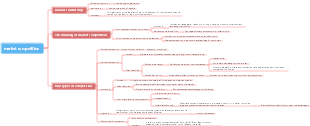
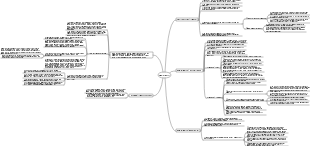
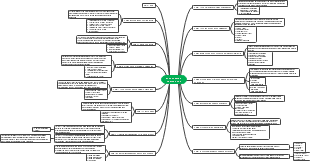
This is a mind map about "Edge Competition", which mainly includes: case analysis, application of edge competition strategy, composition of edge competition strategy, and core concepts.
Edited at 2025-02-19 17:21:12This template shows the structure and function of the reproductive system in the form of a mind map. It introduces the various components of the internal and external genitals, and sorts out the knowledge clearly to help you become familiar with the key points of knowledge.
This is a mind map about the interpretation and summary of the relationship field e-book, Main content: Overview of the essence interpretation and overview of the relationship field e-book. "Relationship field" refers to the complex interpersonal network in which an individual influences others through specific behaviors and attitudes.
This is a mind map about accounting books and accounting records. The main contents include: the focus of this chapter, reflecting the business results process of the enterprise, the loan and credit accounting method, and the original book of the person.
This template shows the structure and function of the reproductive system in the form of a mind map. It introduces the various components of the internal and external genitals, and sorts out the knowledge clearly to help you become familiar with the key points of knowledge.
This is a mind map about the interpretation and summary of the relationship field e-book, Main content: Overview of the essence interpretation and overview of the relationship field e-book. "Relationship field" refers to the complex interpersonal network in which an individual influences others through specific behaviors and attitudes.
This is a mind map about accounting books and accounting records. The main contents include: the focus of this chapter, reflecting the business results process of the enterprise, the loan and credit accounting method, and the original book of the person.
"Fringe Competition"
Core concept
Fringe Competition Theory
Definition: The theory of marginal competition points out that enterprises need to accurately find a balance between stability and change, constantly explore in continuous adjustment and change, and then gain competitive advantages to adapt to the complex and changeable market environment. It breaks through the dependence of traditional strategic theory on a stable environment and emphasizes that enterprises should develop in dynamic changes.
Background: Against the backdrop of rapid development of technology, accelerated market globalization, and increasingly diversified consumer demand, the market environment has become highly complex and full of uncertainty. Traditional strategic theory emphasizes long-term planning and stable execution, and it is difficult to cope with a rapidly changing market. Enterprises urgently need new strategic thinking to guide development, and marginal competition theory emerged. For example, the rise of the Internet industry has caused many traditional companies to face huge challenges. The original strategic plans cannot adapt to the rapidly changing market demand, prompting companies to seek new strategic paths.
Comparison with traditional strategies
Characteristics of traditional strategies: Traditional strategies focus on in-depth prediction and analysis of market trends, formulate relatively fixed strategic goals and detailed plans, emphasize long-term planning and stable implementation, and pursue the sustainable development of enterprises in a stable environment. For example, some traditional manufacturing companies will formulate a 5-10-year long-term strategic plan to produce and sell it around the established product line and market positioning.
Edge competitive advantage: Edge competitive strategies are more flexible and adaptable, and can quickly respond to market changes. Through continuous experimentation and adjustment of strategies, companies can seize market opportunities in a timely manner, avoid falling into trouble due to sudden market changes, and maintain competitiveness in a dynamic environment. Taking sharing economy enterprises as an example, they can quickly adjust their business models and operational strategies according to market demand and policy changes and quickly adapt to market changes.
Fringe competitive strategy composition
A strategy for change
Improvisation
Definition: Improvisation refers to the fact that the enterprise makes quick response and decisions based on actual conditions without sufficient preparation, and makes full use of existing resources to solve problems. This requires companies to have keen insight and quick decision-making skills.
Application: In the e-commerce industry, every promotional event, such as "Double 11", e-commerce companies may face emergencies such as logistics congestion and sudden changes in consumer demand. At this time, companies need to quickly adjust product portfolio and price strategies, such as increasing inventory of popular products, launching limited-time discounts, etc., to cope with market changes.
Adapt to mutual adaptation
Definition: Mutual adaptation emphasizes the mutual adaptation and coordinated development of each department, link within the enterprise, and between the enterprise and the external environment to form an organic whole. Collaborative cooperation within the enterprise can improve work efficiency and enhance the enterprise's ability to respond to changes in the external environment.
Application: In automobile manufacturing enterprises, the R&D department needs to optimize product design based on market feedback and the actual production capacity of the production department. The production department should adjust the production process according to the design of the R&D department, and the sales department should formulate marketing strategies based on product characteristics and market needs. All departments should cooperate with each other to jointly promote the development of the enterprise.
Recreation
Definition: Reengineering refers to redesigning and transforming the business processes, organizational structure, management models, etc. of the enterprise to adapt to the new market environment and competitive requirements. Reengineering is usually a major reform measure taken by enterprises when facing major market transformation or their own development bottlenecks.
Application: Under the impact of e-commerce, traditional retail enterprises will re-plan their business processes, integrate online and offline channels, and at the same time adjust their organizational structure and set up special online operation departments and data analysis departments to adapt to the new market competition environment.
Stable strategy
The rhythm of change
Definition: The pace of change requires enterprises to grasp the timing and speed of change, avoid excessive change or lag in change, and enable enterprises to achieve sustainable development on a stable basis. This requires companies to have accurate judgments and grasp of market changes.
Application: When Internet companies launch new functions or new versions, they will make reasonable arrangements based on the pace of technological development and user needs change. For example, after sufficient testing and market research, WeChat will launch new chat functions and mini-program applications in a timely manner, which will neither update too frequently and cause users to be inadequate, nor will it not be able to update for a long time and lag behind competitors.
The rhythm of time
Definition: The rhythm of time refers to the enterprise using time factors and taking different strategic actions at different stages to achieve effective allocation of enterprise resources and achieve strategic goals. Enterprises need to reasonably arrange strategic actions based on factors such as product life cycle and market development stage.
Application: During the introduction period of smartphone products, enterprises will focus on market promotion, invest a lot of resources for advertising and market expansion, and improve product visibility; in the mature stage, enterprises will strengthen cost control and service optimization, and maintain market competitiveness by reducing production costs and improving service quality.
The rhythm of order
Definition: The rhythm of order requires enterprises to establish and maintain order and rules within the enterprise, ensure that various business activities are carried out in an orderly manner, and at the same time adjust order in a timely manner according to market changes. A perfect management system and process guarantees the normal operation of the enterprise.
Application: Manufacturers will strictly implement the quality control process, from raw material procurement, production and processing to product inspection, there are clear standards and specifications in each link. At the same time, enterprises will adjust production plans and inventory management according to changes in market demand, such as increasing production during the peak season of market demand and appropriately reducing inventory during the off-season.
Application of edge competition strategy
Product Innovation
Quick iteration
Definition: Rapid iteration refers to the company's continuous improvement and upgrading of products to meet the changing needs of consumers and maintain the competitiveness of products. In a rapidly changing market environment, rapid product iteration can keep companies at the forefront of the market.
Application: Taking Internet software products as an example, software companies will fix vulnerabilities, add new functions, and improve user experience through frequent updates. For example, Alipay has continuously launched new payment scenarios and convenient service functions, and has gradually developed from the initial online payment tool to a comprehensive platform covering a variety of services such as life payment, financial management, and travel.
Continuous improvement
Definition: Continuous improvement is to continuously optimize and improve slightly based on the existing product, and gradually improve product quality and performance. Continuous improvement focuses on detailed optimization, which can continuously improve the competitiveness of products.
Application: In the field of automobile manufacturing, automobile manufacturers continue to optimize engine performance and body design, and reduce automobile energy consumption and improve safety and comfort by improving parts and materials, optimizing production processes, etc. For example, Toyota Automobile continuously improves the production process and continuously improves the fuel economy and reliability of the automobile.
Market expansion
Open up new markets
Definition: Opening up new markets means that the company seeks new market opportunities, enters new regions or customer groups, and expands the company's market share. Exploring new markets can bring new growth space to enterprises.
Application: E-commerce companies promote products and services to international consumers by expanding overseas markets. For example, Amazon continues to expand its business worldwide, enters e-commerce markets in different countries and regions, and meets the needs of consumers in different regions through localized operations and logistics distribution.
Deep cultivation of market segments
Definition: Deep cultivation of the segmented market refers to the enterprise segmenting the existing market, providing personalized products and services for specific segmented markets, and improving customer satisfaction and loyalty. Deeply cultivating the segmented market can meet the personalized needs of different consumers and enhance the competitiveness of enterprises in specific markets.
Application: Cosmetics companies launch subdivided product series for people of different skin types, ages and consumer needs. For example, oil control series products for oily skin, moisturizing series products for dry skin, and anti-wrinkle and whitening series products for different age groups can meet the personalized needs of different consumers.
Organizational management
Flexible organizational structure
Definition: Flexible organizational structure refers to the establishment of a flexible and variable organizational structure that can quickly adjust according to business needs and market changes, and improve the organization's resilience. A flexible organizational structure can break down departmental barriers and achieve flexible allocation of resources.
Application: Internet companies often adopt project-based or matrix-based organizational structure. For example, when developing a new Internet product, the company will set up a cross-departmental project team, with members coming from different departments such as R&D, design, marketing, and operations, breaking the boundaries between departments and achieving efficient integration and flexible allocation of resources.
Talent training and motivation
Definition: Talent cultivation and motivation refer to the company cultivating talents with innovation and adaptability, establishing an effective incentive mechanism, and stimulating employees' enthusiasm and creativity. Excellent talents and reasonable incentive mechanisms are the source of driving force for corporate innovation and development.
Application: The company provides employees with rich training and development opportunities, such as internal training courses, external learning opportunities, etc., to encourage employees to continuously learn and improve themselves. At the same time, an innovation reward system is established to provide material and spiritual rewards to employees who propose innovative ideas and solutions to stimulate their enthusiasm for innovation.
Case Study
Success stories
Apple
Strategic application: In terms of product innovation, Apple continues to launch innovative products, such as the continuous upgrade of iPhone. Through rapid iteration and continuous improvement, consumers' demand for smartphone functions and experiences are constantly meeting, and from the initial multi-touch technology to the later facial recognition technology, it has always led the industry's development. In terms of market expansion, Apple has continuously explored the global market and launched different models of products for different consumer groups. For example, the iPhone SE series is aimed at the mid- and low-end markets to meet the needs of different consumers. In terms of organizational management, Apple focuses on talent training and motivation, has an innovative team, attracting top technology and design talents in the world.
Competitive advantages reflect: With its strong brand influence, excellent product quality and innovation capabilities, Apple occupies a leading position in the global smartphone market, achieving high profits and market share. Its brand value ranks among the best in the world, and its high added value and market recognition make it an industry benchmark.
Failure cases
Kodak
Strategic Mistakes: When digital photography technology emerged, Kodak failed to adjust its strategy in time and relied too much on traditional film business. The pace of change is slow, and the pace of time and the timing of market changes are not grasped. In terms of organizational management, Kodak failed to transform in a timely manner, its internal organizational structure was rigid, and its collaboration between departments was not smooth, so it was unable to adapt to market changes. For example, Kodak has insufficient investment in the research and development of digital photography technology and has made mistakes in judging market trends, resulting in a gradual lag in the competition in the digital camera market.
Lesson summary: Enterprises must keep up with market changes, adjust their strategies in a timely manner, and maintain flexibility and adaptability. We must establish a flexible organizational structure, promote internal communication and collaboration, and avoid being eliminated by the market due to strategic mistakes and organizational rigidity. At the same time, enterprises should dare to innovate, be brave to change, and actively adapt to the new market environment and technological development trends.