MindMap Gallery Market Competitive Strategy Competitor Analysis
The industrial market, also called the producer market or industrial market, is composed of individuals or organizations that purchase goods and services and use them to produce other goods and services for sale or lease to other people. It has the characteristics of a small number of buyers and a large scale, large demand fluctuations in the producer market, and generally inelastic demand in the producer market. It plays an important role in the development of the national economy.
Edited at 2022-10-13 10:35:56Avatar 3 centers on the Sully family, showcasing the internal rift caused by the sacrifice of their eldest son, and their alliance with other tribes on Pandora against the external conflict of the Ashbringers, who adhere to the philosophy of fire and are allied with humans. It explores the grand themes of family, faith, and survival.

This article discusses the Easter eggs and homages in Zootopia 2 that you may have discovered. The main content includes: character and archetype Easter eggs, cinematic universe crossover Easter eggs, animal ecology and behavior references, symbol and metaphor Easter eggs, social satire and brand allusions, and emotional storylines and sequel foreshadowing.
[Zootopia Character Relationship Chart] The idealistic rabbit police officer Judy and the cynical fox conman Nick form a charmingly contrasting duo, rising from street hustlers to become Zootopia police officers!
Avatar 3 centers on the Sully family, showcasing the internal rift caused by the sacrifice of their eldest son, and their alliance with other tribes on Pandora against the external conflict of the Ashbringers, who adhere to the philosophy of fire and are allied with humans. It explores the grand themes of family, faith, and survival.
This article discusses the Easter eggs and homages in Zootopia 2 that you may have discovered. The main content includes: character and archetype Easter eggs, cinematic universe crossover Easter eggs, animal ecology and behavior references, symbol and metaphor Easter eggs, social satire and brand allusions, and emotional storylines and sequel foreshadowing.
[Zootopia Character Relationship Chart] The idealistic rabbit police officer Judy and the cynical fox conman Nick form a charmingly contrasting duo, rising from street hustlers to become Zootopia police officers!
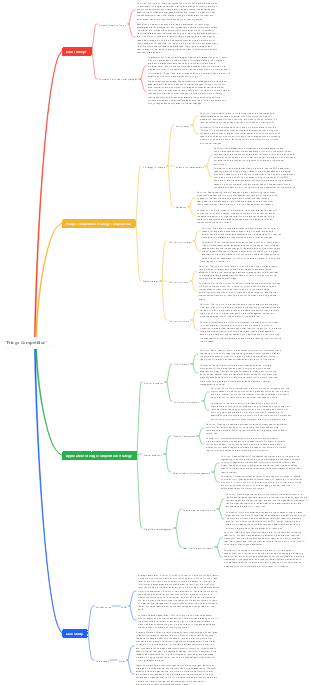
competitor analysis
The company's competitive positioning
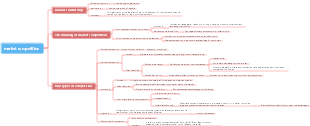
1. After conducting market analysis, enterprises must also clarify their position in the competition in the same industry, and then formulate market competition strategies based on their own goals, resources and environment, as well as their position in the target market.
2. Modern marketing theory divides enterprises into four types based on their competitive position in the market: market leaders, market challengers, market followers, and market fillers.
Choose the countermeasures that the company should take: After the company has identified its main competitors and analyzed the competitors' strengths, weaknesses, and reaction patterns, it must decide its own countermeasures; who to attack and who to avoid.
1. Strength of competitors: Most companies believe that weaker competitors should be the target of attacks, because this can save time and resources, get twice the result with half the effort, but make less profit. On the contrary, some companies believe that they should target stronger competitors because this can improve their competitiveness and make greater profits, and even the strong ones will always have disadvantages.
2. The degree of similarity between competitors and the company: Most companies advocate competing with similar competitors, but at the same time believe that they should avoid destroying similar competitors because the results may be detrimental to themselves.
3. How well competitors perform:
a. Sometimes the existence of competitors is necessary and beneficial to the enterprise and has strategic significance.
b. Competitors may help increase total market demand, share the costs of market development and product development, and help legitimize new technologies. Competitors provide products for less attractive market segments, which may lead to product differentiation. Increased competitiveness; finally, competitors can also strengthen the company's bargaining power with government managers or employees.
c. Businesses do not view all competitors as beneficial. Because there are usually two types of competitors in every industry: good performers and disruptive ones.
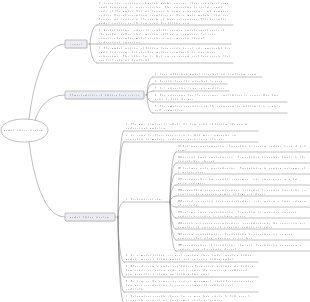
Competitors that perform well act according to industry rules and set prices at reasonable costs, which is conducive to the stability and healthy development of the industry; they encourage other companies to reduce costs or increase product differentiation; they accept reasonable market share and profit levels.
Destructive competitors do not abide by industry rules. They often take desperate risks or use unfair means to expand market share, thus disrupting the industry's equilibrium.
d. Competitors in each industry have good and bad performance, and those who perform well try to form an industry with only good competitors. By issuing licenses, choosing mutual relationships and other means, they try to limit the marketing activities of competitors in the industry to a coordinated and reasonable range, abide by industry rules, expand market share through their own efforts, and cooperate with each other in the combination of marketing factors. Maintain a certain degree of differentiation so that there is less direct conflict
4. In order to grasp competitor intelligence timely and accurately, companies need to establish a competitive intelligence system in addition to analyzing competitors according to the above steps. Specific steps:
a. Establish a system: This system must first clarify the main intelligence needed by marketing managers and what its best sources are.
b. Collect data: Salespeople, dealers and agents, market consulting agencies and relevant associations, as well as relevant newspapers and magazines, etc., can all become sources of intelligence.
c. Evaluation and analysis: Analyze and evaluate the collected data, make necessary explanations, and organize and classify them.
d. Dissemination and response: Immediately send intelligence materials to relevant management departments of the enterprise through phone calls, reports, correspondence, memos, announcements, etc.
Identify your business's competitors
1. Competitors: refer to other companies that provide similar products or services to the company and serve similar target customers.
2. The company has a wide range of actual competitors and potential competitors.
3. Judging from the practice of modern market economy, an enterprise is likely to be eaten up by potential competitors rather than the current main competitors.
4. Competitors of an enterprise can usually be identified from two aspects: industry and market.
① Concept of industrial competition:
a. From an industrial perspective, enterprises that provide the same type of products or products that can be substituted for each other constitute an industry.
b. If the price of one product increases, it will cause an increase in the demand for another substitute.
c. If an enterprise wants to be in a favorable position in the entire industry, it must fully understand the competition model of the industry to determine the scope of its competitors.
②Market competition concept:
a. From a market perspective, competitors are companies that meet the same market needs or serve the same target market.
b. Analyzing competitors from a market perspective can enable companies to broaden their horizons and see more clearly their actual and potential competitors, which is beneficial to companies in formulating long-term development plans.
5. The key to identifying competitors is to combine product segmentation and market segmentation from both industry and market perspectives and consider them comprehensively.
Determine competitors’ goals and strategies
1. After determining who the company’s competitors are, it is necessary to further clarify what goals and strategies each competitor pursues in the market, and what is the motivation for each competitor’s behavior.
2. It can be assumed that all competitors strive to maximize urban profits and act accordingly.
3. Each enterprise has different emphasis on short-term profits or long-term profits.
4. Some companies pursue "satisfactory" profits rather than "maximum" profits. They are satisfied as long as they reach the set profit targets. They will not consider other strategies even if they can win more profits.
5. Competitor’s goals:
①Each competitor has a different set of goals with a different focus.
② Enterprises must understand what the key goals of each competitor are in order to correctly estimate how they will respond to different competitive behaviors.
③The differences in competitors' goals will all be reflected in their business models.
④American companies can generally pursue a short-term profit maximization model to operate, because their current performance is evaluated by shareholders. If short-term profits decline, shareholders may lose information and sell their stocks, causing the company's cost of capital to rise.
⑤ Japanese companies generally operate according to the model of maximizing market share. The cost of capital for Japanese companies is much lower than that of the U.S. market, so they can set a few lower and show greater patience in market penetration.
6. Competitors’ strategies:
①The more similar the strategies adopted by each enterprise, the more intense the competition between them.
②In most industries, competitors can be divided into different strategic groups based on the main strategies adopted.
③According to the division of strategic groups, two points can be summarized:
a. The difficulty of entering each strategic group varies. Generally, small enterprises are suitable to enter groups with lower investment and reputation, because such groups are easier to break into; while large enterprises with strong strength can consider entering groups with strong competition.
b. When an enterprise decides to enter a certain strategic group, it must first clarify who its main competitors are, and then decide on its own competitive strategy.
④ In addition to fierce competition within the same strategic group, there is also competition between different strategic groups. because:
a. Certain strategic groups may have the same target customers.
b. Customers may not be able to tell the difference between products of different strategic groups.
c. Enterprises belonging to a certain strategic group may change their strategies and enter another strategic group.
⑤ Enterprises need to estimate the strengths and weaknesses of competitors and understand whether competitors' intelligence in implementing various established strategies has achieved expected goals.
⑥When looking for competitive disadvantages, pay attention to discovering mistakes in competitors' judgments about the market or themselves.
Determine competitors' market reactions
1. A competitor's goals, strategies, strengths and weaknesses determine its response to market competition strategies such as price cuts, promotions, and new product launches.
2. In order to estimate competitors' reactions and possible actions, corporate marketing managers must have a deep understanding of competitors' thoughts and beliefs.
3. When a company takes certain measures and actions, competitors will react differently.
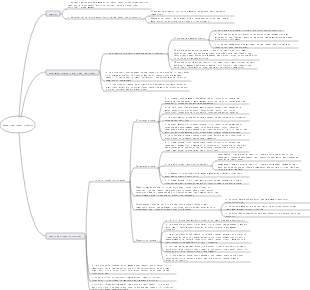
① Calm and leisurely competitors: Some competitors do not respond strongly and act slowly. The reason may be that they believe that customers are loyal to their products; they may not pay enough attention and fail to discover the new measures of their opponents; they may also be unable to make considerable changes due to lack of funds. Reaction.
②Selective competitors: Some competitors may react strongly in some aspects but ignore other aspects because they think it is not a big threat to them.
③ Fierce competitors: Some competitors respond quickly and strongly to attacks from any aspect, and peer companies avoid direct confrontation with them.
④ Random competitors: Some companies have elusive response patterns. They may or may not take action on specific occasions, and it is impossible to predict what actions they will take.