MindMap Gallery Pilates mind map
This is a mind map about Pilates, a comprehensive and effective form of exercise suitable for people of all ages. It improves the body's flexibility, strength and balance, improves posture and appearance, and increases self-confidence.
Edited at 2024-02-19 21:39:19This is a mind map about bacteria, and its main contents include: overview, morphology, types, structure, reproduction, distribution, application, and expansion. The summary is comprehensive and meticulous, suitable as review materials.
This is a mind map about plant asexual reproduction, and its main contents include: concept, spore reproduction, vegetative reproduction, tissue culture, and buds. The summary is comprehensive and meticulous, suitable as review materials.
This is a mind map about the reproductive development of animals, and its main contents include: insects, frogs, birds, sexual reproduction, and asexual reproduction. The summary is comprehensive and meticulous, suitable as review materials.
This is a mind map about bacteria, and its main contents include: overview, morphology, types, structure, reproduction, distribution, application, and expansion. The summary is comprehensive and meticulous, suitable as review materials.
This is a mind map about plant asexual reproduction, and its main contents include: concept, spore reproduction, vegetative reproduction, tissue culture, and buds. The summary is comprehensive and meticulous, suitable as review materials.
This is a mind map about the reproductive development of animals, and its main contents include: insects, frogs, birds, sexual reproduction, and asexual reproduction. The summary is comprehensive and meticulous, suitable as review materials.
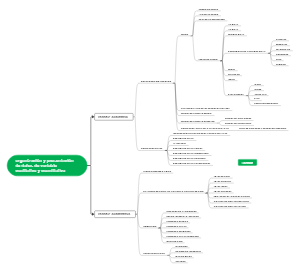
Pilates
concept
narrow sense
The Pilates couple jointly created more than 500 movements, including mat exercises and machine movements.
broad sense
It is a whole-body coordination exercise that mainly exercises the deep small muscles of human beings, maintains and improves the appearance of normal posture, achieves body balance, develops the range of activities and mobility of the trunk and limbs, emphasizes the control of core muscles, and strengthens the human brain. Nerve sensing and control of limbs and skeletal muscle tissue, coupled with correct breathing methods
benefit
improve posture
Improvement of leg shape (X-shaped legs, O-shaped legs), forward and backward pelvic tilt, scoliosis, hunchback, rounded shoulders
Improve muscle mass
Improve deep muscle control
Helps with strength training
Improved control, body stability, and muscle mass
lose weight
body balance
Find your body's balance
Chronic diseases of the muscles and bones
Relevant improvement of cervical spine, lumbar spine, pelvis, and knees; auxiliary improvement of cardiovascular and cerebrovascular diseases, diabetes, etc.; fractures, sports injuries, and postoperative rehabilitation training
history
Joseph Hubertus Pilates
Date of birth: 1883
Place of birth: Dusseldorf, Germany
Have suffered from rheumatic fever, asthma, rickets
Life: Emigrated to England in 1912 In 1914 World War I was brought to Lancaster and the mat movement was created Cadillac was created to help bedridden patients during the 1918-1919 influenza outbreak. In the early 1920s, he met Rudolf Von Laban, the founder of Laban dance music, and Mary Wiaman, the founder of expressionist dance, and incorporated the Pilates mat exercise system into dance movements. In 1925, he met Clara, who later became Pilates’ wife. She was the most loyal supporter and promoter of the Pilates movement. Established "Cybernetics" studio in 1926 Promoted its unique training method and invented the universal sliding bed Reformer, Wunder Chair, Cadillac, Ladder Barrel, and Spine Corrector. In 1966, a fire broke out in the studio. During the rescue, he accidentally fell and inhaled a large amount of smoke, causing pneumonia. He lost his life the following year at the age of 84.
Differences from other fitness exercises
Most other fitness exercises only physically strengthen the muscles, bones, and cardiovascular system in isolation.
Pilates takes into account the development of strength and flexibility, coordination and balance, and requires core control and correct bone alignment.
What it has in common with yoga
Both are physical and mental fitness courses, which have the effect of relaxing the body and mind.
Both require high concentration, concentration, and coordination of body and mind
Both emphasize the importance of breathing coordination
All are required to practice barefoot as much as possible
Both have mat courses and assistive equipment courses
The basic principle
breathe focus center control Accurate Smooth Core-to-body link Balanced muscle development holistic development Relax and free
attention balance breathe concentrated control core efficiency Smooth harmonious precise
principles of movement
breathe Neutral spine and pelvis extension of central axis core control Segment-by-segment movement of spinal joints Correct alignment of posture and bones
breathe core activation neutral position Strengthen the abdomen Lumbar and pelvic stabilization Strengthening and flexibility of the spine scapula stability correct alignment Relax stretch
Five elements of breathing
intercostal breathing
Breathing for Pilates, also known as lateral breathing Suitable for: all sports, all people Method: Inhale through nose and exhale through mouth
Unilateral intercostal breathing
Suitable for people: People with unilateral muscle tone imbalance
nasal breathing
Also known as pump breathing Suitable for the crowd: People who exercise vigorously Note: Rapid and rapid breathing may cause respiratory alkalosis. Pay attention to the duration of movements and take appropriate rest.
back breathing
Suitable for the crowd: People with low back pain Method: Place a small ball on the chest or abdomen or hip, rest your head on your forearms, or kneel, extend your hands forward, put your head on the ground, inhale slowly, and feel the expansion of your waist and back
abdominal breathing
diaphragmatic breathing Suitable for: Breathing patterns in quiet conditions Method: The diaphragm is fixed and contracted, the central tendon descends, the abdomen bulges, the upper and lower vertical diameter of the thorax changes, and the resulting breathing
neutral position
Lying on your back
In the preparatory pose with knees bent, the upper and lower legs are bent at 90 degrees, and the back of the neck, the midpoint of the shoulders, and the sacrum are in a straight line
Lying on side
Rest your head on your forearms, raise your legs slightly, and leave space in your armpits and waist
prone
Keep your head straight, look straight, tighten your abdomen, and keep your legs straight
sitting position
Find the torso from the ischium, with the head, thorax and hips in a straight line
four legs
The head, upper back, and sacrum are in a straight line, the insteps are straight, and the head and shoulders, arms and body, hips, and thighs are all at 90 degrees.
Standing posture
The shoulder, hip, and knee joints are in a straight line
Six core muscle groups (core muscle groups)
Pelvic floor muscles, multifidus, quadratus lumborum, iliopsoas, transversus abdominis, diaphragm
outer core system
Anterior oblique system: serratus anterior, internal oblique, external oblique, adductors
Posterior oblique system: latissimus dorsi, contralateral gluteus maximus
Longitudinal system: erector spinae, quadratus lumborum, thoracolumbar fascia, sacrotuberous ligament, biceps femoris
Lateral oblique system: gluteus medius, gluteus minimus, adductors
anatomical plane
sagittal plane
forward and backward movements, flexion and extension
level
Horizontal movement, external rotation, internal rotation
coronal plane
Left and right movement, abduction, adduction
The main joint activity directions and movement terms of the human body
Head and neck: flexion/extension, lateral flexion, rotation Spine: flexion/extension, lateral flexion, rotation Pelvis: forward/backward tilt, side tilt, rotation Scapula: lift/press down, pull forward/retract, rotate up/down Shoulder joint: flexion/extension, abduction/adduction, external rotation/internal rotation, horizontal abduction/horizontal adduction Elbow joint: flexion/extension Forearm: pronation/supination Wrist joint: flexion/extension, abduction/adduction Hip joint: flexion/extension, abduction/adduction, external rotation/internal rotation Knee joint: flexion/extension Calf: internal rotation/external rotation (knee flexion position) Ankle joint: flexion/extension, foot inversion/foot eversion
bone
80 pieces of axial bone
29 pieces of skull
51 trunk bones
1 piece of sternum
12 pairs of ribs
1-7 real ribs
8-10 false ribs
11-12 floating ribs
26 vertebrae
Cervical vertebra 7, C1-C7
Thoracic vertebra 12, T1-T12
Lumbar vertebra 5, L1-L5
Sacrum 1, S
Coccyx 1, CO
126 appendicular bones
64 upper limb bones
Shoulder blade 2
clavicle 2
Humerus 2
Ulna 2
Radius 2
Hand bones 54
62 lower limb bones
hip bone 2
femur 2
Fibula 2
Tibia 2
Patella 2
Foot bones 52
muscle
back muscles
Superficial layer: trapezius, latissimus dorsi, levator scapulae, rhomboids
Middle layer: superior serratus posterior muscle, inferior serratus posterior muscle
Deep (back extensor muscles)
longus dorsi
Dorsi brevis: interspinalis, intertransverse process, levator costa, suboccipital
chest muscles
chest and upper limb muscles
pectoralis major, pectoralis minor, serratus anterior
Thoracic proper muscles (respiratory function)
external intercostal muscles, internal intercostal muscles, transversus pectoralis muscles
Abdominal muscles
Transversus abdominis, internal oblique, external oblique, rectus abdominis, quadratus lumborum, diaphragm, psoas major
thigh muscles
anterior muscle group
quadriceps
rectus femoris
vastus intermedius
vastus lateralis
vastus medialis
Sartorius muscle
tensor fascia lata
posterior muscle group
hamstrings
biceps femoris
semimembranosus
semitendinosus
medial muscles
pectineus muscle
adductor brevis
Adductor longus, adductor magnus, gracilis
calf muscles
anterior muscle group
Superficial layer: Tibialis anterior muscle
Deep layer: extensor digitorum longus, extensor digitorum longus
posterior muscle group
Superficial layer: gastrocnemius, soleus, plantaris
Deep layers: tibialis posterior, flexor digitorum longus, flexor digitorum longus, popliteus
Respiratory muscles
main inspiratory muscles
Diaphragm, external intercostal muscles, levator costalis muscle
accessory inspiratory muscles
sternocleidomastoid, scalene, sternohyoid, sternothyroid, pectoralis major, pectoralis minor, serratus posterior superior
main expiratory muscles
Internal intercostals, external obliques, internal obliques, rectus abdominis, transversus abdominis, transversus thoracis
accessory expiratory muscles
subcostal, quadratus lumborum, serratus posterior inferior
rotator cuff muscles
tendon cuff
Supraspinatus, infraspinatus, teres minor, subscapularis
deltoid muscle
teres major