MindMap Gallery Baidu Pilates
Specialized action: Lie on your back on the floor, relax your neck, and maintain the natural curvature of your spine. Inhale for 5 beats, exhale slowly for 5 beats, and at the same time contract your abdomen and lift your upper body.
Edited at 2022-05-23 15:23:40This is a mind map about bacteria, and its main contents include: overview, morphology, types, structure, reproduction, distribution, application, and expansion. The summary is comprehensive and meticulous, suitable as review materials.

This is a mind map about plant asexual reproduction, and its main contents include: concept, spore reproduction, vegetative reproduction, tissue culture, and buds. The summary is comprehensive and meticulous, suitable as review materials.
This is a mind map about the reproductive development of animals, and its main contents include: insects, frogs, birds, sexual reproduction, and asexual reproduction. The summary is comprehensive and meticulous, suitable as review materials.
This is a mind map about bacteria, and its main contents include: overview, morphology, types, structure, reproduction, distribution, application, and expansion. The summary is comprehensive and meticulous, suitable as review materials.
This is a mind map about plant asexual reproduction, and its main contents include: concept, spore reproduction, vegetative reproduction, tissue culture, and buds. The summary is comprehensive and meticulous, suitable as review materials.
This is a mind map about the reproductive development of animals, and its main contents include: insects, frogs, birds, sexual reproduction, and asexual reproduction. The summary is comprehensive and meticulous, suitable as review materials.
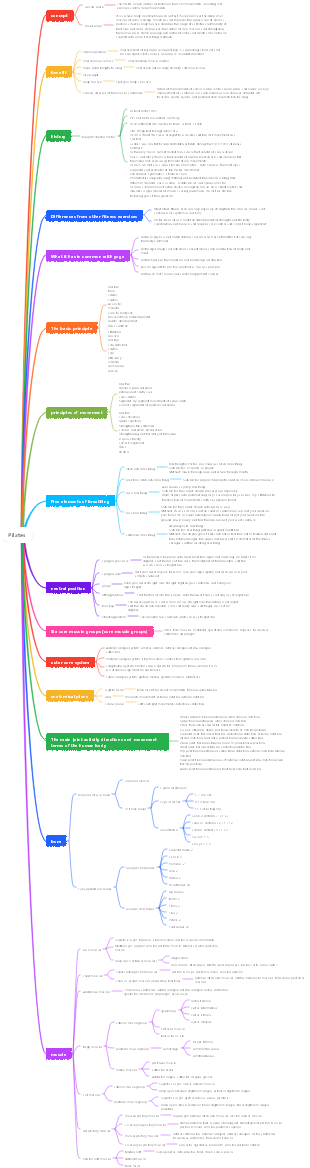
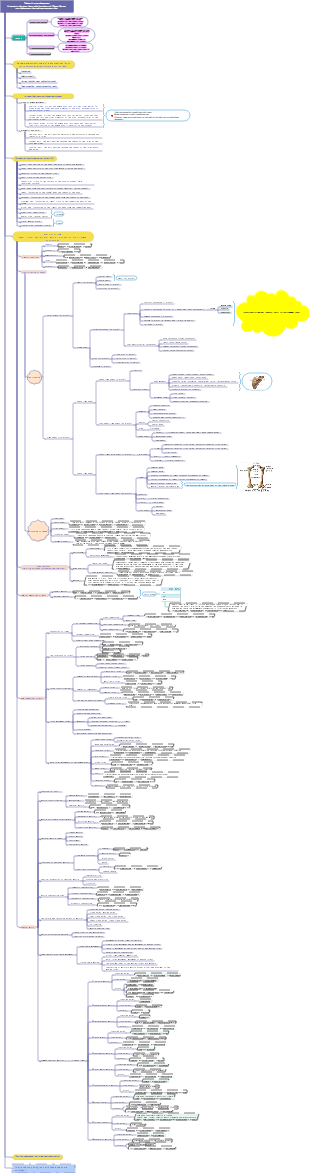
Pilates
Chapter 1·A brief introduction to Pilates
Founder of Pilates
English abbreviation: Pilates (/Pilates Method)
Founder: German Joseph Hubertus Pilates
Name: An exercise method and skill named after the surname "Pilates", alias: "Contrology"
Skills: Pilates created this set of unique training movements and sports skills during his lifetime.
Pilates exercise in a narrow sense
Scope: The Pilates couple created more than 500 moves in total, as well as moves on the mat and studio equipment Mr. Pilates invented.
General Pilates exercise
Concept: A whole-body coordinated exercise using correct breathing methods
Efficacy: Unique and magical combination exercise system therapy
1. Maintain and improve the appearance of normal activity postures
2. To maintain body balance
3. Develop the range of movement and ability of the trunk and limbs
4. Emphasis on core muscle control
5. Strengthen the human brain’s nerve sensing and control of limbs and skeletal muscle tissue
Chapter 2·Origin of Pilates
The history of Pilates
In 1883, Mr. Pilates was frail and sickly since he was a child. He was determined to strengthen his body and studied a variety of exercise therapies. He exercised continuously and became strong at the age of 14. After that, he gradually formed a systematic exercise therapy through practice.
In 1912, 32-year-old Joseph Pilates moved to England and used Pilates' unique and effective exercise therapy to help a large number of prisoners recover during World War I, which attracted public attention. .
In 1926, the Pilates couple established the Pilates studio to provide targeted sports rehabilitation therapy training for famous dancers, actors, and athletes. Due to its remarkable effects, it became well-known in the United States and gradually became more popular in the United States. It has been recognized and affirmed by countries and all walks of life around the world.
Around 1960, Mr. Pilates and his wife still ran the studio by teaching in person, and the studio was still run at the original location by his main student, Ms. Romana Kryzanowska.
Pilates classes
Introduction: Pilates is a course that soothes the muscles throughout the body and improves the body’s trunk control ability.
Pilates Personal Training Session: A personal training session conducted by an instructor to correct a specific injury, muscle imbalance, or other physical problem
Pilates group training course: It is specially designed for people who work in the office. Their muscle development is imbalanced due to working at desks and computers for long periods of time. This course mainly targets the abdominal muscles, hip muscles, shoulders, and back. Muscle training of other parts.
Benefits of exercising Pilates: Regular Pilates exercises can correct body posture, relax the waist and neck, solve shoulder problems, and tighten loose muscles in the arms and abdomen. Particularly professional athletes also use Pilates exercises. to avoid sports injuries.
Chapter 3·Characteristics of Movement
Blending Eastern and Western Movements
Oriental flexibility: training that focuses on breathing and mind concentration, meditation, yoga and tai chi are good examples
Western fortitude: focuses on the training of body muscle capabilities, such as waist, abdomen, back, chest, etc.
Pilates combines the best of both worlds into one:
Suitable for the crowd: The overall movements are slow and clear, and each posture must be coordinated with breathing, so Pilates is suitable for any age, especially those who lack exercise, need to be in contact with computers for a long time, and those who work 9 to 5
Special features: Stretching and lengthening are also one of the most important exercises in Pilates. Its characteristic is that the muscles will not become thick after exercise.
Core part: stretching, waist and abdominal muscle composition, including transverse abdominis, internal oblique, external oblique, rectus abdominis, erector spinae) exercises to make the spine soft and flexible, so Pilates exercise not only It improves the body lines and has a very good effect on correcting the neck and spinal cord.
Sports safety
Movement speed: It is relatively gentle and static movement, causing almost no damage to joints and muscles.
Combining movement and stillness: allowing the body to be both tense and relaxed, changing steps and adjusting the breath during meditation, which makes it easier for exercisers to control their bodies and reduces the negative effects caused by incorrect postures
Exercise equipment: Pilates uses very simple equipment to give your body a comprehensive workout
Exercise environment: As long as there is a quiet space and a soft carpet, you can practice and achieve the union of body and mind.
Emphasis on control processes in movement
Exercise intensity: It is not particularly high, but it emphasizes control, stretching and breathing. It has a very good effect on shaping the waist, abdomen, buttocks and other key parts of women, and is more suitable for women's physical beauty requirements in real life.
Simple exercise: The biggest feature of Pilates is that it is simple and easy to learn. Not only does the movement be gentle, but it can also be used to exercise the arms, chest and shoulders in a purposeful manner, and at the same time it can enhance the flexibility of the body.
Exercise restrictions: Exercise is not restricted by the location of the activity. It can be practiced in a professional gym or in the living room.
Light equipment exercises: follow the principle of small weight and multiple reps to make the muscles full of elasticity without making the muscles become too prominent and combined.
Chapter 4·Notes
Accurate action
correct posture
Keep proper strength concentrated in the abdomen and back so that the muscles can support the spine
Strong abdominal muscles form a "strength zone" that supports the spine
When the abdomen and back are properly raised and other muscles strengthened, the entire body reaches its natural and ideal state
good breathing
It is carried out with the mind, body and spirit, which can make the physical and spiritual stress of the practitioner disappear.
Inhale as you push (your abs are stretched) and exhale as you tighten your abs.
natural artistic conception
It requires harmony between the mind and spirit, mental decompression, and mental concentration before it can be completed naturally during Pilates exercises.
specialized actions
Action 1: Lie on your back on the floor, relax your neck, and maintain the natural curvature of your spine. Inhale for 5 beats, exhale slowly for 5 beats, and at the same time contract your abdomen and lift your upper body.
Action 2: Lie on your back on the floor, contract your abdomen, and lift your feet off the ground. Your back needs to be as close to the ground as possible while your neck is relaxed. When exhaling, lift your neck and lift your head off the ground, while lifting your knees closer to your upper body.
Action 3: Lie face down on your stomach. Push your head and heart forward, and sink your shoulders. Contract your abdominal muscles to lift your belly button off the floor. You must maintain this position throughout the entire movement. Inhale and lift your head, arms and chest off the ground, and tighten your back muscles. After exhaling, slowly lower it. While exhaling, keep your upper body still and lift your legs off the ground to a height where your back muscles are not overly tense.
Action 4: Place your hands on the ground in a push-up position. Tighten your abdomen and buttocks, keep your body and trunk in a straight line, and stay still for 20 seconds. Gently move the trunk up and down in the center of the body, lift and lower it, and repeat this 12 to 15 times.
Action 5: Take a push-up position, the same as the first half of Action 4. Lift your left leg and exhale at the same time without moving the hip joint. Note that the contraction of the abdominal muscles must be used to drive the leg raising movement. Inhale as you lower your left leg, and exhale as you raise your right leg. Make sure your hips don't move and your back is straight. Also lower your shoulders and extend your neck as much as possible. Gently lift and lower your legs alternately, maintaining an even speed. These actions can be practiced 2 to 3 times in a cycle.
Precautions
The route of family expansion in China is unilineal - patrilineal. A community formed according to this monolineal kinship principle is called a clan.
The family structure includes the family, and the smallest family can also be equated with the family.
functions of clan
Fertility function
The clan is also a business organization with complex political, economic, religious and other functions.
The main axis of a Western family is the couple, while the couple in a Chinese family is the secondary axis. The main axis is between father and son, mother-in-law and daughter-in-law, which is vertical rather than horizontal.
In China, both the main axis and the secondary axis are deprived of ordinary emotions because of the family's career. Family law, women's three obediences and four virtues, responsibility and obedience between parents and children, etc. are all characteristics that are generated by career efficiency.