MindMap Gallery Overview of bacteria
This is a mind map with an overview of bacteria. The main contents include: the size and shape of bacteria, the physical properties of bacteria, and the cellular structure of bacteria.
Edited at 2024-03-10 15:05:49This is a mind map about bacteria, and its main contents include: overview, morphology, types, structure, reproduction, distribution, application, and expansion. The summary is comprehensive and meticulous, suitable as review materials.
This is a mind map about plant asexual reproduction, and its main contents include: concept, spore reproduction, vegetative reproduction, tissue culture, and buds. The summary is comprehensive and meticulous, suitable as review materials.
This is a mind map about the reproductive development of animals, and its main contents include: insects, frogs, birds, sexual reproduction, and asexual reproduction. The summary is comprehensive and meticulous, suitable as review materials.
This is a mind map about bacteria, and its main contents include: overview, morphology, types, structure, reproduction, distribution, application, and expansion. The summary is comprehensive and meticulous, suitable as review materials.
This is a mind map about plant asexual reproduction, and its main contents include: concept, spore reproduction, vegetative reproduction, tissue culture, and buds. The summary is comprehensive and meticulous, suitable as review materials.
This is a mind map about the reproductive development of animals, and its main contents include: insects, frogs, birds, sexual reproduction, and asexual reproduction. The summary is comprehensive and meticulous, suitable as review materials.
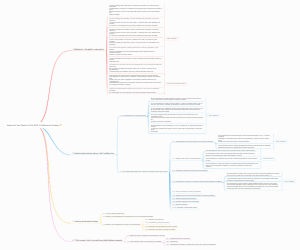
Overview of bacteria
1||| Bacterial size and shape
mark
size of bacteria
Bacteria are tiny, usually measured in microns (um)
An optical microscope is commonly used to observe its size, and a micrometer can also be used to measure its size under a microscope.
Bacterial morphology
cocci (spherical)
diplococci
The cells of diplococci divide on a plane, and after division the two cocci are arranged in pairs
Examples: Neisseria meningitidis and Neisseria gonorrhoeae
Streptococcus
Streptococcus cells divide on a plane, and after division, multiple cells adhere to form a chain.
For example: beta-hemolytic streptococci
staphylococcus
The cells of Staphylococcus aureus divide on multiple irregular planes. After division, the cells stick together irregularly, like grapes.
For example: Staphylococcus aureus
Tetragenococcus
The cells of Tetracoccus divide on two mutually perpendicular planes. After division, the four cells stick together and form a square shape.
For example: Gaffia tetragenus
Sarcina
The cells of Sarcina divide on three mutually perpendicular planes. After division, the eight cells adhere to form a wrapped cube.
For example: Sarcina luteus
Bacilli (rod-shaped)
coccobacillus
Bacilli are short, approximately spherical, and are called coccobacilli.
For example: Pasteurella multocida
Mycobacteria
Bacilli form side branches or branches
Example: Mycobacterium tuberculosis
Spiral bacteria (spiral-shaped)
Category: Vibrio, spirillum, campylobacter
Influencing factors: temperature, pH value, medium composition and culture time
2||| physical properties of bacteria
Optical properties
Bacteria are translucent. When light irradiates bacteria, part of the light is absorbed and part of the light is refracted, so the bacterial suspension becomes turbid. The more bacteria there are, the greater the turbidity. The number of bacteria can be roughly estimated using turbidimetry or a spectrophotometer. , and can also observe the morphology and structure of bacteria through phase contrast microscopy
surface area
Bacteria are single-celled microorganisms with small size and large relative surface area, which are conducive to their exchange of materials with the outside world and vigorous metabolic activities.
Charging phenomenon
50% to 80% of the solid content of bacteria is protein, and protein is composed of zwitterionic amino acids. Bacteria have a low charging point (PH2~3 for Gram-positive bacteria and PH4~5 for Gram-negative bacteria) and are negatively charged in a near-neutral or weakly alkaline environment. It is closely related to its bacterial staining reaction, agglutination reaction, bacteriostatic and bactericidal effects, etc.
semipermeable
Both the bacterial cell wall and cell membrane are semipermeable, allowing water and some small molecular substances to pass through, which is beneficial to the absorption of nutrients and the excretion of metabolites.
permeability
Bacteria contain high concentrations of organic substances and inorganic salts and have high osmotic pressure
The osmotic pressure of Gram-positive bacteria is as high as 2026.5~2533.1kPa (20~25 atmospheres)
The osmotic pressure of Gram-negative bacteria is 506.6~608.0kPa (5~6 atmospheres)
3||| bacterial cell structure
basic structure of bacteria
cell wall
Main ingredients: peptidoglycan
Functions: ① Maintain cell shape; ② Inhibit mechanical and osmotic damage (the cell wall of Gram-positive bacteria can withstand a pressure of 20kg/cm²); ③ Mediate cell-to-cell interactions (invasion of the host); ④ Prevent macromolecule invasion; ⑤ Assists cell movement and division; ⑥ It has antigenicity and can stimulate the body’s immune response
Defective type (L-type bacteria)
refers to a mutation in bacteria that develops defects in the bacterial cell wall
cell membrane
The main function
Selective permeability: Bacterial cell membranes have selective permeability and can control the entry and exit of nutrients and metabolites into the cell.
Respiration: Various respiratory enzymes on the cell membrane of aerobic bacteria can transport electrons, complete oxidative phosphorylation, participate in the respiration process, and are related to the generation, storage and utilization of energy.
Biosynthesis: The cell membrane contains enzymes that synthesize a variety of substances. Many components of the cell wall (peptidoglycan, phosphate wall, lipopolysaccharide) and membrane phospholipids are synthesized on the cell membrane.
intermediary
Refers to a sac-like or tubular structure formed by invagination of the cell membrane, mostly seen in Gram-positive bacteria
cytoplasm
Main components: ribosomes, storage products, various enzymes and intermediate metabolites, various nutrients and monomers of macromolecules
microstructure
Ribosome: an oval particle composed of ribosomal RNA and protein
Plasmid: exists in the bacterial cytoplasm and is the genetic material outside the bacterial chromosome (chemical essence is closed circular double-stranded DNA)
Inclusions: A place where bacteria store energy and nutrients, in the form of cytoplasmic particles.
Nucleoplasm: Bacteria are prokaryotes, without nuclear membrane and nucleolus, and have an amorphous nucleus. Their chromosomes are mostly concentrated in a certain area of the cytoplasm.
The special structure of bacteria
capsule
Chemical composition: polypeptide or polysaccharide
Functions: ① Anti-phagocytosis: The capsule can effectively resist phagocytosis by host phagocytes due to its hydrophilicity, space-occupying and barrier effects; ② Adhesion: Capsular polysaccharides can cause bacteria to adhere to each other and to The surface of tissue cells or inanimate objects is an important factor causing infection; ③ Resistance to damage by harmful substances: The capsule is the outermost layer of bacterial cells, which can effectively protect the bacteria from or be less susceptible to a variety of bactericidal and bacteriostatic substances. Damage; ④ Anti-desiccation effect: Capsular polysaccharides are highly hydrated molecules with a water content of more than 95%, which can help bacteria resist the threat of dryness to survival; ⑤ When there is a lack of nutrients, the capsule can be used as a carbon source and energy source, which is beneficial The capsule can also serve as a nitrogen source
flagellum
Chemical composition: protein, called flagellin; highly immunogenic, called flagellar antigen
Role: Flagellar antigens can be used to identify bacteria or classify bacteria
pili
Ordinary pili: spread on the surface of the bacterial body, the number can reach hundreds or more, very thin; have adhesion effect
Sexual pili; found only in a few Gram-negative bacteria; as genetic material
spores
Concept: The cytoplasm of certain bacteria is dehydrated and concentrated under certain conditions, forming round or oval bodies with multi-layered membranes and low permeability inside the bacteria.
Reasons for strong resistance: ① The spores have a multi-layered dense thick film structure, which is difficult for physical and chemical factors to penetrate; ② The moisture content of the spores is low (about 40%), and the protein is not easily denatured after being heated; ③ The core and cortex of the spores contain a large amount of Picolidinedicarboxylic acid, which combines with calcium to form salts that can improve the thermal stability of various enzymes in spores
The most effective way to kill spores: high-pressure steam sterilization
Methods for morphological examination of bacteria
Inspection of unstained specimens: Place unstained specimens directly under a microscope to observe the dynamics, size, morphological outline and reproduction methods of bacteria. Commonly used pressure drop method or hanging drop method, dark field microscope or phase contrast microscope are used to observe the effect. will be better
staining method
Single dyeing method
Counterstaining
Gram stain
Steps: smear fixation, primary staining, mordant staining, destaining and counterstaining
Practical significance: ① Identify bacteria; ② Select drugs; ③ Analyze pathogenic substances
acid fast staining
Special dyeing method