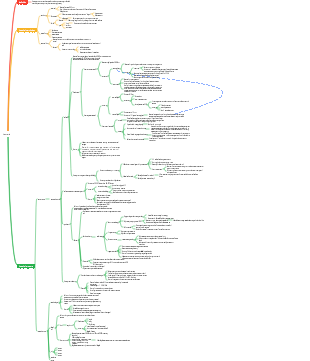
MindMap Gallery 2-4 Bacteria Archaea Actinomycetes
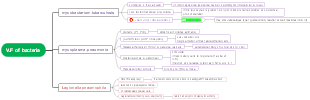
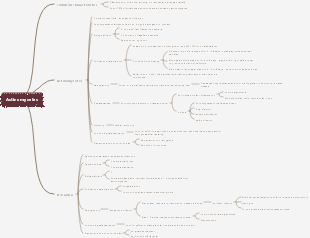
This is a mind map about 2-4 Bacteria, Archaea and Actinomycetes. They are branched filaments and Gram-positive bacteria. Most are saprophytic bacteria and a few are parasitic bacteria. They are the main producers of antibiotics. .
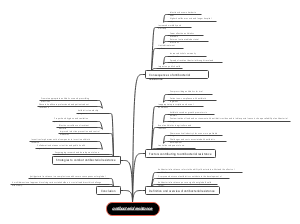
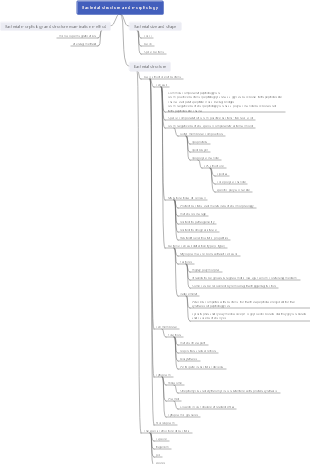
Edited at 2023-11-02 15:30:09This is a mind map about bacteria, and its main contents include: overview, morphology, types, structure, reproduction, distribution, application, and expansion. The summary is comprehensive and meticulous, suitable as review materials.

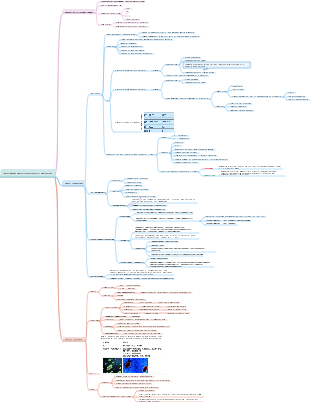
This is a mind map about plant asexual reproduction, and its main contents include: concept, spore reproduction, vegetative reproduction, tissue culture, and buds. The summary is comprehensive and meticulous, suitable as review materials.
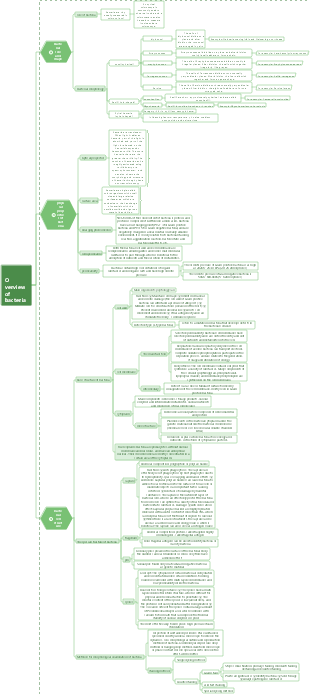
This is a mind map about the reproductive development of animals, and its main contents include: insects, frogs, birds, sexual reproduction, and asexual reproduction. The summary is comprehensive and meticulous, suitable as review materials.
This is a mind map about bacteria, and its main contents include: overview, morphology, types, structure, reproduction, distribution, application, and expansion. The summary is comprehensive and meticulous, suitable as review materials.
This is a mind map about plant asexual reproduction, and its main contents include: concept, spore reproduction, vegetative reproduction, tissue culture, and buds. The summary is comprehensive and meticulous, suitable as review materials.
This is a mind map about the reproductive development of animals, and its main contents include: insects, frogs, birds, sexual reproduction, and asexual reproduction. The summary is comprehensive and meticulous, suitable as review materials.
prokaryotic microorganism species
bacteria
Bacteria multiply
Mainly by fission, only a few species reproduce by budding
fission
Bacteria generally reproduce asexually, which is manifested by horizontal division of cells, called fission (mainly binary fission)
budding
Refers to a method of reproduction in which a small protrusion is first formed on the surface of the mother cell (especially at one end), and then separates from each other and lives independently after it grows to be similar to the mother cell.
All bacteria that reproduce in this way are collectively called blastobacteria.
bacterial division process
Nuclear division, formation of diaphragm → formation of transverse partition → separation of daughter cells
bacterial colony
concept
Bacteria grow and reproduce on solid media. Within a few days, one or several bacteria can divide and multiply to produce thousands of cells, which gather together to form a visible group called a colony.
pure culture
A colony is formed by the growth and reproduction of one bacterial cell
Actinomycetes
The morphology is branched filaments, Gram-positive bacteria, most of which are saprophytic bacteria, and a few are parasitic bacteria. They are antibiotics. The main bacteria that produce the hormone.
Mycelium classification
Basal hyphae/vegetative hyphae/primary hyphae
Grows in the medium or on the surface of the medium, and its main function is to absorb nutrients
Aerial hyphae/secondary hyphae
Mycelium grows from the hyphae in the base and extends into the space outside the culture base.
spore filaments
When the aerial hyphae grow and develop to a certain stage, the aerial hyphae differentiate into spore-forming hyphae.
When the spore filaments grow to a certain stage, they break into spores, or conidia.
Spore shape, surface structure, color, etc. are the basis for identification of actinomycete species.
Reproductive mode
asexual spores
Actinomycetes divide spore filaments into a cluster of conidia by producing a diaphragm.
any hyphal fragment
Actinomycetes can also use fragments of broken mycelium to form new mycelium. This phenomenon is common in liquid culture. This is how actinomycetes multiply during industrial fermentation to produce antibiotics. If cultured statically, a bacterial film often forms on the surface of the culture, and spores can also grow on the film.
cystospore
Some actinomycetes are coiled with hyphae to form sporangia, with transverse septa between them to produce spores. When the cysts mature, the spores are released. Cysts can be formed on aerial hyphae or on basal hyphae.
intrabasal hyphae breakage
When the vegetative hyphae of Nocardia become mature, they will suddenly produce bacillary, spherical or branched conidia with uniform shapes and sizes by dividing horizontally.
Colony characteristics
Actinomycete colonies are surrounded by radial hyphae
In solid culture media: (obviously different from bacteria) the colonies are dry, opaque, and have a dense velvety surface with a thin layer of colored "dry powder"; the colonies are closely connected to the culture medium and difficult to pick; the front and back of the colonies are often colored Inconsistency, and deformation of the agar plane at the edge of the colony, etc.
Main groups
Streptomyces, Micromonospora, Nocardia, Actinomyces, Swim Actinomyces, etc.
Archaea
concept
Archaea are a group of single-cell organisms with unique genetic structures or systems larger than the sequence of biological macromolecules
Classification
It is divided into five major groups: methanogenic archaea, extreme halophilic archaea, sulfate-reducing archaea, extreme thermophilic sulfur-metabolizing archaea, and cell wall-free archaea.
cell wall
Except for the thermoplasma group, which does not have a cell wall, all have cell walls.
Distinguish prokaryotic
① There is no complex peptidoglycan network structure, but a surface layer of protein or glycoprotein
②Does not contain muramic acid, D-amino acids and diaminopimelic acid, and is composed of pseudo-peptidoglycan (N-acetylglucosamine and N-acetyltaluronic acid as the backbone) with β-1,3-glycosidic bonds constitute
③Not affected by lysozyme hydrolysis and penicillin action
cell membrane
Contains isopentenyl ether but does not contain fatty acid esters. The fatty acids are branched straight chains.
other
①16S rRNA has a unique nucleotide sequence, and its base sequence and modifications are different from bacteria and eukaryotes; ②There is a gene transcription and translation system similar to eukaryotes; ③Insensitive to chloramphenicol, penicillin, and rifampicin , sensitive to cyclohexylamine and anisomycin, contrary to bacteria; ④ Often live in extreme environments or natural environments in the early stages of life
Basis for identification of bacterial species: colonies, pigments, spores