MindMap Gallery General Introduction to Surgery - Anesthesia
Organize and summarize the anesthesia part of the General Introduction to Surgery, with clear ideas
Edited at 2020-06-19 21:35:03This is a mind map about bacteria, and its main contents include: overview, morphology, types, structure, reproduction, distribution, application, and expansion. The summary is comprehensive and meticulous, suitable as review materials.
This is a mind map about plant asexual reproduction, and its main contents include: concept, spore reproduction, vegetative reproduction, tissue culture, and buds. The summary is comprehensive and meticulous, suitable as review materials.
This is a mind map about the reproductive development of animals, and its main contents include: insects, frogs, birds, sexual reproduction, and asexual reproduction. The summary is comprehensive and meticulous, suitable as review materials.
This is a mind map about bacteria, and its main contents include: overview, morphology, types, structure, reproduction, distribution, application, and expansion. The summary is comprehensive and meticulous, suitable as review materials.
This is a mind map about plant asexual reproduction, and its main contents include: concept, spore reproduction, vegetative reproduction, tissue culture, and buds. The summary is comprehensive and meticulous, suitable as review materials.
This is a mind map about the reproductive development of animals, and its main contents include: insects, frogs, birds, sexual reproduction, and asexual reproduction. The summary is comprehensive and meticulous, suitable as review materials.
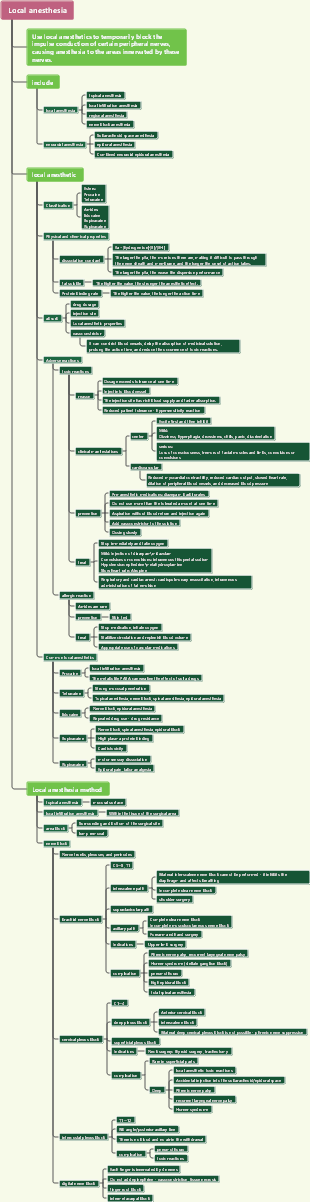
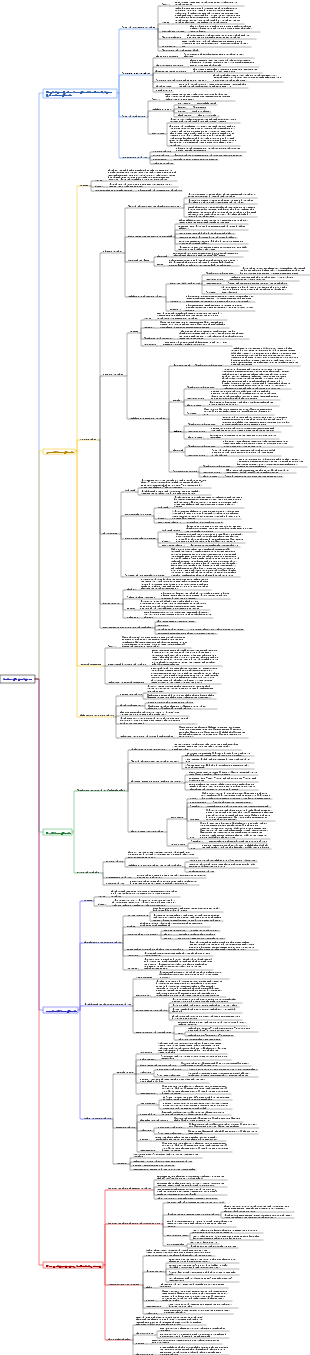
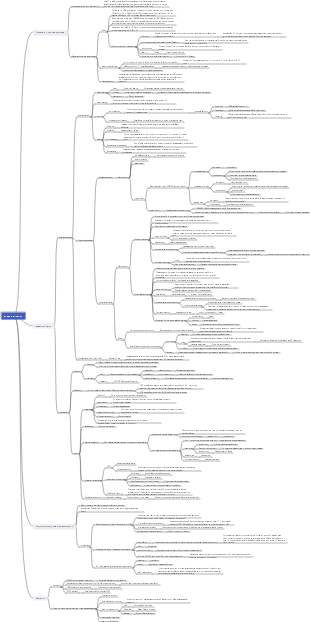
General Introduction to Surgery - Anesthesia
Preparation and medication before anesthesia
Prepare
①Beta blockers-that day/180 100/Avoid the use of central antihypertensive drugs and enzyme inhibitors ②Stop smoking for two weeks, fasting blood sugar <8.3/lower urine sugar and negative urine ketone bodies ③No solids and non-breast milk for 6 hours , fasting on high fats and meats for 8 hours/ fasting on solid non-breast milk for 6 hours for newborns and 4 hours on breast milk
Medication
①Purpose: Eliminate the patient's nervousness, enhance the effect of general anesthetics, reduce the side effects of general anesthetics, produce amnesia for adverse stimuli/raise the pain threshold, relieve pain/eliminate adverse reactions caused by surgery or anesthesia, especially the vagus nerve reflex to inhibit sympathetic excitement Maintain hemodynamic stability ② Drug selection: Mainly sedation, add narcotic analgesics for those with pain, increase the dosage for young people and strong people with hyperthyroidism, and decrease it on the contrary.
general anesthesia
general anesthetic
inhalation anesthetic
Pharmacological properties: ① The smaller the MAC value, the stronger the anesthetic effect ② Blood/gas distribution coefficient: proportional to the intensity of anesthesia / the lower it is, the shorter the time to reach equilibrium and the easier it is to control
Factors affecting the alveolar concentration of drugs: ① The ventilation effect is proportional ② The concentration effect is proportional ③ CO: the increase slows down the rise, the greater the blood gas distribution coefficient, the increase in CO causes a significant decrease ④ The lower the blood/gas distribution coefficient, the FA increases during the induction period The faster, the faster the recovery period decreases ⑤F (A-V): The larger it is, the more the pulmonary circulation absorbs and the more drugs are taken away
Metabolism and toxicity: High fat solubility, liver, cytochrome P450 Fluoride ion concentration <50 does not cause nephrotoxicity, 50-100 possible, >100 definitely
Commonly used inhalation anesthetics
① Nitrous oxide: Myocardial depression, CO, HR, BP are not obvious, pulmonary vasoconstriction, and right atrial pressure increases. Combination application, 50% concentration for dental or obstetric analgesia. ②Sevoflurane: Strong performance, CNS depression, cerebral vasodilation, increased intracranial pressure, does not increase myocardial sensitivity to exogenous catecholamines, obvious respiratory depression, and relaxes tracheal smooth muscle. For induction and maintenance. ③Desflurane: inhibits the electrical activity of the cerebral cortex, does not increase the sensitivity of myocardium to exogenous catecholamines, and increases the effect of non-depolarizing muscle relaxants. used to maintain
intravenous anesthetic
① Ketamine: selectively inhibits brain communication pathways and the thalamus-neocortex system, excites the limbic system, has less inhibition on the reticular structure, excites the sympathetic system, accelerates heart rate, and increases blood pressure and pulmonary artery pressure. Significant respiratory depression, increased bronchial secretions, and relaxation of bronchial smooth muscles. Hepatic metabolism, norketamine is active. Used for induction and basic anesthesia in children. Side effects: increased intraocular pressure and intracranial pressure.
② Etomidate: short-acting hypnosis, no analgesia, used for induction, myoclonus occurs after injection, and repeated use can inhibit adrenocortical function.
③ Propofol: sedative and hypnotic, significantly inhibits the cardiovascular system, directly inhibits the myocardium, causes vasodilation, decreases blood pressure, slows heart rate, decreases peripheral resistance, and decreases cardiac output. Significant respiratory depression. for induction.
④Midazolam: induction and maintenance.
⑤ Dexmedetomidine: auxiliary medication
muscle relaxants
1. Classification and mechanism of action: ① Depolarizing muscle relaxant, succinylcholine has strong affinity with receptors, causing continuous depolarization of the postsynaptic membrane. Characteristics of action: Continuous depolarization of the posterior membrane, muscle fiber bundle tremor (uncoordinated contraction), cholinesterase inhibitors cannot antagonize, but enhance it. ②Non-depolarizing muscle relaxants: tubocurarine, which binds to receptors but does not cause depolarization. The blocking site is at the neuromuscular junction and occupies acetylcholine receptors. When excited, the amount of acetylcholine does not decrease, but it cannot It does not function as muscle fiber bundles and can be inhibited by cholinesterase inhibitors.
2. Commonly used muscle relaxants
①Succinylcholine: muscle fiber tremor occurs, which can cause a transient increase in blood potassium without causing histamine release and postoperative myalgia. for endotracheal intubation
② Vecuronium: non-depolarizing muscle relaxant, easily antagonized by cholinesterase inhibitors, no histamine release, no vagal antagonism, suitable for patients with ischemic heart disease. For endotracheal intubation and intraoperative muscle relaxation
③Rocuronium: non-depolarizing muscle relaxant, with the fastest onset of action and no histamine release. It is used for endotracheal intubation and maintaining intraoperative muscle relaxation.
④Cis Atracubine: does not cause the release of histamine, used as above
Precautions
Notes: ① Establish artificial airway ② Not only use succinylcholine ③ Blood potassium, intraocular pressure, and intracranial pressure increase. It is contraindicated in patients with severe trauma, paraplegia, glaucoma and elevated intracranial pressure. ④ Low temperature prolongs the action time, inhaled anesthetics, certain antibiotics, and magnesium sulfate can enhance the effect of "Fei" ⑤ "Fei" is contraindicated in patients with myasthenia gravis ⑥ Certain histamine-releasing effects are prohibited in patients with asthma and allergies
Narcotic analgesics
① Morphine and opioids act on the limbic system and significantly inhibit the respiratory center. The release of histamine causes bronchospasm, dilation of arterioles and veins, etc., resulting in a drop in blood pressure, but has no obvious inhibitory effect on the myocardium. ② Pethidine is analgesic, hypnotic, and relieves smooth muscle spasm. It should not be used by children under two years old. ③Fentanyl, respiratory depression ④Remifentanil, a standard analgesic, dose-dependent respiratory depression, high incidence of muscle rigidity, used to induce and maintain analgesia during surgery, and inhibit the reaction during tracheal intubation . ⑤Sufentanil, respiratory depression
Administration of general anesthesia
Induction: Mask and IV
Maintenance: ① Maintenance of inhalation anesthetics. Volatile fluorinated anesthetics (sevoflurane, etc.) can be used alone for maintenance. Nitrous oxide cannot be used. Clinically, nitrous oxide-oxygen-volatile anesthetics are commonly used in combination. ② Intravenous anesthetics Sustain, single, divided, continuous.
Judgment of anesthesia depth: ① During the light anesthesia period, airway resistance increases, laryngospasm, blood pressure and heart rate increase, eyelid reflexes, eye movements and swallowing reflexes are (➕), sweating and secretions increase ② During surgical anesthesia period, the airway The resistance decreases, the circulation becomes more stable, the eyelid reflex (-), the eyeball is fixed in the center, there is no body movement when stimulated, and the secretions disappear. ③ During the deep anesthesia period, the blood pressure drops, the light reflex (-), and the pupil dilates.
Correct judgment on intubation: P48
theme