MindMap Gallery basic mechanical properties
Civil engineering materials - basic mechanical properties, such as elasticity: the property that materials deform under the action of external forces and can completely restore their original shape after the external forces are removed. Plasticity: Permanent deformation refers to the material deforming under the action of external force. After the external force is removed, it can still maintain the deformed shape and size without cracks.
Edited at 2023-07-27 12:23:10This is a mind map about bacteria, and its main contents include: overview, morphology, types, structure, reproduction, distribution, application, and expansion. The summary is comprehensive and meticulous, suitable as review materials.

This is a mind map about plant asexual reproduction, and its main contents include: concept, spore reproduction, vegetative reproduction, tissue culture, and buds. The summary is comprehensive and meticulous, suitable as review materials.
This is a mind map about the reproductive development of animals, and its main contents include: insects, frogs, birds, sexual reproduction, and asexual reproduction. The summary is comprehensive and meticulous, suitable as review materials.
This is a mind map about bacteria, and its main contents include: overview, morphology, types, structure, reproduction, distribution, application, and expansion. The summary is comprehensive and meticulous, suitable as review materials.
This is a mind map about plant asexual reproduction, and its main contents include: concept, spore reproduction, vegetative reproduction, tissue culture, and buds. The summary is comprehensive and meticulous, suitable as review materials.
This is a mind map about the reproductive development of animals, and its main contents include: insects, frogs, birds, sexual reproduction, and asexual reproduction. The summary is comprehensive and meticulous, suitable as review materials.
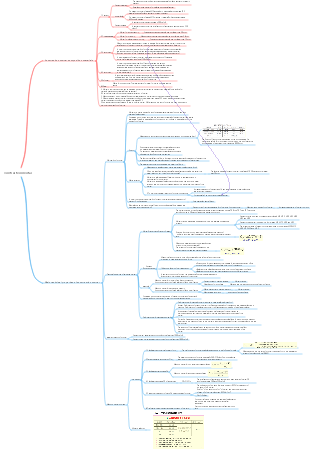
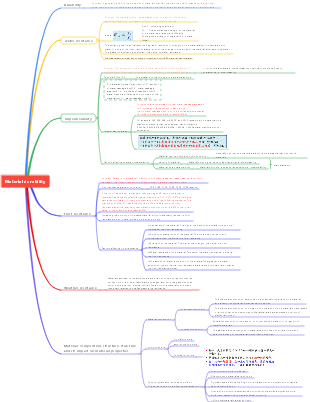
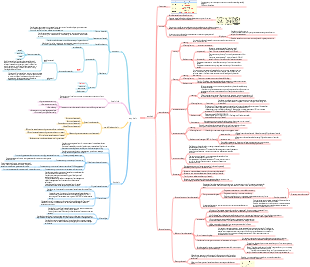
basic mechanical properties
strength
Concept: The ability to resist damage under the influence of external forces.
Classification
Shear resistance
Tensile strength
Calculation formula: f=Fmax/A
f--material strength (MPa); Fmax--maximum load when material fails (N); A--stress area of specimen
Three-point loading f=FL/bh² Single-point loading f=3FL/2bh²
In the flexural strength test measurement of beams (the cross-sectional dimensions of the beams are the same), the one-point concentrated load (1/2 point) method and the two-point concentrated load (1/3 point) method are used respectively. If the measured failure loads are the same , then the flexural strength relationship of the beam is ().
The one-point concentrated load method has high flexural strength
Influencing factors
1. The composition, structure and construction of materials.
2. Porosity and pore characteristics. (High void ratio, low strength)
3. The shape and size of the test piece. (Prism <cube)
When the cross-sections of the specimens are the same, the measured strength value of the short specimen is higher than that of the long specimen. The measured compressive strength values of small specimens are higher than those of large specimens
When the pressure areas are the same, the entire cube specimen is limited by the hoop effect. The uniaxial compressive strength of cubic specimens is higher than that of prismatic specimens.
In the concrete compressive strength test, the compressive strength test value of the 150mm cube specimen is higher than the compressive strength test value of the 200mm cube specimen.
4. Loading speed. (Fast speed, high strength when destroyed)
×When the test loading speed is faster, the measured strength value of the material is higher, otherwise it is lower. Therefore, a faster loading speed should be used as much as possible during the test
5. Temperature and humidity of the experimental environment. (high temperature, low intensity)
×Measure the strength of the material in the dry state, because the material has the highest strength in the dry state
The higher the moisture content, the more the strength decreases.
6. The state of the force-bearing surface. (Flat surface has high strength)
The surface of the specimen is uneven, with edges and corners missing, or the specimen is in smooth contact with the test device. It will lead to stress concentration, which will make the strength measurement value lower.
The flexural strength of the material is related to the stress condition, cross-sectional size and support conditions of the specimen.
For materials of the same quality, the greater the apparent density value, the smaller the porosity (that is, the denser the structure), so the higher the strength.
1. Deformation properties of materials
elasticity and plasticity
elasticity
Definition: The property of a material that is deformed under the action of an external force and can completely restore its original shape after the external force is removed.
Index: Elastic modulus--E=σ/ε, the larger E, the less likely it is to deform.
Plasticity: permanent deformation
Definition: A material deforms under the action of external force. After the external force is removed, it can still maintain the deformed shape and size without cracks.
The compressive strength, tensile strength and bending strength of plastic materials such as steel are roughly equal, with the lowest shear resistance. They can withstand tension, compression and bending moments.
most materials First undergo elastic deformation, then plastic deformation
Brittleness and toughness
brittleness
Definition: When the external force reaches the limit, the material suddenly breaks, and there is no obvious plastic deformation before the damage rather than no deformation.
Mechanical characteristics: Compressive strength is much higher than tensile and bending resistance. i.e. often used in areas under pressure
Rock, ceramics, glass, ordinary concrete, natural stone, clay bricks
toughness
Definition: Under impact and vibration loads, The material can absorb a large amount of energy and can also deform to a certain extent without damaging it.
wood, rubber
Creep and stress relaxation
Xu Bian
The phenomenon that the deformation of solid materials gradually increases with time under the action of external force.
It is closely related to the stress on the material and the temperature and humidity of the environment.
stress relaxation
When a material is under load and the resulting deformation cannot develop due to constraints, the stress will gradually decrease over time. (It is caused by the gradual increase in plastic deformation of the material, the gradual decrease in elastic deformation, and the "total deformation remains unchanged")