MindMap Gallery construction mortar
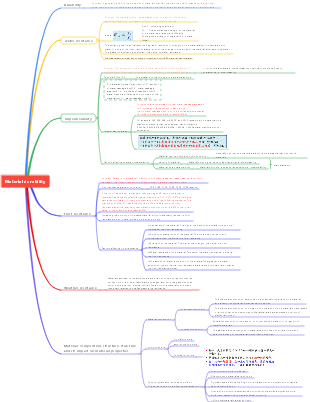
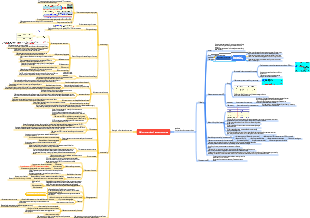
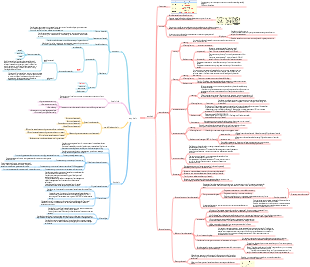
Civil engineering materials - construction mortar. The components of construction mortar include cement, fine aggregate, admixtures, admixtures, polymers, and water. I hope this mind map will be helpful to you.
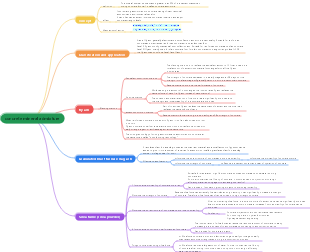
Edited at 2023-07-27 12:22:38This is a mind map about bacteria, and its main contents include: overview, morphology, types, structure, reproduction, distribution, application, and expansion. The summary is comprehensive and meticulous, suitable as review materials.

This is a mind map about plant asexual reproduction, and its main contents include: concept, spore reproduction, vegetative reproduction, tissue culture, and buds. The summary is comprehensive and meticulous, suitable as review materials.
This is a mind map about the reproductive development of animals, and its main contents include: insects, frogs, birds, sexual reproduction, and asexual reproduction. The summary is comprehensive and meticulous, suitable as review materials.
This is a mind map about bacteria, and its main contents include: overview, morphology, types, structure, reproduction, distribution, application, and expansion. The summary is comprehensive and meticulous, suitable as review materials.
This is a mind map about plant asexual reproduction, and its main contents include: concept, spore reproduction, vegetative reproduction, tissue culture, and buds. The summary is comprehensive and meticulous, suitable as review materials.
This is a mind map about the reproductive development of animals, and its main contents include: insects, frogs, birds, sexual reproduction, and asexual reproduction. The summary is comprehensive and meticulous, suitable as review materials.
construction mortar
Construction mortar composition materials
1. Cement
Cement varieties
The masonry mortar configuration adopts general portland cement or masonry cement.
Special purpose mortar is formulated with special cement
power level
For masonry mortar of grade M15 and below, it is advisable to use grade 32.5 general-purpose Portland cement or masonry cement.
For masonry mortar of grade M15 or above → general Portland cement grade 42.5 should be used.
Cement dosage
In cement mortar: cement dosage ≥200 kg/m3;
In cement mixed mortar: the total amount of cement and admixtures is ≥350 kg/m3.
2. Fine aggregate
Mortar for stone masonry
Coarse sand, maximum particle size not larger than 5.0mm
Mortar for brickwork
Medium sand, the maximum particle size is not larger than 2.5mm
Mortar for plastering and jointing
Fine sand, maximum particle size not larger than 1.2mm
3. Admixtures
When high-strength grade cement is used to prepare low-strength grade mortar → due to the small amount of cement, the mortar is prone to delamination, segregation and bleeding.
In order to improve the workability of mortar, save the amount of cementitious materials, and reduce the cost of mortar, certain admixtures can be added when preparing mortar. (Such as: ground quicklime, lime paste, gypsum, fly ash, clay paste, electrogypsum, etc.).
In the preparation of masonry mortar, the standard consistency of lime paste during trial preparation should be (120±5)mm.
4. Admixtures
In order to improve the workability of fresh mortar and the various properties of hardened mortar or to give the mortar some special properties, an appropriate amount of admixtures (such as water-reducing agent, air-entraining agent, micro-foaming agent, waterproofing agent) can be added to the mortar. wait).
5. Polymer
In concrete repair and reinforcement, adding certain polymers (such as epoxy resin, polyester resin, etc.) into the mortar can significantly improve the adhesion, toughness, impact resistance and durability of the mortar.
6. Water
Water for mixing mortar: The requirements for water for mixing concrete are the same.
A. Mortar in a dry environment can be prepared with either air-hardening cementitious materials (such as lime) or hydraulic cementitious materials (such as cement). B. Adding lime is mainly to improve the water retention of mortar. C. Masonry cement, which is specially used to prepare masonry mortar, cannot be used to prepare concrete. D. When preparing cement mortar, the cement should not be greater than grade 32.5; when preparing cement mixed mortar, the cement should not be greater than grade 42.5. E. Add admixtures such as lime and fly ash to building mortar. While reducing the cost of mortar, the main purpose is to improve the workability of mortar.
Main technical properties of construction mortar
Workability of mortar
Mortar with better workability should have a greater degree of sinking and less degree of delamination.
Compared with ordinary concrete, the constituent materials of cement mortar lack coarse aggregate. Therefore, the evaluation of cohesion is not involved in the evaluation of the workability of mortar.
fluidity
Measured with a mortar consistency meter, expressed in sinking degree (mm)
The fluidity of fresh mortar is expressed by the sinking degree (i.e. consistency value). For brick masonry construction in a dry climate, the sinking degree of the masonry mortar can be 80-90mm.
Porous water-absorbing masonry materials and hot and dry weather require greater fluidity of the mortar. For dense non-water-absorbent materials and humid and cold weather, less fluidity may be required.
The factors that affect the fluidity of masonry mortar are mainly the amount of cement, the thickness, gradation and particle shape of the sand, and the amount of water used.
The greater the mortar sinking degree, the better the fluidity.
Water retention
Measured with a delamination meter, expressed in delamination (mm)
Within the specified range, the smaller the delamination value, the better the water retention, but it should not be too small.
The layering degree of masonry mortar is preferably 10-20mm and not greater than 30mm.
Mortar with a large degree of layering is prone to segregation and is inconvenient for construction; Mortar with a degree of delamination close to zero has too strong water retention and is prone to shrinkage cracks during the hardening process of the mortar.
5. To improve the water retention of mortar, you can use
Increase the amount of cement, add fly ash, add lime paste, organic plasticizer, and air-entraining agent
Not advisable: Use high-strength grade cement
In order to improve the workability of masonry mortar and save the amount of cement, () is often added.
Lime paste, clay paste, fly ash
Before laying an ordinary brick wall, the bricks should generally be watered and moistened, and the purpose is ().
Prevent bricks from taking away a lot of moisture from the mortar
Maintain good workability of mortar
Increase the adhesion of mortar to bricks
Technical properties of hardened mortar
Mortar Strength and Strength Grades
The mortar strength is the ultimate compressive strength measured using a 70.7mm×70.7mm×70.7mm cube test block cured to 28 days of age under standard conditions.
Mortar strength grades are divided according to the average compressive strength.
·Cement mortar is divided into seven strength levels: M5, M7.5, M10, M15, M20, M25 and M30.
·Cement mixed mortar is divided into four grades: M5, M7.5, M10 and M15.
The strength grades of masonry mortar are divided into six grades: M20, M15, M10, M7.5, M5 and M2. 5.
Strength of mortar on non-absorbent base (dense stone masonry) , similar to concrete, mainly depends on cement strength and water-cement ratio.
When using water-absorbent substrates (such as bricks or other porous materials), The strength of mortar mainly depends on the cement strength grade and cement dosage.
Adhesion Bonding strength
·Masonry relies on mortar to bond block materials into a solid whole, so the mortar is required to have a certain bonding force.
·Influencing factors of mortar adhesion:
①The bonding force increases with the increase of compressive strength; ②The bonding force is related to the surface condition of the masonry;
③Related to the cleanliness and moisture conditions of the masonry surface; ④Related to construction and maintenance conditions ⑥Mortar strength
In ancient my country, glutinous rice juice and yellow rice juice were added to lime mortar to improve the adhesion of the mortar.
example
Masonry mortar for ordinary fired clay brick masonry, Its bonding strength is closely related to () and other factors.
Cement strength, cement dosage
Mortar strength
Cleanliness of brick surface
Watering and moistening conditions before brick laying
Masonry mortar for dense stone masonry, Its bonding strength is closely related to () and other factors.
Water-cement ratio, cement strength
Mortar strength
Maintenance conditions
roughness of stone surface
Compared with concrete, the strength of masonry mortar should be mainly considered (bonding strength) in addition to compressive strength.
Deformation performance and durability
Deformation performance (mortar is required to have smaller deformability):
Impact: Deformation of masonry mortar → will reduce the quality of the masonry and cause settlement or cracking. Deformation of the plastering mortar → will cause cracks or peeling of the plastering layer.
Improvement: In actual projects, the deformation performance of the mortar can be improved by adding anti-cracking materials to improve the plasticity and toughness of the mortar.
·Durability: Hardened mortar must withstand the physical and chemical effects of the surrounding medium together with the masonry blocks, so the mortar is required to have durability that is compatible with the use environment.
The addition of fiber materials such as hemp into building mortar has a good toughening effect, which can inhibit the volume shrinkage of the mortar and improve the crack resistance of the mortar.
apparent density of mortar
Cement mortar: apparent density should not be less than 1900 kg/m3.
Cement mixed mortar: apparent density should not be less than 1800 kg/m3.
Masonry mortar mix ratio
mix design
1. Calculate the mortar trial strength fm,o
The trial strength of mortar is calculated according to the following formula:
When designing the mix ratio of mortar, the probability t in the preparation strength formula should be (-0.645).
2 Determine water consumption Qw
The water consumption of mortar is generally 240~310kg/m3, which is selected according to the mortar consistency and other requirements.
3. Calculate cement dosage Qc
Masonry mortar for non-absorbent base surfaces:
Masonry mortar for absorbent base surfaces:
4. Calculate the dosage QD of admixtures
QD=QA-Qc
The total amount of cement and admixtures in each square of mortar QA: should be between 300 and 350 kg/m3.
5. Determine the amount of sand Qs in each square of mortar
The bulk density of dry sand (moisture content <0.5%) is the amount of dry sand in 1m3 mortar. [Use 1m³ of dry sand to mix 1m³ of mortar, and the moisture content of each m³ of mortar is less than 0.5% for 1m³].
Qs=1×Po'gan
6. Trial matching, adjustment and determination of mix ratio
Conduct trial mixing, measure the degree of delamination and sinking, and obtain the base mix ratio after adjustment. Carry out strength check and obtain the laboratory mix ratio.
Mix ratio selection