MindMap Gallery case control study
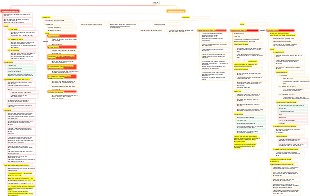
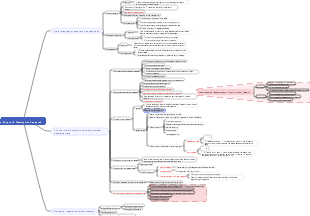
The content of preventive medicine epidemiological case-control studies summarizes data collection and analysis, advantages and limitations of case-control studies, overview, Design and implementation, etc.
Edited at 2024-01-19 15:43:27This is a mind map about bacteria, and its main contents include: overview, morphology, types, structure, reproduction, distribution, application, and expansion. The summary is comprehensive and meticulous, suitable as review materials.

This is a mind map about plant asexual reproduction, and its main contents include: concept, spore reproduction, vegetative reproduction, tissue culture, and buds. The summary is comprehensive and meticulous, suitable as review materials.
This is a mind map about the reproductive development of animals, and its main contents include: insects, frogs, birds, sexual reproduction, and asexual reproduction. The summary is comprehensive and meticulous, suitable as review materials.
This is a mind map about bacteria, and its main contents include: overview, morphology, types, structure, reproduction, distribution, application, and expansion. The summary is comprehensive and meticulous, suitable as review materials.
This is a mind map about plant asexual reproduction, and its main contents include: concept, spore reproduction, vegetative reproduction, tissue culture, and buds. The summary is comprehensive and meticulous, suitable as review materials.
This is a mind map about the reproductive development of animals, and its main contents include: insects, frogs, birds, sexual reproduction, and asexual reproduction. The summary is comprehensive and meticulous, suitable as review materials.
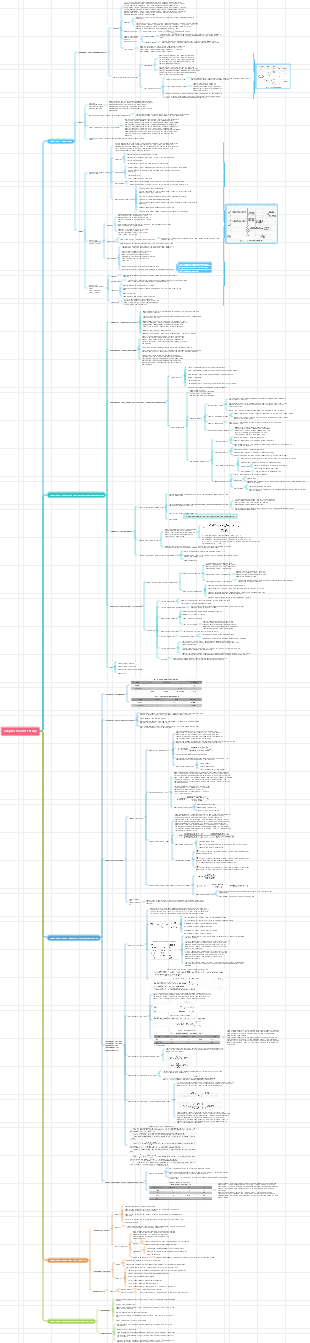
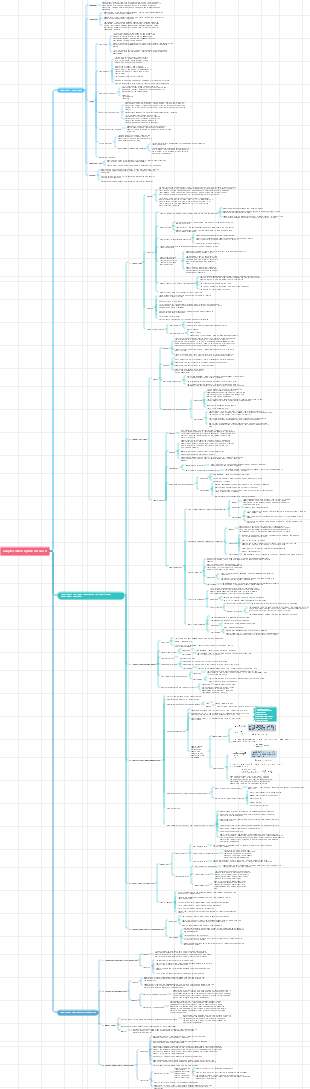
case control study
Overview
concept
Select people with the disease under study from the target population as the case group, and people without the disease as the control group. Investigate and compare whether the two groups have been exposed to certain or certain suspicious factors in the past and the degree of exposure. Compare the two groups. Differences in exposure history, an observational research method that analyzes whether the exposure factor is associated with the disease and the degree of association
Since the exposure ratio between the case group and the control group is often obtained through the review of the research subjects, that is, the "cause" is inferred from the "effect", it is also called a retrospective study.
Basic Features
Observational research method
Is a retrospective study
Research object grouping standards
Analyze metrics based on exposure rates
Design and implementation
Clarify research purpose
The main function of case-control studies is to test etiological hypotheses and screen for etiological factors.
Case-control study classification
Classified by whether there is a hypothesis before research
exploratory case-control study
Identify possible risk factors and formulate hypotheses. such as food poisoning investigation
experimental case-control study
On the basis of descriptive research, after initially forming an etiological hypothesis, this method is then used to test whether this hypothesis is true.
Sort by matching
matched case-control study
Advantages: Can increase statistical testing capabilities during analysis
Disadvantages: complex selection and comparison, troublesome data collection and analysis
unmatched case-control study
Suitable for exploratory case-control studies, easy to implement and obtain more information
Choose research subjects
Case selection
in principle
Diagnosis is reliable
Selected cases must have the potential to be exposed to the factors under investigation
Source of cases: hospital cases, community diseases
Type of case
new cases
Advantages: Recalling exposure history is easier and more reliable
Disadvantages: Longer waiting time to obtain a sufficient number of cases to meet the study sample, and therefore higher costs
Current cases
Refers to survivors of past disease
Deaths
Refers to cases who died before exposure history was collected in the study
Control selection
Principles for choosing comparisons
representative
Comparability
Exposure cannot be used as a basis for selecting controls
source of comparison
Drawn from the source population for selected cases
Hospital comparison
crowd control
Matching of cases and controls
Matching: Also known as matching, when selecting research subjects, the case group and the control group are consistent in certain characteristics or variables.
Overmatching: As matching factors increase, the exposure factors under study gradually converge between the case group and the control group, thus masking or underestimating the association between exposure and disease.
Group matching (group matching, frequency matching)
Requires controls to have the same overall distribution of matching factors as cases
individual matching
Matching of cases and controls on an individual basis
Generally no more than 1:4, 1:1 matching is also called matching
Estimate sample size
Determinants of sample size
1. The estimated exposure rate of the studied factor in the control population (P1); 2. The estimated exposure rate (P2) or odds ratio (OR) of the studied factor in the case group; 3. Hypothesis test significance level (α); 4. Test efficiency or test confidence (1-β)
Data collection content and methods
Collect content
(1) General conditions (2) Disease conditions (3) Exposure history
Collection method
Check existing records
Interview (questionnaire)
Physical examination and laboratory tests
Organizing of data
Proofreading Review File or type into computer
Data compilation and analysis
General steps
Descriptive Statistics
inferential statistical analysis
Comparison of differences in exposure history between case group and control group
Estimate of tie strength
Analysis of the strength of association between exposure and disease (OR value)
Analysis of data from case-control studies in group design
X 2 inspection
Calculation of tie strength
Calculate odds ratio OR
OR =ad/bc
Ratio: refers to the ratio of the probability of something happening to the probability of not happening
Odds ratio (OR): the ratio of the exposure ratio of the case group to the exposure ratio of the control group
The meaning of OR value
OR=1: Indicates that there is no association between exposure and disease;
OR>1: There is a "positive correlation" between exposure factors and diseases. Exposure factors are risk factors for diseases and increase the risk of disease;
OR<1: Exposure factors are "negatively related" to the disease. Exposure factors are protective factors for the disease and reduce the risk of disease.
Estimate of 95% confidence interval for OR
The 95% confidence interval of the OR contains 1, which indicates that the relationship between the exposure factor and the disease is not statistically significant or that the risk of disease caused by exposure is not significantly higher than that without exposure.
Stratified analysis
Role: Control confounding bias
Stratification is to stratify the study sample according to the exposure of one or more confounding factors, analyze the association between exposure and disease within each stratum, and calculate the OR value within each stratum
hierarchical analysis
Significance: Analyze the dose-response relationship between exposure and disease to increase the basis for causal inference
Analysis of paired data
X 2 inspection
OR=c/b
Advantages and limitations of case-control studies
advantage
1. The required research time is short, and manpower, financial and material resources are saved;
2. Suitable for research on rare diseases;
3. Suitable for research on diseases with long incubation periods;
4. The relationship between multiple factors and a disease can be explored simultaneously
limitation
1. The sample is poorly representative and prone to selection bias;
2. The exposure data is inaccurate and prone to recall bias;
3. Not suitable for research on populations with very low exposure rates;
4. It is generally impossible to calculate RR, and one can only use OR to estimate the strength of association, and generally cannot draw conclusions about causality.
Common biases and their control
Types of bias
selection bias
Systematic errors arising from systematic differences in characteristics between study subjects and non-research subjects
Mainly in the research and design stage
Such as: admission rate bias, existing case-new case bias, detected symptom bias, time effect bias, etc.
information bias
It is caused by unclear or inconsistent diagnosis of diseases, leading to grouping errors; due to unclear definition of exposure factors, or inconsistent standards between comparison groups, leading to misclassification of exposures and incorrect grading of exposure levels.
Such as: recall bias, survey bias
confounding bias
Factors that are related to both the exposure and the disease being studied and which, if unevenly distributed between cases and controls, may distort the true relationship between the exposure and the disease
Control of bias
1. Design rationally and use randomization sampling as much as possible; 2. Pay attention to the application of blinding; 3. It is best to have objective indicators for survey variables; 4. When organizing data, pay attention to the balance between the case group and the control group; 5. To control confounding bias, matching design methods can be used in design; 6. Strict quality control