MindMap Gallery World History 24-Renaissance (Part 2)
The Renaissance made Europe transition from a dark period to a glorious period of culture and knowledge. Fundamental changes took place in the lives of European people, which are still affecting their way of life today.
Edited at 2024-01-19 15:40:12This is a mind map about bacteria, and its main contents include: overview, morphology, types, structure, reproduction, distribution, application, and expansion. The summary is comprehensive and meticulous, suitable as review materials.

This is a mind map about plant asexual reproduction, and its main contents include: concept, spore reproduction, vegetative reproduction, tissue culture, and buds. The summary is comprehensive and meticulous, suitable as review materials.
This is a mind map about the reproductive development of animals, and its main contents include: insects, frogs, birds, sexual reproduction, and asexual reproduction. The summary is comprehensive and meticulous, suitable as review materials.
This is a mind map about bacteria, and its main contents include: overview, morphology, types, structure, reproduction, distribution, application, and expansion. The summary is comprehensive and meticulous, suitable as review materials.
This is a mind map about plant asexual reproduction, and its main contents include: concept, spore reproduction, vegetative reproduction, tissue culture, and buds. The summary is comprehensive and meticulous, suitable as review materials.
This is a mind map about the reproductive development of animals, and its main contents include: insects, frogs, birds, sexual reproduction, and asexual reproduction. The summary is comprehensive and meticulous, suitable as review materials.
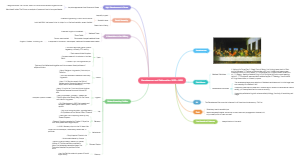
World History 24-Renaissance (Part 2)
1.Overview
time
The Renaissance began in the middle of the 14th century and came to an end around 1650, lasting 300 years.
City
The Renaissance began in Venice and Florence, Italy.
Variety reason
①Humanists created a very excellent culture. This new culture interacts with politics, society and economy. Material civilization and spiritual civilization should be grasped together.
② Complementarity with other cultures. The Renaissance movement is connected with the European Renaissance.
significance
The Renaissance made Europe transition from a dark period to a glorious period of culture and knowledge, becoming a force driving Europe's renaissance. The lives of people in Europe underwent fundamental changes that still affect their way of life today.
2. Humanist
What kind of person is he?
The people who created the new European culture were called humanists. They created a large number of masterpieces in architecture, art and literature that showed the charm of modern civilization.
It is proposed that mankind has entered a new era, an era in which war is about to end, darkness is about to pass, and mankind will gain security, prosperity and happiness.
Research covers numerous technical and creative fields, and they approach knowledge with an open attitude. Therefore, while creating modern ideas, we are also learning outstanding traditional cultures from different periods in history. The purpose is to create a new culture for today
Basic idea
Respecting people and putting people first, a new ideal kingdom will be born in the humanistic spirit and scientific knowledge.
program
Be orderly, not disorderly
Be rich, don't be hungry
Want culture, not ignorance
Want peace not war
Be virtuous and not corrupt
3. Be orderly and not disorderly
establishing the political order of monarchy
The major European countries became unified in the 15th and 16th centuries, and an alliance of citizens and monarchs emerged under the leadership of the government. This is an important symbol of the transformation of countries such as Britain, France and Spain from feudal countries to modern countries. During this period, government administration replaced the military rule of the local aristocracy, and politics became an art form.
Machiavelli's "The Prince" is the foundation work of modern political theory. People began to focus on the present world instead of God. Beginning to pay attention to people's social life marks a general change in people's concepts of life.
establish a modern state
The new political order is called a nation-state with national sovereignty. There are no international interference forces above it, and there are no local separatist forces that can compete with the central government. The new government also represented public interests to a certain extent. It ended the history of national administration being dominated by the feudal system and thus achieved unified management of administration and justice.
4. Want peace not war
The modern political model gradually took shape
Three estates emerged in society: the clergy, the nobility and the common people, who shared power with the monarch in parliament. The powers of the three levels were specified by certificates of privilege. Countries began to hold hierarchical meetings or parliaments, and the model of modern politics gradually took shape.
Focus on political and diplomatic resolution of disputes
The establishment of political order helps develop peace, private wars are reduced, and politics and diplomacy become common means to resolve various disputes.
Boost the economy and improve lives
The new-style government effectively provides political and social order guarantee for the development of industry and commerce. Political stability lays the foundation for economic progress, industry and commerce and prosperity, and the improvement of people's lives.
5. Be educated but not ignorant
Broadening the concept of happiness
Material situation, social situation, cultural situation, physiological situation, emotional satisfaction. It is a concept of the whole person.
Pay attention to creating a cultural atmosphere
It is believed that only by establishing a civilized social environment can people's quality be improved.
Artists pursue not only material satisfaction, but also social, artistic, cultural and emotional satisfaction.
Scholars tried to change the use of language, and vivid national languages replaced Latin, which was divorced from people's lives. Scholars discover the precision, intensity, depth, and breadth of life.
Sculptors worked tirelessly to revive a culture that had long been dormant in a short period of time.
6. Be virtuous and not corrupt
The reform of the political system brought about a major rotation in the social structure. Protestant monks began to marry, and the spiritual shackles of celibacy and asceticism were broken.
Serfs would become free peasants; medieval warriors would change from personal allegiance to their lords to mercenaries responsible to the government. Germany, Switzerland, Italy.
Political consultation and the use of diplomatic negotiations have become the means to resolve international disputes. The development of politics and diplomacy promoted the stable development of the European economy and improved people's lives. At the same time, the power of the military aristocracy was also greatly reduced.
7. Be rich not hungry
The spirit of humanism is reflected in promoting human personality and maintaining human dignity. Human thinking has changed significantly in the 15th and 16th centuries.
Intellectuals began to use scientific methods to think, and there was a transformation from analysis to synthesis, from abstract thinking to image thinking, wrong into correct, untested things into tested, narrow-minded into broad-minded, abstract into All of this promoted the rise of experimental science in Europe.
The rational spirit of the Renaissance significantly improved the conditions of people suffering from cold and hunger since the Middle Ages. The concept of being rich but not hungry brought about fundamental changes in the economic structure.
The development of science and technology. Society began to value skilled craftsmen with specialized skills, and achievements in textiles, pottery, glass, and weapons were quickly absorbed by crafts and manufacturing.
People no longer oppose the spiritual and material, and making money is no longer considered a sin. The pursuit of the opposite sex, the yearning for the human body and sex have also become beautiful, and have become the theme of beauty sung by many beautiful poems.
The earth was proven to be round and the sun was proven to be the center of the solar system. Where once the display of life force was seen as a sin, it now becomes a proof of character and ability.
With the decline of the mystery cults and the end of pessimism in the Middle Ages, the monasteries also began to decline. Giving full play to people's free will and initiative has become an excellent character praised by thinkers and social reformers.
Science gained independence from theology, like Leonardo da Vinci. A Renaissance scientist who was also a great artist, writer and sculptor. Art and science were combined during the Renaissance.
In modern manufacturing, productivity and worker motivation are the focus of attention.
8. The formation of national character
The formation of national characters in European countries
Empiricism emerged in England
Image thinking is popular in Italy
The pursuit of excellence and philosophical thinking have become the national characteristics of the Germans.
France advocates politeness, pays attention to good dress and language, and develops French elegance.
The increased exchange of ideas and culture among these countries furthered the creative activity and intellectual development of the Renaissance.
9. Changes in values
Reading and education have now become the basic contents of people's lives. Libraries were built, and people were studying history and exploring truth. People's values have also changed. They not only pursue satisfaction in food, clothing, housing and transportation, but also pursue justice, order, knowledge and beauty.
Explorers emerged because they were fascinated by the civilization and wealth of the East.
During the Renaissance, Venice was the richest and most powerful city in the world. Its power and wealth came from its strategic position in the maritime trade between Europe and the East.
"The Travels of Marco Polo" aroused great interest among Europeans and was translated into many languages.
The ancient Greek astronomer Ptolemy's theory of observing the earth's surface from a mathematical perspective became popular again in Europe in the 15th century. Compass and nautical maps were widely used in the 14th and 15th centuries.
Columbus crossed the Atlantic to the Bahamas and landed in Cuba and Haiti. Vasco da Gama opened up a route to India. Magellan's journey around the world confirmed that the Earth is round.
These geographical discoveries and the opening of new routes brought many new inventions and new products to Europe during the Renaissance, opened Europe's eyes to the world, brought about the expansion of foreign trade and economy, and were instrumental in completing the transformation of Europe during the Renaissance. It worked.