MindMap Gallery Flavonoid spectral characteristics
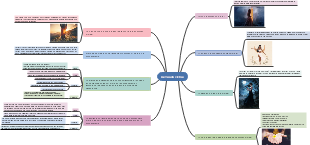
This is a mind map about the spectral characteristics of flavonoid compounds. The spectral characteristics of flavonoid compounds are mainly reflected in ultraviolet spectrum (UV), mass spectrometry, nuclear magnetic resonance spectrum (NMR), etc.
Edited at 2024-01-16 20:35:29This is a mind map about bacteria, and its main contents include: overview, morphology, types, structure, reproduction, distribution, application, and expansion. The summary is comprehensive and meticulous, suitable as review materials.
This is a mind map about plant asexual reproduction, and its main contents include: concept, spore reproduction, vegetative reproduction, tissue culture, and buds. The summary is comprehensive and meticulous, suitable as review materials.
This is a mind map about the reproductive development of animals, and its main contents include: insects, frogs, birds, sexual reproduction, and asexual reproduction. The summary is comprehensive and meticulous, suitable as review materials.
This is a mind map about bacteria, and its main contents include: overview, morphology, types, structure, reproduction, distribution, application, and expansion. The summary is comprehensive and meticulous, suitable as review materials.
This is a mind map about plant asexual reproduction, and its main contents include: concept, spore reproduction, vegetative reproduction, tissue culture, and buds. The summary is comprehensive and meticulous, suitable as review materials.
This is a mind map about the reproductive development of animals, and its main contents include: insects, frogs, birds, sexual reproduction, and asexual reproduction. The summary is comprehensive and meticulous, suitable as review materials.
Spectral characteristics of flavonoid compounds
UV spectrum
basic peak band
Band I is the B ring, band II is the A ring
Peak band I: 300~400 nm, originating from the π → π* transition of the cinnamoyl system Peak band II: 220~280 nm, originating from the π → π* transition of the benzoyl system
Basic UV spectral characteristics in methanol solutions
Flavones and flavonols (bands I and II are both stronger)
Common characteristics: Band I and Band II are both strong
Difference: The position of belt I is different Flavonoids: 304~350 nm Flavonols: 3-OH free: 352~385 nm; 3-OH substituted: 328~357 nm
Chalcones and orange ketones (with I as the main peak)
Common characteristics: Band I is very strong and is the main peak; Band II is weak and is the secondary peak.
Difference: Band I peak position is different Chalcones: 340~390nm Orange ketone: 370~430nm
Isoflavones, dihydroflavones and dihydroflavonols (band II is the main peak)
Common features: Band II is the main peak; Band I is very weak and is the shoulder of the main peak.
Difference: Band II peak position is different Isoflavones: 245~278 nm Dihydroflavone (alcohol): 270~295 nm
The skeleton type of flavonoids can be determined based on UV characteristics
Effect of introducing -OH on UV
Effect on peak shape
7-OH flavonoids: similar to dihydroflavones (peak band II is strong because of the introduction of hydroxyl group in the A ring) 4’-OH flavonoids: similar to chalcones (peak band I is strong because of the introduction of hydroxyl group in the B ring) 4’, 7-dihydroxyflavone: normal That is, the introduction of 7-OH will enhance the peak band II; the introduction of 4’-OH will enhance the peak band I.
Effect on wavelength
Introduction of -OH into the A ring: with II red shift, especially 5,7-OH has a great influence Introduction of -OH into ring B: red shift of I, especially 2’, 4’, 6’-OH Introduction of -OH (3-OH) into the C ring: band I red-shifts 30~50 nm, band II has little effect OH→OCH3: The corresponding peak band shifts purple by 15~20 nm
UV diagnostic reagents for flavonoids
CH3ONa: a strong base, turning all -OH into O-, and the corresponding peak is red-shifted
If the intensity of band I does not decrease, it means there is 4’-OH; if the intensity of band I decreases, it means there is 3-OH but no 4’-OH.
NaOAc (unmelted): weak base, cannot ionize 5-OH
Band II, 5~20 nm (red shift): 7-OH
NaOAc /H3BO3: can complex with o-diphenol OH (excluding 5,6-dihydroxy), causing the corresponding peak to red shift
Band II: 5~10nm, indicating that ring A contains ortho-diAr-OH (excluding 5,6-dihydroxy) Band I: 12~30nm, it means that the B ring contains ortho-di-Ar-OH
AlCl3/HCl • AlCl3 can complex with o-diphenol OH and 5-OH with 4-CO • HCl can destroy the complex between o-diphenol OH and Al3
The presence or absence of o-diphenolic hydroxyl group:
3-OH, 5-OH presence or absence (?):
mass spectrometry
Glycone: EI-MS
M-28: -C=O or -CO R-DA cracking: can determine the substituents on the A and B rings
Features: M is strong, often the base peak There are two main cleavage pathways of Ⅰ and Ⅱ: flavonoids are mainly Ⅰ; flavonols are mainly cleavage pathways Ⅱ. m/z of A1, B1, B2: Infer the substitution pattern of A ring and B ring: A1 ·, B1 ·, B2 retain the structures of A and B rings A1 and B1 are complementary: that is, the sum of their mass-to-charge ratios is equal to the mass-to-charge ratio of M
EI-MS of flavonoids
• Mainly cleavage pathway I • M is usually the base peak • The main fragments are A1 ·, B1 ·, medium intensity • [M-CO] and [A1-CO] are also prominent
EI-MS of flavonols
• Mainly cleavage pathway II • M is usually the base peak • The main fragments are B2, [B2-CO], and [A1 H]
Glycoside: soft ionization method • ESI-MS • FD-MS • FAB-MS
FD-MS, FAB-MS of flavonoid glycosides
• Quasi-molecular ion peaks: [M H] , [M Na] , [M K] • Excimer peaks are fragmented peaks that lose sugar groups sequentially from the end
Nuclear Magnetic Resonance Spectroscopy (example question on PPT!)
hydrogen spectrum
flavonoids
B ring > 3-H > A ring
• Ring A is often a cryptophloroglucinol structure • >C = O is close to A ring, remove shielding • Deshielding of C-ring
5-H
• δH ≈ 8 • Strongly deshielded by >C = O
3-H
• Closer to H-8 and H-6 • Unimodal
6, 8-H
• Always at the top • δH-8 > δH-6; the opposite is true in 13C-NMR • H-8 is more deshielded by the C ring • Dihydroflavone δH-8 ≈ δH-6: C ring non-conjugated
1H-NMR signal of active protons
5-OH: δH ~12.40 7-OH: δH ~10.93 3-OH: δH ~9.70 4'-OH: δH ~9.70 3'- and other OH: δH ~9.10 or higher field
Dihydroflavone
dominant conformation
Large group 2-ph in e bond
absolute configuration
Mostly 2S type
Features: Typical ABX coupling system
• 2-H: ~5.20 (1H, dd, J=11.0, 4.0 Hz) • 3-Ha: ~2.80 (1H, dd, J=11.0, 17.0 Hz) • 3-He: ~2.80 (1H, dd, J=17.0, 4.0 Hz)
Dihydroflavonol
relative configuration
2-ph and 3-OH are in most e bonds
absolute configuration
• Most naturally occurring types are 2R and 3R types • A few are 2S, 2S type
feature
• 2-H: δH ~4.90 (1H, d, J=11.0 Hz) • 3-H: δH ~4.30 (1H, d, J=11.0 Hz)
Other flavonoids
Isoflavones
H-2: δH 8.5~8.7 (1H, s)
orange ketone
H-3: δH 6.37~6.94 (1H, s)
Chalcones
• Hα: δH 6.70~7.40 (1H, d, J=17.0 Hz) • Hβ: δH 7.30~8.10 (1H, d, J=17.0 Hz)
dihydrochalcone
• Hα: δH ~3.2 (2H, t, J=7.0) • Hβ: δH ~2.8 (2H, t, J=7.0)
Flavonoid glycosides
The J value of the sugar terminal proton is used to determine the configuration
• J ≈ 7.0 Hz: β type • J ≈ 3.0 Hz: Type α • Limited to: sugars with 2-OH in the a bond
Flavonoid (alcohol) glycosides
• β type: 3-forming glycoside, δH > 5.3; 4’-forming glycoside, δH < 5.2 • α type: No matter 3- or 4’-forming glycoside, δH ~ 4.0 • The β-type terminal proton of 3-glycoside is coplanar with >C=O and C-O bonds, deshielding → δH ↑
diglycoside
The outer sugars are far away from the mother core and are less affected by anisotropy → δH ↓
carbon spectrum
carbonyl
Cross-conjugated system: δC shifts upfield 13~20
No cross-conjugated system: C-2,3 is sp3 hybridized; chalcone, cross-conjugated system is destroyed
Presence of 5-OH: formation of intramolecular H bond; δC shifts downfield 3~6
C-2
C Differences in the degree of epoxidation: dihydroisoflavones < dihydroflavones < dihydroflavonols < chalcones < Flavonols < Orange ketones < Isoflavones < Flavonoids
2’ or 6’-OR substituent
In dihydroflavones (alcohols), δC↓ >3.9 due to steric effects
Effect of 3-OH
C-2,3 is a double bond: δC ↓ ~15 (C effect) C-2,3 is a single bond: δC ↑ 2~7 (-I effect, electron-withdrawing induction effect)
Use 13C-NMR to determine the type of flavonoids