MindMap Gallery Nucleic acid mind map
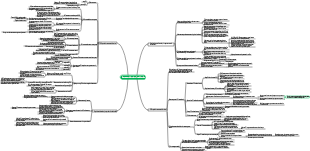
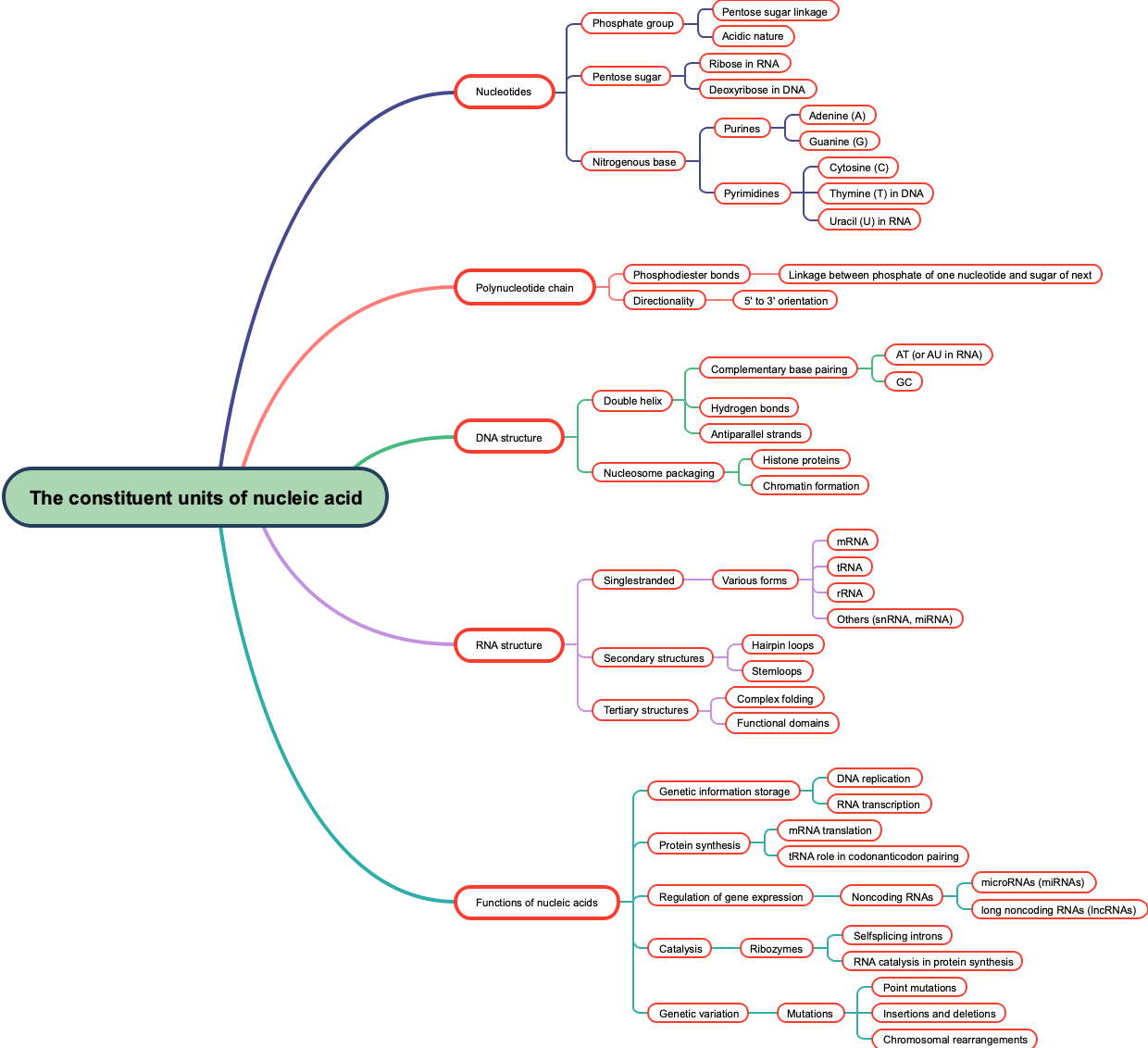
Nucleic acid is a biological macromolecular compound polymerized from many nucleotide monomers and is one of the most basic substances of life. According to the different five-carbon sugars, nucleic acids can be divided into two categories: deoxyribonucleic acid (DNA) and ribonucleic acid (RNA).
Edited at 2024-10-13 15:20:10Lezione 12 della storia, l'ascesa della democrazia nazionale in Asia, Africa e America Latina, questa mappa del cervello ti aiuta a familiarizzare con i punti chiave della conoscenza e rafforzare la memoria. Gli studenti bisognosi possono aggiungere un segnalibro.
Questa è una mappa mentale sull'introduzione alla competenza di Chat GPT.
Questa è una mappa mentale sulla condivisione di profonde abilità di utilizzo.
Lezione 12 della storia, l'ascesa della democrazia nazionale in Asia, Africa e America Latina, questa mappa del cervello ti aiuta a familiarizzare con i punti chiave della conoscenza e rafforzare la memoria. Gli studenti bisognosi possono aggiungere un segnalibro.
Questa è una mappa mentale sull'introduzione alla competenza di Chat GPT.
Questa è una mappa mentale sulla condivisione di profonde abilità di utilizzo.
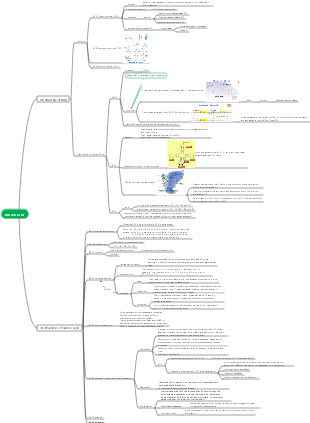
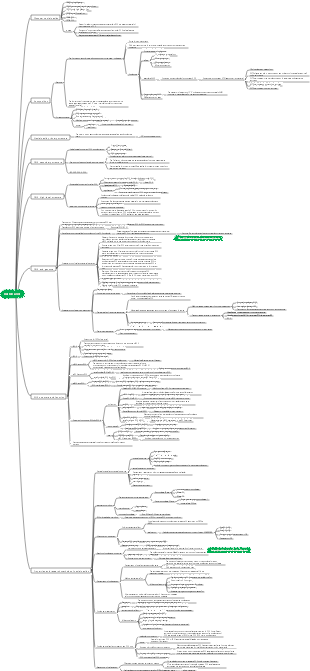
nucleic acid
Types and biological functions of nucleic acids
Types of nucleic acids
DNA
RNA
Distribution of nucleic acids
eukaryotic cells
prokaryotic cells
central dogma
basic elements of nucleic acid molecules
basic structure of nucleotides
Pentose
base
pyrimidine
Purine
Phosphoric acid
Physicochemical properties of nucleotides
general shape
Colorless powder or crystal, easily soluble in water, insoluble in organic solvents, and optically active
UV absorption
The maximum absorption value is around 260 nm
tautomerism of nucleotides
ampholytic dissociation of nucleotides
functions of nucleotides
①Basic building blocks of nucleic acids, such as NMP, dNMP
② Second messenger, such as cAMP, cGMP
③Participate in energy metabolism in the body, such as ATP, which is the energy currency
④ Participate in the metabolism of substances in the body, such as UDP-glucose, CDP-choline, etc., involved in glycogen and phospholipid synthesis respectively.
⑤Participate in the formation of some coenzymes, such as NAD⁺, Coenzyme A, etc., all contain nucleotides
⑥Participate in the regulation of substance metabolism. ATP, ADP, and AMP are allosteric regulators of many enzymes in the body.
Free nucleotides and their derivatives in cells
Adenosine triphosphate ATP
Deoxyribonucleic acid DNA structure
base composition of DNA
A=T,G=C
primary structure of DNA
The linear order of nucleotide residues in a nucleic acid molecule
DNA secondary structure
DNA double helix structure
right-handed double helix
Antiparallel double strands: the deoxyribose monophosphate backbone is on the outside, the bases are on the inside, and the base pair plane is perpendicular to the longitudinal axis
Surface functional area: the minor groove is shallow and the major groove is deep, which is the basis for protein recognition and DNA binding.
Base complementary pairing, AT pairing, CG pairing
Stabilizing force: Hydrogen bonding double strands stabilize transversely, base stacking force stabilizes double strands longitudinally
Various double helix conformation types of DNA
Secondary structure based on the special base sequence of DNA
Tertiary structure of DNA
supercoiled
Positive supercoiling is the same as DNA helix, tight coiling effect
Negative supercoiling is the opposite of DNA helix, unwinding effect
Packaging of chromosomal DNA
The basic unit of chromatin: nucleosome (composed of DNA and histones)
Nucleic acid research technology
Nucleic acid amplification technology
Nucleic acid sequencing technology
Determination of DNA primary structure
Determination of RNA primary structure
Nucleic acid electrophoresis technology
Related factors affecting electrophoretic mobility
Important nucleic acid electrophoresis technology
Nucleic acid hybridization technology
Southern blotting and Northern blotting
gene chip technology
recombinant DNA technology
Physicochemical properties of nucleic acids
General properties of nucleic acids
shape
The finished products of RNA and its components nucleotides, nucleosides, purine bases, and pyrimidine bases are all in the form of white powder or crystals, while DNA is a loose asbestos-like fibrous solid. Except for inosinic acid and guanylic acid, which have an umami taste, most nucleic acids and nucleotides have a sour taste.
Solubility
Both are slightly soluble in water, insoluble in ethanol, ether, chloroform and other organic solvents, and their sodium salts are easily soluble in water.
sticky
DNA is more sticky than RNA.
Acid-base properties of nucleic acids
Because the DNA molecule contains bases and phosphate groups, it is an amphoteric electrolyte. However, the acidity of the phosphate groups in nucleic acids is greater than the alkalinity of the bases, and its isoelectric point is acidic.
UV absorption properties of nucleic acids
Maximum absorption value at 260 nm
Sedimentation characteristics and buoyant density of nucleic acids
Denaturation and renaturation of nucleic acids
transsexual
Definition: Under the action of certain physical and chemical factors, the double strands of DNA unwind and form two single strands.
Denaturation factors: excessive acid and alkali heating
Nature of denaturation: breakage of hydrogen bonds between double strands
The main changes in the physical and chemical properties after denaturation: increase in UV absorption, decrease in viscosity, increase in sedimentation coefficient, and loss of biological activity.
Dissolution temperature tm value: The temperature at which 50% of the DNA melts is also called the melting temperature
Restoration
Definition: Under appropriate conditions, the two complementary strands of denatured DNA can restore their native double helix conformation. This phenomenon is called denaturation.
The thermally denatured DNA can be renatured after slow cooling. This process is called annealing.
Hydrolysis of nucleic acids
The structure of ribonucleic acid RNA
Basic features of RNA structure
Distributed in the cytoplasm, it is an unbranched long-chain macromolecule composed of nucleotides connected through 3', 5' phosphodiester bonds, existing in a single chain
Main types and functions of RNA
RNA secondary structure
RNA is a single-stranded molecule that bends back on itself so that bases that can pair with each other meet. Forms local base pairing, so its secondary structure can be divided into helices and different types of loops
RNA tertiary structure and quaternary structure
The forces that determine the tertiary structure of RNA include: hydrogen bonding force, base pairing in space and base stacking.
nucleoprotein complex formed by RNA and protein
Structure and function of the three major RNA molecules
tRNA
Primary structural characteristics
secondary structure
clover shape
tertiary structure
Inverted L shape
Correction tRNA
rRNA
primary structure
secondary structure
mRNA
Primary structural characteristics
high level structure