MindMap Gallery Care for women with abnormal childbirth
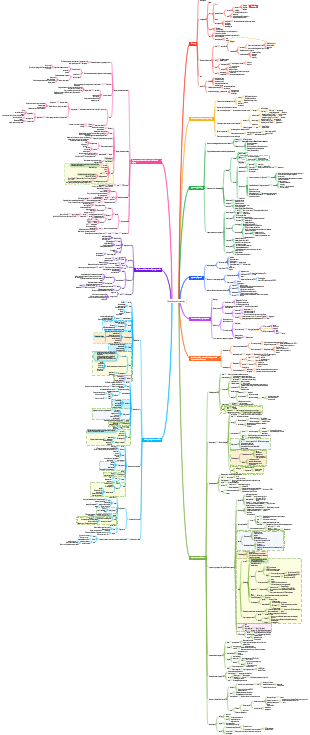
A mind map on the care of women with abnormal delivery, including abnormal labor, birth canal abnormalities, and fetal abnormalities. The introduction is detailed and the description is comprehensive. I hope it will be helpful to those who are interested!
Edited at 2024-11-20 10:11:55This template shows the structure and function of the reproductive system in the form of a mind map. It introduces the various components of the internal and external genitals, and sorts out the knowledge clearly to help you become familiar with the key points of knowledge.
This is a mind map about the interpretation and summary of the relationship field e-book, Main content: Overview of the essence interpretation and overview of the relationship field e-book. "Relationship field" refers to the complex interpersonal network in which an individual influences others through specific behaviors and attitudes.
This is a mind map about accounting books and accounting records. The main contents include: the focus of this chapter, reflecting the business results process of the enterprise, the loan and credit accounting method, and the original book of the person.
This template shows the structure and function of the reproductive system in the form of a mind map. It introduces the various components of the internal and external genitals, and sorts out the knowledge clearly to help you become familiar with the key points of knowledge.
This is a mind map about the interpretation and summary of the relationship field e-book, Main content: Overview of the essence interpretation and overview of the relationship field e-book. "Relationship field" refers to the complex interpersonal network in which an individual influences others through specific behaviors and attitudes.
This is a mind map about accounting books and accounting records. The main contents include: the focus of this chapter, reflecting the business results process of the enterprise, the loan and credit accounting method, and the original book of the person.
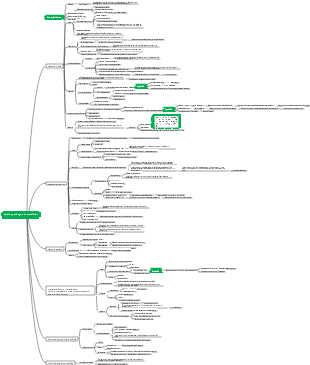
Care for women with abnormal childbirth
abnormal productivity
uterine atony
Cause
Cephalopelvic disproportion or abnormal fetal position: the most common causes of secondary uterine atony
myogenic factors
mental factors
Endocrine disorders: estrogen deficiency
drug effects
clinical manifestations
Coordinated uterine atony (hypotonic uterine atony)
Clinical manifestations: Uterine contractions have normal rhythm, symmetry and acuteness, but weak contractility, long and irregular intervals.
first stage labor care
Improve overall condition
Ensure rest and psychological counseling
Supplement nutrients, water and electrolytes
Carry out accompanied delivery
Keep the bladder and rectum empty
Strengthen uterine contractions
Artificial rupture of membranes: If the cervix is dilated ≥3cm, there is no cephalopelvic disproportion, and the fetal position is connected, artificial rupture of membranes can be performed. It is necessary to check whether the umbilical cord is present before rupture of membranes, and rupture of membranes should be performed during uterine contractions. At the same time, observe changes in amniotic fluid volume, properties, and fetal heart rate
Utotocin: suitable for coordinated uterine atony, cervix dilation ≥3cm, no cephalopelvic disproportion, normal fetal position, and good fetal heart rate. The principle is to obtain the best uterine contractions with the minimum concentration. Totocin 2.5U is added to 500ml of 0.9% normal saline, starting from 4 to 5 drops/min
Acupuncture points
stimulate nipples
Diazepam reduces cervical edema
Preparation before cesarean section
Second stage labor care
If the fetal head is still not connected or there are signs of semi-distress, preparations for cesarean section should be made immediately
Third stage of labor care
Prevent postpartum hemorrhage and infection
Incoordinated uterine atony
Clinical manifestations: The polarity of uterine contractions is reversed, the fundus of the uterus is not strong during contractions, and the lower uterine segment is strong, which is an ineffective contraction.
Care: The principle of treatment is to regulate uterine contractions and restore normal rhythm and acuteness. Pethidine 100 mg or morphine 10 mg intramuscularly. It is strictly forbidden to use uterotonics until coordinated uterine contractions have resumed.
Abnormalities during labor: signs of cervical dilatation and descent of the fetal presenting part
Prolonged latent period: 6cm from the beginning of regular uterine contractions to the beginning of the active phase
Primipara >24h
Multiparous women>14h
Abnormality in the active phase: from 6cm from the starting point of the active phase to the full dilation of the cervix
Prolonged active phase: cervical dilation speed <0.5cm/h
Active phase stagnation: when the membranes rupture and the cervix is dilated ≥6cm
Normal uterine contractions: the cervix stops dilating for ≥4 hours
Poor uterine contractions: the cervix stops dilating for ≥6 hours
Abnormalities in the second stage of labor
Delayed descent of fetal head: fetal head descent speed in parturients <1cm/h, multiparous women <2cm/h
The descent of the fetal head is stagnant: the fetal head is exposed and stays far away without descending for >1 hour
Prolonged second stage of labor: multiparous women >2h, primiparous women >3h (epidural analgesia during delivery >4h for primiparous women, multiparous women >4h)
strong uterine contractions
Coordinated uterine contractions are too strong: the uterine contractions have normal rhythm, symmetry, and polarity, but the uterine contractions are too strong (uterine pressure ≥ 60mmHg) Hg (more than 5 contractions in 18 minutes)
Incoordinated uterine contractions
Tonic uterine contractions: strong uterine contractions (persistent abdominal pain), loss of rhythm, intermittent contractions, pathological contraction rings (annular depression below or level with the umbilicus)
Uterine spasmodic ring: uncoordinated contractions
Process of labor: A total labor process of <3 hours is called acute labor, which is common in multiparous women.
Nursing measures
Preventing emergency delivery: Pregnant women with a history of emergency delivery should be hospitalized in advance to wait for delivery and avoid holding their breath downwards.
Postpartum treatment: Newborns should be given vitamin K as directed by the doctor to prevent intracranial hemorrhage.
Abnormal birth canal
Bone birth canal abnormalities
Flat pelvis: Narrow entrance plane to the pelvis The abdomen of primiparous women usually has a pointed abdomen, while that of multiparous women usually has a hanging abdomen. Clinical manifestations: latent period and active early period are prolonged, active late period is progressing smoothly
Narrow middle pelvic plane: It is not difficult to enter the pelvis first, and the fetal head can be connected normally. However, when the fetal head descends to the middle pelvis, internal rotation is blocked, and the occipital transverse or occiput posterior position persists, and secondary uterine inertia enters active labor. Progress is slow or even stagnant after late stage and second stage of labor
Narrowing of the pelvic outlet plane: mainly narrowing of the inter-ischial tuberosity diameter and posterior sagittal diameter of the pelvic outlet
funnel pelvis
Traces of narrow pelvis
Uniminipelvis: The pelvis is narrow in all three planes
Pelvic deformity: rare
Abnormalities of the soft birth canal (vagina, cervix, uterus, and pelvic floor soft tissues)
vaginal abnormalities
vaginal diaphragm
vaginal mediastinum
vaginal mass
cervical abnormalities
Cervical adhesions and scars
cervical toughness
cervical edema
cervical cancer
uterine abnormalities
Uterine anomalies
scarred uterus
Pelvic tumors
Uterine fibroids
ovarian tumors
Fetal abnormalities
Clinical manifestations of abnormal fetal position
Persistent occipito-posterior or persistent occipito-transverse position
Abnormal pelvis, poor flexion of the fetal head: more common in male pelvis, middle pelvis is narrow, hindering internal rotation of the fetal head
Prolonged labor, the mother feels anal swelling and defecation sensation, which can easily lead to cervical edema and secondary uterine atony, active late stage and prolonged second stage of labor.
High fetal head position
uneven anterior tilt
Face first
Breech presentation (most common)
shoulder first
compound presentation
abnormal fetal development
giant fetus
Fetal malformation
hydrocephalus
Conjoined children
care
Strengthen pregnancy health care
Before 30 weeks of breech presentation, most of the time it can change to cephalic presentation on its own.
After 30 weeks of pregnancy, correct fetal position in knee-chest position (empty bladder, loosen belt)
Provide perioperative care for cesarean section
Vaginal delivery care
Encourage expectant mothers to maintain good nutritional status
Prevent premature rupture of fetal membranes
Assist doctors to prepare for vaginal midwifery and neonatal rescue
psychological care