MindMap Gallery Zhulan's Three Steps A Powerful Weapon of Quality Strategic Thoughts and Management
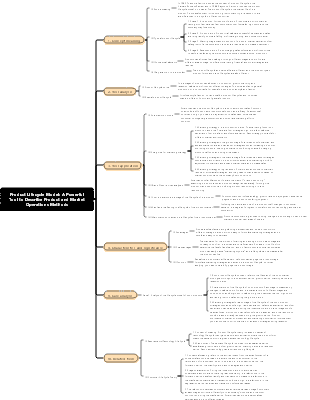
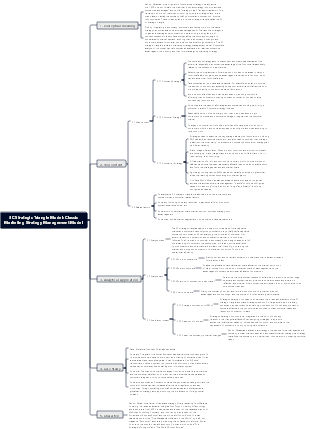
This is a mind map about Zhulan’s three-step: a powerful weapon for quality strategic thinking and management. The main contents include: 5. Character links, 4. Case analysis, 3. Main significance, 2. Analytical application, 1. Conceptual meaning .
Edited at 2025-02-04 13:05:41In order to help everyone use DeepSeek more efficiently, a collection of DeepSeek guide mind map was specially compiled! This mind map summarizes the main contents: Yitu related links, DS profile analysis, comparison of DeepSeek and ChatGPT technology routes, DeepSeek and Qwen model deployment guide, how to make more money with DeepSeek, how to play DeepSeek, DeepSeek scientific research Application, how to import text from DeepSeek into MindMaster, the official recommendation of DeepSeek Wait, allowing you to quickly grasp the essence of AI interaction. Whether it is content creation, plan planning, code generation, or learning improvement, DeepSeek can help you achieve twice the result with half the effort!
This is a mind map about DeepSeek's 30 feeding-level instructions. The main contents include: professional field enhancement instructions, interaction enhancement instructions, content production instructions, decision support instructions, information processing instructions, and basic instructions.
This is a mind map about a commercial solution for task speech recognition. The main content includes: text file content format:, providing text files according to the same file name as the voice file.
In order to help everyone use DeepSeek more efficiently, a collection of DeepSeek guide mind map was specially compiled! This mind map summarizes the main contents: Yitu related links, DS profile analysis, comparison of DeepSeek and ChatGPT technology routes, DeepSeek and Qwen model deployment guide, how to make more money with DeepSeek, how to play DeepSeek, DeepSeek scientific research Application, how to import text from DeepSeek into MindMaster, the official recommendation of DeepSeek Wait, allowing you to quickly grasp the essence of AI interaction. Whether it is content creation, plan planning, code generation, or learning improvement, DeepSeek can help you achieve twice the result with half the effort!
This is a mind map about DeepSeek's 30 feeding-level instructions. The main contents include: professional field enhancement instructions, interaction enhancement instructions, content production instructions, decision support instructions, information processing instructions, and basic instructions.
This is a mind map about a commercial solution for task speech recognition. The main content includes: text file content format:, providing text files according to the same file name as the voice file.
Zhulan's Three Steps: A Powerful Weapon of Quality Strategic Thoughts and Management
1. Conceptual meaning
1.1. Basic Concept
The three-step Juran is the core of Dr. Joseph Moses Juran's theory of quality management, a famous American scholar. Zhulan believes that through the management process, quality management can be "makes realization", and quality management includes three stages: quality planning, quality control and quality improvement:
Quality planning stage: Determine quality goals, identify customers and their needs, develop and design product characteristics and production processes that meet customer needs, and transfer the plan to the implementation stage.
Quality control stage: Comparing and evaluating work situations with goals to find out the gaps.
Quality improvement phase: Find and implement methods for bridging gaps to achieve higher quality levels.
1.2. Basic ideas
Quality management is achieved by three internally relevant and sequenced basic quality processes: quality planning, quality control and quality improvement:
Quality planning: the preparation process to meet quality goals and develop a process that can meet quality goals under operating conditions.
Quality control: A process of meeting quality goals in the operation and achieving operation implementation consistent with the quality plan.
Quality improvement: The process of breaking through to an unprecedented level of execution is carried out at a quality level that is significantly better than the original planned execution.
2. Analytical Application
2.1. Basic steps
Quality planning steps
Identify customers: including external and internal customers.
Confirm customer needs.
Product development features: Develop products according to customer requirements, including goods and services.
Establish quality goals: comprehensively consider costs and customer requirements to ensure that suppliers can achieve them.
Development process: Design a production process that meets product goals.
Verify process capability: Verify that the process can meet quality goals under operating conditions.
Quality control steps
Select control object: explicit control content.
Configure measurement equipment.
Determine the measurement method.
Establish operation standards.
Determine the correctness of the operation.
Analysis and standard gap.
Take action on the gap.
Quality improvement steps
To confirm the need for improvement: strive for project establishment.
Identify improvement projects: establish a project team.
Organizational guidance project: Leadership participation.
Tissue diagnosis: The cause was found.
Implement diagnosis: find out the root cause of the problem.
Take remedial measures.
Verify the effectiveness of measures: Check under operating conditions.
Control at a new level: maintain improvement results.
2.2. Characteristic Curve
[Figure 1: Characteristic Curve of Julan Trilogy] Shows the correlation between the three processes of mass three-step process. The vertical coordinate is a bad cost, and the horizontal coordinate is time. The specific characteristics are as follows:
Starting point and process: The starting point is quality planning, creating a process that meets the established goals and operates under operating conditions. The planning object includes various quality system elements.
Operation control: After the planning is completed, it is handed over to the operator and controlled according to the quality plan. When there are occasional fluctuations, it is carried out to return the process to the control area.
Inadequate planning and loss: Due to insufficient planning, frequent losses are at a high level, which is an inherent loss in the planning process and cannot be solved by the operator.
Quality improvement and breakthrough: From the M-N period, through quality improvement, the adverse costs have dropped significantly and the recurring losses have been reduced.
Experience feedback and cycle: The lessons learned from improvement are fed back into the new round of planning, forming a circular chain of continuous breakthroughs - planning - control.
2.3. Time allocation of trilogy
[Figure 2: Time allocation in the trilogy] shows the time allocation of senior supervisors, middle supervisors, grassroots supervisors and general employees in the three-step quality:
Senior Supervisor: Most of the time is spent on planning and improvement, and more investments are made in strategic planning, and not much time is spent on control and is focused on the main control projects.
Middle-level supervisor: The time reduction used for strategic planning, the time increase used for control and maintenance.
Grassroots supervisors and general staff: Time is mainly used for control and maintenance, but it also requires some time to be spent on planning and improvement.
3. Main significance
Form a circular chain of quality management: fully explore the internal correlations of quality planning, quality control and quality improvement, form an enterprising circular chain, and become a powerful weapon together with other quality management theories.
The universal application process: Applicable to every quality system element and all work, providing practical ways to do a good job with quality as the center.
Training convenience: Training all personnel with a concise and universal application process is conducive to personnel at all levels to exert subjective creativity.
Similar to financial management: Similar to financial budget, expenditure control and income improvements to financial management help managers understand quality management and reduce the risk of being excluded by the organization.
Emphasize quality improvement: It points out that quality planning is the main breeding ground for regular quality problems, which is conducive to reversing the habit of not paying attention to quality improvement.
Point out the direction of catching up: point out the direction of catching up for backward countries in quality and economy, that is, adopt changing and continuous quality improvement.
4. Case Study
4.1. Case: Application of Quality Trinity in Postdoctoral Management
Quality Planning Phase
Clear goals and management: It requires clear goals, strictly manage the management objects of postdoctoral mobile stations, and formulate entry and exit conditions, such as the requirements of Jiangsu Postdoctoral Management Center for entry personnel. At the same time, formulate work procedures, improve management systems, invest in laboratory construction and research funds, and provide living facilities.
Characteristics of management goals: The goal starts at a high level, reflecting the characteristics of "double highs"; humanization is formulated and caring for talents; conducting them in layers, reflecting the importance and particularity of the organization.
Quality control phase
Inspection Assessment and Management
Self-examination of managers: including work plan formulation and implementation, communication and coordination with various departments, and attention to postdoctoral fellows.
Humanized management: Strengthen service awareness, adopt flexible management methods, solve the problem of "three sons" of postdoctoral students, and issue policies to solve the problem of professional titles and benefits.
Key points for assessment and inspection
Regular assessment and full-process supervision: Each station-setting unit implements regular assessment and full-process supervision and management of personnel entering the station.
Fair competition environment: Establish supervision and management procedures in the project establishment, assessment and other aspects to ensure the direction and quality of scientific research projects, and ensure the promotion and application of new technologies.
Quality improvement phase
Management improvement and development
Improve management goals: Check and assess management goals to make them feasible, serve the needs of economic and social development, and cultivate innovative talents.
Improve management methods and measures: improve management around the "three quality", improve the quality of workstation management, postdoctoral ideological and style management, and scientific research quality, and strengthen personnel management and quality improvement.
Experience feedback and cycle: Feedback the lessons learned from improvements into the next round of quality plans to achieve the sustainable development of postdoctoral mobile stations.
5. Character links
Joseph Moses Juran is the great quality mentor:
Personal experience: Born in Romania in 1904, grew up in the Minnesota countryside, studied electrical engineering at the University of Minnesota, and was a chess champion. After graduation, he worked in Western Electric Company and later taught at New York University.
Major contributions
Development of quality management concept: Western electrical companies developed important quality concepts, and went to Japan to conduct lectures and consulting projects in the 1950s and 1960s, contributing to the development of quality management in Japan and the friendship between Japan and the United States.
Awards and Honors: He has won more than 50 awards and medals from 14 countries, and was awarded the "Second Class Ruibao Chapter" by the Emperor of Japan, and was awarded the National Technical Medal by the President of the United States.
Work Influence: More than 20 books have been published, and the "Julan Quality Manual" is hailed as the "Bible in the Field of Quality Management".