MindMap Gallery 3C Strategic Triangle Model Classic Marketing Strategy Management Model
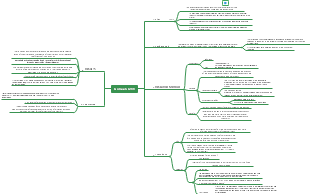
Confused in formulating marketing strategies? The 3C strategic triangle model is a classic choice! It focuses on the three core elements of the company itself, customer needs, and competitors. By analyzing the relationship between the three, we can help enterprises find the right market positioning and formulate unique marketing strategies. Help you seize customers and deal with competitors in market competition, make your marketing strategy more accurate and effective, and start a new marketing situation.
Edited at 2025-01-16 17:55:00Rumi: 10 dimensions of spiritual awakening. When you stop looking for yourself, you will find the entire universe because what you are looking for is also looking for you. Anything you do persevere every day can open a door to the depths of your spirit. In silence, I slipped into the secret realm, and I enjoyed everything to observe the magic around me, and didn't make any noise. Why do you like to crawl when you are born with wings? The soul has its own ears and can hear things that the mind cannot understand. Seek inward for the answer to everything, everything in the universe is in you. Lovers do not end up meeting somewhere, and there is no parting in this world. A wound is where light enters your heart.
Chronic heart failure is not just a problem of the speed of heart rate! It is caused by the decrease in myocardial contraction and diastolic function, which leads to insufficient cardiac output, which in turn causes congestion in the pulmonary circulation and congestion in the systemic circulation. From causes, inducement to compensation mechanisms, the pathophysiological processes of heart failure are complex and diverse. By controlling edema, reducing the heart's front and afterload, improving cardiac comfort function, and preventing and treating basic causes, we can effectively respond to this challenge. Only by understanding the mechanisms and clinical manifestations of heart failure and mastering prevention and treatment strategies can we better protect heart health.
Ischemia-reperfusion injury is a phenomenon that cellular function and metabolic disorders and structural damage will worsen after organs or tissues restore blood supply. Its main mechanisms include increased free radical generation, calcium overload, and the role of microvascular and leukocytes. The heart and brain are common damaged organs, manifested as changes in myocardial metabolism and ultrastructural changes, decreased cardiac function, etc. Prevention and control measures include removing free radicals, reducing calcium overload, improving metabolism and controlling reperfusion conditions, such as low sodium, low temperature, low pressure, etc. Understanding these mechanisms can help develop effective treatment options and alleviate ischemic injury.
Rumi: 10 dimensions of spiritual awakening. When you stop looking for yourself, you will find the entire universe because what you are looking for is also looking for you. Anything you do persevere every day can open a door to the depths of your spirit. In silence, I slipped into the secret realm, and I enjoyed everything to observe the magic around me, and didn't make any noise. Why do you like to crawl when you are born with wings? The soul has its own ears and can hear things that the mind cannot understand. Seek inward for the answer to everything, everything in the universe is in you. Lovers do not end up meeting somewhere, and there is no parting in this world. A wound is where light enters your heart.
Chronic heart failure is not just a problem of the speed of heart rate! It is caused by the decrease in myocardial contraction and diastolic function, which leads to insufficient cardiac output, which in turn causes congestion in the pulmonary circulation and congestion in the systemic circulation. From causes, inducement to compensation mechanisms, the pathophysiological processes of heart failure are complex and diverse. By controlling edema, reducing the heart's front and afterload, improving cardiac comfort function, and preventing and treating basic causes, we can effectively respond to this challenge. Only by understanding the mechanisms and clinical manifestations of heart failure and mastering prevention and treatment strategies can we better protect heart health.
Ischemia-reperfusion injury is a phenomenon that cellular function and metabolic disorders and structural damage will worsen after organs or tissues restore blood supply. Its main mechanisms include increased free radical generation, calcium overload, and the role of microvascular and leukocytes. The heart and brain are common damaged organs, manifested as changes in myocardial metabolism and ultrastructural changes, decreased cardiac function, etc. Prevention and control measures include removing free radicals, reducing calcium overload, improving metabolism and controlling reperfusion conditions, such as low sodium, low temperature, low pressure, etc. Understanding these mechanisms can help develop effective treatment options and alleviate ischemic injury.
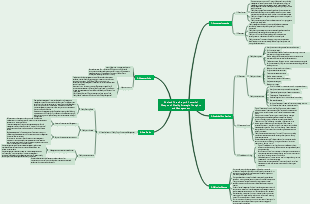
3C Strategic Triangle Model: Classic Marketing Strategy Management Model
1. Conceptual meaning
Kenichi Omamae is the originator of competitive strategy. As early as the mid-1970s, he put forward the view that "business strategy is how to achieve competitive advantages" and built a "strategy three C" analysis framework. The framework points out that when structuring corporate strategic plans, three main players, namely the company itself, customer and competition, must be fully considered. These three key factors form a strategic triangle, called the 3C or strategic triangle.
Only by integrating the company, customers and competitors into the same strategy can sustainable competitive advantages exist. The task of a strategist is to gain an advantage over competition in determining the key factors of business success, while simultaneously enabling the company's strength to cooperate with market demand, ensuring that the company's strength and consumer demand form better coordination overwhelming competitors. The 3C strategic triangle is a classic marketing strategy management model. A complete analysis of this model can help companies evaluate their relative competitive advantages in the industry and then formulate a good marketing strategy.
2. Tool content
2.1 Main content
2.1.1 Company Strategy
The company's strategy aims to maximize the competitive advantage of the enterprise, especially the competitive advantage of the functional areas closely related to the success of the enterprise:
Selectivity and programmatic: Enterprises do not need to be ahead in various functional areas, but gain decisive advantages in a certain core function, which can enhance other functional areas.
Take homemade or purchase as an example: For example, when labor costs rise, the decision to subcontract assembly business of enterprises will affect the cost structure and ability to cope with demand fluctuations.
Improve cost-effectiveness: It can be achieved by reducing costs more efficiently than competitors, making business optimization choices, sharing business key functions, etc.
2.1.2 Customer Strategy
Customers are the basis of all strategies and companies should give priority to customer interests. Customer strategy includes:
Reasonable division of customer groups: it can be divided according to consumption purpose and customer coverage, or segmented the customer market.
Changes in consumer portfolio: Market forces will change the distribution of consumer portfolios, and companies need to reconfigure resources according to time conditions.
2.1.3 Competitor Strategy
Strategists need to examine the key strategic elements of competitors, including R&D capabilities, resource status, etc., and also need to consider their strategic ideas from the other party’s perspective. A company's competitor strategy can be differentiated by:
Brand image differentiation: When product functions and distribution models are converging, brand image may be the only source of differentiation, but it requires long-term monitoring.
Differentiation of profit and cost structure: obtain profits from new product sales and additional services, reasonably allocate fixed costs and variable costs, and low-price strategies can expand market share.
Lightweight boxing tactics: SMEs can adopt variable incentive programs that erode their earnings when competing with market giants.
Hito Kane Mono: When a balance between people, money and things can achieve streamlined enterprise management, "people" should be configured based on the existing "things" and then "things" and "wealth" should be configured as needed.
2.2 Related factors
To analyze the 3C strategic triangle, we also need to consider the company, competitors and customer-related factors:
Company: Including company resources, organizational form, production system, experience curve, etc.
Competitors: cover market share, market position, business strategy, cost advantages, etc.
Customers: involve market segmentation, customer purchase standards, etc.
3. Analytical Application
3.1 Analysis steps
The 3C strategic triangle analysis is divided into three steps: first analyze the market and customers, secondly study competitors, and finally self-analyze the company's own situation. When analyzing, the principles of customer first, enterprise second, competition and cooperation partner third should be followed. The first step is to consider the company's own design based on a full understanding of customers; the second step is to learn positive experience from competitors and potential partners, learn their flexibility in observing the market, and distinguish competitors from market conditions. To improve operational efficiency.
3.2 Analysis path
3.2.1 Who to compete with
Identify current and potential competitors, understand their past activities and future action plans.
3.2.2 Where to compete
Analyze the global and national market share allocation, the market distribution of major competitors, the division of market share of each segment, and the advantages of competitive entities at all levels of competition.
3.2.3 What kind of competition does it take?
Determine the core competitiveness of enterprises in specific industries, judge whether each competitive entity has core competitiveness and where it is reflected, and whether other competitive entities can form or improve their own core competitiveness.
3.2.4 How to compete
Clarify the company's current and future product positioning, market direction, advantages and shortcomings, and the source of future operating performance.
3.3 Application impact
3.3.1 Strategic business units (SBUs)
Strategic operating units need to understand the three basic elements of the 3C strategic triangle and make strategic decisions. For large enterprises, three key issues can be used to test when defining business units. If business units cannot compete effectively, they should be repositioned to meet customer needs and respond to competitor threats.
3.3.2 Freedom of business
Strategic operating units should be integrated into the spirit of business freedom in the triangular alliance. When designing strategies, they should explain the total market capacity, include decisive functions, and understand the key aspects of competitors to win by using various factors.
3.3.3 Adapt the company to market changes
Kenichi Omaemae believes that strategy is the decisive force that enables the company to meet market needs, and a successful market strategy is a strategy that allows the company to do better than its competitors in meeting customer needs.
4. Case Study
Case: Postal mail business 3C analysis example
Company: The goal of the Postal Business Headquarters (mail business group) is to provide public services and improve the profitability of postal services. It has a wide area of express delivery area. It has formulated a Hub & Spoke transportation network system to promote the construction of express delivery services and comprehensive postal logistics information system. .
Customer: The main customer has changed from an individual to an enterprise, and the customer satisfaction of the current parcel service has decreased, so customers are given priority to home delivery services.
Competitive companies: Domestic home delivery companies have grown and the number of companies has increased after the new regulations has been introduced. Foreign postal logistics staff visited abroad and implemented a globalization strategy, actively promoting the privatization of foreign postal bureaus.
5. Characters
Kenichi Omae is the father of Japanese strategy. After graduating from Waseda University, he received a master's degree from Tokyo University of Technology and a doctorate from MIT. He has served as president of the Japanese branch of McKinsey Consulting Company, and is currently the president of the Entrepreneur Business School and the principal of Ichishi School. He was selected as one of the "Five Management Masters in the World" by the British magazine "Economist", accurately predicting the collapse of the former Soviet Union and the bubble in Japan's economy. His main works include "The Strategist's Thoughts" and "The World Without Borders".