 Wondershare EdrawMind
MindMap Gallery Total quality management an effective management system for continuous change
- 34
Total quality management an effective management system for continuous change
This is a mind map about total quality management: an effective management system with continuous change, with the main contents including: 6. Example analysis, 5. Comparison of the characteristics of total quality management with quality inspection and statistical quality control, 4. Implementation Application, 3. Main features, 2. Content analysis, 1. Conceptual meaning.
Edited at 2025-02-04 13:32:30
- DeepSeek User Guide Collection
In order to help everyone use DeepSeek more efficiently, a collection of DeepSeek guide mind map was specially compiled! This mind map summarizes the main contents: Yitu related links, DS profile analysis, comparison of DeepSeek and ChatGPT technology routes, DeepSeek and Qwen model deployment guide, how to make more money with DeepSeek, how to play DeepSeek, DeepSeek scientific research Application, how to import text from DeepSeek into MindMaster, the official recommendation of DeepSeek Wait, allowing you to quickly grasp the essence of AI interaction. Whether it is content creation, plan planning, code generation, or learning improvement, DeepSeek can help you achieve twice the result with half the effort!
- DeepSeek 30 feeding level instructions
This is a mind map about DeepSeek's 30 feeding-level instructions. The main contents include: professional field enhancement instructions, interaction enhancement instructions, content production instructions, decision support instructions, information processing instructions, and basic instructions.
- Voice recognition commercial solution
This is a mind map about a commercial solution for task speech recognition. The main content includes: text file content format:, providing text files according to the same file name as the voice file.
Total quality management an effective management system for continuous change
- DeepSeek User Guide Collection
In order to help everyone use DeepSeek more efficiently, a collection of DeepSeek guide mind map was specially compiled! This mind map summarizes the main contents: Yitu related links, DS profile analysis, comparison of DeepSeek and ChatGPT technology routes, DeepSeek and Qwen model deployment guide, how to make more money with DeepSeek, how to play DeepSeek, DeepSeek scientific research Application, how to import text from DeepSeek into MindMaster, the official recommendation of DeepSeek Wait, allowing you to quickly grasp the essence of AI interaction. Whether it is content creation, plan planning, code generation, or learning improvement, DeepSeek can help you achieve twice the result with half the effort!
- DeepSeek 30 feeding level instructions
This is a mind map about DeepSeek's 30 feeding-level instructions. The main contents include: professional field enhancement instructions, interaction enhancement instructions, content production instructions, decision support instructions, information processing instructions, and basic instructions.
- Voice recognition commercial solution
This is a mind map about a commercial solution for task speech recognition. The main content includes: text file content format:, providing text files according to the same file name as the voice file.
- Recommended to you
- Outline
Product Lifecycle Model A Powerful Tool to Describe Product and Market Operations Methods
- 25
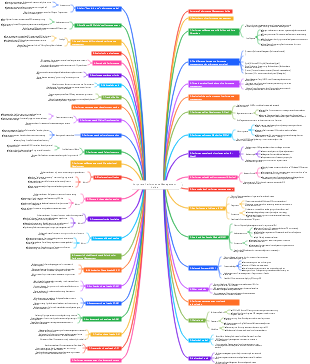



Total quality management: an effective management system for continuous change
1. Conceptual meaning
1.1. Generation and Development
Total quality management originated after the end of World War II. In the 1940s, scientific and technological breakthroughs, productivity development, market competition intensified, consumers' requirements for product and service quality increased. People realized that statistical quality control alone was not enough to effectively control quality, and total quality management began to emerge. In 1951, Dr. Zhu Lan compiled quality management ideas and papers into the "Quality Control Manual", which became popular all over the world. During the same period, Bell Laboratories in the United States carried out comprehensive quality assurance program activities. In 1956, Faganburg of General Electric Company of the United States published a paper "total quality control" in the Harvard Business Review, proposing the concept of TQC (total quality management) for the first time. In 1961, Feigenberg published a book of the same name, promoting the development of quality management from statistical quality control in the manufacturing process to controlling and managing all aspects that meet customer requirements.
Since then, total quality management has been gradually promoted in the service industry and various industries. Japan has made outstanding achievements in this process. Its economic development and high-quality reputation of "Made in Japan" are both due to total quality management. The development of total quality management has gone through four stages: from the introduction of the United States into Japan, the widespread adoption of statistical technology and computer technology, the standardization of content and requirements, and the rise to the level of business management. In 1986, the International Organization for Standardization ISO standardized the content and requirements of total quality management, and officially promulgated the ISO 9000 series standards in March 1987.
1.2. Basic points
The basic point of Total Quality Management (TQM) is: In order to achieve real economic benefits, management must be based on identifying customers' quality requirements, ultimately making customers satisfied with the products in their hands, and centered on this, and ultimately Make the enterprise organization develop healthily. Total quality management is a management system that comprehensively considers and acts on the organization's activities to achieve this goal.
1.3. Basic definition
GB/T6583 - 1994 (idt ISO 8402:1994) defines “Total Quality Management” as: an organization is quality-centric and based on full participation, with the aim of satisfying customers and all members of the organization and management paths that benefit society and achieve long-term success.
1.4. Definition explanation
"All employees" refers to all personnel in an enterprise or organization.
A necessary condition for success in Total Quality Management is the strong and continuous leadership of the top managers, as well as education and training for all members of the organization.
Quality is not only related to the effectiveness of physical products or services, but also closely related to the entire organizational management.
"Social requirements" means that the organization must consider meeting relevant laws, regulations, systems, and social requirements such as environmental protection, life safety, social security, rational development and protection of energy and natural resources, and pay attention to social benefits.
2. Content analysis
2.1. Main content
Total quality management revolves around business activities and operates to achieve business management goals. It is a broad quality system integrating product quality, production cost, delivery time, after-sales service, etc., mainly including the following four aspects:
Quality management of product design process: refers to the quality management of technical preparation work before the formal production of the product. The purpose is to ensure the quality of product and process design and prevent congenital deficiencies.包括做好市场调查研究,提出合理设计方案;重视产品设计审查、工艺验证和试制鉴定工作;加强产品质量的经济可行性分析,确定产品质量最佳点,提高企业和社会经济效益。
Quality management of the production and manufacturing process: It is the central link of total quality management. The task is to ensure the formation of a production management system that can produce qualified and high-quality products, focusing on six types of people, machines, tools, raw materials, methods, measurement means and methods, and environment. Production factors are unfolded. It includes strictly implementing production processes and implementing clean production; strictly implementing technical inspection work, strengthening the management of unqualified products; mastering quality dynamics and conducting quality analysis; taking different measures to carry out process quality control.
Quality management of auxiliary processes: Auxiliary processes include material supply, tool preparation, equipment maintenance, transportation and storage activities. The quality management department needs to promote these links to improve work quality and ensure the stability of the production system. For example, the supply of materials must ensure quality and strengthen warehouse management; tools must ensure quality during use; equipment must be maintained and repaired.
Quality management of the use process: to ensure that the product plays a normal role in use and meets the needs of use. It includes actively carrying out after-sales technical services; investigating and collecting product usage effects and improvement requirements, and feedbacking them to relevant departments to improve products; carefully dealing with the quality of the factory products and establishing the idea of thinking about users.
2.2. Constituent elements
全面质量管理由结构、技术、人员和变革推动者四个要素组成,只有这四个方面全部齐备,才会有全面质量管理这场变革。 Its structural characteristics are low vertical variation, wide management span, low labor division, and decentralization; technically focusing on flexible processes; personnel emphasize workers' education and training, supportive performance evaluation and reward system; change promoters promote comprehensive quality Implementation of management.
2.3. Basic Requirements
Requirements for the whole process: Product quality is ensured through effective control of the entire process from market research, development and design, production and manufacturing to sales and services.
Requirements for the entire enterprise: The quality management functions are distributed in all management classes and functional departments, and all levels and departments of the enterprise are required to assume quality management responsibilities.
Requirements for all employees to participate: Product quality is a comprehensive reflection of the quality of all work of all departments, links and types of employees of the enterprise. All personnel of the enterprise are required to care about product quality and participate in quality management activities.
Requirements of management methods: There are various factors that affect product quality. Companies that promote TQM should use a variety of management technologies and methods to effectively control them according to different factors.
2.4. Eight Principles
Customer-centered: The organization depends on customers, and the total quality management continuously improves quality through the PDCA cycle to meet customer needs.
The role of leadership: Enterprises must participate in quality management from the general manager to the employee level, and the attention of the decision-making level is particularly important. For example, my country's "Quality Management Law" stipulates that the quality department must be directly led by the general manager.
All-staff participation: All-staff participation is the core of the idea of total quality management. The QC group in Japan and the large number of registered QC groups in my country and the benefits it brings prove this.
Process method: The resources and activities involved in total quality management are managed as a process. The PDCA cycle is the method of researching the process, and attention should be paid to the entire process of product production and quality management.
System management: When carrying out quality improvement activities, we must formulate, identify and determine goals, uniformly manage interrelated process systems, and organize all departments to participate to meet customer needs.
Fact-based: Effective decision-making is based on the analysis of data and information, and total quality management must be based on facts.
Mutually beneficial supplier relationship: maintaining mutually beneficial relationships between the organization and supplier can enhance the ability of both parties to create value, and total quality management has penetrated into supplier management.
3. Main features
Total quality management has changed from past post-testing and "gateway" to mainly focus on prevention and improvement; from "managing results" to "managing factors", controlling quality from the root of the source; from mainly division of labor to Focus on coordination, making the organization a close organic whole. Implement the requirements of "three all and one diversified" in total quality management:
Comprehensive quality management: Based on the broad quality concept, it not only manages product quality, but also includes work quality, service quality, etc.; not only manages product performance, but also includes reliability, safety, etc.; not only manages goods, but also manages employees, and provides all aspects of the organization. Carry out comprehensive management.
Quality management of the whole process: Product quality goes through all aspects of the generation, formation and implementation. The scope of total quality management includes the entire process from market research to the end of the product's service life. It is necessary to manage the product formation and subsequent processes and even the use process.形成综合性质量管理体系。
Quality management with all employees participating: Total quality management is the management of comprehensive quality and the entire process. It is not only the responsibility of the quality department or relevant personnel, but also the work of all personnel in the enterprise or organization. All personnel are required to participate.
Total quality management is scientific and diverse: With the development of technology, product quality requirements have improved, and the influencing factors are complex. It is necessary to integrate and apply various management theories and methods to make scientific decisions.
4. Implement application
4.1. How to carry out total quality management
Working methods for implementing PDCA cycle: The basic methods of total quality management can be summarized into four sentences and eighteen characters, namely one process, four stages, and eight steps. A process refers to the process of enterprise management; four stages are the PDCA (planning, execution, inspection, processing) cycle; eight steps are the refinement of the PDCA cycle, including investigating and researching, analyzing the current situation, finding problems, analyzing the causes, Formulate plans, implement plans, check implementation status, summarize experiences and lessons, deal with legacy issues, etc., and each cycle promotes organizational progress.
Do a good job in quality management of manufacturing processes and auxiliary production processes: The quality management of manufacturing processes revolves around production factors, including performing processes, inspection work, mastering quality dynamics, and carrying out process quality control; the quality management of auxiliary production processes must ensure the supply of materials and tools Quality of work in preparation, equipment maintenance and other aspects.
Strengthen the management of 4M: 4M refers to people (Man), equipment (Machine), materials (Material), and methods (Method), which are the main factors affecting product quality during the production process. Management of people includes skills training and improving quality awareness; equipment management should detect problems as early as possible and carry out preventive maintenance; material management should strengthen acceptance inspection and storage; operation method management should standardize the best methods and explain them to workers.
Promote the "5S" activity: Through the "5S" activity (organization, rectification, cleaning, cleaning, and literacy), the work can be orderly, efficiency, guarantee product quality, reduce equipment failure rate, reduce waste, improve safety level, and improve interpersonality. Relationships and improve people's qualities.
Carry out QC group activities: The QC group is the main body of comprehensive quality management activities, with obvious autonomy, extensive mass nature, high democracy and strict scientific nature. Its functions include developing intelligence, improving service quality, and realizing full-staff management. To form a QC group, we must adhere to the principles of voluntary participation, combining top and bottom, seeking truth from facts, flexibility and diversity, and selecting a good team leader. At the same time, leaders should attach importance to support, improve employee participation awareness, cultivate business backbones, and strengthen management.
Implementing ISO9000 quality system standards: The ISO 9000 series standards are consistent with the purpose, requirements and role of TQM. It is a guide for establishing an organizational quality system. Implementing this standard is an effective method and means to carry out comprehensive quality management and lay the foundation for comprehensive quality management.
Strengthen the management of team leaders: Team leaders assume important responsibilities in quality management, including ideological education for team members, organizing quality inspection activities, implementing process discipline, organizing production, carrying out technological innovation, and being responsible for unqualified products.
4.2. Common tools
在应用PDCA循环解决质量问题时,常用的七种统计方法包括排列图、因果图、直方图、分层法、相关图、控制图及统计分析表,这些方法以数理统计为理论基础,科学可靠And intuitive.
Statistical analysis table method and measure plan method: Quality management focuses on scientificity and requires statistical analysis of original quality data. Commonly used statistical analysis tables include bad project questionnaire, part size frequency distribution table, etc., and also used to formulate improvement measures. Measures plan.
Arrangement method: It is an effective method to find out the main factors affecting product quality.
Causal analysis diagram method: also known as characteristic cause diagram, branch diagram or fish bone diagram, it is an effective tool to find the causes of quality problems. By convening a technical democratic meeting, jointly discuss and draw, and determine the main causes.
Hierarchical method: also known as classification method, by classifying collected data by different purposes, the facts reflected by the data are more obvious, making it easier to find problems. It can be classified according to various principles such as time, operator, equipment, operating methods, and raw materials.
Histogram method: also known as mass distribution map, the quality of the production process is judged by delineating and analyzing the product quality distribution status during the production process.
Control chart method: judges and predicts whether the quality status fluctuates during the production process in the form of a control chart, can monitor the process quality dynamics, and plays a role in stabilizing production, ensuring quality and actively preventing.
Spread chart method: By analyzing and studying the relationship between data of two factors, we control the relevant factors that affect product quality.
4.3. Key Elements
In order to successfully implement TQM in total quality management, the company needs to pay attention to eight key elements: ethics, honesty, trust, training, teamwork, leadership, appreciation, and communication. These elements can be divided into four categories:
Foundation: Including ethics, honesty and trust. Ethics are composed of corporate and personal ethics; honesty means integrity, ethics, etc.; trust is a by-product of honesty and ethics behavior and is the basis of comprehensive quality management, encouraging all employees to participate and ensuring customer satisfaction.
Building bricks: Including training, teamwork and leadership. Training is very important to improve employee productivity and can improve employees' various abilities; team collaboration is conducive to solving problems and improving business efficiency. The organizations that implement comprehensive quality management mainly include three types of teams: quality improvement group, problem solving group, and ordinary working group; Leadership is the most important factor in total quality management, requiring managers to provide strategic decisions, instill values, guide employees, and ensure that the concept of total quality management is implemented.
Adhesive cement: refers to communication. Communication is an important link in all aspects of total quality management, including downward communication, upward communication and horizontal communication. Smooth communication and correct information sharing are crucial.
Roof: refers to appreciation. Appreciation provides advice and performance to teams and individuals, which can improve employee self-esteem, productivity and quality, and there are diverse ways, places and times for appreciation.
4.4. Factors influencing successful implementation of TQM
Whether to perform ISO9000 certification: ISO9000 can be considered the cornerstone of TQM. There are two opposing views on the impact of whether an enterprise performs ISO9000 certification on the successful implementation of TQM, one believes that it has an impact and the other believes that it has no impact.
Enterprise size: Different enterprise sizes will affect the enthusiasm of implementing TQM. There are some obstacles for small enterprises to implement TQM, such as difficulty in building customer information feedback mechanisms, but the success of TQM implementation is not positively correlated with the enterprise size. Relevant measures can eliminate this kind of influence.
Time to import TQM and time to implement TQM: Enterprises that imported TQM earlier have won market opportunities and accumulated experience. The length of implementation will also affect the successful implementation of TQM. Large enterprises often have human and financial advantages in implementing TQM. The probability of success is relatively high.
The degree of understanding of TQM by TQM operators: The understanding of TQM and the understanding of its principles by senior managers play an important role in the successful implementation of TQM. Implementers need to have a motivation to implement in-depth understanding of the implementation purpose.
The importance of senior managers and the degree of participation of employees: Senior managers’ emphasis on TQM can ensure the resources required for implementation, and the implementation of TQM requires participation of all employees.
Can TQM become an important path to improve organizational performance: TQM is not the only path to improve organizational performance, but successful implementation requires high-level managers to attach great importance to it, believing it is an important path to improve organizational performance and has a strong implementation motivation.
The business goals of the company and the degree of understanding of TQM as a strategic issue: If quality management is regarded as an important strategic issue, quality issues will be taken seriously. Enterprise employees should know the company's main goals, otherwise they do not know whether their behavior is conducive to achieving the goal. .
5. Comparison of the characteristics of total quality management, quality inspection and statistical quality control
There are differences in total quality management and quality inspection and statistical quality control in terms of production characteristics, quality concepts, management scope, management objects, management characteristics, management basis, management methods, management standardization, management economy, and participating management personnel. From quality inspection to statistical quality control to total quality management, production characteristics have developed from manual and semi-mechanized production to modern large-scale production; the quality concept has developed from narrow quality to broad quality; the management scope has been expanded from limited to production site quality management to products Quality management throughout the process; management objects are limited to product quality development to product quality, work quality, and process quality; management characteristics develop from post-registration to combining prevention and inspection and prevention; management basis focuses on product quality in line with quality specifications to Mainly based on user needs; management methods have evolved from mainly using technical inspection methods to using multiple management methods; management standardization has developed from focusing on technical standards to focusing on both technical standards, control standards and management standards; management economy has evolved from economic development that ignores quality To pay attention to quality and economicality; the participating managers have developed from relying on quality inspection departments and quality management personnel to relying on all employees.
6. Case Study
6.1. Case: APL company's total quality management application
【APL is an active advocate of Total Quality Management (TQM) and is committed to promoting TQM within the company. The goal is to continuously improve work quality through full participation, meet customer needs, and become a world-class high-quality transportation company].
APL's total quality management system and performance:
Reasonable and efficient TQM system and company organizational structure: APL has established a top-down quality management system and has passed ISO9002 certification in many regions. In 1987, he entered the mainland Chinese market and established representative offices in coastal areas since 1989 to form a multimodal transport operation model and organizational structure that is in line with the international level. The organizational structure is reasonable and efficient, the employee responsibilities are clear, and all levels of the quality improvement goals are consistent. Employees can form a quality improvement team to analyze and improve the process.
TQM has enabled APL customers to achieve win-win results:
Performance achieved by APL: APL popularizes TQM education and forms a system, and invests huge amounts of money to carry out training for different personnel. Since the 1980s, a quality improvement group has been established in North America and promoted globally, and the company has successively established about 500 QI groups. The company holds a cross-regional and cross-country TQM achievement competition every two years, and is held every year in northern China, which promotes the research and application of TQM.
Performance achieved by APL customers: With quality gained attention, many of APL's customers are committed to total quality management, and APL has been included in its business cooperation units many times. About 20% of APL's global business is directly designated by the shipper or consignee, and this proportion continues to rise. APL has won many of the highest awards in the shipping industry every year, and has also won awards in Internet services for personalized high-quality services, and has carried out wider cooperation with companies such as General Motors.
Work practice of APL Quality Improvement Group: In 2000, APL Nanjing Branch established a QI group for the transfer and delivery delays of imported goods.
Establishment and preparation of QI team:
Determine members: Members come from all relevant departments, namely the person responsible for import transfer and delivery.
Clarify tasks and make full preparations: clarify the four stages and seven steps of quality improvement, and arrange a dedicated person to record the content of the meeting.
Use the QI flow chart to clarify member positioning: use the flow chart to display the entire process of import transit and delivery, clarify member location and related customer groups, including external customers (import consignee, agent, export consignee) and internal customers (customers Service Department, Operation Department, Finance Department, Shanghai Transfer Department).
Analysis of QI process:
Analysis of the reasons for improvement: In the first six months of 2000, the import transit and delivery delay rates increased, affecting the satisfaction of consignees and the company's export performance.
Confirm the problem: Collect historical data, use verification forms and sector charts to analyze it, and it was found that the import delay ratio increased to 32% from January to June, of which 33% were documents problems.
Analysis of the reasons affecting quality: Using brainstorming method and production characteristics is a cause of pictures (fish bone pictures), and find out three reasons for document problems within the APL: errors in the input port, accidents and lack of Chinese product names.
Solve the problem: List important plans and score them, eliminate unfeasible plans, sort feasible plans, and formulate solutions.
Results: After three months of efforts, the delay rate of import transshipment and delivery was reduced from 32% to 12%, achieving the established target.
Standardization of work procedures: Summarize successful experiences and improve the original work process.
Future plan: Promote the new workflow to subordinate offices with similar import operating models, establish a new QI group for emerging space shortage issues, and move to the next PDCA cycle.