MindMap Gallery 37-The Language of Parents
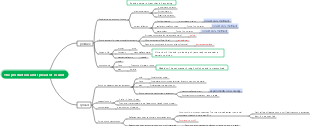
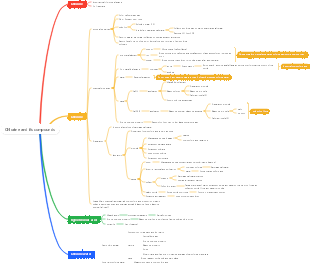
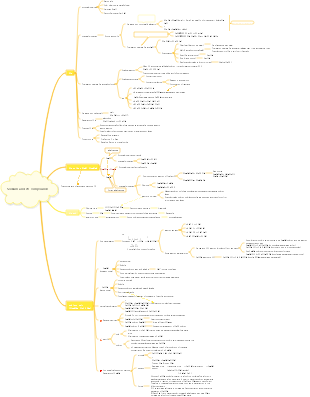
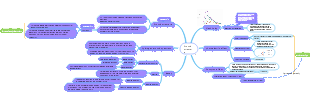
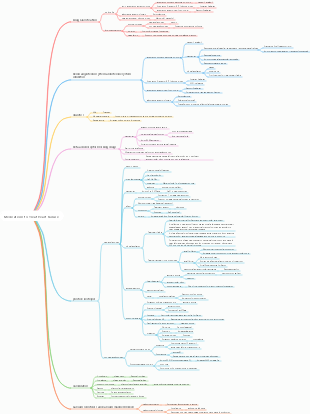
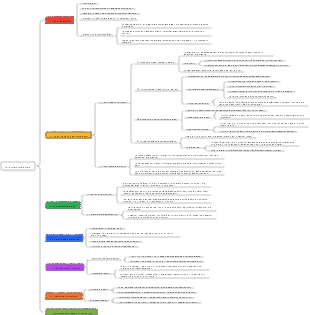
This is a mind map about 37-"Parents' Language", the main contents include: 6. Encountering light and sharing, 5. Related extension and controversial thinking, 4. Refining golden sentences, 3. Core theoretical model and key knowledge points, 2. Content structure and logical framework, 1. Basic information.
Edited at 2025-03-04 18:45:54Rumi: 10 dimensions of spiritual awakening. When you stop looking for yourself, you will find the entire universe because what you are looking for is also looking for you. Anything you do persevere every day can open a door to the depths of your spirit. In silence, I slipped into the secret realm, and I enjoyed everything to observe the magic around me, and didn't make any noise. Why do you like to crawl when you are born with wings? The soul has its own ears and can hear things that the mind cannot understand. Seek inward for the answer to everything, everything in the universe is in you. Lovers do not end up meeting somewhere, and there is no parting in this world. A wound is where light enters your heart.
Chronic heart failure is not just a problem of the speed of heart rate! It is caused by the decrease in myocardial contraction and diastolic function, which leads to insufficient cardiac output, which in turn causes congestion in the pulmonary circulation and congestion in the systemic circulation. From causes, inducement to compensation mechanisms, the pathophysiological processes of heart failure are complex and diverse. By controlling edema, reducing the heart's front and afterload, improving cardiac comfort function, and preventing and treating basic causes, we can effectively respond to this challenge. Only by understanding the mechanisms and clinical manifestations of heart failure and mastering prevention and treatment strategies can we better protect heart health.
Ischemia-reperfusion injury is a phenomenon that cellular function and metabolic disorders and structural damage will worsen after organs or tissues restore blood supply. Its main mechanisms include increased free radical generation, calcium overload, and the role of microvascular and leukocytes. The heart and brain are common damaged organs, manifested as changes in myocardial metabolism and ultrastructural changes, decreased cardiac function, etc. Prevention and control measures include removing free radicals, reducing calcium overload, improving metabolism and controlling reperfusion conditions, such as low sodium, low temperature, low pressure, etc. Understanding these mechanisms can help develop effective treatment options and alleviate ischemic injury.
Rumi: 10 dimensions of spiritual awakening. When you stop looking for yourself, you will find the entire universe because what you are looking for is also looking for you. Anything you do persevere every day can open a door to the depths of your spirit. In silence, I slipped into the secret realm, and I enjoyed everything to observe the magic around me, and didn't make any noise. Why do you like to crawl when you are born with wings? The soul has its own ears and can hear things that the mind cannot understand. Seek inward for the answer to everything, everything in the universe is in you. Lovers do not end up meeting somewhere, and there is no parting in this world. A wound is where light enters your heart.
Chronic heart failure is not just a problem of the speed of heart rate! It is caused by the decrease in myocardial contraction and diastolic function, which leads to insufficient cardiac output, which in turn causes congestion in the pulmonary circulation and congestion in the systemic circulation. From causes, inducement to compensation mechanisms, the pathophysiological processes of heart failure are complex and diverse. By controlling edema, reducing the heart's front and afterload, improving cardiac comfort function, and preventing and treating basic causes, we can effectively respond to this challenge. Only by understanding the mechanisms and clinical manifestations of heart failure and mastering prevention and treatment strategies can we better protect heart health.
Ischemia-reperfusion injury is a phenomenon that cellular function and metabolic disorders and structural damage will worsen after organs or tissues restore blood supply. Its main mechanisms include increased free radical generation, calcium overload, and the role of microvascular and leukocytes. The heart and brain are common damaged organs, manifested as changes in myocardial metabolism and ultrastructural changes, decreased cardiac function, etc. Prevention and control measures include removing free radicals, reducing calcium overload, improving metabolism and controlling reperfusion conditions, such as low sodium, low temperature, low pressure, etc. Understanding these mechanisms can help develop effective treatment options and alleviate ischemic injury.
37-"The Language of Parents"
1. Basic information
Title: "Parents' Language: 30 million vocabulary shapes a stronger learning brain"
Author: Dana Suskind | Translator: Ren Yi
Publisher: Machinery Industry Press
Publication background: Based on the research on the "30 million Vocabulary Initiative" of the University of Chicago, combined with empirical data from neuroscience and pedagogy, it reveals the decisive impact of early language environment on children's intellectual development.
Reasons for recommendation:
American Academy of Pediatrics: “Use science to subvert traditional parenting concepts and provide parents with actionable early intervention programs.”
Evaluation of the field of education: “Looking at the roots of educational inequality and revealing the key role of the locale.”
2. Content structure and logical framework
Part 1: Discovery of Problems – From Cochlear Implant to 30 Million Vocabulary Disparity
Cochlear implant doctor's observation
Zach and Michelle:
Zach: High-frequency interactions in homes after surgery → Normalization of language skills.
Michelle: Lack of interaction after surgery → Language development lags and eventually enters special schools.
Core conclusion: After hearing recovery, the amount of language input determines intellectual development.
Empirical study on the vocabulary gap of 30 million
Betty Hart and Todd Risley's experiments:
Tracked 55 families, it was found that the vocabulary difference before the age of three was 30 million.
Data comparison:
Family of mental workers: 45 million words (cumulatively 3 years old).
Welfare family: 13 million words.
Long-term impact: Vocabulary gap is directly related to IQ, academic achievement and future income.
Part 2: Principles of Science—Neuroplasticity and Language Window
The "pruning mechanism" of the baby's brain
Core theory: Unused neuronal connections gradually degenerate (such as in the case of cataracts in children).
The golden period of language stimulation: Before the age of three, it is a key stage in the construction of language, mathematics and logic abilities.
Destructive effects of stress hormones
The role of cortisol: Long-term stress leads to reduced brain connections and decreased cognitive ability (such as "faceless experiments").
The harm of lack of interaction: Indifference or imperative language aggravates children's anxiety and hinders learning ability.
Part 3: Methodology—3T Principles and Language Practice
Core strategy: 3T principle
Tune In (Emboyant Follow)
Key points of operation: Follow the child's attention and use "children to language" to describe behavior.
Case: The child touches the sheets → “This is the sheets, soft, right?”
Skill: Use repetitive words ("eat meals") to enhance the fun of interaction.
Talk More (full communication)
Parallel conversation: describe the current activity (such as "Mom is cutting carrots, and it's clattering").
Extended out of context: stimulate imagination (such as “Where will the puppy hide if it rains?”).
Language extension: Expand "Hug" to "Do you want your baby to hug him when he is tired?"
Take Turns (Talking in turn)
Open question: Alternative commands (such as "The stove is hot, what if you touch it?").
Cause and effect explanation: cultivate self-control (such as "toys can trip people up, can we organize them together?").
Additional Principle: Turn It Off (Switch off electronic devices)
Disadvantage analysis: The lack of interactive feedback between TV and mobile phones hinders the development of language and emotional intelligence (such as children imitating animation violence without consequences).
Language shaping ability
Mathematical Ability: Daily dialogue incorporates the concepts of numbers and space (such as "buttons: first, second...").
Resolving gender bias: Girls have less exposure to mathematical vocabulary and can be eliminated through language intervention.
Growth thinking: Through process praise (such as “You practice hard, so you make progress”).
Part 4: Social significance and call for action
Low-level solutions to educational inequality
The value of free resources: Parental language can narrow the class gap more than school district housing.
Policy enlightenment: Early education should give priority to popularizing scientific parenting concepts rather than hardware investment.
Challenges of traditional concepts
Misunderstanding refutation: "Children who do not understand before the age of three" is a wrong perception, and early interaction determines lifelong potential.
3. Core theoretical model and key knowledge points
Theoretical model:
30 million vocabulary theory: The difference in language quantity is directly related to children's intellectual development.
Neuroplasticity window period: Before the age of three, it is a critical stage in the construction of brain connections.
3T Principle: A systematic methodology of empathy, communication, and rotational dialogue.
Key experiments and cases
Zach and Michelle: Comparison of language intervention after cochlear implants.
Expression-free experiment: The sudden stop of interaction in the mother caused the baby's cortisol to soar.
Marshmallow experiment: Children with strong self-control achieve higher adulthood, and language interaction is the core of cultivation.
Application scenarios
Family scene: Describe the color and shape of the food during meals, and discuss natural phenomena during walking.
Educational scenario: Teachers use open-ended questions to guide students to think and avoid imperative instructions.
4. Refining golden sentences
"Parents' language is a valuable resource that costs money, but it can determine the future of children more than school district housing."
"The child is a copy of the parents, and how you speak determines how he thinks."
"The language gap before the age of three is the starting point for imbalance in educational resources."
“Switch off TV and turn on conversations – it’s the cheapest early education investment.”
5. Related extension and controversial thinking
Further reading
The same author's work: "Thirty Million Words: Building a Child's Brain" (original English version).
Related books:
"Lifelong Growth": Theoretical Deepening of Growth-based Thinking.
"The Essence of Poverty": The complex relationship between economic conditions and educational investment.
"Deliberate Practice": The scientific methodology for improving ability.
Controversy and doubt
Oversimplification factors: Are other influencing factors such as genetics and nutrition ignored?
Cultural Applicability: Is "child-oriented language" effective in non-Western families?
Technology substitution controversy: Can AI replace parents' language interactions in the future?
6. Compilation and sharing of Hidden Light