MindMap Gallery Neurological regulation
The knowledge points have been summarized and organized, and they can be directly focused on the key points. They can be used as study notes and review materials. I hope they can help high school students in biology♡ Students in need can collect it.
Edited at 2025-03-07 12:26:29Rumi: 10 dimensions of spiritual awakening. When you stop looking for yourself, you will find the entire universe because what you are looking for is also looking for you. Anything you do persevere every day can open a door to the depths of your spirit. In silence, I slipped into the secret realm, and I enjoyed everything to observe the magic around me, and didn't make any noise. Why do you like to crawl when you are born with wings? The soul has its own ears and can hear things that the mind cannot understand. Seek inward for the answer to everything, everything in the universe is in you. Lovers do not end up meeting somewhere, and there is no parting in this world. A wound is where light enters your heart.
Chronic heart failure is not just a problem of the speed of heart rate! It is caused by the decrease in myocardial contraction and diastolic function, which leads to insufficient cardiac output, which in turn causes congestion in the pulmonary circulation and congestion in the systemic circulation. From causes, inducement to compensation mechanisms, the pathophysiological processes of heart failure are complex and diverse. By controlling edema, reducing the heart's front and afterload, improving cardiac comfort function, and preventing and treating basic causes, we can effectively respond to this challenge. Only by understanding the mechanisms and clinical manifestations of heart failure and mastering prevention and treatment strategies can we better protect heart health.
Ischemia-reperfusion injury is a phenomenon that cellular function and metabolic disorders and structural damage will worsen after organs or tissues restore blood supply. Its main mechanisms include increased free radical generation, calcium overload, and the role of microvascular and leukocytes. The heart and brain are common damaged organs, manifested as changes in myocardial metabolism and ultrastructural changes, decreased cardiac function, etc. Prevention and control measures include removing free radicals, reducing calcium overload, improving metabolism and controlling reperfusion conditions, such as low sodium, low temperature, low pressure, etc. Understanding these mechanisms can help develop effective treatment options and alleviate ischemic injury.
Rumi: 10 dimensions of spiritual awakening. When you stop looking for yourself, you will find the entire universe because what you are looking for is also looking for you. Anything you do persevere every day can open a door to the depths of your spirit. In silence, I slipped into the secret realm, and I enjoyed everything to observe the magic around me, and didn't make any noise. Why do you like to crawl when you are born with wings? The soul has its own ears and can hear things that the mind cannot understand. Seek inward for the answer to everything, everything in the universe is in you. Lovers do not end up meeting somewhere, and there is no parting in this world. A wound is where light enters your heart.
Chronic heart failure is not just a problem of the speed of heart rate! It is caused by the decrease in myocardial contraction and diastolic function, which leads to insufficient cardiac output, which in turn causes congestion in the pulmonary circulation and congestion in the systemic circulation. From causes, inducement to compensation mechanisms, the pathophysiological processes of heart failure are complex and diverse. By controlling edema, reducing the heart's front and afterload, improving cardiac comfort function, and preventing and treating basic causes, we can effectively respond to this challenge. Only by understanding the mechanisms and clinical manifestations of heart failure and mastering prevention and treatment strategies can we better protect heart health.
Ischemia-reperfusion injury is a phenomenon that cellular function and metabolic disorders and structural damage will worsen after organs or tissues restore blood supply. Its main mechanisms include increased free radical generation, calcium overload, and the role of microvascular and leukocytes. The heart and brain are common damaged organs, manifested as changes in myocardial metabolism and ultrastructural changes, decreased cardiac function, etc. Prevention and control measures include removing free radicals, reducing calcium overload, improving metabolism and controlling reperfusion conditions, such as low sodium, low temperature, low pressure, etc. Understanding these mechanisms can help develop effective treatment options and alleviate ischemic injury.
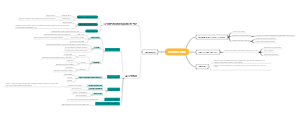
Neurological regulation
Structural basis: nervous system
Central nervous system
brain
Brain: The highest center, the surface is the cerebral cortex
Brain Stem: There is a necessary center to maintain life (regulating breathing, heart)
Cerebellum: Coordinate exercise and maintain body balance
Hypothalamus: Control of biological rhythms (thermal regulation, water and salt balance)
Spinal Cord: Low-level Center for Movement
Peripheral nervous system
Brain nerves and spinal nerves all contain
Afferent nerve (sensory nerve)
Efferent nerve (motor nerve)
Somatic motor nerves (controllable)
Visceral motor nerves (uncontrollable)
Autonomous nervous system (ultimate the internal organs, blood vessels, glands)
Sympathetic nerve (dominates when excited): innervates blood vessels and inhibits gastrointestinal motility
Parasympathetic nerve (quiet): does not innervate blood vessels and promotes gastrointestinal motility
Constituting cells
Neurons
Cell body
Protrusion
Dendrites: sensory nerve endings (income)
Axon: motor nerve endings (egress) A layer of myelin sheath to form nerve fibers
Glial cells: The number is much larger than that of neurons, and they have support, protection, nutrition and repair functions. Participate in the formation of myeloid sheath
Basic method: reflection
Structural basis: Reflective arc
(Stimulation) Receptor: Generate excitement
Afferent nerve: conducting excitement
Excitement conduction position: reflective arc Central nervous system
Neurological Center: Analytical Comprehensive
Efferent nerve: conduction of excitement
Effector: generates an answer
Completion conditions: 1. Reflective arc complete 2. Suitable stimulation
Knee reflex: consists of 2 neurons, afferent nerve endings Constituting a nerve center in the spinal cord with efferent nerve cell body
type
The two are related: non-conditioned reflex is the basis of conditioned reflex; Maintenance of conditioned reflex requires continuous strengthening of non-conditioned stimuli
Conditioned reflex (indirect stimulation)
Features
The day after tomorrow
Unlimited
Need for cerebral cortex participation
Can be established, can be eliminated
Non-conditioned reflex (direct stimulation)
Features
Born
Limited
No cerebral cortex involvement is required
Lifetime
The transmission of excitement
Conduction on nerve fibers
Form: Electrical signal
Resting potential: potassium ion outflow (assisting diffusion), Negative inside and positive outside on both sides of the membrane
Action potential: sodium ions inflow (assisted diffusion), Negative inside and outside the membrane
Due to the presence of potential difference, charge moves, and local currents
Local current direction
Extramembrane: unexcited parts → excited parts
Inside the membrane: excited parts → unexcited parts
Faster speed
Features: Two-way
Extrabody: bidirectional
Intrabody: One way
If you want to maintain the transport of sodium ions in the membrane and the transport of potassium ions in the membrane into the cells, Rely on potassium-sodium pump (sodium out potassium inlet: active transportation)
Transmission between neurons
Structural basis: Synapses Synaptic soma and other neurons cell bodies or synapses, etc. Together synapses
Presynaptic membrane
Fusion with synaptic vesicles to release neurotransmitters (exocytosis)
Neurotransmitter (Small molecule organic matter)
Excitement
Inhibitory (chlorine ion inflow)
Synaptic cleft
Neurotransmitters spread here near the receptors in the postsynaptic membrane
Postsynaptic membrane
There are receptors, neurotransmitters are degraded or recycled into cells after binding to the receptor.
Features: One-way delivery
Cause: Neurotransmitters can only be released from the presynaptic membrane and act on the postsynaptic membrane
Signal transduction: electrical signal—chemical signal—electrical signal —————————— Front film —————————— Back membrane
Slower because of the need to convert chemical signals
Grading adjustment
Somatic exercise
Anterior gynectomy of the central cerebral cortex: somatic motor area Central back: somatosensory area
The movement regulation of various parts of the body has corresponding areas in the cerebral cortex. Their positional relationship characteristics: up and down, cross left and right, Frontal face
The size and fineness of the area of the cerebral cortex motor Positive correlation
Visceral activities
Urination reflex
Sympathetic nerve excitement, bladder relaxation, which is conducive to urine storage Parasympathetic nerve excitement, bladder contraction, which is conducive to urination
The cerebral cortex regulates the spinal cord, and people can consciously control urination. Autonomous nervous system is not completely autonomous
Advanced functions of the human brain
language
Listening: H-zone of the cerebral cortex, auditory language center (auditative aphasia)
Say: S-region of the cerebral cortex, motor language center (motor aphasia)
Read: V-section of the cerebral cortex, visual language center (abscess)
Writing: W area of the cerebral cortex, writing language center (abstract)
Language function and logical thinking are mainly responsible for the left hemisphere of the brain. The right hemisphere is mainly responsible for image thinking
memory
Four stages
Short-term memory (Related to instant information exchange between neurons)
Sensory memory (instant memory)
First-level memory (temporary memory)
Long-term memory (Related to changes in synaptic morphology and function, as well as the establishment of new synapses)
Second level memory
Level 3 memory
thinking
mood
Mental stress → Negative emotions - (accumulation) → Depression - (continued) → Depression - (treatment) → Improvement