MindMap Gallery Efficient Reading
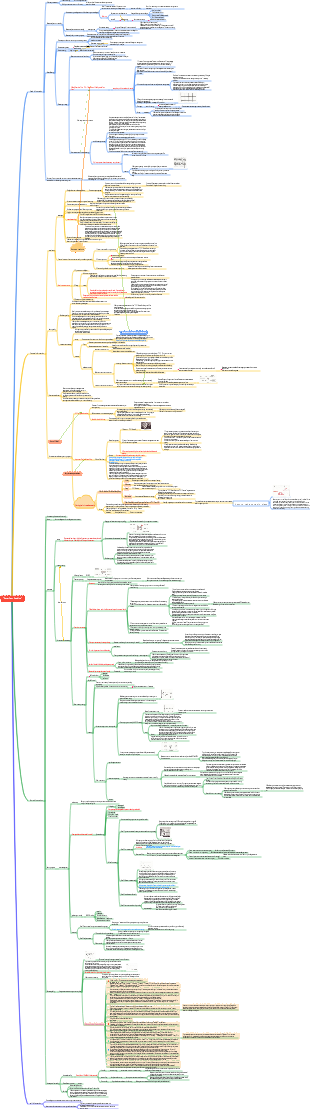
Reading notes, the formula for efficient reading is: one thing, one book, confirm your stage, choose a reading method that suits you = the result of the thing = efficient reading.
Edited at 2025-02-16 21:42:03This is a mind map about the annual work plan of the three pillars of human resources. The main contents include: strategic human resources planning, talent recruitment and allocation, employee performance management, employee training and development, employee relationships and communication, employee welfare and care, human resources information system construction, regulatory compliance and risk management, and organizational culture construction.
This is a mind map for the diagnosis and treatment of acute cerebral hemorrhage in patients with hemodialysis. The annual incidence of acute cerebral hemorrhage in patients with hemodialysis is (3.0~10.3)/1000, and the main cause is hypertension. Compared with non-dialysis patients, the most common bleeding site is the basal ganglia area, accounting for 50% to 80%; but the bleeding volume is large and the prognosis is poor, and the mortality rate is 27% to 83%. Especially for patients with hematoma >50ml, hematoma enlarged or ventricular hemorrhage on the second day after onset, the prognosis is very poor.
The logic is clear and the content is rich, covering many aspects of the information technology field. Provides a clear framework and guidance for learning and improving information technology capabilities.
This is a mind map about the annual work plan of the three pillars of human resources. The main contents include: strategic human resources planning, talent recruitment and allocation, employee performance management, employee training and development, employee relationships and communication, employee welfare and care, human resources information system construction, regulatory compliance and risk management, and organizational culture construction.
This is a mind map for the diagnosis and treatment of acute cerebral hemorrhage in patients with hemodialysis. The annual incidence of acute cerebral hemorrhage in patients with hemodialysis is (3.0~10.3)/1000, and the main cause is hypertension. Compared with non-dialysis patients, the most common bleeding site is the basal ganglia area, accounting for 50% to 80%; but the bleeding volume is large and the prognosis is poor, and the mortality rate is 27% to 83%. Especially for patients with hematoma >50ml, hematoma enlarged or ventricular hemorrhage on the second day after onset, the prognosis is very poor.
The logic is clear and the content is rich, covering many aspects of the information technology field. Provides a clear framework and guidance for learning and improving information technology capabilities.
Reading stage
Initial stage
5-minute reading method + business card storage reading method Intelligent classification is available at any time
Intermediate stage
Theme reading method Experts in the segment. New identity tags, new identity, ideal life
Advanced stage
Pyramid System
Layered
The first level: the total amount of the underlying logical thinking knowledge system.
The second level: the depth of professional skills and knowledge system.
The third level: the breadth of the knowledge system of related disciplines.
The fourth level: innovate the new level of self-knowledge system.
filter
First, whether it can improve one of your skills;
Second, whether it can help you approach your goals and achieve your ideals;
Third, whether it can form a link with your original knowledge system;
Fourth, whether it can subvert your original cognition and form new values;
Fifth, can it open up your curiosity about the world?
Reading method
Main: Quick Read
Stage 1: Keyword reading method
Stage 2: Ten practices at one glance
Stage 3: Whole-brain reading method
The formula for efficient reading is: one thing, one book, confirm your stage, choose a reading method that suits you = the result of the thing = efficient reading.
Useful books
One is the core theme, accounting for 4%
The second is the main point, accounting for 20%
Fourth, case argument
Five is perception and thought
76%
Reading value
Literature
Value positioning
The first step is to transform from a participant to an organizer.
The meaning of life
The first type: find the value that the results create by work to others.
The second type: find the meaning of life through the satisfaction brought by dedication.
The third type: find the meaning of life by choosing an attitude towards life.
Reading direction
Learn skills
The first question: Assess who were the most needed in this circle in the past and why did they need it?
The second question: In your circle now, who are the people you are in most need and why?
The third question: In the future, what are the skills that are most likely to be needed in your circle?
Read Feedback
past
Past reading status
Now
Write down everything you do about reading now, including the time you invest every day.
future
Write down the feedback you hope to read to bring you and make a list of them.
Manage yourself
About the goal
3 levels of reading goals
1. Establish an underlying logical knowledge system
2. It refers to a person's professionalism.
Target
First point: To clarify a goal, you can be ambitious, but you can't imagine it.
The second point: Find the essence behind the goal, work hard on the key points, and achieve twice the result with half the effort.
The third point: The goal can be big, but the small goals executed every day must be small, and divide them into the smallest steps, so small that you can complete them without thinking.
Microhabits: "Decompose the habits you want to develop into the smallest unit. What is the smallest unit? It's so small that you can't accomplish it."
Target strategy
The first type: ability motivation.
Split the big goals into your circle of competence. What you do every day must be within your circle of ability, not within your circle of ability, and you must become within your circle of ability before doing it.
The second type: self-motivation.
Every time you eliminate a grid, you must give yourself a reward.
thinking
Way of thinking
What makes you really decide to stop doing something is the emotion you don't want to do it. That is, the expectation of reading results is not completed, and the essence behind it is your way of thinking and cognition.
8 elements of thinking
The first element: purpose.
The second element: source of information.
Message is the switch that triggers your behavior.
The third element: the root cause of the problem.
The fourth element: cognitive concept.
The direction of thinking is a concept that a person masters.
Fifth element: existing perspective.
Take into account all possible perspectives and explanations in full, Be wary of the influence of personal motives and prejudice, and pay more attention to seeking truth/
The sixth element: logical inference.
The seventh element: hypothetical result.
The driving force that guides the direction of thinking
Element 8: Give meaning.
Thinking gives all the meaning and value of behavior.
Thinking warning formula
"If...I'll..."
The first question: What is the basis for me to think like this?
The second question: What kind of results will be produced by thinking like this?
The third question: Are the results produced what I want?
Time Management
The core of time management is specific things rather than yourself or the time itself. It is a process of managing specific things, not the result.
One is to do something at a fixed time, and the other is to get a result from each thing.
Value Exchange
Doing things we must do, things that allow ourselves to grow, things that match our abilities will create resistance beyond our circle of competence.
Time Management Strategy: Evaluation, Investment and Budget
Habit misunderstanding
The first misunderstanding: Habits are a way of life, not a persistence
The second misunderstanding: Believe in the optimist fantasy of the brain and overestimate your perseverance
The third misunderstanding: do not understand or learn anything, execute immediately
First, analyze the principle of forming the result of the matter; second, make the analysis result into a detailed execution process, estimate the time, energy, material resources, etc.; finally, measure whether you have the conditions to complete this matter based on the facts of your past work, and objectively evaluate the price you need to pay to do this matter well.
Objectively evaluate the difficulty of things, then match them yourself, and you will get objective data.
Habit strategy
1. Only develop one habit at a time
2. Set small goals and achieve them beyond expectations
3. Discover resistance, reduce the difficulty of execution Keep it down until you are not resistant to your emotions, and then continue to do it.
Read the output
Material library
Part 1: Title Material Library
Part 2: Case and Story Material Library
Part 3: Golden Sentences and Celebrity Quotes Material Library
The starting point is deep imitation
High-recognition writing
Strategy
Dare to be more important
The first strategy: Teaching as learning
The second strategy: Course-style selling
The third strategy: quickly publish your first book in your life, learn from books
Before writing
1. Who did you write to?
2. What problems do you want to help your readers solve? (Core Topic)
3. What do you want readers to do after reading the article?
Writing template
Module 1: Description of pain points, raise problems.
Module 2: Explain the viewpoint and explain the reasons.
Module 3: Positive cases.
Module 4: Negative cases.
Module 5: Solution.
Module 6: Article sublimation.
Module 7: Call for action.
Create a course "Geese who can lay golden eggs"
Step 1: Find something and make it more than 90% of people, interests, hobbies, and skills.
Step 2: Through various channels, let as many people as possible know your ability (process)
Step 3: Collect and study courses in the same field, and then analyze what the starting point of these courses are and what problems are to solve. You should find the entry point of your course by learning other people’s course design methods and determine what problems you want to solve with this course.
Step 4: Organize the outlines of these course cases and create your course outline based on your skills and personal brand story.
Step 5: Create course content. It is the specific way to solve problems in your course. Find solutions to problems in books in related fields of courses with strong background support
Step 6: Write a word-by-word draft of the course. Write a word-by-word draft for each course and keep revising it until you are satisfied. You must preview each word-by-word draft in advance to ensure the quality of the course.
Step 7: Operation and promotion
Money-making guide
Phase 1: Find your dream
Phase 2: Set clear goals
Phase 3: The goal that must be broken down
Phase 4: Target Implementation Guarantee Plan
Stage 5: The deadline for realizing your dreams
Money View
Judge income
One is skills
The second is energy
The third is personal brand
Fourth, way of thinking
Fifth, the ability to innovate and solve problems
How to make money
First, help others create value and obtain income through physical strength and existing knowledge;
The second is to meet the needs of fixed groups through the products or services you develop yourself to obtain income. This way of making money is generally to create a money-making machine, which will turn the time and energy you invest into a valuable product and sell it to more people at the same time, such as paying for knowledge.
Third, make money for yourself through others, and the company
Fourth, make money through money and invest in various ways.
Logical thinking ability determines your problem-solving ability. The essence of solving a problem is analysis and reasoning.