MindMap Gallery Human Parasitology Chapter 2 Biology of Parasitology
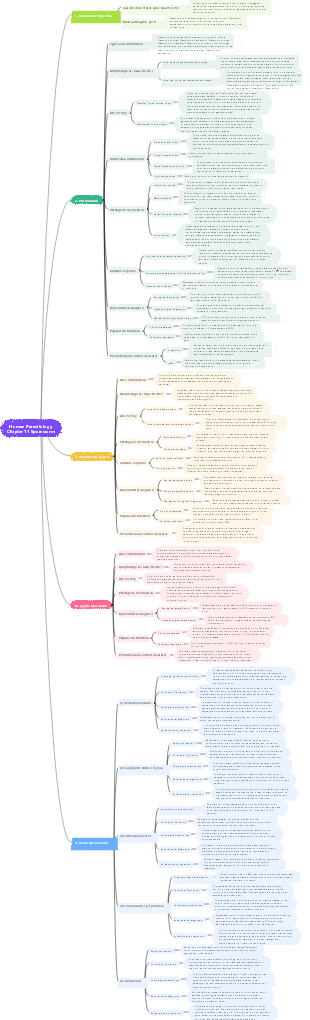
This is a mind map about the biology of parasites in Chapter 2 of "Human Parasitology", which mainly includes: 1. Parasite relationships and their evolution, 2. Parasite life history, parasites and host types, 3. Parasite nutrition and metabolism, 4. Parasite classification system.
Edited at 2025-02-20 20:50:37This template shows the structure and function of the reproductive system in the form of a mind map. It introduces the various components of the internal and external genitals, and sorts out the knowledge clearly to help you become familiar with the key points of knowledge.
This is a mind map about the interpretation and summary of the relationship field e-book, Main content: Overview of the essence interpretation and overview of the relationship field e-book. "Relationship field" refers to the complex interpersonal network in which an individual influences others through specific behaviors and attitudes.
This is a mind map about accounting books and accounting records. The main contents include: the focus of this chapter, reflecting the business results process of the enterprise, the loan and credit accounting method, and the original book of the person.
This template shows the structure and function of the reproductive system in the form of a mind map. It introduces the various components of the internal and external genitals, and sorts out the knowledge clearly to help you become familiar with the key points of knowledge.
This is a mind map about the interpretation and summary of the relationship field e-book, Main content: Overview of the essence interpretation and overview of the relationship field e-book. "Relationship field" refers to the complex interpersonal network in which an individual influences others through specific behaviors and attitudes.
This is a mind map about accounting books and accounting records. The main contents include: the focus of this chapter, reflecting the business results process of the enterprise, the loan and credit accounting method, and the original book of the person.
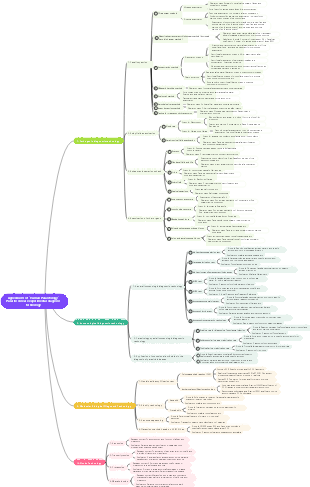
Human Parasitology Chapter 2 Biology of Parasites
1. Parasitic relationships and their evolution
(I) Parasitic and Parasitic Relationship
Mutualism
Examples of termites and flagellates: Termites provide food and habitat for flagellates, and flagellates break down wood chip fibers for both parties to use
Commensalism
Examples of crucian carp and large fish: crucian carp is adsorbed on the surface of large fish, which is not beneficial to large fish and increases the chances of crucian carp foraging
Parasitism
Examples of roundworms and human body: roundworms use food in the human digestive tract as a source of nutrition, resulting in malnutrition and developmental disorders in the human body.
(II) Evolution of parasitic relationships
Changes in shape and structure
Nematodes and tapeworms that are parasitic in the intestine: evolved into linear or banded shape to adapt to the intestinal cavity
Extracorporeal parasitic fleas: flat on both sides, wingless, and swing-like for easy movement
Organ changes: such as digestive tract flukes and tapeworms produce attachment organs, tapeworms degenerate digestive organs, protozoa motor organs are lacking, many parasites have developed reproductive systems and even hermaphrodites
Changes in physiological functions
Intestinal parasites change from aerobic metabolism to glycolysis to obtain energy
Strengthening reproductive capacity
Tapeworm mature section with male and female reproductive system
Female roundworms lay about 200,000 eggs per day
Female Ban's Wuce nematode produces millions of larvae
Fludes have generational alternation of sexual reproduction and asexual reproduction
Changes in invasive power
Toxoplasma gondii secretion penetration enhances cell invasion ability
The tissue-lytic amoeba synthesized proteolytic enzyme invades the host intestinal wall tissue, while the co-occurring colon cannot
The formation of immune evasion function
Trypanosoma Africa replaces glycoproteins on the surface of insects to produce neoantigens to avoid immune attacks
Childworm Mann's lung stage combines host antigen to avoid epidemic attack
Gene mutation or recombination
Environmental pressure causes the parasite gene to mutate or recombinate, resulting in phenotypic changes. For example, the genome difference between Taiwan, Taiwan, and other geographical strains, leads to the inability to cause disease to the human body.
2. Parasite life history, Parasite and host type
(I) Life history of parasites
Parasites complete the complete process of growth, development and reproduction in the first generation, including invading the host pathway, moving, settlement and departure methods within the host, the host and environmental conditions required for development. The stage in which humans are infectious in life history is the infection period
Direct type: Life history process does not require intermediate hosts, such as Trichomonas vaginalis, Giardia lancea, tissue-lysed amoeba, roundworm, hookworm, these worms are soil-derived worms
Indirect type: Life history requires intermediate hosts or vector insects to develop until the infection stage before infecting the human body, such as Plasmodium, Schistosoma, and Firworms. These worms are biologically derived worms
(II) Parasites and their types
Obligatory parasite
Plasmodium development stages must be carried out in humans and mosquitoes
Hookworm larvae can grow on its own and must invade the human body's parasites when it develops to a certain stage.
Facultative parasite
The feces are usually self-generated in the soil and can also invade the human body's parasites.
Endoparasite
For example, the perverted intestinal nematodes parasitizes in the intestine, the larvae parasitizes in skeletal muscle tissue, and the toxoplasma gondola in the cells
Ectoparasite
Mainly refer to mosquitoes, levitra, lice, flea, tick and other arthropods, mostly temporary parasites
Opportunistic parasite
The host's immune function is normal and it causes disease when it is hypoimmune, such as Toxoplasma gondii and cryptosporidium
(III) Host and its type
Definitive host
The host that is parasitic in adults or sexual reproductive stages, such as Schistosoma worm parasitizes in the human body, and the human is the final host
Intermediate host
The hosts parasitic larvae or asexual reproductive stage are divided into first and second intermediate hosts. For example, the first intermediate host of Cystosacia is freshwater snail, and the second intermediate host is freshwater fish
Reservoir host
Certain parasites can be parasitic in humans and in vertebrates. The latter can transmit parasites to humans under certain conditions. For example, Cystosomiae can parasitize in humans and cats, and cats are hosts for insect preservation.
Paratenic host, transport host
Parasite larvae invade into non-suitable hosts and cannot develop into adults, but they can survive and maintain their larval state for a long time. Only by invading suitable hosts can they develop into adults. For example, if the child worm invades the wild boars, they cannot develop into adults. Wild boars are reincarnated hosts.
3. Nutrition and metabolism of parasites
(I) Nutrition
The nutrients required by parasites are the same as those of ordinary animals, including carbohydrates, proteins, fats, vitamins and trace elements.
Protozoa obtains nutrients: simple diffusion, easy diffusion, active transport, endocytosis, some cellular orifices are obtained from the cellular orifices, some phenotypic food vesicles are digested and absorbed, some worms are absorbed by the digestive tract, and some tapeworms are absorbed by the body wall.
(II) Metabolism
Energy metabolism
The energy sources of parasites are mainly through glycolysis. The parasitic environment and oxygen content are different. For example, ascaris eggs and larvae undergo aerobic respiration, while adults undergo rosaic acid respiratory system in the small intestine.
Many worms and protozoa such as Plasmodium, Giardia lancea, tissue-lysed amoeba, etc. mainly obtain energy through glycolysis.
Anabolic
Parasite growth and reproduction require high-speed anabolic metabolism, but the nutrition comes from the host and the anabolic species are limited. For example, parasitic worms cannot synthesize cholesterol and unsaturated fatty acids, and most protozoa cannot synthesize cholesterol.
Nucleotide metabolism: Parasitic protozoa and helminths lack the initial purine synthesis pathway, relying on remedial pathways, pyrimidine synthesis is through de novo synthesis and remedial pathways, such as trypanosoma, Plasmodium, Toxoplasma gonzo
Amino acid metabolism: Trypanosoma Rhodesia can synthesize a variety of amino acids from phosphoenolpyruvate. The catabolism of protozoa varies from species to species. The worms actively absorb amino acids, and its catabolism is not completely clear.
4. Parasite classification system
(I) Naming
Parasitoid name consists of genus names and species names, and is represented in Latin or Latinized characters. The genus names are in the uppercase and species names are in the lowercase, such as Schistosoma japonicum (Schistosoma japonicum)
(II) Classification
Medically, protozoa are called protozoa, flat animals and linear animals are collectively called worms. The spinyworms in the phylum Apricot are of their own type. Medically related arthropods have exoskeletons, segmented and paired appendages.
4 phylas of invertebrates in the animal kingdom (Planetia, Linear, Apricotina, Arthropod)
3 terrain in the protozoa sub-world (the phyllogram, the phyllogram, and the cilia phyllogram)