MindMap Gallery Human Parasitology Chapter 4 Immunity of Parasite Infection
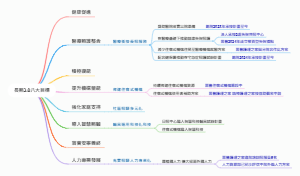
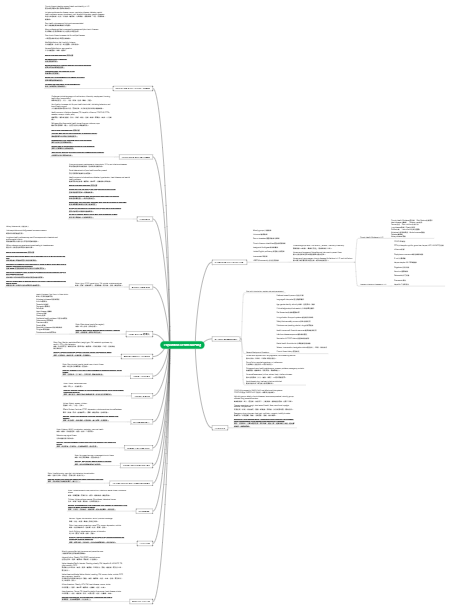
This is a mind map about the immunity of parasitic infection in Chapter 4 of "Human Parasitology", which mainly includes: 6. Hypersensitivity reaction, 5. Immune evasion, 4. The main process of immune response, 3. Parasite antigen, 2. The role of immune response, 1. Types of immune response.
Edited at 2025-02-21 09:49:31This template shows the structure and function of the reproductive system in the form of a mind map. It introduces the various components of the internal and external genitals, and sorts out the knowledge clearly to help you become familiar with the key points of knowledge.
This is a mind map about the interpretation and summary of the relationship field e-book, Main content: Overview of the essence interpretation and overview of the relationship field e-book. "Relationship field" refers to the complex interpersonal network in which an individual influences others through specific behaviors and attitudes.
This is a mind map about accounting books and accounting records. The main contents include: the focus of this chapter, reflecting the business results process of the enterprise, the loan and credit accounting method, and the original book of the person.
This template shows the structure and function of the reproductive system in the form of a mind map. It introduces the various components of the internal and external genitals, and sorts out the knowledge clearly to help you become familiar with the key points of knowledge.
This is a mind map about the interpretation and summary of the relationship field e-book, Main content: Overview of the essence interpretation and overview of the relationship field e-book. "Relationship field" refers to the complex interpersonal network in which an individual influences others through specific behaviors and attitudes.
This is a mind map about accounting books and accounting records. The main contents include: the focus of this chapter, reflecting the business results process of the enterprise, the loan and credit accounting method, and the original book of the person.
Human Parasitology Chapter 4 Immunity from parasite infection
1. Types of immune responses
Innate immunity (nonspecific immunity)
Physiological barriers such as skin, mucous membranes, placenta, etc. resist parasite invasion
Phage cells, eosinophils, natural killer lymphocytes and complement in the blood and tissues play a killing role in invading insects
Adaptive immunity (specific immunity)
It has immune memory function, and can produce a more rapid and strong immune response when the same parasite is reinfected.
Self-limiting: the gradual elimination of antigens causes the loss of lymphocyte activation conditions and/or enhances the immune regulatory function, and weakens the level of immune response; the failure of parasites to be cleared or negative immune regulation is not established, which can lead to pathological consequences
Eliminating immunity: The host clears the parasites in the body and is completely resistant to reinfection, such as skin leishmaniasis caused by tropical Leishmaniae (rare)
Non-elimination immunity: induces the host to have some immunity to reinfection, but cannot completely remove parasites in the body, such as malaria's worm-bearing immunity and schistosomia's accompanying immunity
2. The role of immune response
Immune protection
By killing parasites, it can protect the host to varying degrees to prevent it from
Immunopathology
Excessively strong immune response may lead to pathological damage to host tissue cells, and both results often occur at the same time.
3. Parasite antigen
Classified by insect body structure
Epimembrane antigen
Body antigen
Egg antigen
Excretion/secretion of antigens
Classified by developmental stage
Antigens at different stages
Classified by chemical composition
Protein antigen
Polysaccharide antigen
Glycoprotein antigen
Glycolipid antigen
Importance of surface and excretion/secretion of antigens
Direct contact with the host, induces protective immune response and/or immunopathological response, and can be used as an immunodiagnostic testing object
4. The main process of immune response
Antigen treatment and presentation
Parasite antigens are uptaken by antigen-presenting cells such as macrophages, dendritic cells, and B cells.
Protein antigen is processed into peptides in cells, linked to the main histocompatible complex molecules to form a polypeptide/MHC complex, and is expressed on the cell surface for antigen presentation.
Parasite non-protein antigens can crosslink with B cell surface membrane immunoglobulins, causing B cell activation without T-cell assistance to produce humoral immune effects
Activation and proliferation of immune cells
Activation, proliferation and differentiation of antigen-specific lymphocytes after recognition of antigens
T cells proliferate and differentiate into sensitized T cells, B cells proliferate and differentiate into plasma cells, and partially form memory cells
Activated antigen presenting cells and T cells produce multiple cytokines to regulate lymphocyte proliferation and differentiation
Interleukin-2 is an important interstitial essential for T cell survival and proliferation
T/B cells recognize specific antigens to produce the first signal that is activated, and provide the second signal, namely the costimulation signal, with the antigen presenting molecule on the cell surface.
Negative regulation: PD-1 receptors on the surface of T cells bind to their ligands to inhibit
The production of cellular and humoral immunity
Cellular immunity
Nonspecificity: phagocytic, killer, NK cell-mediated nonspecific killing effects on parasites
Specificity: T cell mediated, including helper T cells (Th), delayed hypersensitivity T cells (TD or TDTH), regulatory T cells (Treg), cytotoxic T cells (Tc or CTL), and inhibitory T cells (Ts)
Th cells secrete different cytokines to regulate immunity: Th1 secretes IL-2, IL-12, IFN-γ, etc. to promote NK, macrophages, Tc and other people to activate and kill parasites; Th2 produces IL-4, IL-5, IL-6, IL-10, IL-13, etc. to regulate humoral immunity; Th17 secretes IL-17 participates in anti-parasitic infection or pathological immune response; Tfh cells act on B cells to promote antibody production
Humoral immunity
Antibodies kill insects alone or with complement participation, or with effector cells participating in effector cells exert effects effects
Humoral immunity plays an important role in anti-ectoparasite infection and is also involved in immune pathological responses
V. Immune Escape
Isolation of anatomical positions
Parasites are parasitic in host cells or cavity, and their unique physiological barriers are isolated from the immune system, such as malaria parasites that are parasitic in red blood cells.
Parasites form protective cyst walls in the host and are isolated from immune cells, such as the cysts of Toxoplasma gondii
Changes in surface antigens
Antigen mutation: Parasites have specific antigens at different development stages, and antigens can also be changed at the same development stage, such as Trypanosoma brucea
Molecular simulation and camouflage: The body surface of the parasite expresses similar components to the host tissue, or combines the host component to form antigenic camouflage, such as schistosomiasis lung stage
The surface membrane falls off and update: The worm's surface membrane keeps falling off and renewing, causing the bound antibodies to fall off.
Suppress the host's immune response
Depletion of specific B cell clones: Parasitic infection induces host polyclonal B cell activation, producing a large number of unprotective antibodies, resulting in specific B cell depletion
Induction and activation of Treg cells: Treg cells inhibit the proliferation, differentiation and effects of immune-active cells, such as mice infected with Schistosoma dysfunction
Insect-derived lymphocytosis factors: Parasite secretions and excretions are lymphocytosis or inhibit lymphocyte activation, such as the thermally stable glycoprotein of Schistosoma mannello and the protease secreted by Trypanosoma cruzi
Production of blocking antibodies: No insecticidal antibodies bound to the surface of the insect block the binding of insecticidal antibodies, such as hosts infected with Schistosoma mannellosa, filaria and trichinidella
6. Hypersensitivity
Type I hypersensitivity reaction (fast hairstyle)
Parasite antigens stimulate the host to produce IgE, which binds to mast cells or basophil surface receptors to sensitize
Re-contacting the same antigen occurs, a bridge reaction occurs, the cells are degranulated, and the inflammatory mediators are released, leading to capillary dilation, enhanced permeability, smooth muscle contraction and local inflammation, which can cause allergic shock
The antibodies that cause type I hypersensitivity are mainly IgE, and some IgG subclasses can also mediate
Type II hypersensitivity reaction (cell lytic/cytotoxic)
Target cell surface antigens bind to IgG or IgM, resulting in complement activation or damage to target cells through antibody-dependent cell-mediated cytotoxicity
Such as nigra and malaria, insect antigens adsorb on the surface of red blood cells, causing hemolysis and anemia
Type III hypersensitivity reaction (immune complex type)
Parasite antigens form immune complexes with antibodies, which are deposited in tissues to activate complement, leading to inflammatory responses and tissue damage
Schistosoma schistosomiae continuously releases antigens and easily forms immune complexes. The size of the IC determines its clearance rate. IgG type IC is easily cleared, and IgA type is easily deposited.
Systemic pathogenesis is manifested as fever, urticaria, etc., local diseases such as immune complex nephritis
Type IV hypersensitivity reaction (late-onset)
Mediated by T cells, such as the formation of egg granuloma of Schistosoma worm
Parasitic infections can have multiple types of hypersensitivity reactions, such as schistosomiasis
1. Types of immune responses
Innate immunity (nonspecific immunity)
Physiological barriers such as skin, mucous membranes, placenta, etc. resist parasite invasion
Phage cells, eosinophils, natural killer lymphocytes and complement in the blood and tissues play a killing role in invading insects
Adaptive immunity (specific immunity)
It has immune memory function, and can produce a more rapid and strong immune response when the same parasite is reinfected.
Self-limiting: the gradual elimination of antigens causes the loss of lymphocyte activation conditions and/or enhances the immune regulatory function, and weakens the level of immune response; the failure of parasites to be cleared or negative immune regulation is not established, which can lead to pathological consequences
Eliminating immunity: The host clears the parasites in the body and is completely resistant to reinfection, such as skin leishmaniasis caused by tropical Leishmaniae (rare)
Non-elimination immunity: induces the host to have some immunity to reinfection, but cannot completely remove parasites in the body, such as malaria's worm-bearing immunity and schistosomia's accompanying immunity
Signaling system for activation of immune cells
2. The role of immune response
Immune protection
By killing parasites, it can protect the host to varying degrees to prevent it from
Immunopathology
Excessively strong immune response may lead to pathological damage to host tissue cells, and both results often occur at the same time.
3. Parasite antigen
Classified by insect body structure
Epimembrane antigen
Body antigen
Egg antigen
Excretion/secretion of antigens
Classified by developmental stage
Antigens at different stages
Classified by chemical composition
Protein antigen
Polysaccharide antigen
Glycoprotein antigen
Glycolipid antigen
Importance of surface and excretion/secretion of antigens
Direct contact with the host, induces protective immune response and/or immunopathological response, and can be used as an immunodiagnostic testing object
4. The main process of immune response
Antigen treatment and presentation
Parasite antigens are uptaken by antigen-presenting cells such as macrophages, dendritic cells, and B cells.
Protein antigen is processed into peptides in cells, linked to the main histocompatible complex molecules to form a polypeptide/MHC complex, and is expressed on the cell surface for antigen presentation.
Parasite non-protein antigens can crosslink with B cell surface membrane immunoglobulins, causing B cell activation without T-cell assistance to produce humoral immune effects
Activation and proliferation of immune cells
Activation, proliferation and differentiation of antigen-specific lymphocytes after recognition of antigens
T cells proliferate and differentiate into sensitized T cells, B cells proliferate and differentiate into plasma cells, and partially form memory cells
Activated antigen presenting cells and T cells produce multiple cytokines to regulate lymphocyte proliferation and differentiation
Interleukin-2 is an important interstitial essential for T cell survival and proliferation
T/B cells recognize specific antigens to produce the first signal that is activated, and provide the second signal, namely the costimulation signal, with the antigen presenting molecule on the cell surface.
Negative regulation: PD-1 receptors on the surface of T cells bind to their ligands to inhibit
The production of cellular and humoral immunity
Cellular immunity
Nonspecificity: phagocytic, killer, NK cell-mediated nonspecific killing effects on parasites
Specificity: T cell mediated, including helper T cells (Th), delayed hypersensitivity T cells (TD or TDTH), regulatory T cells (Treg), cytotoxic T cells (Tc or CTL), and inhibitory T cells (Ts)
Th cells secrete different cytokines to regulate immunity: Th1 secretes IL-2, IL-12, IFN-γ, etc. to promote NK, macrophages, Tc and other people to activate and kill parasites; Th2 produces IL-4, IL-5, IL-6, IL-10, IL-13, etc. to regulate humoral immunity; Th17 secretes IL-17 participates in anti-parasitic infection or pathological immune response; Tfh cells act on B cells to promote antibody production
Humoral immunity
Antibodies kill insects alone or with complement participation, or with effector cells participating in effector cells exert effects effects
Humoral immunity plays an important role in anti-ectoparasite infection and is also involved in immune pathological responses
V. Immune Escape
Isolation of anatomical positions
Parasites are parasitic in host cells or cavity, and their unique physiological barriers are isolated from the immune system, such as malaria parasites that are parasitic in red blood cells.
Parasites form protective cyst walls in the host and are isolated from immune cells, such as the cysts of Toxoplasma gondii
Changes in surface antigens
Antigen mutation: Parasites have specific antigens at different development stages, and antigens can also be changed at the same development stage, such as Trypanosoma brucea
Molecular simulation and camouflage: The body surface of the parasite expresses similar components to the host tissue, or combines the host component to form antigenic camouflage, such as schistosomiasis lung stage
The surface membrane falls off and update: The worm's surface membrane keeps falling off and renewing, causing the bound antibodies to fall off.
Suppress the host's immune response
Depletion of specific B cell clones: Parasitic infection induces host polyclonal B cell activation, producing a large number of unprotective antibodies, resulting in specific B cell depletion
Induction and activation of Treg cells: Treg cells inhibit the proliferation, differentiation and effects of immune-active cells, such as mice infected with Schistosoma dysfunction
Insect-derived lymphocytosis factors: Parasite secretions and excretions are lymphocytosis or inhibit lymphocyte activation, such as the thermally stable glycoprotein of Schistosoma mannello and the protease secreted by Trypanosoma cruzi
Production of blocking antibodies: No insecticidal antibodies bound to the surface of the insect block the binding of insecticidal antibodies, such as hosts infected with Schistosoma mannellosa, filaria and trichinidella
6. Hypersensitivity
Type I hypersensitivity reaction (fast hairstyle)
Parasite antigens stimulate the host to produce IgE, which binds to mast cells or basophil surface receptors to sensitize
Re-contacting the same antigen occurs, a bridge reaction occurs, the cells are degranulated, and the inflammatory mediators are released, leading to capillary dilation, enhanced permeability, smooth muscle contraction and local inflammation, which can cause allergic shock
The antibodies that cause type I hypersensitivity are mainly IgE, and some IgG subclasses can also mediate
Type II hypersensitivity reaction (cell lytic/cytotoxic)
Target cell surface antigens bind to IgG or IgM, resulting in complement activation or damage to target cells through antibody-dependent cell-mediated cytotoxicity
Such as nigra and malaria, insect antigens adsorb on the surface of red blood cells, causing hemolysis and anemia
Type III hypersensitivity reaction (immune complex type)
Parasite antigens form immune complexes with antibodies, which are deposited in tissues to activate complement, leading to inflammatory responses and tissue damage
Schistosoma schistosomiae continuously releases antigens and easily forms immune complexes. The size of the IC determines its clearance rate. IgG type IC is easily cleared, and IgA type is easily deposited.
Systemic pathogenesis is manifested as fever, urticaria, etc., local diseases such as immune complex nephritis
Type IV hypersensitivity reaction (late-onset)
Mediated by T cells, such as the formation of egg granuloma of Schistosoma worm
Parasitic infections can have multiple types of hypersensitivity reactions, such as schistosomiasis