MindMap Gallery Quantitative relationship
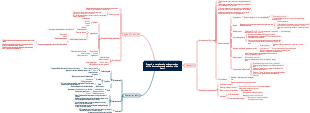
This is a mind map about quantitative relationships, with detailed content, clear and easy to understand. Whether it is a beginner or a student preparing to take the exam, this brain map will be your indispensable learning assistant.
Edited at 2025-02-18 12:43:21This template shows the structure and function of the reproductive system in the form of a mind map. It introduces the various components of the internal and external genitals, and sorts out the knowledge clearly to help you become familiar with the key points of knowledge.
This is a mind map about the interpretation and summary of the relationship field e-book, Main content: Overview of the essence interpretation and overview of the relationship field e-book. "Relationship field" refers to the complex interpersonal network in which an individual influences others through specific behaviors and attitudes.
This is a mind map about accounting books and accounting records. The main contents include: the focus of this chapter, reflecting the business results process of the enterprise, the loan and credit accounting method, and the original book of the person.
This template shows the structure and function of the reproductive system in the form of a mind map. It introduces the various components of the internal and external genitals, and sorts out the knowledge clearly to help you become familiar with the key points of knowledge.
This is a mind map about the interpretation and summary of the relationship field e-book, Main content: Overview of the essence interpretation and overview of the relationship field e-book. "Relationship field" refers to the complex interpersonal network in which an individual influences others through specific behaviors and attitudes.
This is a mind map about accounting books and accounting records. The main contents include: the focus of this chapter, reflecting the business results process of the enterprise, the loan and credit accounting method, and the original book of the person.
Quantitative relationship
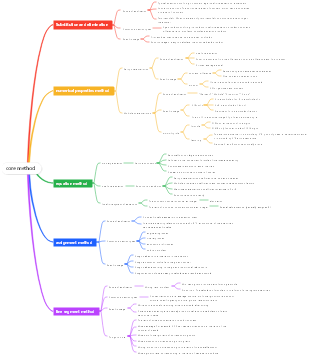
Substitution exclusion method
Applicable time
The option information is sufficient: the options are a set of numbers
Scope of application
Problems such as age, remainder, multi-digit number, indefinite equations
How to use
Exclude first
Look at the mantissa, odd and even
Replacement
Most value (ask for the maximum belt, ask for the minimum belt)
Multiplier characteristic method
Basic knowledge
If A=BXC (B and C are both integers), then A can be divided by B and C.
Dividing judgment
Mental formula: 3 and 9 look at the sum of the numbers, 4 look at the last two digits, 2 and 5 look at the last digits
Factor decomposition: 12=3×4≠2×6 (factors must be mutually exclusive during decomposition)
Split: Split into the sum or difference of two numbers
Remaining type
Every XX is the same/equal distribution, consider multiple relationships
If there is excess or lack of items when distributing them, the total amount can be removed after the amount is reduced or not.
It is known that a and x are integers
If y=ar b, then y-b can be eliminated by a
If y=a-b, yb can be divided by a
Proportional
like
A is a multiple of m
B is a multiple of n
Sir A B is a multiple of m Sir n
Prerequisite: A and B are both integers, m/n is the simplest integer ratio
Method of equations
Ordinary equations
Let unknown numbers
Set large but not small (avoid scores)
Set the intermediate quantity (convenient column formula)
Set number of copies (proportion)
Indefinite equation ax by=M (M is a constant)
Substitute and exclude
Parity characteristics
a, b happens to be strange and even
After ignoring even multiples, the remaining part has the same parity
Multiple characteristics
a or b has a common divisor with M
What common divisor do you have? I have to
Example: 7x 3y=60 (3y and 60 have a common factor 3, so a multiple of x=3 in 7x)
Mantissa characteristics
a or b is 0 or 5
×5 or ×10 appears in multiplication, consider the number of the mantissa
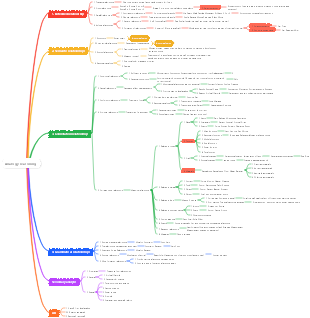
Engineering issues
Three-quantity relationship
Total quantity = efficiency × time (W=PT)
Examination question type
Give specific unit type
What is missing and what is unknown
Find the equation of equality relationship according to the work process
Give completion time
method
Total amount of assignment (W) (usually common multiple of completion time)
Calculation efficiency: efficiency = total amount/time (P=W/T)
Solve according to the working process formula
Give efficiency proportional type
method
Assign efficiency (P) (just satisfy the ratio)
Calculate total amount: total amount = efficiency × time (W=PT)
Solve according to the working process formula
Multiple methods of efficiency ratio
Give it directly
A: B = 3:4, A's efficiency is 3 times that of B.
Indirectly
The time is the same, and the efficiency is proportional to the workload. The same work, when A completes 30% of the work B completes 20%
The workload is the same, and efficiency is inversely proportional to time. The workload of 4 days is equal to the workload of 3 days B
Give specific number of people or machines 50 people go to road construction and 30 harvesters to harvest wheat, and the assigned efficiency is 1 per person/each machine.
Economic profit issues
Basic Economy
Common formulas
Profit = selling price - purchase price
Profit rate = profit/purchase price
Selling price = Purchase price × (1 + profit margin)
Discount = discounted price/pre-discounted price
Total profit = single piece profit × quantity = total selling price - total purchase price
Common methods
Method of equations
The question gives specific values such as price and quantity Solve unknown numbers and set set of formulas to solve the equation
Assignment method
The question stem does not give specific values such as price and quantity Often, the purchase price (often 100) is calculated directly using the formula.
Segmentation calculation
Typical segmented billing issues
Utilization charges, taxi charges, tax charges, etc.
Solutions
Calculate separately according to the standard
Calculated summary
The most value of the function
Typical most valuable question type characteristics
Unit price and sales increase and decrease (the more expensive you buy, the less sales you sell), seek maximum profit or total price
Problem solving method (two-point formula)
Suppose the price increase times is x and list the required functions
Let function = 0, and the solution is x1, x2
When x=(x1 x2)/2, the function gets the most value
Don't blindly use the price × quantity, it depends on the problem
Itinerary issues
Three-quantity relationship
Distance = Speed × Time (S=vt)
Examination question type
Normal itinerary
Average speed of uniform addition (decreasing) speed: (V initial + V end)/2
Relative itinerary
Encounter, chase
Encounter (reverse): S and == U and × t chase
Chase (same direction): S difference = V difference xt Chase
Circular motion
The nth encounter of the ring: n circle = v and xt encounter
The nth time of the ring is chased: n circle = v difference xt chased
Geometric Problems
Probability Problems
Problem of constraining principle