MindMap Gallery digestive system
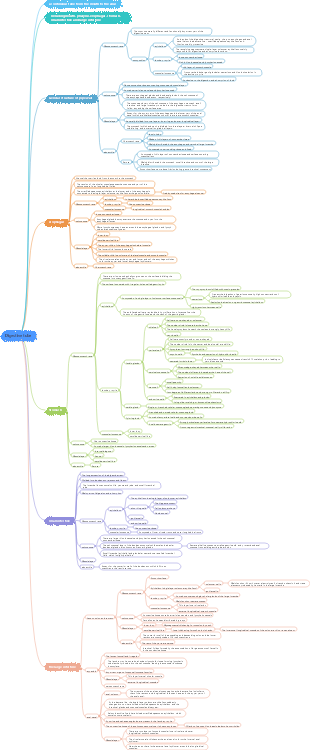
This is a mind map about the digestive system, which consists of digestive tubes and digestive glands. It is the key system for the human body to obtain nutrients and energy. It maintains the health and balance of the body through the processes of ingestion, digestion, absorption and elimination.
Edited at 2023-10-30 08:01:28This is a mind map about bacteria, and its main contents include: overview, morphology, types, structure, reproduction, distribution, application, and expansion. The summary is comprehensive and meticulous, suitable as review materials.

This is a mind map about plant asexual reproduction, and its main contents include: concept, spore reproduction, vegetative reproduction, tissue culture, and buds. The summary is comprehensive and meticulous, suitable as review materials.
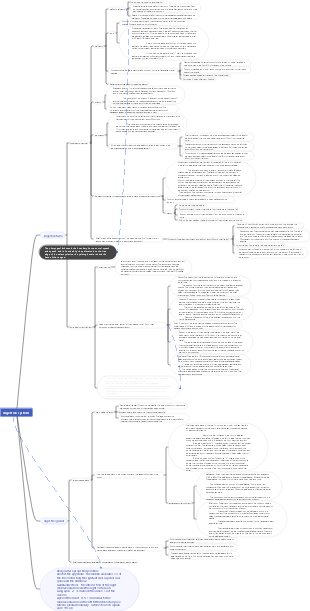
This is a mind map about the reproductive development of animals, and its main contents include: insects, frogs, birds, sexual reproduction, and asexual reproduction. The summary is comprehensive and meticulous, suitable as review materials.
This is a mind map about bacteria, and its main contents include: overview, morphology, types, structure, reproduction, distribution, application, and expansion. The summary is comprehensive and meticulous, suitable as review materials.
This is a mind map about plant asexual reproduction, and its main contents include: concept, spore reproduction, vegetative reproduction, tissue culture, and buds. The summary is comprehensive and meticulous, suitable as review materials.
This is a mind map about the reproductive development of animals, and its main contents include: insects, frogs, birds, sexual reproduction, and asexual reproduction. The summary is comprehensive and meticulous, suitable as review materials.
digestive system
Digestive tube
oral cavity
lips
palate
Hard palate: anterior 2/3
Soft palate: posterior 1/3.
Contains the velum palate, palatine velum, palatine arch (anterior) and connects downward to the base of the tongue, and the palatopharyngeal arch (posterior)
Isthmus: (the boundary between the cavity and the pharynx): It is formed by the palatal velum, the free edge of the velum palatine, the palatine arches on both sides, and the base of the tongue.
tooth
Crown, root, neck, cavity, apical foramen, pulp
Enamel (the hardest part of the body), dentin, cementum
Periodontal tissue: gingiva (non-mobile), periodontal ligament, alveolar bone (maxilla and mandible included)
Central incisors, lateral incisors, canines, first premolars, second premolars, first molars, second molars, third molars (wisdom teeth)
deciduous central incisors, deciduous lateral incisors, deciduous canines, first deciduous molars, second deciduous molars Ⅰ Ⅱ Ⅳ
tongue
Boundary sulcus, lingual foramen cecum, lingual frenulum, tongue tip, tongue body, tongue base, sublingual caruncle (opening of submandibular gland and sublingual gland large duct), sublingual fold (sublingual gland canaliculus)
Lingual tonsils at the base of the tongue
Tongue papilla (tongue body and tongue tip mucosa)
Filamentous papillae: 2/3 of the tongue body, no taste buds, the largest number and the smallest volume
Fungiform papillae: lateral margins and tip of tongue
Contour nipple: in front of the boundary sulcus
Leaf-like papillae: posterior part of tongue
Genioglossus: Contract both sides at the same time, extending forward and downward - tongue extension
salivary glands
major salivary glands
Parotid gland: The parotid duct penetrates the buccinator muscle and opens into the raised parotid duct papilla on the buccal mucosa opposite to the crown of the maxillary second molar.
Submandibular gland: opens into the sublingual caruncle
Sublingual gland: Located deep under the sublingual fold. Contains one large tube and more than ten small tubes
minor salivary glands
cheek
There is a parotid duct papilla on the buccal mucosa opposite to the crown of the maxillary second molar.
Pharynx (attached to the base of the skull, down to the sixth cervical vertebra)
Nasopharynx
Eustachian tube round pillow: it is a symbol to identify the pharyngeal opening of the Eustachian tube
Eustachian tube pharyngeal opening: closed most of the time, open when the mouth is opened
Pharyngeal recess: a common site for nasopharyngeal cancer
Oropharynx: palatine tonsils
Hypopharynx: Piriform recess: site of foreign body retention
Esophagus (from the sixth cervical vertebra to the 11th thoracic vertebra)
The first stenosis: 15cm from the central incisor, the beginning of the esophagus
Second stenosis: 25cm, passing through the left bronchus
Third stenosis: 50cm, penetrating the diaphragm
These three strictures are prone to esophageal injury, inflammation and tumors.
Stomach
Cardia, pylorus, lesser curvature of stomach, greater curvature of stomach, angular notch, fundus of stomach, body of stomach, pylorus (pyloric canal, pyloric antrum)
Pyloric valve and pyloric sphincter: have the function of delaying gastric emptying and preventing reflux of small intestinal contents
small intestine
duodenum
Upper part: superior duodenal flexure, duodenal bulb (duodenal ulcer prone site)
Descending part: inferior curvature of duodenum, major duodenal papilla (opening of common bile duct and pancreatic duct) Small duodenal papilla: opening of accessory gland duct
Horizontal part
Ascending part: Duodenal suspensory ligament (an important landmark to determine the beginning of the jejunum during surgery)
Jejunum (left upper abdomen): proximal 2/5, isolated lymphocytes
Ileum (right lower abdomen): distal 3/5, collected lymphocytes, isolated lymphocytes
the large intestine
Cecum: Ileocecal valve (has the function of controlling and preventing the contents of the small intestine from flowing too quickly into the large intestine, which is conducive to the full digestion and absorption of food in the small intestine; and also prevents the contents of the large intestine from flowing back into the small intestine)
Appendix: Three bands of colon converge at the base of the appendix.
McFarland's point: the middle and outer 1/3 of the line connecting the umbilicus and the right anterior superior iliac spine
Lang's point: the intersection of the right 1/3 of the line connecting the left and right anterior superior iliac spines
Colon (colon band, colon pouch, intestinal fat bag)
Ascending colon: right flexure of colon (hepatic flexure)
Transverse colon: left flexure of the colon (splenic flexure). Greater mobility
Descending colon
Sigmoid colon: high mobility, excessive mesentery, and frequent intestinal volvulus
The rectum (sacral flexure, perineal flexure) contains 3 rectal transverse folds, the most stable and obvious fold. Rectal folds are often used as positioning landmarks for proctoscopy
anal canal
external anal sphincter
Internal anal sphincter: anal column, anal valve, anal sinus, dentate line anal comb, linea alba (junction of internal and external sphincter)
Above the dentate line are internal hemorrhoids (visceral nerves), below are external hemorrhoids (somatic nerves)
digestive glands
Most of the liver (the largest digestive gland in the human body) is located in the right rib area and epigastric area, and a small part is located in the left rib area.
Diaphragm, coronary ligament, falciform ligament (divided into left and right lobes)
Dirty noodles
gallbladder-hepatic round ligament
inferior vena cava_ligamentum venosum
Porta-hepatic pedicle
left and right hepatic ducts
Right and left branches of proper hepatic artery
left and right branches of hepatic portal vein
extrahepatic biliary system
Gallbladder: gallbladder base, gallbladder body, gallbladder neck, cystic duct
Hepatic duct and common hepatic duct: The left and right hepatic ducts merge to form the common hepatic duct. Gallbladder triangle: cystic duct, common hepatic duct and the visceral surface of the liver. The gallbladder artery often passes through the triangle.
Common bile duct: The junction of the common bile duct and the common hepatic duct. It merges with the pancreatic duct in the wall, forming the hepatopancreatic ampulla at the junction, which opens into the great papilla of the duodenum.
Pancreas: upper abdominal area, left rib area
The pyloric antrum near the lesser curvature of the stomach is a common site for gastric ulcers and gastric cancer.