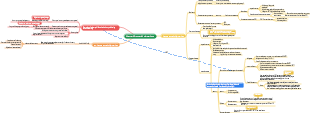
MindMap Gallery Chapter 7 Alcohol and Phenol Ethers
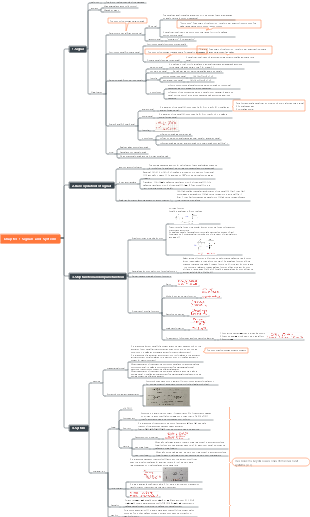
"Organic Chemistry" final review mind map, with clear context and comprehensive content, is a good helper for review. Welcome to use it! The other chapters are on the homepage. It’s not easy to make. Please give it a like! 🥰
Edited at 2023-10-24 10:49:53This is a mind map about bacteria, and its main contents include: overview, morphology, types, structure, reproduction, distribution, application, and expansion. The summary is comprehensive and meticulous, suitable as review materials.

This is a mind map about plant asexual reproduction, and its main contents include: concept, spore reproduction, vegetative reproduction, tissue culture, and buds. The summary is comprehensive and meticulous, suitable as review materials.
This is a mind map about the reproductive development of animals, and its main contents include: insects, frogs, birds, sexual reproduction, and asexual reproduction. The summary is comprehensive and meticulous, suitable as review materials.
This is a mind map about bacteria, and its main contents include: overview, morphology, types, structure, reproduction, distribution, application, and expansion. The summary is comprehensive and meticulous, suitable as review materials.
This is a mind map about plant asexual reproduction, and its main contents include: concept, spore reproduction, vegetative reproduction, tissue culture, and buds. The summary is comprehensive and meticulous, suitable as review materials.
This is a mind map about the reproductive development of animals, and its main contents include: insects, frogs, birds, sexual reproduction, and asexual reproduction. The summary is comprehensive and meticulous, suitable as review materials.
Chapter 7 Alcohol and Phenol Ethers
alcohol
structure
hydrocarbyl hydroxyl
There are hydrogen bonds
nature
physical properties
Lower monohydric alcohol
Solubility miscible with water
The hydrophilic characteristics are obvious
Common hydrophilic groups: —OH, —COOH, —NH2, —SO3H Common lipophilic groups: —R, —Ar, —COOR, C—O—C
boiling point
The larger the molecular mass, the higher the
The fewer branches, the higher the
density
Fatty alcohols are larger than alkanes, less than 1, and aromatic alcohols are larger than 1
Chemical Properties (Figure)
Acidity and alkalinity
Acidic (proton transfer)
Weaker acid than water
The R group donates electrons, causing the O-H bond to become less polar and less acidic.
Alkaline (weak)
The hydroxyl oxygen has a lone pair of electrons and can accept protons from strong acids to form protonated alcohols (yang salts)
Yang salt is soluble in strong acid and can distinguish alkanes, halogenated hydrocarbons and alcohols that are insoluble in water.
Halogenated
Halogenated by hydrogen halide
active
Allyl alcohol | Benzyl alcohol > Tertiary alcohol > Secondary alcohol > Primary alcohol
HI>HBr>HCl>HF
Mechanism (picture)
Primary alcohol may be SN2 mechanism
Secondary tertiary alcohols may be SN1 mechanisms, undergoing carbocation intermediates and rearrangement
Lucas test
Lucas reagent
Anhydrous zinc chloride in concentrated hydrochloric acid solution
use
Identification of primary, secondary, tertiary and tertiary alcohols
Below 6C
Tertiary alcohol
Immediately turbid at room temperature
Benzyl, allyl type
Immediately turbid at room temperature
Secondary alcohol
Turns cloudy after a few minutes at room temperature
Primary alcohol
No reaction at room temperature, turbid when heated
Halogenated by tri(penta)phosphorus halide, thionyl chloride, etc.
Laboratory preparation of halogenated hydrocarbons (picture)
Esterification (reversible)
Acid dehydroxylation alcohol dehydrogenation
Reactivity
Methanol>Primary alcohol>Secondary alcohol>Tertiary alcohol
Glycerin trinitrate (nitroglycerin)
dehydration
Alcohols dehydrate on heating under acid catalysis
Higher temperature (170)
Intramolecular dehydration (elimination reaction) gives ene
Follow Zaitsev's rules
lower temperature (140)
Tertiary alcohols generally undergo intramolecular dehydration at 80-90℃
Intermolecular dehydration gives ether
Degree of difficulty
Carbocation stability determines
Tertiary alcohol>Secondary alcohol>Primary alcohol
May produce rearrangement product P120
Williamson reaction
The substitution reaction between sodium alkoxide and halogenated hydrocarbons produces ether compounds (an effective method for synthesizing asymmetric ethers)
Tertiary halogenated hydrocarbons, vinyl halogenated hydrocarbons, and aromatic halogenated hydrocarbons cannot be used.
Oxidation
Oxidation of monohydric alcohols
Reaction on α—H
Primary alcohol
aldehyde-carboxylic acid
Secondary alcohol
ketone
Tertiary alcohol
Not easily oxidized
PCC oxidation method
The complex formed by chromium trioxide and pyridine can quickly oxidize primary and secondary alcohols into aldehydes and ketones with high yield and does not affect C=C
Industrial catalytic dehydrogenation
Oxidation of vicinal diol
Oxidized by periodic acid and quantitatively converted into carbonyl compounds
iodometric method
phenol
Structure (picture)
P-π conjugation, electron density decreases with oxygen and increases with benzene
-OH activates benzene
nature
physical properties
state
Pure colorless liquid or solid, light pink-red-brown after oxidation
boiling point
It is higher if there is hydrogen bonding, and it is lower if it contains intramolecular hydrogen bonding, for example, nitrophenol
water soluble
Slightly soluble in water, easily soluble in benzene, ether, ethanol and other organic solvents
density
Greater than 1
Toxic and corrosive
chemical properties
Weakly acidic
The negative charge (lone pair of electrons) of phenoxide anions can be dispersed into the benzene ring, increasing stability and acidity.
Acidity: carboxylic acid>carbonic acid>phenol>water>alcohol
color reaction
Both phenol and enol structures can complex with ferric chloride to develop color
use
Identify phenolic and enolic compounds
Phenol reacts with ferric chloride to form blue-purple color
Ether-forming reaction (Williamson reaction)
Phenol (nucleophile) reacts with halogenated hydrocarbons or sulfate esters in alkaline solution to form ethers
esterification reaction
Can react with acids, acid chlorides, and acid anhydrides
Electrophilic substitution on benzene ring
Halogenated
Reacts with bromine water to form white precipitated tribromophenol (identification, quantification)
Nitrification
It is acidified by dilute nitric acid at room temperature to obtain two products in the ortho-para position, with the ortho-position being the main product.
The ortho position forms intramolecular hydrogen bonds, and the six-membered chelate is easily volatile. The para position forms intermolecular hydrogen bonds and is not easy to volatilize.
Concentrated nitric acid is heated to obtain trinitrophenol (picric acid)
sulfonation
reacts with concentrated sulfuric acid
room temperature
adjacent position
100℃
Counterpoint
Friedel-Crafts reaction Friedel-Crafts reaction
Alkylation
Acylation
Excess aluminum chloride
oxidation reaction
Forms p-benzoquinone with acidic potassium dichromate
The more hydroxyl groups there are, the easier it is to be oxidized
1,2,3-Ploroglucinol (pyrogallic acid) readily absorbs oxygen
ether
Mixed ether naming
Small groups come first, large groups come last, and those containing aryl groups come first.
StructureP131
Not a linear molecule
nature
physical properties
state
A liquid with a certain fragrance, methyl ether is a liquid
boiling point
Boiling points are roughly similar to alkanes
Solubility
Small dipole moment, weakly polar molecule, low-grade ethers are slightly soluble in water, most ethers are insoluble
chemical properties
Alkaline (weak)
reacts with concentrated acid to form yang salt
Breaking of ether bonds
The phenoxy group is not broken (conjugated)
React with concentrated HI or HBr under heating conditions to obtain halogenated hydrocarbons and hydroxyl compounds
Determination of methoxyl group (Zeizer method)
auto-oxidation
The α position is easily oxidized and generates peroxide
Testing method: KI starch test paper, if present, it turns blue Removal method: add ferrous sulfate or sodium sulfite
cyclic ether
Ethylene oxide
picture
crown ether
phase transfer catalytic reaction
representative compound
alcohol
Methanol
Commonly known as wood alcohol
Originally derived from wood distillation Industrially produced from carbon monoxide and hydrogen
Colorless liquid, miscible with water and most organic solvents
It does not form a constant boiling mixture with water and can be separated by fractional distillation.
Metal magnesium can remove trace amounts of water
Complexes formed with calcium chloride cannot be dried with calcium chloride
Highly toxic
ethanol
Fermentation of sugars, preparation of ethylene by adding water
Form a constant boiling mixture with water
Colorless flammable liquid
Complexes with calcium chloride
Ethylene glycol
Commonly known as glycol
Colorless, odorless, sweet, transparent liquid
Preparation by oxidation of ethylene or hydrolysis of ethylene oxide
engine antifreeze
Glycerol
Commonly known as glycerin
Colorless and sweet viscous liquid, easily soluble in water, insoluble in ether and chloroform
Oil hydrolysis preparation
cyclohexanol
Commonly known as myo-inositol
White crystal, easily soluble in water, insoluble in ethanol and ether
necessary for biological growth
Benzyl alcohol
Also known as benzyl alcohol
Colorless liquid, fragrant aroma
Slightly soluble in water, miscible with organic solvents
Will be oxidized to benzaldehyde
Weak anesthesia, antisepsis, 2% aqueous solution is called "painless water"
phenol
phenol
Commonly known as carbolic acid
Easily oxidized, store away from light
Disinfection
Pentachlorophenol is a colorless crystal, used for weeding, wood preservation, and termite control.
Cresol
Also known as coal phenol
Cresol soap solution is commonly known as "Lysol"
mixture of three isomers
o-cresol
m-cresol
p-cresol
Disinfection
benzene
three isomers
Resorcin does not exist and needs to be synthesized artificially Sterilizes, is less irritating than phenol, and can treat skin diseases
Catechol and hydroquinone
reducing agent, developer
Polymerization inhibitor to prevent polymer monomers from being oxidized and polymerized by oxidants
Pair-Lab Antioxidants
Ortho-adrenaline contains this structure
Vitamin E
Also known as tocopherol and pregnol
Widely present in vegetable oils, there are three types of αβγ, with the highest α activity
Yellow oily substance, insoluble in water, easily soluble in organic solvents
Stable to heat and alkali in anaerobic state, easily oxidized
Antioxidant, scavenge free radicals
Bisphenol A
BPA
White needle-like crystal, slightly soluble in water, aliphatic hydrocarbons, soluble in acetone, ethanol, acetic acid, and dilute alkali.
Enhances the properties of plastic products, but can cause endocrine disorders
ether
Ether
Colorless liquid, highly volatile and flammable, will explode in case of fire
Have anesthetic effect
herbicide
2,4-Dichloro-4’-nitrodiphenyl ether
Yellow needle-shaped crystal, difficult to dissolve in water, easily soluble in organic solvents
Tetrahydrofuran
THF
Colorless transparent liquid with ether smell, miscible with water, alcohol, ketone, benzene, ester, ether and hydrocarbons
Neutral polar aprotic solvent
Oxygen atoms coordinate with Lewis acid
There are hydrogen bonds
Increased water solubility
boiling point increase
hydrogen bond
definition
A very weak bond formed by the combination of an atom in a molecule with an atom containing an unshared electron pair, such as O, N, F, and sometimes S, Cl, etc.
Influence
intramolecular hydrogen bonding
Molecular association, boiling point increased
intermolecular hydrogen bonding
Reduce molecular association, lower boiling point