 Wondershare EdrawMind
MindMap Gallery 1A42400 Project Construction Safety Management
- 47
1A42400 Project Construction Safety Management
Construction practice: 1A42400 project construction safety management, including project safety production management plan, Engineering safety production inspection, engineering safety production management key points, etc.
Edited at 2024-01-17 10:19:59
- bacteria
This is a mind map about bacteria, and its main contents include: overview, morphology, types, structure, reproduction, distribution, application, and expansion. The summary is comprehensive and meticulous, suitable as review materials.
- Plant asexual reproduction
This is a mind map about plant asexual reproduction, and its main contents include: concept, spore reproduction, vegetative reproduction, tissue culture, and buds. The summary is comprehensive and meticulous, suitable as review materials.
- Reproductive development of animals
This is a mind map about the reproductive development of animals, and its main contents include: insects, frogs, birds, sexual reproduction, and asexual reproduction. The summary is comprehensive and meticulous, suitable as review materials.
1A42400 Project Construction Safety Management
- bacteria
This is a mind map about bacteria, and its main contents include: overview, morphology, types, structure, reproduction, distribution, application, and expansion. The summary is comprehensive and meticulous, suitable as review materials.
- Plant asexual reproduction
This is a mind map about plant asexual reproduction, and its main contents include: concept, spore reproduction, vegetative reproduction, tissue culture, and buds. The summary is comprehensive and meticulous, suitable as review materials.
- Reproductive development of animals
This is a mind map about the reproductive development of animals, and its main contents include: insects, frogs, birds, sexual reproduction, and asexual reproduction. The summary is comprehensive and meticulous, suitable as review materials.
- Recommended to you
- Outline
![Establishment and implementation of safety management system of safety management elements [Practical version]](https://edrawcloudpublicus.s3.amazonaws.com/work/5594687/2024-5-15/1715767013/thumb.png?x-oss-process=image/resize,w_300,m_lfit)
Establishment and implementation of safety management system of safety management elements [Practical version]
- 76
![Establishment and implementation of safety management system of safety management elements [Practical version]](https://edrawcloudpublicus.s3.amazonaws.com/work/5594687/2024-5-15/1715772547/thumb.png?x-oss-process=image/resize,w_300,m_lfit)
Establishment and implementation of safety management system of safety management elements [Practical version]
- 51
![Rupture discs for safety facilities [Regulations Summary]](https://edrawcloudpublicus.s3.amazonaws.com/work/5594687/2024-5-15/1715773286/thumb.png?x-oss-process=image/resize,w_300,m_lfit)
![Safety facility safety valve [working principle version]](https://edrawcloudpublicus.s3.amazonaws.com/work/5594687/2024-5-15/1715773418/thumb.png?x-oss-process=image/resize,w_300,m_lfit)
![Safety valves for safety facilities [Regulations Summary]](https://edrawcloudpublicus.s3.amazonaws.com/work/5594687/2024-5-15/1715773446/thumb.png?x-oss-process=image/resize,w_300,m_lfit)
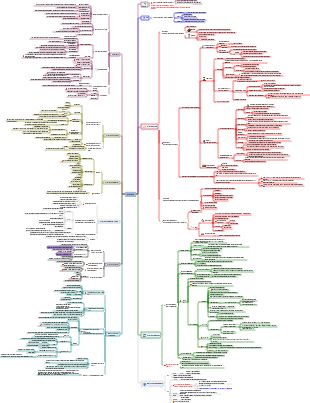
Project construction safety management
Engineering Safety Production Management Plan 0, 3, 0, 2, 0
Construction safety management content
Management objectives, systems and systems, education and training, cost management, technical management, subcontractor management, construction site safety management, emergency rescue management
8 items
Construction safety production education and training
Training content: plan preparation, organization and implementation, personnel certification review
Personnel holding certificates: A, B, and C are responsible for the enterprise, project, and full-time safety production management
Training types: preliminary examination, re-examination of personnel certificates, third-level education, pre-job, daily, annual continuing education
Construction site safety management content
character environment
Construction safety production cost management
Fund withdrawal, application, approval, payment, use, statistics, analysis, audit and inspection, etc.
Construction companies shall withdraw the expenses required for safe production in accordance with regulations
Safety technical measures, safety education and training, labor protection, emergency preparedness, etc., as well as the necessary expenses for safety evaluation, monitoring, testing, and demonstration.
Emergency rescue plan content
1) Analysis of emergency situations, accident types and characteristics; 2) Emergency rescue organizations and personnel, division of responsibilities, and contact information; 3) Procedures for calling emergency rescue equipment and equipment; 4) Information reports and contact methods with relevant internal functional departments of the enterprise and external government, fire protection, emergency rescue, medical and other relevant units and departments; 5) Specific arrangements for the organization of emergency first aid, on-site protection, personnel evacuation and evacuation and other activities.
Construction safety hazard management
Category 1 and Category 2 hazard sources
Energy and hazardous substances are present
Insecurity
jointly cause accidents
The composition of the major hazard source control system
~Identification of major hazard sources
Zhuan, Tou, Tiao, Shu; Ren, De, An, Danger
~evaluation
~Management
~Safety Report
Accident emergency rescue plan
Factory site selection and land use planning
~Supervision
Engineering safety production inspection 4, 0, 0, 13, 0
Security check content
Main contents of safety inspection
Safety inspection standards
Safety ideas, safety responsibilities, safety systems, safety measures, safety protection, equipment and facilities, education and training, safety behaviors, use of safety protective equipment and handling of casualties and safety accidents
Thought, responsibility, control, measures; prevention, preparation, training, action, use, accident
Main forms of construction safety inspection of construction projects
Daily inspections, special inspections, regular safety inspections, regular safety inspections, seasonal safety inspections, holiday safety inspections, resumption of work inspections, professional safety inspections and equipment and facility safety acceptance inspections, etc.
Regular safety inspection requirements
The establishment of a hierarchical safety inspection system and regular safety inspections by construction companies are comprehensive and assessment inspections.
The construction site will be carried out at least once every ten days, and the project manager will organize it in person
Regular safety inspections
On-site full-time and part-time safety production management personnel and safety on-duty personnel conduct routine safety inspections and inspections
Project managers, responsible engineers and relevant professional and technical management personnel conduct safety inspections while inspecting production
Safety inspections conducted by the work team before, during and after the shift
Security inspection requirements
Spot checks on “should know and should be able”
Decide on people, deadlines, and measures
Security check method
Listen, ask, see, measure, measure, run tests
Listening to reports, asking questions, inspections, actual measurements, professional instrument testing, equipment practical testing
Safety inspection standards
Safety inspection items
Safety Inspection Score Sheet
Security management
Safety production responsibility system, safety education, construction organization design and special construction plan, safety inspection, emergency rescue, safety technical briefing
Civilization Construction
Site fencing, closed management, construction site, on-site office and accommodation, on-site fire prevention, material management.
15%
scaffold
Foundation pit engineering
formwork bracket
Construction plan, pole foundation, frame and building structure ties, pole spacing and scissor braces, scaffolding boards and protective railings, disclosure and acceptance.
Working at heights
Lifting operations, suspension mechanisms, construction plans, installation operations, safety devices, wire ropes.
Construction electricity
Material lifting and construction lifts
Tower Cranes and Hoisting
construction machinery
5%
multiple arithmetic average
Rating*corresponding score/100 points
Check scoring method
Ensure that one item is not scored or the subtotal score is <40
Sub-item checklist does not score points
Security level classification table
Unqualified
Below 70 points
One-point score scale is zero
Make rectifications within a time limit and reach the standard
qualified
=70~80 points
excellent
80 points or above
Key points of engineering safety production management 0,10,0,2,8
Basic engineering safety points
Type of accident: foundation pit collapse, poisoning, electric shock, mechanical injury, etc.
Main contents of safety control in basic engineering construction
The main contents of the special construction plan for earth excavation
Grading requirements, support structure design, machinery selection, excavation time, excavation sequence, layered excavation depth, ramp location, vehicle access roads, precipitation measures, or monitoring requirements, etc.
Key points of safety technical measures for foundation pit excavation and backfilling
The operating distance between two people should be greater than 2.5m. When there are multiple machines, the distance between excavators should be greater than 10m.
Stacking around foundation pit
1m from the edge, no more than 1.5m high
Excavation is carried out from top to bottom, layer by layer.
After excavation to the bottom elevation of the foundation pit, the bottom of the pit should be fully sealed in time for foundation engineering construction.
Foundation pit excavation monitoring
Monitoring of supporting structures and monitoring of surrounding environment
Monitoring of horizontal displacement of supporting structures, deformation of surrounding buildings, underground pipelines, groundwater levels (enclosures, protection, water, pipes), etc.
Safety emergency measures for foundation pit construction
Water seepage, leakage, leakage and blockage
The displacement of the cantilever support structure exceeds the design value, quicksand, and pipeline protection measures
Key points of safety management of scaffolding projects
Concept introduction
Inform that the building has 8 floors, the floor height is 4.5 meters, and the scaffolding is greater than 24 meters.
Less than 24m
Single row or double row
Scissor braces are set continuously from top to bottom on the facade at both outer ends and in the middle of the corner, no more than 15m apart.
Both ends of the open double row must be equipped with transverse diagonal braces
24~50m
Double row
Special program
More than 50m
Double row, segmented installation
Expert argument
The entire facade is equipped with scissor braces and rigid wall-connecting measures are required.
Positions where horizontal horizontal poles of single-row scaffolding are not installed
No foot, hand or eye positions are allowed in masonry
The base and pad should be accurately placed on the positioning line; the pad should be a wooden pad with a length of not less than 2 spans, a thickness of not less than 50mm, and a width of not less than 200mm.
Longitudinal horizontal rod
Set inside the riser, with a span of not less than 3 spans
The length is extended by butt joint or lap joint.
The overlap length should not be less than 1m
The joints of two adjacent longitudinal horizontal rods should not be set to be resynchronized or within the same span.
The horizontal staggering distance between two adjacent joints that are out of synchronization or have different spans should not be less than 500mm.
The distance between the joint center and the main node should not be greater than 1/3 of the longitudinal distance
When the scaffolding boards are butted and laid flat, two horizontal horizontal rods must be installed at the joints. The extension length of the scaffolding boards should be 130-150mm, and the sum of the extension lengths of the two scaffolding boards should not be greater than 300mm; When the scaffolding boards are overlapped and laid, the joints must be supported on transverse horizontal poles. The overlap length should not be less than 200mm, and the length extending beyond the transverse horizontal poles should not be less than 100mm.
Pole requirements
Wall fittings must be used to reliably connect to the building. Flexible connections with only steel bars are strictly prohibited.
mark
可采用刚性连墙件,与建筑物可靠连接
钢筋与顶撑配合的附墙连接
Except for the top layer, which can be overlapped, the others are all butt jointed.
The overlap length should not be less than 1m
Pole joints are arranged in a staggered manner. Adjacent pole joints should not be set within synchronization. The staggered height direction distance between two adjacent joints of every other pole within synchronization should not be less than 500.
The vertical and horizontal spacing between support frame poles shall not exceed 1500
Sweeping pole requirements
Vertical and horizontal sweeping rods must be installed
The longitudinal sweeping rod is fixed on the vertical pole no more than 200mm away from the base epithelium.
The horizontal sweeping rod should be fixed on the vertical pole below the longitudinal sweeping rod
The foundations are of different heights. The vertical sweeping pole from the high place should be extended two spans to the lower place and fixed to the vertical pole. The height difference should not be greater than 1m. The distance from the axis of the vertical pole above the slope to the slope should be greater than 500mm.
The step distance is generally no more than 1.8m, and the bottom step distance should be less than 2m
Scaffolding removal
Remove from top to bottom
The connecting wall parts will be dismantled layer by layer along with the scaffolding. The height difference between layered demolition should not be greater than two steps. If the height difference is greater than two steps, add connecting wall parts.
Dedicated personnel to command, clear division of labor, unified actions, and sufficient working surface
The dismantled accessories should be hoisted or manually transferred to the ground. Throwing is strictly prohibited.
Scaffolding should be inspected and accepted at the following stages
After the JSJ foundation is completed and before the frame is erected
Each erection is 6~8m; after reaching the design height
Before applying load on the working layer
The total load of the two layers of double-row scaffolding within the same span shall not exceed 5KN/㎡
In the event of strong winds and heavy rain above level 6, frozen areas will thaw.
Disabled for more than one month
The wind and rain stopped freezing; the foundation was laid with high loads.
Main contents of regular inspection of scaffolding
Solid connection and support
Water accumulation in the foundation, loose base, suspended poles, loose fasteners and bolts, etc.
For double-row, full-hall scaffolding with a height of 24m, and full-hall support frames with a height of 20m or more, the settlement and verticality deviation of the vertical poles should comply with the specifications.
Whether the safety protection measures for the frame meet the requirements?
Is it overloaded?
Scaffolding construction, dismantling and inspection contents
step distance, vertical distance
Key points of safety management of cast-in-place concrete
Main contents of safety control of cast-in-place concrete projects
Accident types such as overall collapse of formwork support, falling from high altitude, impact from objects, electric shock, etc.
Formwork support design, support and demolition construction safety, steel bar operation safety, concrete pouring electricity consumption higher than the safety of operation equipment
Safety requirements for formwork projects
The main content of the cast-in-place concrete project construction plan should include the design, production, installation and removal of the formwork support system, construction procedures and operating conditions
Wooden pads should be installed at the bottom of the formwork columns. Bricks and brittle materials are prohibited from being used as pads.
If the installation height of the formwork exceeds 3m, scaffolding must be erected. No one else is allowed to stand under the scaffolding except the operator.
When encountering severe weather such as heavy rain, heavy fog, sand dust, heavy snow, or strong winds above level 6, open-air high-altitude operations should be suspended. When the wind is strong at level 6 or above, high-altitude lifting operations should be stopped.
If the steel formwork is installed over 15m, lightning protection measures must be provided
Construction during strong wind season, set up resistance and reinforcement measures
summary
8~20m
>20m
all around
The height of the support frame in the whole hall shall not exceed 30m
The length of the jacking screw extending out of the vertical pole is controlled to 300mm
Formwork removal construction safety
Non-load-bearing side formwork, including side formwork for beams, columns, and walls, can be removed as long as the strength of the concrete ensures that its surface and edges will not be damaged by form removal, 1 MPa
The load-bearing formwork, including the bottom formwork of horizontal structural members such as beams and slabs, should be removed when the strength of the same-cured test block reaches the specified requirements.
A form removal application must be filled in before the form removal operation, and when the strength record of the cured test block under the same conditions reaches the specified requirements, the project technical leader shall approve the form removal.
When dismantling the post-tensioned prestressed concrete structure or component formwork, the side formwork should be removed before prestressed tensioning, and the concrete strength must meet the conditions for side formwork removal. Prestressed tensioning must be carried out when the concrete strength reaches the design specified value (75%), and the bottom formwork must be removed after the prestressed tensioning is completed.
The order and method of dismantling various formwork should be carried out according to the requirements of the formwork design. If there are no requirements for the formwork design, it can be carried out in the following order: first support and then dismantle, rear support first, non-load-bearing formwork first, then load-bearing formwork and brackets.
The formwork should not be removed by prying hard enough to cause large pieces to collapse.
Key points in safety management of hoisting projects
1. Special operation personnel must undergo special safety training, pass the assessment, and hold a special operation qualification certificate to work. Special operations personnel should undergo physical examination and reexamination in accordance with regulations.
2. Transportation of precast components: The strength of precast concrete components during transportation shall not be less than 75% of the designed concrete strength. The support position and method of components during transportation should be set according to the designed lifting (cushion) points, and should not cause overstress or damage to the components.
When components are stacked in multiple layers, there should be no more than 2 layers of columns and no more than 3 layers of beams; 6-8 layers of large roof panels and porous boards; no more than 3 layers of steel roof trusses. The supporting pads of each layer should be on the same vertical line. A channel not less than 0.7m wide should be left between stacked components.
Hoisting
Notice
There is a hanging point, and the resultant force is at the center of gravity. Calculate the length of the sling.
No hanging points, must be protected at edges and corners, safety factor 6~8
For large or precise heavy objects, the safety factor is 10
Steel wire rope: If the number of broken wires exceeds 10% of one pitch, if the rust or surface wear exceeds 40%, or if there are dead bends, structural deformation, rope core extrusion, etc., it should be scrapped and stopped from use.
Key points of safety management for working at heights
Base level 2m and above
Basic requirements for working at heights
If construction involves edge and opening operations, climbing and suspended operations, operating platforms, cross-cutting operations and the erection of safety protection nets, technical safety measures for high-altitude operations should be formulated in the construction organization design or construction plan.
Before construction at high altitudes, safety protection facilities should be inspected and accepted according to category. Operations can only be carried out after passing the inspection, and acceptance records should be kept. Acceptance can be done in tiers or stages.
When encountering severe weather conditions such as strong winds above level 6, thick fog, sandstorms, etc., open-air climbing and suspended operations at high altitudes are not allowed.
Safety precautions for edge operations
Three-piece set: railing, closure, foot block
When the fall height is 2m or more above the base level for edge operations, protective railings should be set up on the airside side and closed with dense safety nets or tool-type railings.
Protective railings should be installed at stairwells, stair platforms and ladder sections during construction, and external stairs should be enclosed with dense mesh safety nets.
At the outer edge of the building, projects without scaffolding should be equipped with protective railings; projects with scaffolding should be fully enclosed with dense mesh safety nets. The dense-mesh safety net should be set on the outer pole (inside) of the scaffold and be tightly connected to it.
Protective railings and toeboards should be installed on both sides of the landing platforms where construction lifts, gantry frames and derrick material hoists are installed between buildings, and should be closed with dense mesh safety nets or tool-type railings.
The entrance to the landing platform should be equipped with a floor protective door with a height of not less than 1.8m, and an anti-opening device should be installed. Isolation facilities should be set up in the middle of the derrick material hoist channel.
Protective railings and toe-stops are set up around the edges and openings; protective sheds are set up at the entrances of passages.
Safety precautions for tunnel operations
Vertical hole protection measures:
When the short side is <500mm, sealing measures should be taken
When the short side is >= 500mm, a protective railing with a height of not less than 1.2m should be installed on the airside side, and a dense-mesh safety net or tool-type fence should be used to close it, and a toe-stop should be installed.
(5) For vertical openings on the wall, vertical openings with a window sill height less than 800mm, and openings in the frame structure after the concrete is poured but the wall is not built, protective railings should be installed according to the edge protection requirements.
Non-vertical opening protection
25~500mm, cover plate with fixed measures
The opening cover should be able to withstand a concentrated load of not less than 1kN and a uniform load of not less than 2kN/㎡. Covers with special requirements should be designed separately.
500~1500mm
Both up and down can be used and are firmly fixed.
1500mm, and protective railings with a height of not less than 1.2m should be installed on the edge. The opening should be closed with a safety flat net.
Elevator shaft
A protective door should be installed at the entrance of the elevator shaft. Its height should not be less than 1.5m. The distance between the bottom of the protective door and the ground should not be greater than 50mm, and a foot guard should be installed.
Before the elevator construction, a safety flat net should be installed every 2 floors and no more than 10m in the elevator shaft.
The upper part of the construction floor in the elevator shaft should be equipped with isolation and protection facilities
500
protective railing
Set up two horizontal bars. The height of the upper bar from the ground should be 1.2m, and the lower bar should be set between the upper bar and the foot guard.
When the height is greater than 1.2m, additional crossbars should be added, and the spacing between crossbars should not be greater than 0.6M.
The spacing between protective railing poles should not be greater than 2m
The height of the foot guard should not be less than 180mm
The protective railings should be hung with dense mesh safety nets or other materials to seal them.
Any part of the upper and lower crossbars and vertical poles can withstand 1KN external force in any direction.
For slopes with a slope greater than 25° without scaffolding, protective railings of no less than 1.5m high should be installed along the eaves.
cross assignment
safety shelter
Settings for passages within the crane boom and access passages for construction site personnel: safety protection sheds
Shed bottom height
Non-motor vehicles, not less than 3m
Motor vehicle, not less than 4m
When the building height is greater than 24m and built with wooden panels, a double-layer protective shed should be installed, with the distance between the two layers not less than 700 meters
The height should not be less than 4m
The length is based on the drop radius, >=5m
safety net
There is a support pole every 3m, and the horizontal angle should not be less than 45°
② When support rods are set up on the floor, steel rings should be embedded in advance or a horizontal bar should be set up inside and outside the structure;
③The safety protection net should be high on the outside and low on the inside, and the nets should be tightly spliced.
Fall radius consideration
Safety nets should be installed for cross-cutting operations when erecting scaffolding and setting up safety protection sheds;
When constructing on the facade of a multi-story or high-rise building, a fixed safety net should be installed on the second floor and every fourth floor, and a safety net should be installed that increases with the construction height.
Building Construction Safety Net
(1) The mesh density of the dense-mesh vertical safety net should be greater than or equal to 2000 meshes on an area of 10cm×10cm.
(2) When using flat net protection, it is strictly prohibited to use dense mesh safety nets instead of flat nets.
Each eye-opening buckle of the dense-mesh safety net should be tied with a tether and tied to the support frame, and the spacing should not exceed 450mm.
When used for closed protection such as gantry frames and material lifting frames, the distance should not exceed 750mm.
flat net
The fixed distance is no more than 750mm
The distance between the flat screen in the elevator shaft and the shaft wall shall not exceed 25mm.
Regulations for mobile, floor-standing and cantilevered operating platforms
Common issues
Escalators with protective railings and step spacing of no more than 400mm
Load limit plates for allowable load values and limits on the number of workers allowed
Regular inspection once a month and dedicated daily maintenance work
Mobile
The area does not exceed 10㎡, the height does not exceed 5m, the load does not exceed 1.5kN/㎡, and the aspect ratio is <2:1
Wheel clearance 80mm, equipped with brake device or brake brake
The bearing capacity of the running wheel shall not be less than 5KN, and the braking torque shall not be less than 2.5N.m.
No one is allowed to stand while moving
floor-standing
The height should not be greater than 15m, and the aspect ratio should not be greater than 3:1
The first step is to set up the connecting wall parts layer by layer starting from the horizontal rods. The distance between the connecting wall parts shall not exceed 4m.
The construction load should not be greater than 2.0kN/㎡; when the construction load of the material receiving platform is greater than 2.0kN/㎡, special design should be carried out
Scissor braces and pole spacing are equivalent to scaffolding content
Cantilevered
Shelving points, pull nodes, and support points are set on the main structure and are strictly prohibited on temporary facilities.
The outer side of the cantilevered operating platform should be slightly higher than the inner side; protective railings should be installed on the outer side and protective baffles should be set to fully enclose it.
The overhang length is <5m, the uniform load is <5.5KN/㎡, and the concentrated load is not more than 15KN.
Key points for safety management of demolition projects
Common methods for demolition projects
Static demolition, manual demolition, mechanical demolition, blasting demolition
Safety accidents such as collapse, object impact, mechanical damage, fire, explosion, etc. occur
Key points of decoration safety management
Falls from heights, strikes by objects (40%), fires, electric shocks, mechanical injuries, etc. occur.
Key points for safe operation of construction machinery
Safety control points for tower cranes
Staffing
Operation qualification certificates for enterprise leaders, project leaders, safety leaders, and special operations personnel who hold safety production assessment certificates;
Construction hoisting machinery installation and disassembly workers, lifting drivers, lifting signal workers, rigging workers and other special operations operators who have a qualification certificate for special operations in construction construction.
environment
The track foundation and concrete foundation of the tower crane must undergo design verification (bearing capacity, stability, overturning resistance), and can be used only after passing the verification. Slopes and drainage facilities should be built around the foundation, and a certain safe distance should be maintained from the foundation pit.
Before work, it is necessary to have a comprehensive understanding of the surrounding environment of the work site, driving roads, overhead wires, buildings, and the weight and distribution of components. When the tower crane is operating, there must be no obstacles within the lifting and turning radius of the tower crane's boom, and the safe distance from overhead power transmission wires should comply with regulations.
(14) When encountering strong winds of level 6 or above or severe weather such as heavy rain, heavy snow, or heavy fog, the tower crane should be stopped; when working in the open air after rain or snow or in rain and snow, a test hoisting should be carried out first to confirm that the brake is sensitive and reliable. Work can be done.
manage
Tower crane machinery must not overload or lift objects of unknown mass.
(15) When the lifting load reaches 90% or more of the tower crane's rated lifting capacity, the heavy object should be lifted 200-500mm off the ground first, and then the following inspections should be made: mechanical condition, braking performance, object lashing, etc., to confirm safety. You can continue. For lifting objects that are shaking, you must pull the rope to stabilize them.
In the event of a sudden power outage, immediately pull all controllers to the zero position, turn off the power switch, and take measures to safely lower heavy objects to the ground. It is strictly forbidden to lift heavy objects and hang them in the air for a long time.
Sporadic materials and objects must be tied firmly with a cage or wire rope before they can be lifted. It is strictly prohibited to use tower cranes for cable pulling, diagonal lifting and lifting of heavy objects buried underground or condensed on the ground.
thing
Safety protection devices such as the boom amplitude limiter, travel limiter, torque limiter, hook height limiter and various travel limit switches of the tower crane must be safe, complete, sensitive and reliable, and must not be adjusted or dismantled at will. It is strictly prohibited to use limit devices instead of operating mechanisms
After the tower crane is installed, the overall technical inspection and adjustment should be carried out. It can only be delivered for use after the phased and complete machine inspections pass. Under no load conditions, the vertical deviation between the tower and the ground shall not exceed 4/1000
Safety control points of construction elevators
No combustible or combustible materials should be piled up within 5m of the surrounding area, and trenches should not be dug; a solid protective shed should be built within 2.5m.
Verticality
According to instructions
80m,<25mm
100m,<35mm
No instructions required
It is strictly prohibited to hang slogans, flags and other items unrelated to the elevator in the elevator supporting facilities.
Raise to 1m and stop to check whether the brake meets the requirements.
Safety control points for material hoists (gantry, tic-tac-toe)
The foundation should have a drainage device: When digging trenches within 5m of the foundation, measures must be taken to ensure the stability of the frame.
The wall-attached frame is rigidly connected to the frame and the building to form a stable structure. It is not allowed to be connected to the scaffolding and the use of steel wire binding is strictly prohibited.
The core is protective facilities
Common types of safety accidents and their causes 2, 0, 0, 2, 0
Safety incident classification
Common types of accidents
Falling from above, object impact, mechanical damage, electric shock, collapse
Classification
Cause and nature
Production
Main types
Safety production management mainly focuses on production accidents
quality
technology
Construction and production stage
Use stage
environment
category
Blow, vehicle injury, mechanical injury, lifting injury, electric shock, burning, fire, fall from height, collapse, explosion, poisoning, suffocation and other injuries
severity
minor injury
seriously injured
casualties
summary
Same quality accident
Read the examples
reason
people
thing
ring
Tube
two aspects
copy background
write management
system
Security check
safe education
safety consciousness