 Wondershare EdrawMind
MindMap Gallery clinical blood transfusion
- 52
clinical blood transfusion
This is a mind map about clinical blood transfusion. Clinical blood transfusion refers to a medical method that infuses blood to patients through veins to treat diseases or save lives.
Edited at 2024-01-16 21:54:13
- bacteria
This is a mind map about bacteria, and its main contents include: overview, morphology, types, structure, reproduction, distribution, application, and expansion. The summary is comprehensive and meticulous, suitable as review materials.
- Plant asexual reproduction
This is a mind map about plant asexual reproduction, and its main contents include: concept, spore reproduction, vegetative reproduction, tissue culture, and buds. The summary is comprehensive and meticulous, suitable as review materials.
- Reproductive development of animals
This is a mind map about the reproductive development of animals, and its main contents include: insects, frogs, birds, sexual reproduction, and asexual reproduction. The summary is comprehensive and meticulous, suitable as review materials.
clinical blood transfusion
- bacteria
This is a mind map about bacteria, and its main contents include: overview, morphology, types, structure, reproduction, distribution, application, and expansion. The summary is comprehensive and meticulous, suitable as review materials.
- Plant asexual reproduction
This is a mind map about plant asexual reproduction, and its main contents include: concept, spore reproduction, vegetative reproduction, tissue culture, and buds. The summary is comprehensive and meticulous, suitable as review materials.
- Reproductive development of animals
This is a mind map about the reproductive development of animals, and its main contents include: insects, frogs, birds, sexual reproduction, and asexual reproduction. The summary is comprehensive and meticulous, suitable as review materials.
- Recommended to you
- Outline
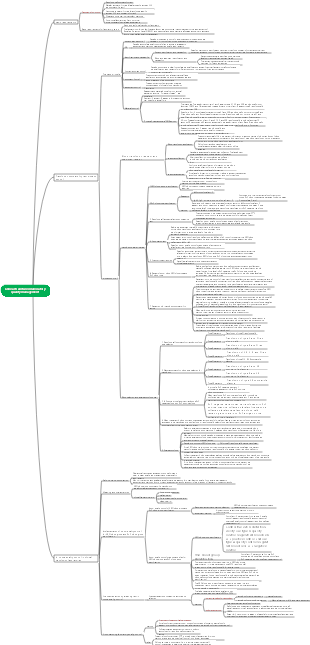
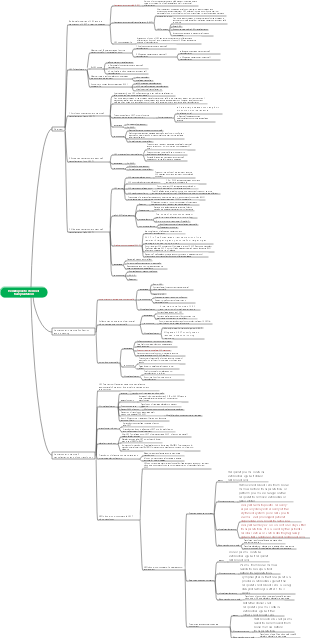

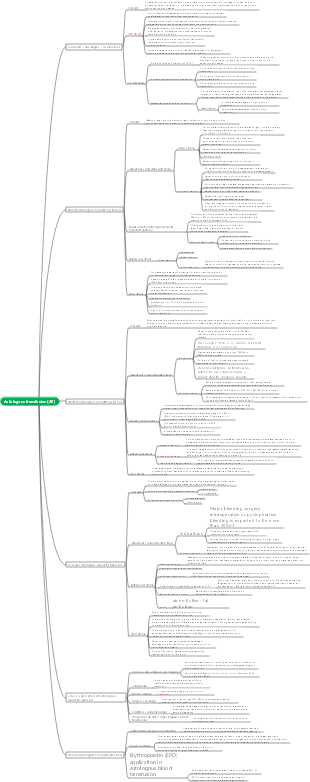
clinical blood transfusion
1 Overview
component transfusion
Separate and purify various cellular components, plasma and plasma protein components in blood using physical or chemical methods to produce high-concentration, high-purity, and low-volume preparations.
Principle of blood transfusion: make up for what is missing, and reduce the risk of adverse reactions to blood transfusion and the risk of transfusion-borne viruses
1. Complete anemia
The blood preservation solution is for red blood cells. It only protects red blood cells at (4±2°C) and has no preservation effect on white blood cells, platelets and unstable coagulation factors.
Platelets should be stored under oscillating conditions (22±2°C) and stored statically at 4°C.
Neutrophils should be stored at 4°C for a maximum of 8 hours.
Unstable coagulation factors (FV, FVIII), which retain their activity below -20°C
2. Whole blood transfusion has many adverse reactions.
Transfusion-associated circulatory overload (TACO) may occur in patients with normovolemia and anemia who receive excessive blood transfusions or transfusions at too fast a rate.
Red blood cells, white blood cells, platelets and plasma proteins contain complex antigens, which stimulate the body to produce antibodies. Re-transfusion is prone to adverse reactions.
Whole blood contains a lot of cell fragments and preservation damage products. The more transfusions, the heavier the metabolic burden.
Whole blood is more likely to produce alloimmunization than red blood cells and has more adverse reactions.
Whole blood with a long shelf life has a lot of micropolymers, and large amounts of blood transfusion can cause pulmonary microvascular embolism.
3. Transfusion of preserved blood is safer than fresh blood
Preserving blood is safer
Treponema pallidum loses its vitality in blood stored at (4±2°C) for 3 to 6 days
Plasmodium can be partially inactivated if stored at 4±2°C for 2 weeks
The meaning of new blood
Whole blood stored within 3 days in ACD and within 7 days in CPD or CPDA is regarded as fresh blood.
Supplement coagulation factors, and the whole blood of the day is regarded as fresh blood
Replenish platelets, whole blood within 12 hours is considered fresh blood
To replenish granulocytes, whole blood within 8 hours is regarded as fresh blood.
4. Minimize white blood cell transfusion
White blood cells are the main media for the transmission of blood-borne viruses, such as cytomegalovirus (CMV), human immunodeficiency virus (HIV), and human T-lymphotropic virus (HTLV)
Whole blood or blood components containing white blood cells (including residual white blood cell membranes), the recipient is prone to produce immune antibodies, and re-infusion may cause adverse transfusion reactions.
Febrile non-hemolytic transfusion reaction (FNHTR)
Platelet transfusion refractory (PTR)
Transfusion-associated graft-versus-host disease (TA-GVHD)
5. Blood transfusion is risky
Transfusion-transmitted pathogens: syphilis, malaria, bacteria, AIDS, hepatitis A, hepatitis B, hepatitis C, prions, cytomegalovirus, etc.
There is a window period for blood virus marker testing, and the virus test is negative, but the virus is already in the blood
There are 33 blood group systems for red blood cells. ABO and Rh homotype transfusion are actually heterogeneous blood transfusions, which can produce irregular antibodies and lead to adverse reactions of blood transfusions.
6. Strictly grasp the indications for blood transfusion and implement restrictive blood transfusion
Consider blood transfusion in adult and pediatric ICU patients when £70g/L
Consider blood transfusion when surgical patients have £80g/L or have clinical symptoms.
Consider blood transfusion in hemodynamically stable hospitalized patients with cardiovascular disease who have clinical symptoms or £80 g/L
Those who may or may not lose must be determined not to lose; carry out component blood transfusions and make up for what is lacking.
2. Whole blood transfusion
Indications
When red blood cells and blood volume need to be replenished at the same time, when acute blood loss exceeds 30% of autologous blood volume and is accompanied by shock symptoms
Postpartum hemorrhage
major surgery
severe trauma
Contraindications
Situations applicable to transfusion of various components are considered relative contraindications to whole blood transfusion
dose
Adults: For every 1 unit of whole blood (200ml) infusing a body weight of 60kg, Hb5g/L can be increased
Children: 6ml/kg body weight input can increase Hb by approximately 10g/L
usage
Use a standard blood transfusion set, preferably a leukocyte filter, and special patients should undergo blood irradiation.
The blood transfusion speed is slow at first, 5ml/min, and can be increased appropriately after a few minutes. One unit of whole blood should be transfused in 30 to 40 minutes.
3. Red blood cell transfusion
1. Suspension red blood cell transfusion (SRBC)
Also known as additive red blood cells
High-concentration red blood cells made by removing as much plasma as possible and adding additives at the same time
advantage
Intravenous infusion is smooth, different additives have different shelf lives, and are the most widely used in clinical applications.
Indications
Those who require blood transfusion due to acute blood loss caused by trauma or surgery
People with heart, kidney, and liver dysfunction who need blood transfusions
Chronic anemia with normal blood volume requiring blood transfusion
chronic anemia in children
2. Concentrated red blood cell transfusion (CRBC)
also called packed red blood cells
Removes most of the plasma and has the same oxygen-carrying capacity as whole blood, but only half the capacity
Indications
For patients with heart, kidney, and liver dysfunction who require blood transfusion, it can reduce the patient's metabolic burden.
shortcoming
Too viscous, difficult to infuse, and less clinical application
3. Leukocyte-poor red blood cell transfusion
Apply a leukocyte filter to remove leukocytes after blood collection
advantage
The white blood cell clearance rate and red blood cell recovery rate are very high, with few adverse reactions to blood transfusion, and it gradually replaces suspended red blood cells.
Indications
Patients with aplastic anemia, globin production disorder anemia, and leukemia who require repeated blood transfusions
Patients preparing for organ transplantation
Patients with non-hemolytic febrile reactions caused by repeated blood transfusions that have produced white blood cell or platelet antibodies
4. Washed red blood cell transfusion
A preparation that removes more than 80% of white blood cells and 99% of plasma and retains at least 70% of red blood cells
advantage
Can significantly reduce the incidence of adverse blood transfusion reactions
Indications
Patients who develop allergic reactions after transfusion of whole blood or plasma
Patients with autoimmune hemolytic anemia
Patients with hyperkalemia and liver and kidney dysfunction requiring blood transfusion
5. Frozen red blood cell transfusion
Also known as frozen-thawed glycerol-depleted red blood cells
Use high-concentration glycerol as a cryoprotectant for red blood cells, store it below -80°C, and then thaw and wash the glycerol-free red blood cell preparations before use.
Indications
Blood transfusion for patients with rare blood types
6. Irradiated red blood cell transfusion
It is not a separate red blood cell preparation, but various red blood cell preparations are irradiated to kill immune active lymphocytes to prevent transfusion-related graft-versus-host disease (TA-GVHD).
Indications
Blood transfusion in patients with immunodeficiency or immunosuppression
neonatal blood transfusion
intrauterine blood transfusion
Select blood transfusion from close relative donors
7. Young red blood cell transfusion
Most of them are reticulocytes, which are larger in size and lower in specific gravity. They are separated and collected using a blood cell separator.
Indications
For patients with long-term repeated blood transfusions, the interval between blood transfusions is prolonged, which can reduce or delay the occurrence of hemochromatosis.
8. Dosage and usage
dose
For adult patients without bleeding or hemolysis, 1 unit of red blood cell preparation can increase Hb5g/L
There is no need to increase it to normal levels, as long as it can improve and meet the oxygen supply of tissues and organs (increase to 80~100g/L)
usage
The infusion speed should be slow and not too fast. For adults, 1 unit of red blood cell preparation should not be infused for more than 4 hours.
For patients with heart, kidney, and liver dysfunction, the elderly and infirm, newborns, and children, the infusion should be slower to avoid transfusion-associated circulatory overload (TACO).
Patients with acute massive blood loss should speed up blood transfusion
When transfusing red blood cell preparations, no drugs are allowed to be added except physiological saline when necessary.
4. Platelet transfusion
unit dose
manual method
Number of platelets in 1 unit³2.0x10¹⁰
Store under shaking conditions at 22±2°C and infuse within 6 hours
Platelet apheresis
Number of platelets in 1 unit³2.5x10¹¹
Store under shaking conditions at 22±2°C for 5 days
Indications
prophylactic platelet transfusion
It can significantly reduce the probability and degree of bleeding, especially the risk of intracranial hemorrhage and visceral hemorrhage.
Low platelets are accompanied by factors such as increased destruction or consumption, such as infection, fever, sepsis, anticoagulant treatment, coagulation disorders (such as DIC), liver failure, etc., and the risk of bleeding is higher.
Various chronic diseases with poor platelet production, such as aplastic anemia, leukemia, thrombocytopenia after high-dose chemotherapy, and hematopoietic stem cell transplantation
Platelet count £50x109/L, prophylactic platelet transfusion required
The platelet count is £5x10⁹/L. Platelets should be transfused promptly regardless of obvious bleeding.
Brain or eye surgery requires an increase in the patient's platelet count >100x109/L
therapeutic platelet transfusion
Bleeding caused by reduced platelet production
Thrombocytopenia due to massive blood transfusion, platelet count £50x109/L
Infections and DIC
Idiopathic thrombocytopenic purpura (ITP)
Those who have severe bleeding before or during surgery such as splenectomy
Those whose platelet count is lower than 20x109/L and accompanied by bleeding may be life-threatening
Intravenous immunoglobulin before infusion prolongs the life of transfused platelets
Severe bleeding caused by abnormal platelet function
Giant platelet syndrome, platelet disease, etc., platelet count is normal but function is abnormal
Contraindications
Heparin-induced thrombocytopenia (HIT)
HIT is drug-induced immune thrombocytopenia, which often causes severe thrombosis and should not be transfused with platelets.
Thrombotic thrombocytopenic purpura (TTP)
The platelet count of patients with TTP is extremely low, which may be caused by thrombosis that consumes a large number of platelets. Platelet transfusion will aggravate TTP.
Dosage and usage
Prophylactic platelet transfusion in adults recommends 1 therapeutic amount
Therapeutic platelet transfusion should be increased in dose
Children (<20kg), infuse 10~15ml/kg up to 1 therapeutic amount
For older children, infuse 1 therapeutic amount
The patient has splenomegaly, infection, DIC and other non-immune factors that lead to thrombocytopenia, so the infusion dose should be increased appropriately.
Special platelet preparation
Features: Removes most platelets from plasma
Suitable for children who cannot tolerate too much fluid, patients with cardiac insufficiency and plasma protein allergy
Wash platelets
Washing apheresis platelets to remove plasma proteins and other components, suitable for people allergic to plasma proteins
leukocyte-poor platelets
Filter out leukocytes during platelet apheresis, before platelet storage, or during transfusion
prevention
Febrile non-hemolytic transfusion reaction
HLA alloimmunization
leukotropic virus
Cytomegalovirus (CMV)
Human T-cell virus (HTLV)
Patients with repeated platelet transfusions and patients with HLA antibodies who need platelet transfusions
irradiated platelets
g-ray irradiation before infusion to inactivate immunologically active lymphocytes
Evaluation of the efficacy of platelet transfusion
The most effective indicator is the hemostatic effect
Laboratory indicators
Corrected Platelet Count Increment (CCI)
Platelet recovery rate (PPR)
5. Plasma transfusion
Fresh frozen plasma (FFP) transfusion
FFP is made from fresh whole blood, separated into plasma within 6 hours at 4°C, and stored frozen below -50°C.
FFP contains all coagulation factors (including unstable V and VIII activities)
FFP-below 20°C, 1 year, after 1 year it is ordinary frozen plasma (FP)
Indications
If a single coagulation factor is deficient, such as hemophilia, FFP can be infused when there is no corresponding concentrated preparation.
Acquired coagulopathy in patients with liver disease
Coagulation disorders associated with massive blood transfusions
Bleeding due to oral anticoagulant overdose
Thrombotic thrombocytopenic purpura
immunodeficiency syndrome
Antithrombin III deficiency
DIC
Contraindications
Patients with plasma protein allergy after blood transfusion
Elderly and frail patients with normal blood volume
Severely ill infants and young children
Patients with severe anemia or cardiac insufficiency
Dosage and usage
Adult first time 200~400ml
Melt in 37°C water bath and infuse with blood transfusion device within 24 hours
Precautions
Infuse FFP as soon as possible after melting to avoid inactivation of unstable factors V and VIII.
There is no need to do a cross-match test before FFP infusion, but it is best to have the same ABO blood type.
In emergencies, if there is no plasma with the same ABO blood type, ABO blood type compatible plasma can be transfused.
Irregular infusion principle
AB type plasma can be safely transfused to recipients of any blood type
Type A plasma can be transfused to type A and type O recipients
Type B plasma can be transfused to type B and type O recipients
Type O plasma can only be transfused to type O recipients
Before infusion, it is a light yellow translucent liquid. If the color is abnormal, it cannot be infused.
Do not leave it at room temperature to melt naturally to avoid the precipitation of a large amount of fibrin.
Once thawed, do not freeze again and infuse in time (temporarily no more than 24 hours at 4°C)
Ordinary frozen plasma (FP) transfusion
preparation
a. Plasma separated from whole blood more than 6 to 8 hours old
b. Plasma separated from whole blood within the validity period
c. FFP with a shelf life of 1 year
save
Below -20°C, 4 years
6. Cryo infusion
Features
Mainly contains: FVIII, fibrinogen (Fg), FXIII, fibronectin (FN), von Willebrand factor (vWF)
Also known as cryoprecipitate coagulation factor, it is a white floc that is thawed and precipitated by fresh frozen plasma at low temperature (2~4°C). It is a concentrated product of FFP partial coagulation factor.
There is no inactivated virus in the preparation of Cryo, which can easily cause post-infusion infection and has few clinical applications.
Indications
Hemophilia A
One of the most effective preparations besides FVIII concentrated preparations
Congenital or acquired fibrinogen deficiency
It can significantly improve the prognosis of fibrinogen deficiency caused by severe trauma, burns, leukemia and liver failure.
Congenital or acquired FXIII deficiency
Rich in FXIII
Von Willebrand Disease (vWD)
There is a deficiency or defect in vWF in the blood of patients with vWD, and cryoprecipitate contains higher levels of FVIII and vWF, which is one of the ideal preparations.
acquired fibronectin deficiency
Fibronectin is a major opsonic protein used in severe trauma, burns, severe infections, hemophilia, skin ulcers and liver failure.
Contraindications
Coagulation factor deficiencies other than those indicated
Dosage and usage
dose
1~1.5U/10kg body weight
If the initial treatment effect is poor, increase the dose and repeat the treatment for better effects.
usage
Completely melts in 37°C water bath, infusion must be completed within 4 hours
Intravenous infusion using standard blood transfusion set
Choose ABO same type or compatible infusion
Precautions
Does not contain V factor and is generally not used alone to treat DIC.
After melting, place at room temperature to inactivate VIII and infuse as soon as possible; the melting temperature should not exceed 37°C to avoid inactivation of FVIII
If it still does not melt when heated to 37°C, it indicates that fibrinogen has been converted into fibrin and cannot be used.
Cryoprecipitate has not been inactivated by the virus. Hemophilia A patients require lifelong treatment and are susceptible to viral infection.
Patients with hemophilia A prefer FVIII concentrated preparations, and those with fibrin deficiency prefer fibrinogen products. These products have been treated with virus inactivation and are safe and reliable.
7. Granulocyte infusion
Indications
The absolute value of neutrophil count is less than 0.5x10⁹/L
Have a clear bacterial infection
Strong antibiotic treatment failed for 48 hours
If there are indications, but bone marrow function recovers within a few days, no infusion is required.
Contraindications
People with bacterial infections who are sensitive to antibiotics, or those whose infections have been effectively controlled
The prognosis is extremely poor. For example, patients with terminal cancer should not undergo infusion.
Dosage and usage
dose
Once a day for 4 to 5 consecutive days, the daily dose is greater than 1.0x10¹⁰ granulocytes
Discontinue if there are pulmonary complications or infusion failure
usage
Infuse as soon as possible after preparation, at room temperature no longer than 24 hours
The preparation contains a large amount of red blood cells and plasma, ABO and RhD are of the same type for infusion, and a cross-match test is done before infusion.
To prevent the occurrence of TA-GVHD, irradiate before infusion
Precautions
It is not advisable to use leukocyte filters to filter concentrated granulocytes to prevent the spread of CMV. CMV antibody-negative donors should be selected
8. Plasma protein product infusion
a.Albumin product infusion
Indications
hypoalbuminemia
Supplement exogenous albumin to increase albumin concentration and colloid osmotic pressure, reduce edema and reduce body cavity fluid accumulation
Expand blood volume
Volume expansion for patients with shock, trauma, surgery, and extensive burns
extracorporeal circulation
Use crystalloid or albumin as pump base fluid to reduce the risk of postoperative renal failure
plasma exchange
To remove plasma containing pathological components and also remove albumin, albumin needs to be used as replacement fluid, especially for patients with severe liver and kidney diseases.
hemolytic disease of newborn
Albumin can bind free bilirubin, prevent free bilirubin from passing through the blood-brain barrier, and prevent bilirubin encephalopathy.
Contraindications
Use with caution in patients with allergic reactions to albumin products, patients with heart disease, and patients with normal or high plasma albumin levels.
usage
Intravenous infusion alone, or infusion with normal saline
b.Immune globulin product infusion
Gamma (g) globulin
Also known as normal human immunoglobulin, it is purified from the mixed plasma of thousands of people. It is mainly IgG, with very small amounts of IgA and IgM.
Contains anti-viral, anti-bacterial and anti-toxin antibodies and can only be injected intramuscularly, intravenous injection is prohibited
intravenous immunoglobulin
Immune globulin suitable for intravenous injection is prepared by gastric enzymatic digestion, chemical modification, ion exchange chromatography, etc., and is mostly freeze-dried powder. It can be configured with 5% or 10% solution for intravenous injection.
For immunodeficiency diseases, viral and bacterial infections
specific immunoglobulins
After immunization with the corresponding antigen, purification from plasma containing high-titer specific antibodies
Indications
Prevent certain viral infections, such as hepatitis B immune globulin and rabies immune globulin
Prevent bacterial infections, such as tetanus immune globulin
Suppress primary immune responses, such as RhD alloimmunization prophylaxis using anti-RhD immune globulin
Other uses: Antithymic immunoglobulin treats acute aplastic anemia, with an effective rate of 50%
c. Infusion of coagulation factor VIII concentrated preparation
Also known as antihemophilic globulin, it is a freeze-dried coagulation factor concentrate obtained by separating and storing fresh mixed plasma from 2,000 to 30,000 donors.
Treatment of bleeding and wound healing difficulties caused by FVIII deficiency, such as hemophilia A, vWD and DIC
Compared with cryoprecipitate, FVIII concentrate has high activity, convenient storage and infusion, and fewer allergic reactions. It can be diluted with water for injection or normal saline for use.
d. Infusion of coagulation factor IX concentrated preparation
FIX is an important coagulation factor synthesized by the liver and is a vitamin K-dependent factor.
Treatment of hemophilia B, vitamin K deficiency, severe liver insufficiency and DIC, etc.
It is contraindicated in patients with thrombotic diseases and high-risk embolism, and should be used with caution in patients with anti-FIX antibodies.
e. Fibrinogen product infusion
It is synthesized by the liver, and the normal plasma content is 2~4g/L. In severe liver disease or malnutrition, the synthesis is reduced.
The body's fibrinogen level to maintain normal and effective hemostasis should be ³0.5g/L
When major surgery or trauma occurs, ³1.0g/L should be used
Indications
Congenital absence or hypofibrinogen
Acquired fibrinogen deficiency, such as liver disease
DIC
primary fibrinolysis
f.Prothrombin complex concentrate infusion (PCC)
It is a mixed preparation of coagulation factors II, VII, IX, and X that relies on vitamin K. It is a freeze-dried product prepared by mixing human plasma.
Suitable for congenital or acquired coagulation factor II, VII, IX, and X deficiencies, including hemophilia B, liver disease, vitamin K deficiency, DIC, etc.
g. Fibrin glue (FS)
Hemostatic adhesive isolated from plasma is a hemostatic gel product composed of fibrinogen and thrombin.
advantage
Airtight, liquid impermeable, biodegradable, promotes blood vessel growth and formation, local tissue growth and repair
h. Antithrombin (AT) concentrate infusion
Plasma protein products separated and purified from plasma using heparin agar gel affinity chromatography technology
Indications
Patients with congenital and acquired AT deficiency, such as hereditary AT deficiency or functional deficiency disorders
Surgery to prevent deep vein and arterial thrombosis, cirrhosis and severe hepatitis, hemodialysis, nephrotic syndrome, DIC, bone marrow transplantation and secondary AT deficiency caused by chemotherapy, etc.
i.Activated protein C products
Genetically engineered activated protein C can inactivate FVa and FVIIIa, limit the formation of thrombin, and exert anti-thrombotic effects.
Indications
Serious infections in adults at high risk of death
DIC
Thrombotic disease
Common side effects: Gastrointestinal bleeding and abdominal bleeding
j.Gene recombinant activated coagulation factor VII (rFVIIa)
An active coagulation factor prepared by genetic engineering. The mechanism of action is that rFVIIa binds to tissue factor on the surface of endothelial cells to generate a small amount of thrombin, activate V, VIII and platelets, and amplify the coagulation reaction.
Indications
Bleeding in hemophilia A and B with antibodies
surgical hemostasis
Liver Transplantation
cardiac surgery
prostate surgery
cerebral hemorrhage
Traumatic bleeding
upper gastrointestinal bleeding
Others include thrombocytopenia, overdose of anticoagulants, postpartum hemorrhage, etc.
k. Other plasma protein products
a2-macroglobulin, fibronectin, a1-antitrypsin, von Willebrand factor concentrate, etc.
9. Blood transfusion for special diseases
a. Massive blood transfusion
concept
Calculated based on a 24-hour cycle, the blood volume transfused reaches more than the patient's own total blood volume.
The amount of blood transfused reaches more than 50% of the patient's total blood volume within 3 hours
Transfusion of more than 4 units of red blood cell preparation within 1 hour
Blood loss rate>150ml/min
Blood loss 1.5ml/(kg.min) for more than 20 minutes
in principle
Replenish blood volume to maintain tissue perfusion and oxygenation
Treat the cause of blood loss, use appropriate blood products to correct coagulation disorders, and control bleeding
method
red blood cell transfusion
On the basis of full volume expansion and anti-shock treatment using crystalloids and colloids, or emergency infusion of 2 to 4 units of suspended red blood cells at the same time, it can quickly alleviate insufficient tissue oxygen supply.
platelet transfusion
Massive bleeding causes platelet loss, and massive transfusion of whole blood, red blood cells, and massive transfusion can cause platelet dilution.
Platelets should be transfused when the level is lower than 50x109/L
Fresh frozen plasma transfusion
When the blood transfusion volume reaches twice the total blood volume of the recipient, the coagulation factor drops to less than 30% of the pre-bleeding level.
When PT and APTT exceed the normal control by more than 1.5 times, especially in patients with liver dysfunction, fresh frozen plasma should be transfused to supplement plasma proteins and multiple coagulation factors, especially unstable coagulation factors (V, VIII)
cryoprecipitate infusion
When the blood transfusion volume reaches 1.5 times the recipient's autologous blood volume and the fibrinogen drops below 1.0g/L, cryoprecipitate should be infused for treatment.
Other blood product transfusions
In massive blood transfusions, the use of recombinant activated coagulation factor VII (rFVIIa) has a significant hemostatic effect
Prothrombin complex concentrate (PCC) can reduce bleeding in patients with liver dysfunction or vitamin K deficiency
triad of death from massive blood transfusion
acidosis
hypothermia
Coagulation disorders
b. Blood transfusion for liver transplant patients
Preoperative preparation
Prepare the patient's total blood volume of 3 to 5 or more
ABO homologous liver transplantation, even if there is a shortage of donors, ABO incompatible liver transplantation can be performed
Rational application of component blood transfusion
Fresh frozen plasma transfusion
Liver transplant patients suffer from coagulation factor deficiency due to various reasons
Apheresis platelet transfusion
Platelets should be transfused when the platelet count is <50x109/L, and the cause of bleeding should be corrected, such as hypovolemia, hypothermia, and anemia.
red blood cell transfusion
When Hb is less than 70g/L, consider blood transfusion
cryoprecipitate infusion
Mainly contains fibrinogen, FVIII, FXIII, fibronectin, and von Willebrand factor
Effective in treating bleeding caused by hyperfibrinolysis
Infusion of other plasma protein products
Fibrinogen infusion: When the Fg content is less than 1.0g/L, fibrinogen preparation should be supplemented
Prothrombin complex concentrate (PCC) infusion: PCC contains vitamin K-dependent factors (FII, FVII, FIX, FX), which can improve hypocoagulation.
Recombinant activated coagulation factor VII (rFVIIa): rFVIIa forms a complex with local tissue factor in injured blood vessels. This complex activates FX and FIX on the surface of activated platelets to generate thrombin.
Precautions
Regular monitoring of laboratory indicators during the perioperative period of liver transplantation
Hematocrit (Hct) guides red blood cell transfusion
Platelet count guides platelet transfusion
PT and APTT guide the application of fresh frozen plasma
Fibrinogen determination guides the application of cryoprecipitate and fibrinogen preparations
Thromboelastography comprehensively monitors coagulation status and guides applications such as fresh frozen plasma and platelets
During liver transplantation, attention should be paid to body temperature, acid-base balance and electrolyte imbalance
Hypothermia slows down coagulation rate and coagulation factor synthesis, accelerates fibrinolysis, causes reversible platelet dysfunction and prolongs bleeding time
Hypocalcemia and acidosis can affect coagulation function
Appropriate calcium supplementation is required during liver transplantation
Liver transplantation requires massive blood transfusions, and the ability to metabolize citric acid is weakened during the anhepatic stage; accumulation of citric acid and increased calcium complexes can cause hypocalcemia.
Hypocalcemia changes hemodynamics and inhibits myocardium
Use autologous blood transfusion
Wash-type autologous blood transfusion is commonly used (except for patients with liver tumors)
immune hemolysis
During ABO heterotypic liver transplantation (type O liver transplantation to type A patient), donor-derived plasma cells can produce anti-A, leading to hemolytic reaction 7 to 10 days after transplantation.
ABO heterogeneous liver transplantation uses red blood cells with the same ABO blood type as the organ donor
The relationship between liver transplant survival rate and blood transfusion
Patients with large blood transfusions have slower recovery and longer hospital stay
The less blood transfused, the higher the survival rate
c. Blood transfusion in patients with disseminated intravascular coagulation (DIC)
Pathophysiological process
a. Hypercoagulable period
b. Consumptive hypocoagulation period
c. Secondary hyperfibrinolysis stage
clinical manifestations
Clinical manifestations of extensive bleeding, microcirculation disorders, multiple embolisms, microangiopathic hemolytic anemia and primary disease
Treatment principles
Red blood cell transfusion: When blood loss exceeds autologous blood volume by 20% to 30%, Hb is less than 80g/L, and accompanied by anemia symptoms or active bleeding, red blood cells can be transfused regardless of whether the pathological process of DIC is controlled or not.
Platelet transfusion: When platelets are less than 50x109/L, platelet transfusion should be done on the basis of heparin anticoagulation.
Fresh frozen plasma and cryoprecipitate transfusion: The consumptive hypocoagulation period is the best period to replenish fresh frozen plasma or cryoprecipitate.
Antithrombin concentrate infusion: When the antithrombin level is lower than 50% of the normal value, antithrombin concentrate should be supplemented
Infusion of other plasma protein preparations: Prothrombin complex concentrate (PCC) is extremely effective, along with activated protein C products
d. Blood transfusion for newborns and infants
red blood cell transfusion
Newborn blood transfusion is small
Red blood cell preparations should be selected with short storage time, white blood cell removal, and washing and irradiation treatment if necessary.
Choose a blood transfusion set that can filter out microaggregates
platelet transfusion
Choose apheresis platelets with the same ABO and Rh blood types
If RhD-negative platelets are not available, RhD-negative children should receive an intramuscular injection of anti-RhD immunoglobulin at the same time as RhD-positive platelets are transfused.
Platelet apheresis is preferred: the residual amount of white blood cells and red blood cells in platelets is low and the purity is high, which can avoid transfusion reactions caused by HLA incompatibility
e. Blood transfusion for elderly patients
in principle
Use stock blood as little as possible and use fresh blood or recent blood instead.
If you can not lose, don’t lose. If you can lose less, don’t lose too much. If you can lose multiple times, don’t lose once. The principle is to use small amounts many times.