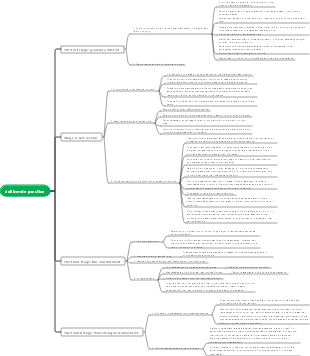
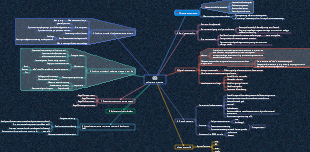
The ins and outs of the 10,000-hour rule
Erikson
Emphasis on deliberate practice
Gladwell
The 10,000-hour rule (wrong psychological concepts)
sandpile paradox
The boundary between qualitative change and quantitative change
"Attraction": a sense of hope
Practice results are not positively related to time
Practicing mechanically is useless
In any industry or field with a long history, if you want to achieve a career and become an outstanding figure in the industry, it will take many years of hard and outstanding efforts.
Deliberate practice of maintaining large time periods patiently and humbly
The core idea of deliberate practice
Key words
with a clear purpose
Have a set of effective training methods
Training programs are controlled by effective instructors
Set goals carefully, break the long journey into a series of controllable small goals, and only focus on one at a time to reward yourself in time.
Focus on investment
If your mind is wandering, or you're taking it easy and doing it just for fun, you probably won't make progress.
Constantly challenge your comfort zone
Just beyond the capabilities
Find a great mentor
When you change, find a new mentor
keep practicing
Purpose: Establish effective mental representations
It not only produces effective mental representations, but also relies on effective mental representations.
long term memory
The direction and essence of deliberate practice
Give meaning, finely encode
Understand words and terminology in one's field very quickly
Extract structure or pattern
Extract structures or patterns from knowledge in professional fields: better memory storage
Increase your speed and connections
Working memory and long-term memory pathways
The speed of combining theory and practice
Memory palace: the ability to quickly encode short-term memory into long-term memory
tacit knowledge
The difference between learning activities with high cognitive complexity and low cognitive complexity is largely reflected in the amount and proportion of implicit knowledge.
cognitive complexity
The ability to construct an "objective" world.
Highly complex thinking ability
Understanding the objective world through the concepts of complementarity and noncompliance
Tacit knowledge needs to be found in situations
Empirical know-how based on clues, hunches, personal insights, and instincts
“Learn wherever you use it”
Learn mainstream concepts of science
Find a learning community
"Genius" is the product of training
Strengthen the "neurons" of the brain to establish new connections and strengthen connections. "How to Study Efficiently" reading notes
"Genius" is just better at using talents and abilities
He just used his genius, he is a real genius
The ability to create through correct training and practice
The purpose of education and training: to help realize potential and fill deficiencies
Use specific methods to learn "predetermined limits"
The brain is adaptable and predetermined abilities do not exist.
Training can create abilities we didn't have before.
Learning is no longer a way to discover someone's potential, but a way to develop that potential. We can create our own potential.
With deliberate practice: the goal is not just to discover your potential, but to build it so that things that were previously impossible become possible.
Superior abilities: highly developed psychological processes
Quantity and quality of mental representations
What exactly are we trying to improve in the brain?
How people use psychological components to enhance extraordinary abilities
Meaningful memories are more efficient
"data block"
Improve our ability to use the knowledge we learn
mental representation
Mental internal representation of cognitive things. [Can be concrete or abstract]
a mental structure that corresponds to what our brains are thinking about
See both the trees and the forest
The psychological representations mentioned in this article have certain industry characteristics.
A kind of experience and predictability for specific things
Coding type specific to each person
Create good mental representations for mental representation concepts
methodology
use
Monitoring and evaluation
Gap: The more acutely you discover existing problems: the more effective mental representation you have
Correct practice
The most effective way to improve performance and level
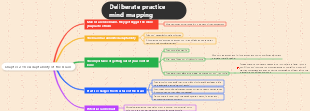
deliberate practice
purposeful practice
well-defined specific goals
Get out of your comfort zone
encountered a bottleneck
Try doing something different, not something harder
It’s not that you’ve reached your limit, it’s that you’re not motivated enough.
Create search structure
construction of psychological structure
Distinguishing deliberate practice
An industry field that has been reasonably developed (with standardized evaluation criteria)
change mind
How the brain responds to deliberate practice
brain adaptability
The focus is on establishing new neuronal connections, or strengthening neuronal connections to enable faster and more rapid responses.
The human body has a tendency to prefer stability.
The motivation for change, unconsciously speaking, is the process of moving from one comfort zone to another.
Effects of training on the brain
The younger you are, the more adaptable you are
Intensive training strengthens this part of the brain and weakens another brain function
The structure of training will degrade
The extent to which different types of exercises tap into the brain’s and body’s adaptive abilities
Use deliberate practice
Work
Make practice a part of life
reject three thoughts
Believe that abilities are limited
Believe in your own potential
I think it will work if it lasts long enough
Effective repetition practice
You can improve by working hard
Correct feedback practice
If you're not improving, it's not because you lack talent, it's because you're not practicing the right way
Knowledge and skills
The traditional approach has been to first seek out information about the right approach, deliberate practice focusing on performance and performance, and how to improve performance and performance
It is much easier to introduce knowledge than to create conditions for people to improve their skills through practice.
Life
Excellent tutor
Someone who is just for you at this stage and can guide you and give you feedback.
When there is no tutor: Design your own practice methods and create opportunities
The purpose of doing something repeatedly is to find out the shortcomings, focus on the progress made, and try to use different methods to improve until you find the one that suits you best.
The "three F's" create effective mental representations
focus
feedbackfeedback
correct fixit
We can only try to copy the achievements of outstanding people. If we fail, stop and think about why.
Overcoming the stagnation stage
Challenge yourself in new ways
Attack specific weaknesses
stay motivated
new year resolution effect
Willpower does not exist
Willpower is a completely situational attribute
Strengthen the reasons to move forward and weaken the reasons to stop.
Believe that you can succeed
Control the environment that persists
Deliberate practice is for everyone who has a dream, for those who want to control their lives, shape their own potential, not bow to fate, and not be reconciled to the status quo.
People stop learning and improving not because they reach some innate limit, but because they stop training or, for some reason, never start training.
Once they understand what it takes to reach a high enough level in one area, they understand at least in principle what it takes to pursue excellence in other areas.
 Wondershare EdrawMind