MindMap Gallery Problem solving, transfer and creativity among primary school students
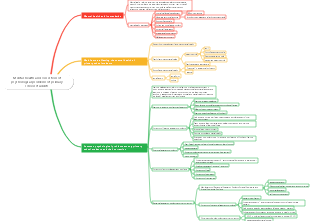
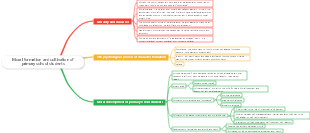
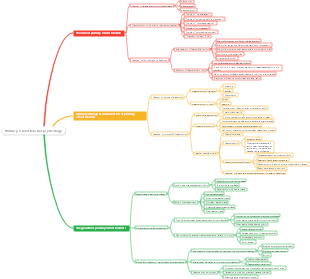
This is a mind map about primary school students' problem solving, transfer and creativity. The main content includes: creativity and its measurement, problem solving, transfer and its main types.
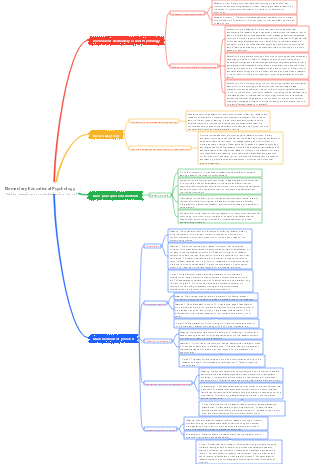
Edited at 2024-03-13 10:38:31This is a mind map about bacteria, and its main contents include: overview, morphology, types, structure, reproduction, distribution, application, and expansion. The summary is comprehensive and meticulous, suitable as review materials.

This is a mind map about plant asexual reproduction, and its main contents include: concept, spore reproduction, vegetative reproduction, tissue culture, and buds. The summary is comprehensive and meticulous, suitable as review materials.
This is a mind map about the reproductive development of animals, and its main contents include: insects, frogs, birds, sexual reproduction, and asexual reproduction. The summary is comprehensive and meticulous, suitable as review materials.
This is a mind map about bacteria, and its main contents include: overview, morphology, types, structure, reproduction, distribution, application, and expansion. The summary is comprehensive and meticulous, suitable as review materials.
This is a mind map about plant asexual reproduction, and its main contents include: concept, spore reproduction, vegetative reproduction, tissue culture, and buds. The summary is comprehensive and meticulous, suitable as review materials.
This is a mind map about the reproductive development of animals, and its main contents include: insects, frogs, birds, sexual reproduction, and asexual reproduction. The summary is comprehensive and meticulous, suitable as review materials.
Problem solving, transfer and creativity among primary school students
Migration and main types
Transfer meaning: refers to the impact of one type of learning on another type of learning, or the impact of acquired experience on the completion of other activities
Type of migration
Migration nature: positive migration, negative migration
Different levels of abstraction and generalization of migrating content: horizontal migration and vertical migration
Time sequence of migration: forward migration and reverse migration
Differences in migration content: general migration and specific migration
Migration scope: near migration and far migration
Basic theory of migration
Form training theory: Learning content is not important, form and training are important
Common elements theory (Thorndike and Woodworth)
The Theory of Generalization of Experience (Judd) - Target Shooting Experiment in Water
Relationship Transformation Theory (Gestalt Psychologist-Koehler)
Cognitive structure theory (Ausubel)
Promote the migration of primary school students
Main factors affecting migration
Similarity of learning materials (Thorndike-Common Elements Theory)
Similarity in structural properties and similarity in surface properties (Jick and Holyoke)
Original cognitive structure (Ausubel)
Learning set (set: a state of mental readiness or tendency to an activity caused by previous activities)
Teaching Strategies to Promote Primary School Students’ Migration
Selected teaching material content (the most basic and typical factual materials; variations and counterexamples)
Reasonably arrange teaching content (from general to individual, from overall to details; comprehensive and thorough)
Reasonable handling of teaching procedures (macro - the overall arrangement of the learning sequence; micro - the specific arrangement of each lesson)
teach learning methods
Raise students’ awareness of migration
problem solved
Meaning: A problem usually refers to a difficult situation in which an individual has no ready-made solution to the current task.
Type of question
Well-defined problems (well-structured problems): usually means that the starting state, goal state and solution of the problem are determined
Poorly defined problems (poorly structured problems): refer to the problem where the starting state, goal state and solution are uncertain
Problem-solving characteristics: purposefulness, cognition, sequence
problem solving model
Dewey: Problems, Analysis, Hypothesis, Testing and Evaluation, Conclusion
Wallace: Preparation, Incubation, Clarity, Verification
Dunkel: Scope reduction aggregation model
The first stage: general scope
Phase 2: Functional solution
Stage Three: Special Solutions
Newell and Simon's information processing model, four steps
receiver
processor
memory
reactor
Glass: The modern cognitive model
Develop an initial representation of the problem
Specify a plan to resolve the problem
Reconstruct problem representation
Execution plan and inspection results
Improve primary school students’ problem-solving skills
Main factors affecting primary school students’ problem solving
objective external environmental factors
How the problem is presented
The intuitiveness and specificity of the problem
The amount of information provided in the question
personal reason
Function fixation (Dunkel): When a person sees an item, his thinking is often bound by its usual use, and it is difficult to think of other functions of the item.
Thinking set: "Inertial thinking" is a special state of mental preparation for activities caused by previous activities, or the tendency of activities
brewing effect
reserve of knowledge
cognitive strategies
Cultivation of primary school students’ problem-solving abilities
Improve students’ knowledge reserve level
Combining the teaching content of various subjects to train students’ problem-solving abilities
Cultivate students’ habit of thinking about problems
Adopt scientific problem-solving training methods
Creativity and its measurement
Concept: Creativity refers to an individual’s personality traits or tendencies to produce unique, socially valuable products
Main factors affecting primary school students' creativity
Intelligence (most creative people have IQs between 110 and 130; people with IQs above 130 have very scattered levels of creativity, ranging from high to low; people with low IQs are also less creative)
knowledge experience
personality and motivational factors
envirnmental factor
Cultivation of creativity among primary school students
Training methods for primary school students’ creative thinking
Brain stimulation method (brainstorming method), social stimulation
metaphor training method
Multiple Strategies (Guilford)
Teaching suggestions for cultivating creativity among primary school students
Create an independent and relaxed learning atmosphere
Pay attention to the development of children's intuitive thinking and divergent thinking
Encourage hands-on experience and learn from creative role models