MindMap Gallery Elementary Educational Psychology
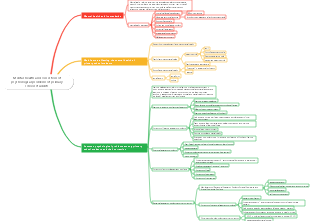
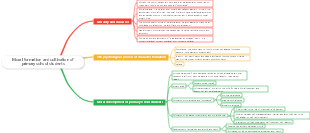
This is a mind map about primary school educational psychology. The main contents include: main research methods, basic principles and methods, nature and tasks, and an overview of primary school psychology.
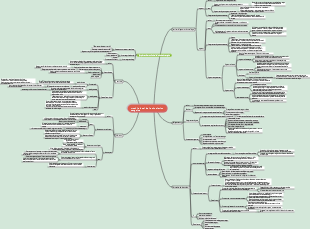
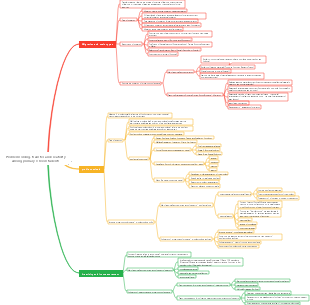
Edited at 2024-03-13 10:37:09This is a mind map about bacteria, and its main contents include: overview, morphology, types, structure, reproduction, distribution, application, and expansion. The summary is comprehensive and meticulous, suitable as review materials.

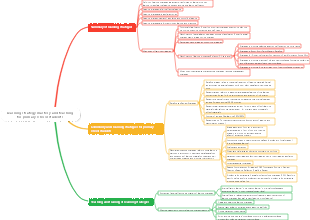
This is a mind map about plant asexual reproduction, and its main contents include: concept, spore reproduction, vegetative reproduction, tissue culture, and buds. The summary is comprehensive and meticulous, suitable as review materials.
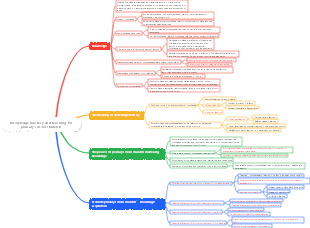
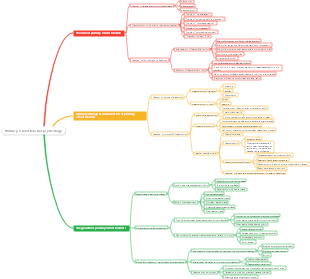
This is a mind map about the reproductive development of animals, and its main contents include: insects, frogs, birds, sexual reproduction, and asexual reproduction. The summary is comprehensive and meticulous, suitable as review materials.
This is a mind map about bacteria, and its main contents include: overview, morphology, types, structure, reproduction, distribution, application, and expansion. The summary is comprehensive and meticulous, suitable as review materials.
This is a mind map about plant asexual reproduction, and its main contents include: concept, spore reproduction, vegetative reproduction, tissue culture, and buds. The summary is comprehensive and meticulous, suitable as review materials.
This is a mind map about the reproductive development of animals, and its main contents include: insects, frogs, birds, sexual reproduction, and asexual reproduction. The summary is comprehensive and meticulous, suitable as review materials.
Elementary Educational Psychology
Overview of Elementary School Psychology
Research objects and content
Research object: Primary school educational psychology is a discipline that studies the basic psychological laws of student learning and teacher teaching in the context of primary school education. It is a branch of educational psychology;
Research contents: 1. The psychological development characteristics of primary school students; 2. The definition, process, types, functions and learning theories of learning, etc.
Relationship with neighboring disciplines
Relationship with pedagogy: Both are sciences that study educational phenomena. The research objects have many overlaps, and the research results also corroborate and complement each other; pedagogy explores the essence, functions, purposes, tasks, principles, methods, etc. of education. Organizational forms, educational systems and other issues focus on the macro aspects of education; primary school educational psychology explores the psychological laws of learning and teaching in educational situations, focusing on the micro aspects of education.
Relationship with general psychology: Both study psychological phenomena and have many similarities in terms of research objects, content, methods, etc. General psychology explores people's general psychological phenomena, that is, general cognitive processes, emotional and volitional activities, and the rules of personality formation, etc.; the research objects and content of primary school educational psychology are more focused, and explores students and teachers in the context of primary school education. psychological characteristics and laws of
Relationship with child psychology: the two disciplines intersect and complement each other. Child psychology is a discipline that studies the age-stage characteristics and development rules of children's psychological development from birth to adulthood. It conducts research from a longitudinal perspective on time development; primary education psychology studies from a transversal perspective the psychological laws in the process of primary school students mastering knowledge, skills and forming abilities and moral character, and how to teach effectively based on these laws.
Nature and tasks
The tasks of primary education psychology
Reveal the psychological laws of primary school students' learning: research and reveal the characteristics, characteristics, types and processes, conditions and laws of different types of learning in the primary education system; explore effective methods to improve the effectiveness of education and teaching: optimize education based on the basic laws of student learning System, improve educational efficiency and accelerate talent training.
The role of educational psychology in primary schools
Promote the development of psychology and related disciplines: Primary education psychology explores a series of basic learning psychological laws such as students' learning motivation, knowledge mastery, and skill formation in primary education settings. These results verify, expand or deepen psychology and related disciplines. The research builds a bridge between basic research and applied research; effectively solves relevant problems in the practice of primary school education and teaching: improves the theoretical level and grasps the correct direction of education reform; improves the effectiveness of education and teaching, promotes student development; promotes the professional growth of teachers;
Basic principles and methods
The basic principle
Principle of objectivity: It is required to reveal the objective laws of students' learning based on the students' objective reality.
Systemic principle: The student's psychology is regarded as a whole composed of functionally interconnected elements. The nature and laws of various psychological phenomena should be understood from the psychological system and environment, the internal components of the psychological system and their mutual constraints.
Practicality principle: Starting from the needs of educational practice, research topics should come from practice, the research process should be closely integrated with practice, and research results should be tested by practice and serve practice.
Educational principle: When conducting research on primary school educational psychology, it must conform to the laws of students' physical and mental development, be conducive to students' normal development, and have educational significance.
Main methods of research
Observation
Meaning: The observation method is a method of collecting research data by using the senses or with the help of scientific observation instruments to conduct planned and purposeful inspections of the words and deeds of the subjects being studied.
Features: 1. The current behavior and related information can be obtained. However, for some events that can be encountered but cannot be expected, it is not easy to use the observation method. 2. Relevant information on research subjects who cannot be reported directly or who are inconvenient to report can be obtained. 3. Access to real and natural information. It may be interfered by some irrelevant variables, and it is difficult for researchers to draw some causal inference from the observed data. 4. Usually the cooperation of the observed object is not required, but the requirements for the observer are higher.
Notes: 1. Observers must make preliminary preparations for observation—observation purpose, observation plan, observation objects, observation tools, etc. 2. Make detailed observation records—descriptive recording, data recording, tool recording, etc. 3. Efforts should be made to eliminate observer errors—observers should undergo necessary training and use more objective observation and rating methods to overcome possible errors.
interview method
Meaning: The interview method refers to a method of collecting relevant information through conversations between the researcher and the researched.
Features: 1. Flexible and easy to control. 2. It has a wide range of applications, but interviews require a lot of time and energy, resulting in a limited number of interviewees, high costs, and difficulty in large-scale implementation. 3. The effectiveness of the interview depends on the trust and cooperation of both parties
Notes: 1. Make preparations for the interview. 2. Grasp the theme and direction of the interview. 3. Master interviewing skills. 4. Minimize interviewer error.
Questionnaire method
Meaning: The questionnaire method is a method of collecting information and data by sending a series of strictly designed questions to the research subjects in written form, requiring truthful answers;
Features: 1. Not limited by the number of people, sampling can be large or small. 2. The scope of application is relatively wide. 3. The data is easy to organize and statistically analyze. 4. There are high requirements for the preparation of questionnaires.
Notes: 1. The questionnaire framework should be constructed according to the research purpose. 2. Formulate appropriate questions. 3. Test and revise the questionnaire.
Educational experience summary method
Meaning: The educational experience summary method is a method to analyze and summarize the actual educational process, discover the objective laws contained in the educational process, and provide reference for subsequent educational work. (Thematic experience summary/general experience summary)
Characteristics: 1. Educational experience often comes from specific educational practices. 2. The educational experience summary method is economical and flexible, has low technical requirements, simple operating procedures and strong practicability. This method is greatly affected by the user's own theoretical accomplishment level.
Notes: Determine the topic (based on reality, typicality, representativeness) - Make a plan - Collect data (using multiple methods) - Analyze the data - Summarize and refine (clarify the internal contents of the data through theory, logic, and statistical methods) structure and relationships)
educational action research
Meaning: Educational action research refers to teachers focusing on specific problems existing in actual educational activities, proposing improvement strategies and putting them into practice, so as to achieve the purpose of improving practice and enhancing educational activities.
Characteristics: Educational action research mainly has the characteristics of situational, participatory and self-evaluation.
Notes: 1. Educational action research includes identifying problems, reviewing literature, revising questions, determining procedures, selecting evaluation methods, implementing intervention measures, and evaluating and adjusting results. 2. Educational action research is a systematic, ongoing, planned, and self-constantly reflective and critical research process. 3. Educational action research mainly obtains knowledge and methods about specific educational situations.