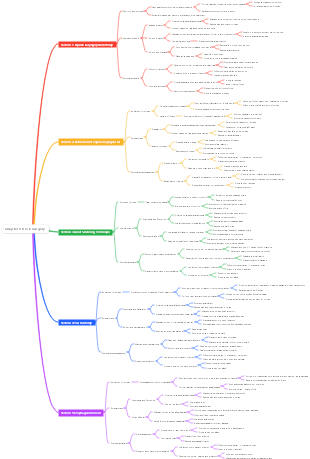
MindMap Gallery Animal anatomy digestive system mind map
A mind map about animal anatomy and digestive system, including tubular organs, solid organs, etc.
Edited at 2023-11-28 14:13:21This is a mind map about bacteria, and its main contents include: overview, morphology, types, structure, reproduction, distribution, application, and expansion. The summary is comprehensive and meticulous, suitable as review materials.

This is a mind map about plant asexual reproduction, and its main contents include: concept, spore reproduction, vegetative reproduction, tissue culture, and buds. The summary is comprehensive and meticulous, suitable as review materials.
This is a mind map about the reproductive development of animals, and its main contents include: insects, frogs, birds, sexual reproduction, and asexual reproduction. The summary is comprehensive and meticulous, suitable as review materials.
This is a mind map about bacteria, and its main contents include: overview, morphology, types, structure, reproduction, distribution, application, and expansion. The summary is comprehensive and meticulous, suitable as review materials.
This is a mind map about plant asexual reproduction, and its main contents include: concept, spore reproduction, vegetative reproduction, tissue culture, and buds. The summary is comprehensive and meticulous, suitable as review materials.
This is a mind map about the reproductive development of animals, and its main contents include: insects, frogs, birds, sexual reproduction, and asexual reproduction. The summary is comprehensive and meticulous, suitable as review materials.
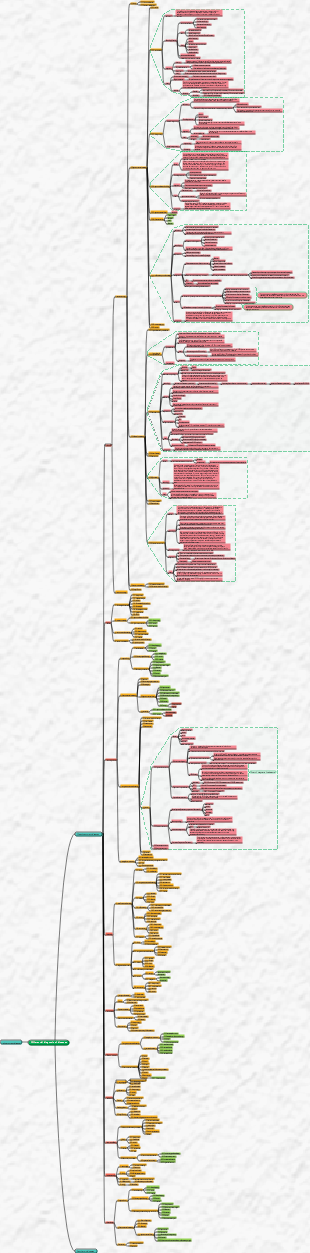
digestive system
tubular organ
digestive tract
oral cavity
structure
front wall
lip
side wall
cheek
top wall
hard palate
lower wall
oral cavity
It is connected to the pharynx and houses the tongue and teeth.
tongue
effect
Stirring and pushing food
tongue papilla
Does not contain taste buds
Conical papillae
filiform papillae
Contains taste buds
fungiform papillae
Contoured nipples
foliate papillae
teeth
effect
cutting, tearing and grinding food
type
incisor
anterior part of dental arch
canine teeth
interalveolar margin
molar
posterior dental arch
structure
Crown
exposed beyond the gums
Tooth neck
The neck of the tooth surrounded by the gums
tooth root
buried in tooth alveolus
oral vestibule
The space between the lips, cheeks and dental arches
proper oral cavity
part within the dental arch
throat
esophagus
Stomach
In the abdominal cavity, behind the diaphragm and liver
enlarged part of the digestive tract
The cardia is used as the entrance to connect the esophagus. Communicates with duodenum using pylorus as outlet
Function
temporary food storage
secrete gastric juice
Push food into the duodenum
Monogastric
example
pig
Rabbit
horse
dog
structure
cardia gland area
pyloric gland area
gastric fundic gland area
Restoration of stomach
multichambered stomach
example
ox
sheep
structure
forestomach
rumen
Areas divided by left and right ditches and front and rear ditches
rucksack
abdominal pouch
Anterodorsal caecum
Anterior ventral caecum
Backpack
Posterior ventral caecum
microbes on nipples
During peristalsis they are fully contact with the contents, thereby promoting its fermentation
Reticulum
The reticulum of cattle is the smallest of the four stomach chambers.
Honeycomb or grid-like
The edges of its mucosa are papillae, It can move the reticulum at the same time Simple cutting of food, to facilitate further digestion
omasum
The omasum of sheep is the smallest of the four gastric chambers.
Smaller size
Spherical, relatively solid
There are many valve leaves, There are also densely packed omasum papillae on the valve leaflets.
When food enters the omasum, it is sandwiched by numerous omasums. Extrusion and further grinding
There are no glands under the mucosa and no gastric juices are secreted
Function
store food, Fermentation, breaking down cellulose
abomasum
abomasum
inner surface mucous folds
Increases the contact area between the abomasum and its contents, Allow food to fully come into contact with gastric juices for digestion
pyloric gland area
gastric fundic gland area
Many wrinkles, The gastric glands are developed, The abomasum is the main digestive area
secrete gastric juice
Esophageal groove
A groove-like structure that runs through the rumen, reticulum, and omasum
Able to deliver water or other liquids directly into the abomasum
Intestine
Originates from the pylorus of the stomach, Stop at the anus
small intestine
duodenum
Curved in a "B" shape or a "U" shape, Originates from the pylorus and is followed by the jejunum, The openings of the pancreas and bile duct, There are 1 to 2 catheters
Pancreatic juice rich in various digestive enzymes is injected into the duodenum through a catheter
Similar to the liver, bile from the gallbladder flows into the duodenum through the hepatic duct. To assist fat digestion
jejunum
the longest section of the small intestine
Well developed mesentery
Larger range of activities
There are many twists and turns, surrounding the colon in a garland shape.
Function
The main place where food is digested and absorbed
ileum
connective bowel
shorter, The intestines are straight, The pipe wall is thicker
Ileocecal opening leads to cecum
The ileum and cecum are connected by the ileocecal ligament
the large intestine
Cecum
blind sac-like
One end is connected to the ileum with the ileocecal opening. One end leads to the colon through a blind knot
Food that is not fully digested in the small intestine of herbivores Fermentation and digestion will be carried out again in the cecum, to better obtain nutrients
colon
Ascending colon
transverse colon
Descending colon
Function
Absorbs water and electrolytes
Form, store and excrete feces
rectum
located in pelvic cavity
There is serosa on the anterior surface, The mesentery is used to hang the ventral side of the sacral vertebrae, There is no serosa on the posterior surface, Connected to surrounding organs through loose connective tissue
Communicates with the outside world through the anus
Large intestine and small intestine duodenocolic ligament, ileocecal ligament Divided into 6 sections
anus
As the end of the digestive tract, Its surrounding wall has internal and external sphincters, Can control the opening and closing of the anus
solid organ
digestive glands
salivary glands
minor salivary glands
labial glands
buccal gland
major salivary glands
sublingual gland
submandibular gland
parotid gland
infraorbital gland
Only domestic rabbits have
pancreas
liver
Food undergoes initial digestion in the stomach, Enters the duodenum via the pylorus, further digestion and absorption
alternately contract and relax This allows the food to be mixed well in the rumen, for full fermentation