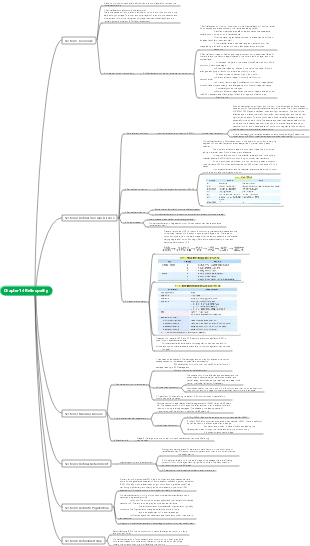
MindMap Gallery Ophthalmology Chapter 15 Visual Pathway Diseases
About Ophthalmology Chapter 15: Mind map of visual pathway diseases, including optic nerve diseases, optic chiasm lesions, visual pathway lesions above the optic chiasm, etc.
Edited at 2023-11-25 19:34:59This is a mind map about bacteria, and its main contents include: overview, morphology, types, structure, reproduction, distribution, application, and expansion. The summary is comprehensive and meticulous, suitable as review materials.

This is a mind map about plant asexual reproduction, and its main contents include: concept, spore reproduction, vegetative reproduction, tissue culture, and buds. The summary is comprehensive and meticulous, suitable as review materials.
This is a mind map about the reproductive development of animals, and its main contents include: insects, frogs, birds, sexual reproduction, and asexual reproduction. The summary is comprehensive and meticulous, suitable as review materials.
This is a mind map about bacteria, and its main contents include: overview, morphology, types, structure, reproduction, distribution, application, and expansion. The summary is comprehensive and meticulous, suitable as review materials.
This is a mind map about plant asexual reproduction, and its main contents include: concept, spore reproduction, vegetative reproduction, tissue culture, and buds. The summary is comprehensive and meticulous, suitable as review materials.
This is a mind map about the reproductive development of animals, and its main contents include: insects, frogs, birds, sexual reproduction, and asexual reproduction. The summary is comprehensive and meticulous, suitable as review materials.
Chapter 15 Visual Pathway Diseases
Section 1 Overview
The optic nerve is composed of axons from retinal ganglion cells.
At least half of all central nervous system diseases directly or indirectly affect the visual pathway. Visual field examination is of great significance in the localization and diagnosis of visual pathway diseases.
Section 2 Optic Nerve Diseases
- Optic neuritis
clinical manifestations
symptom
Patients with demyelinating optic neuritis show subacute vision loss; visual impairment is usually most severe 1 to 2 weeks after onset. In addition to decreased vision, there are also symptoms such as abnormal color vision or only visual field damage, which may be accompanied by flashes of light and orbital pain. 95% of patients have pain when the eyeballs are turned.
About half of optic neuritis in children affects both eyes, while the rate of bilateral involvement in adults is significantly lower than that in children.
physical signs
Relative afferent pupillary disorder (RAPD) of the affected eye means that when the flashlight is illuminated alternately in both eyes, the pupil shrinks when the light shines on the normal eye, and the pupil dilates when the light shines on the affected eye. This is related to direct light reaction or indirect light reaction. Reactions vary. RAPD is the most reliable objective test for monocular optic neuropathy. Direct or indirect pupil response to light may be normal in mild to moderate optic neuropathy.
Fundus examination shows that in patients with optic discitis, the optic disc is congested and edematous, and there are small bleeding spots on or around the optic disc surface, but little leakage. The retinal veins are thickened and the arteries are generally unchanged. Most patients with retrobulbar optic neuritis have no abnormal fundus changes.
diagnosis
1. Medical history and ocular manifestations: Based on the above-mentioned symptoms of vision loss, pain when turning the eyeball, and signs of the pupil and fundus Make a diagnosis.
2. Visual field examination: Various types of visual field damage can occur, but the more typical ones are central scotoma or concentric contraction of the visual field. Small.
3. Visual evoked potential (VEP): It can be manifested as prolonged latency and reduced amplitude of the Р₁₀₀ wave.
Differential diagnosis
1. Pseudo optic disc edema: Although the optic disc is red and slightly bulging, it does not exceed 1 to 2D in most cases and remains unchanged throughout life, regardless of the surrounding disc area. Periretinal hemorrhage and exudation. Naked or corrected vision is normal, visual field may be slightly changed, The main feature is that the optic disc is not obscured by blood vessels.
2. Anterior ischemic optic neuropathy (AION): sudden and severe loss of vision. There is usually no pain during eye movement. exist Non-arteritic ischemic neuropathy often involves segmental optic disc filling. Blood and edema. Visual field defects are most common inferiorly and are often arcuate. Or sector-shaped visual field defect, distributed horizontally, generally without central darkness point.
3. Leber hereditary optic neuropathy (LHON): It is a disease of adolescents (usually occurs in teenagers or twenties) Mitochondria associated with bilateral optic neuropathy in men Hereditary diseases, women are the carriers and transmitters of genes There are fewer physical illnesses. Acute or subacute symptoms in both eyes simultaneously or successively Painless visual loss with central visual field defect and color vision impairment hinder. Superficial capillaries near the optic disc were obviously dilated, but there was no fluorescence Photoreceptor leakage; no obvious edema of the optic disc, only congestion, followed by For optic nerve atrophy.
4. Toxic or metabolic optic neuropathy: progressive painless severe loss of vision in both eyes, possibly secondary to chronic smoking Grass poisoning, alcohol or acute methanol poisoning, severe malnutrition, drugs Toxicity such as ethambutol, chloroquine, isoniazophene, chlorpropamide, etc., heavy gold Poisoning, severe anemia, etc.
treat
Demyelinating optic neuritis: The purpose of using glucocorticoids is to shorten the course of the disease and reduce recurrence.
2. Anterior ischemic optic neuropathy
Clinical manifestations: Vision: Sudden painless, non-progressive vision loss, usually found when waking up in the morning. often Complaints of obstruction of vision on the side, below or above the nose. It usually occurs in one eye. The age of onset is mostly under 50 years old superior. This disease is more common in people with small optic discs and no cup. The optic disc is mostly localized segmental edema (non-arteritis sex), or gray-white edema (arteritis)), and there may be linear or flame-like shapes around the optic disc. Bleeding. Retinal nerve fiber layer defects appear in the later stages, and the optic disc is slightly swollen and pale red in the early stages. Caused by dilation of capillaries on the surface of the optic disc.
Diagnosis: The visual field defect is often an arcuate or fan-shaped defect connected to the physiological blind spot, corresponding to the changed location of the optic disc.
Differential diagnosis: Optic discitis: The patient is younger, has pain when moving the eyeballs, and has subacute vision loss, which may be accompanied by retinal disease. Membrane bleeding and exudation. The scotoma in the center of the visual field and the periphery shrink centrally.
Treatment: 1. Early systemic application of glucocorticoids; 2. Treatment of systemic diseases. 3. Apply microcirculation improving drugs locally and systemically.
3. Optic disc edema
Cause: Optic disc edema includes non-inflammatory and inflammatory conditions. The most common causes are benign intracranial hypertension and intracranial swelling. Increased intracranial pressure caused by tumors, inflammation, trauma, and congenital malformations; it can also cause optic disc edema.
clinical manifestations
Early vision is normal, but there may be temporary and transient blurred vision; headache, diplopia, nausea, and vomiting may occur; vision loss is rare. Acute severe or chronic optic disc edema can cause visual field defects and severe vision loss.
Fundus manifestations: Early optic disc edema may be asymmetrical, with blurred borders, often covering blood vessels, and may be accompanied by nerve fiber layer edema.
Visual field examination: The physiological blind spot is enlarged and the peripheral visual field is normal. However, when the optic disc edema is severe or the optic nerve atrophy develops, the central vision may be severely reduced and the peripheral visual field may be narrowed, especially under the nose.
Differential diagnosis
Optic discitis: no symptoms of increased intracranial pressure, severe vision loss, often unilateral, relative afferent pupillary disorder, Color vision loss, eye movement pain. The bulge of the optic disc does not exceed 3D, and the hemorrhage and exudation of the fundus are not as good as those of the optic disc. Disc edema is common.
4. Optic nerve atrophy
Causes: Optic neuropathy: including vascular (ischemic optic neuropathy), inflammation (optic neuritis).
Fundus performance
1. Primary optic atrophy: damage to the optic nerve, optic chiasm, optic tract and lateral geniculate body behind the lamina cribrosa. As a result, its shrinkage process is downward. The optic disc is light or pale, with clear borders, and the visual Ehmoid holes are visible in the cup, and retinal blood vessels are generally normal.
2. Secondary optic atrophy: The primary lesions are in the optic disc, retina, and choroid, and the atrophy process is upward.
5. Optic nerve tumors: Tumors originating primarily in the optic nerve are rare. The main clinical manifestations are proptosis and progressive loss of vision. Mainly include optic nerve glioma and optic nerve sheath meningioma (ONSM).
Section 3 Optic chiasm lesions
Cause
The most common cause of optic chiasm lesions is pituitary adenoma, which can also cause optic chiasm damage.
Empty sella turcica syndrome refers to the herniation of the subarachnoid space into the sella, causing it to be filled with cerebrospinal fluid, causing the glands in the sella to be squeezed, shrinking in size, atrophying the glands, and enlarging the sella turcica. It may be a manifestation of benign intracranial hypertension, with clinical symptoms of varying degrees of visual impairment and visual field defects. Fundus examination may show optic disc edema or optic nerve atrophy, headache, obesity, etc.
clinical manifestations
The typical sign of chiasmatic lesions is temporal hemianopia in both eyes. However, clinically, optic chiasm lesions do not start with temporal hemianopia in both eyes, but often start with incomplete quadrant defects, which is related to the location of optic chiasm compression. For example, a pituitary tumor that occurs below the optic chiasm first compresses the infranasal fibers of the optic chiasm, causing visual field defects in the superior temporal quadrant, and then visual field defects in the infratemporal, infranasal, and superior nasal quadrants.
Tumors from above the optic chiasm, such as tuberculum sellae meningiomas, craniopharyngioma, third ventricular tumors, etc., compress the optic chiasm from top to bottom, and the order of visual field damage is different.
In addition to causing optic chiasm syndrome (visual impairment, visual field defects and primary optic atrophy), pituitary tumors can also be accompanied by obesity, sexual dysfunction, male impotence, menstrual irregularities and other endocrine disorders.
Section 4: Visual path lesions above the optic chiasm
2. Lesions of the lateral geniculate body: Lesions that damage the lateral geniculate body alone are extremely rare. The visual field defect was on the contralateral side of the lesion and hemianopia on the same side of both eyes, but the visual field defects in both eyes were relatively symmetrical.
3. Optic radiation lesions Characteristics of visual radiation damage to temporal and parietal lobes: ① Consistent homonymous hemianopia in both eyes ② Due to the extensive projection of nerve fiber bundles, macular avoidance may occur, that is, in the migraine The central fixation area within the blind visual field retains a visual functional area of 3°~10°.
4. Occipital lobe lesions Damage to the bilateral occipital cortex can cause cortical blindness. Its clinical characteristics are: ① total blindness in both eyes; ② normal pupillary light reflex; ③ normal fundus; ④ abnormal VEP examination, which is helpful to identify pseudoblindness and hysteria.