MindMap Gallery Medicine Chapter 11 Glaucoma
An article about medicine Chapter 11 Glaucoma, including secondary glaucoma, congenital or developmental glaucoma, primary glaucoma, etc.
Edited at 2023-11-24 23:43:17This is a mind map about bacteria, and its main contents include: overview, morphology, types, structure, reproduction, distribution, application, and expansion. The summary is comprehensive and meticulous, suitable as review materials.

This is a mind map about plant asexual reproduction, and its main contents include: concept, spore reproduction, vegetative reproduction, tissue culture, and buds. The summary is comprehensive and meticulous, suitable as review materials.
This is a mind map about the reproductive development of animals, and its main contents include: insects, frogs, birds, sexual reproduction, and asexual reproduction. The summary is comprehensive and meticulous, suitable as review materials.
This is a mind map about bacteria, and its main contents include: overview, morphology, types, structure, reproduction, distribution, application, and expansion. The summary is comprehensive and meticulous, suitable as review materials.
This is a mind map about plant asexual reproduction, and its main contents include: concept, spore reproduction, vegetative reproduction, tissue culture, and buds. The summary is comprehensive and meticulous, suitable as review materials.
This is a mind map about the reproductive development of animals, and its main contents include: insects, frogs, birds, sexual reproduction, and asexual reproduction. The summary is comprehensive and meticulous, suitable as review materials.
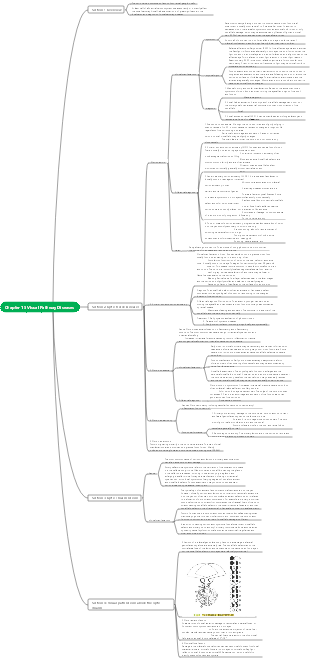
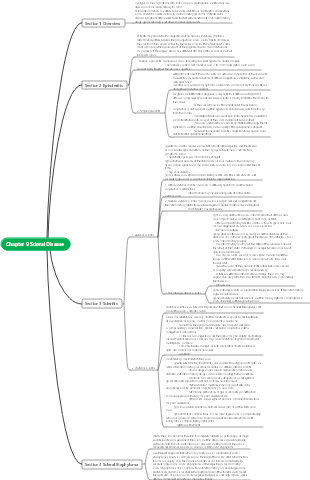
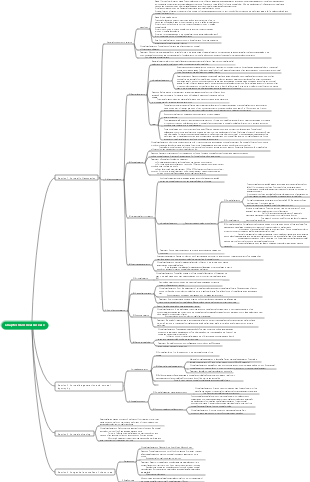
Chapter 11 Glaucoma
Section 1 Overview
—The concept of glaucoma: Glaucoma is a group of diseases characterized by characteristic optic atrophy and visual field loss, and pathological increase in intraocular pressure is its main risk factor. Elevated levels of intraocular pressure and optic nerve tolerance to pressure damage and glaucoma Optic atrophy is related to the occurrence and development of visual field defects.
2. Intraocular pressure and glaucoma
From a statistical perspective, normal intraocular pressure is defined as 10 to 21 mmHg (mean ± 2X standard deviation).
In normal people, the difference in intraocular pressure between the two eyes should not be >5 mmHg, and the 24-hour intraocular pressure fluctuation range should not be >8 mmHg.
3. Clinical Diagnosis of Glaucoma
The most basic examination items include intraocular pressure, chamber angle, visual field and optic disc examination.
1. Intraocular pressure: The Goldmann tonometer is currently recognized as the gold standard for intraocular pressure measurement.
2. Angle: The opening or closing of the chamber angle is the basis for diagnosing open-angle glaucoma or angle-closure glaucoma.
3. Visual field: Changes in visual field are the gold standard for diagnosing glaucoma.
4. Optic disc: Glaucoma optic disc changes are the objective basis for diagnosing glaucoma.
Section 2 Primary glaucoma
— Primary angle-closure glaucoma
Angle closure mechanism in primary angle-closure glaucoma
Non-pupillary block type: can be divided into peripheral iris hypertrophy type and ciliary body anterior type. The characteristics of peripheral iris hypertrophy are: The thick peripheral iris root is trapezoidal at the entrance of the chamber angle, forming a sharply turning narrow chamber. Some scholars call this type of patient a high iris fold type. ciliary body anterior position The characteristic is that the position of the ciliary body moves forward, pushing the peripheral iris toward the chamber angle, resulting in narrowing of the chamber angle or closure.
(1) Acute angle-closure glaucoma
It is more common in people over 50 years old, and is more common in women. The ratio of men to women is about 1:2.
Clinical manifestations and disease stage
1. Preclinical stage: Acute angle-closure glaucoma is a bilateral eye disease. When one eye has an acute attack After being diagnosed, the other eye can diagnose the disease even if there are no clinical symptoms. It was judged to be the preclinical stage of acute angle-closure glaucoma.
2. Aura phase manifestations: transient or repeated small attacks.
3. Acute attack stage: manifested by severe headache, eye pain, photophobia, tearing, and severe visual acuity Decrease, often to index or manual, may be accompanied by nausea, vomiting, etc. Systemic symptoms. Signs include eyelid edema, mixed hyperemia, corneal Epithelial edema, the epithelium appears in the shape of small water droplets under the slit lamp, and the patient may There is a main complaint of "rainbow vision". Retrocorneal pigmentation, anterior chamber pole Shallow, peripheral anterior chamber almost completely disappears. If the iris is seriously missing Blood necrosis, aqueous humor may be turbid, and even flocculent exudate may appear. Pupils are moderately dilated, often vertically oval, light reflex disappears, and Localized posterior adhesions may sometimes be seen. I can't see clearly in my eyes. high intraocular pressure After solution, the symptoms alleviated or disappeared, the vision improved, and the anterior segment remained Lower permanent tissue damage, such as sector-shaped iris atrophy and depigmentation loss, localized posterior synechiae, fixed mydriasis, extensive chamber angle Adhesions. Sometimes small flakes of white opacity can be seen under the anterior capsule of the lens. It's called glaucoma. Whenever the above changes are seen clinically, it can be proved It was found that the patient had experienced a major attack of acute angle-closure glaucoma.
4. Intermittent period: Diagnostic criteria: intraocular pressure can be stabilized at normal level.
5. Chronic phase: After an acute major attack or repeated minor attacks, there is extensive adhesion of the chamber angle (usually >180°), the trabecular function has been severely damaged, and the intraocular pressure has moderately increased. High, glaucomatous optic disc depression is often visible in the fundus, and there is a corresponding visual field Defect.
Diagnosis and differential diagnosis: Although acute iridocyclitis also has symptoms of eye pain, there is generally no corneal epithelial edema. The blood pressure is often low, the pupils are constricted, aqueous humor can be seen shining in the anterior chamber, and sometimes fibrinoid exudation can be seen. out so that it can be identified. Because acute angle-closure glaucoma attacks are often accompanied by nausea, vomiting, and severe headache, these symptoms Symptoms can even mask eye pain and vision loss. Clinical identification should be noted to avoid misdiagnosis of gastrointestinal disease. Delay in treatment due to tract disease, brain disease or migraine.
(2) Chronic angle-closure glaucoma
Diagnosis: The diagnosis of chronic angle-closure glaucoma should be based on the following points: ① The peripheral anterior chamber is shallow, the depth of the central anterior chamber is slightly shallow or close to normal, and the iris bulge is not obvious; ②The chamber angle is moderately narrow, and there are varying degrees of anterior synechiae around the iris; ③ accompanied by varying degrees of glaucomatous visual field defects. Chronic angle-closure glaucoma and open-angle glaucoma also have elevated intraocular pressure, optic disc pit atrophy, and visual field defects.
2. Primary open-angle glaucoma
Although the intraocular pressure increases, the angle of the chamber remains open. Histological examination showed degeneration of trabecular meshwork collagen fibers and elastic fibers, endothelial cell shedding or proliferation, trabecular meshwork thickening, mesh narrowing or occlusion, extracellular matrix deposition in the trabecular meshwork and under the inner wall of Schlemm's canal, and endothelial cells in the wall of Schlemm's canal. Pathological changes such as reduced vacuoles.
clinical manifestations
1. Symptoms: Most patients do not have any conscious symptoms.
2. Intraocular pressure: It appears unstable in the early stage, and sometimes it can be within the normal range. It is easier to detect intraocular pressure peaks and larger fluctuations by measuring 24-hour intraocular pressure. The overall intraocular pressure level is often slightly higher than normal.
3. Anterior segment: The depth of the anterior chamber is normal or deeper.
4. Fundus: The optic disc depression progressively expands and deepens.
5. Visual function: Changes in visual function, especially visual field defects. Typical early visual field defects in glaucoma visual field examination manifest as isolated paracentral scotoma. and nasal steps.
diagnosis
Visual field defect: Normal tension glaucoma (NTC) has characteristic glaucomatous optic disc damage and visual field defect, but the intraocular pressure is always within the statistically normal range. around. Even under normal intraocular pressure, the optic nerve is damaged.
3. Treatment of primary glaucoma
(1) Commonly used intraocular pressure-lowering drugs
1. Parasympathomimetic drugs (miotics): The most commonly used are 1% ~ 4% pilocarpine eye drops. Pilocarpine directly stimulates pupils Aperture sphincter, narrows the pupil and increases iris tension, releasing the peripheral iris from the trabecular meshwork It is the first-line medication for the treatment of angle-closure glaucoma.
2. Beta-adrenergic receptor blockers: commonly used are 0.25% ~ 0.5% timolol, 0.25% ~ 0.5% levobunolol hydrochloride and Eye drops such as 0.25% ~0.5% betaxolol can reduce intraocular pressure by inhibiting the production of aqueous humor. It does not affect pupil size and adjustment function, but its blood pressure lowering range is limited. The blood pressure lowering effect is weakened.
3. Prostaglandin derivatives: The preparations currently in clinical use include 0.005% latanoprost, 0.004% travoprost and 0.03% bemetoprost.
4. Carbonic anhydrase inhibitors: represented by acetazolamide, which reduces intraocular pressure by reducing the production of aqueous humor and is mostly used as a supplement for topical medications. Charge.
5. Hypertonic agent: 50% glycerin and 20% mannitol are commonly used. This type of drug can increase plasma osmotic pressure in the short term, causing eye tissue, especially In particular, the water in the vitreous body enters the blood, thereby reducing the intraocular volume and rapidly lowering intraocular pressure, but the antihypertensive effect It disappears after 2 to 3 hours. Hypertonic agents are mainly used to treat acute attacks of angle-closure glaucoma and certain acute Secondary glaucoma due to increased intraocular pressure.
(2) Commonly used anti-glaucoma surgeries
1. Surgery to relieve the resistance of the trabecular meshwork: such as goniotomy, trabeculotomy, and selective laser trabeculoplasty (SLT). This type of surgery can often cure primary infantile glaucoma. healing effect.
2. Surgery to establish an external aqueous humor drainage channel (filtration surgery): aqueous humor drainage device implantation. This type of surgery is mainly suitable for For POAG and angle-closure type with extensive angle adhesions glaucoma.
(3) Treatment of PACG
1. Narrow pupils: During the aura stage, use 1% pilocarpine eye drops once every half hour. The reduction is usually achieved after 2 to 3 times. To narrow pupils and reduce intraocular pressure.
2. Combined medication: During an acute attack, in addition to local miotic drops, combined medication is often required, such as systemic application of hypertonic agents, carbonic acid Anhydrase inhibitors, local drops of beta-blockers to quickly reduce intraocular pressure.
3. Surgical treatment: Peripheral iridectomy can be used for pupillary block and the scope of angle adhesion is not limited. Mydriasis alone can be used. Early cases of intraocular pressure control.
(4) Treatment of POAG
Filtration surgery: Trabeculectomy is the most common procedure. It is generally believed that the indications for surgery are when medical treatment is ineffective or intolerable. Cases that are subject to long-term medication or are incapable of medical treatment.
Section 3 Secondary glaucoma
Secondary glaucoma is a group of glaucoma caused by certain eye diseases or systemic diseases that interfere with or destroy the normal circulation of aqueous humor, blocking the outflow path of aqueous humor and causing increased intraocular pressure.
(1) Glaucoma cyclitis syndrome: Glaucoma cyclitis syndrome tends to occur in middle-aged men. Typical cases show paroxysmal increase in intraocular pressure, which can reach more than 50mmHg. At or around the same time as the increase in intraocular pressure, symptoms may occur. There is mutton-like retrocorneal deposit, deep anterior chamber, open angle, no obvious turbidity in the aqueous humor, and does not cause retropupillary synechiae. Generally, it can resolve spontaneously within a few days, and the prognosis is better than POAC. Good, but easy to relapse.
(2) Glucocorticoid glaucoma: Long-term instillation or systemic application of glucocorticoids can cause an increase in intraocular pressure, leading to glucocorticoid glaucoma.
(3) Secondary glaucoma caused by eye trauma: ① Intraocular hemorrhage, especially vitreous hemorrhage, can sometimes cause hemolytic glaucoma or ghost cell glaucoma. Phages and degenerated red blood cells block the trabecular meshwork, blocking the outflow of aqueous humor and increasing intraocular pressure. ② Recessed angle glaucoma may occur months or years after blunt ocular contusion. Its clinical manifestations are similar to POAG. Previous ocular contusion and hyphema History and abnormal widening (recession) of the angle on examination are helpful in diagnosis. ③Any long-term non-formation of the anterior chamber due to eye trauma, corneal perforation, adhesive leukoplakia, or anterior segment surgery can cause permanent damage to the peripheral iris and trabecular meshwork. Permanent adhesions cause the angle to close and cause secondary angle-closure glaucoma.
(4) Iridocyclitis secondary glaucoma: Iridocyclitis can cause annular posterior pupillary synechiae. Aqueous humor cannot enter the anterior chamber through the pupil. The pressure in the posterior chamber increases and pushes the iris forward, causing it to bulge forward and become occluded. Anterior chamber Angular causes secondary glaucoma.
Section 4 Congenital or developmental glaucoma
Infantile glaucoma·
Infantile glaucoma occurs in newborns or infants.
clinical manifestations
1. Photophobia, tearing, and blepharospasm are the three characteristic symptoms of this disease.
2. The cornea is enlarged and the anterior chamber is deepened. The transverse diameter of the cornea exceeds 12mm (the normal transverse diameter of the cornea in infants generally does not exceed 10.5mm).
Treatment: In about 80% of cases, intraocular pressure can be controlled through goniotomy or trabeculotomy.