MindMap Gallery Cancer mind map
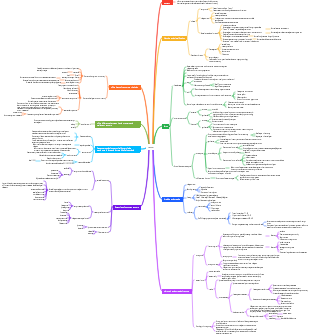
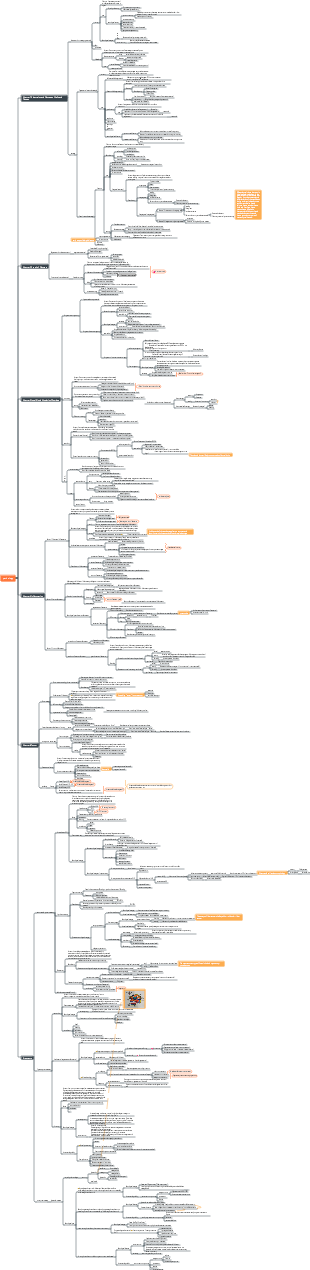
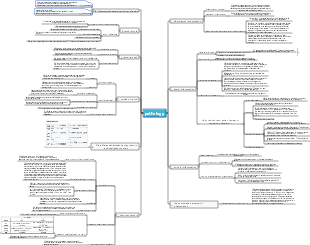
This is a mind map about tumors, including the difference between benign tumors and malignant tumors, examples of common tumors, tumor growth, spread, grading and staging, etc.
Edited at 2023-11-05 01:04:32This is a mind map about bacteria, and its main contents include: overview, morphology, types, structure, reproduction, distribution, application, and expansion. The summary is comprehensive and meticulous, suitable as review materials.

This is a mind map about plant asexual reproduction, and its main contents include: concept, spore reproduction, vegetative reproduction, tissue culture, and buds. The summary is comprehensive and meticulous, suitable as review materials.
This is a mind map about the reproductive development of animals, and its main contents include: insects, frogs, birds, sexual reproduction, and asexual reproduction. The summary is comprehensive and meticulous, suitable as review materials.
This is a mind map about bacteria, and its main contents include: overview, morphology, types, structure, reproduction, distribution, application, and expansion. The summary is comprehensive and meticulous, suitable as review materials.
This is a mind map about plant asexual reproduction, and its main contents include: concept, spore reproduction, vegetative reproduction, tissue culture, and buds. The summary is comprehensive and meticulous, suitable as review materials.
This is a mind map about the reproductive development of animals, and its main contents include: insects, frogs, birds, sexual reproduction, and asexual reproduction. The summary is comprehensive and meticulous, suitable as review materials.
tumor
The difference between benign tumors and malignant tumors
Degree of differentiation: 1. Benign tumors: well differentiated, similar in morphology to the tissue and cells of origin; 2. Malignant tumors: poorly differentiated, morphologically similar to the tissue and cells of origin
Benign tumors: well differentiated, similar in morphology to the tissue and cells of origin; malignant tumors: poorly differentiated, morphologically similar to the tissue and cells of origin
Malignant tumors: poorly differentiated, with the morphology of the tissue of origin and cells
Atypia: 1. Benign tumors: tissue and cell atypia is not obvious, mitotic figures are absent or few, and there are generally no pathological mitotic figures; 2. Malignant tumors: tissue and cell atypia are obvious, mitotic figures are easily visible, and the number of mitotic figures varies. pathological mitotic figures
Benign tumors: The tissue and cell atypia are not obvious, there are no or few mitotic figures, and generally there are no pathological mitotic figures; Malignant tumors: The tissue and cell atypia are obvious, mitotic figures are easy to see, and varying degrees of pathological mitotic figures can be seen.
Growth rate: 1. Benign tumors: slow; 2. Malignant tumors: faster
Benign tumors: slowly; malignant tumors: faster
Growth pattern: 1. Benign tumors: often grow expansively or exophytically. The former often have capsule formation and are generally clearly demarcated from surrounding tissues, and bones can usually push them; 2. Malignant tumors: often grow invasively or exophytically, The former has an unclear capsule and a clear boundary with surrounding tissue, and usually cannot be pushed, while the latter is often accompanied by infiltrative growth.
Benign tumors: often show expansion or exophytic growth. The former often has a capsule and is generally clearly demarcated from the surrounding tissue, and the bone can usually push it; malignant tumors: often show infiltrative or exophytic growth. The former has an indistinct capsule and is different from the surrounding tissue. The surrounding tissue is clearly demarcated and usually cannot be pushed. The latter is often accompanied by infiltrative growth.
Secondary changes: 1. Benign tumors: rare; 2. Malignant tumors: bleeding, necrosis, ulcers, etc. often occur
Benign tumors: rare; malignant tumors: bleeding, necrosis, ulcers, etc. often occur
Metastasis: 1. Benign tumors: do not metastasize; 2. Malignant tumors: often metastasize
Benign tumors: do not metastasize; malignant tumors: often metastasize
Recurrence: 1. Benign tumors: no or very few recurrences after complete removal; 2. Malignant tumors: difficult to completely remove by surgery and prone to recurrence after treatment
Benign tumors: no or little recurrence after complete removal; malignant tumors: difficult to completely remove by surgery and prone to recurrence after treatment
Effects on the body: 1. Benign tumors: small, mainly causing local compression or obstruction. It only causes serious consequences when it occurs in vital organs; 2. Malignant tumors: large, in addition to oppression and obstruction, it can also destroy adjacent tissues and organs, cause necrosis, bleeding, combined infection, and may cause fever and cachexia
Benign tumors: small, mainly causing local compression or obstruction. It only causes serious consequences when it occurs in vital organs; malignant tumors: large, in addition to oppression and obstruction, can also destroy adjacent tissues and organs, cause necrosis, bleeding, combined infection, and may cause fever and cachexia
Borderline tumors: In addition to clear benign tumors and malignant tumors, there is also a large class of tumors whose morphology and biological behavior are in between.
Examples of common tumors
Benign tumors of epithelial tissue: 1. Papilloma; 2. Adenoma: cystadenoma, fibroadenoma, pleomorphic adenoma, polypoid adenoma
1. Papilloma; 2. Adenoma: cystadenoma, fibroadenoma, pleomorphic adenoma, polypoidal adenoma
Epithelial tissue malignant tumors: 1. Squamous cell carcinoma: Cancer cells are distributed in clusters, forming cancer nests with clear boundaries with the stroma. In the cancer nest of well-differentiated squamous cell carcinoma, intercellular bridges can be seen between cancer cells, and lamellar or massed keratin can be seen in the center of the cancer nest, called keratinized beads or cancer beads: 2. Basal cell carcinoma; 3. Urothelial carcinoma ; 4. Adenocarcinoma
Precancerous lesions, dysplasia and carcinoma in situ
Precancerous lesions: Lesions with the potential to become cancerous, that is, these lesions exist for a long time and may turn into cancer after evolution. 1. Mucosal leukoplakia: 2. Cervical erosion; 3. Hyperplastic fibrocystic change of the breast; 4. Polypoidal adenoma of the colon and rectum; 5. Chronic atrophic gastritis and gastric ulcer; 6. Chronic ulcerative colitis; 7. Skin Chronic ulcer; 8. Liver cirrhosis
Atypical hyperplasia: The morphology and structure of the proliferating epithelial cells show a certain degree of atypia, but it is not enough to be diagnosed as cancer. Characteristics: 1. Proliferated cells are of varying sizes, with large and deeply stained nuclei, an increased nucleocytoplasmic ratio, and increased mitoses, but pathological mitoses are generally not seen; 2. Increased cell levels, disordered arrangement, and loss of polarity
Carcinoma in situ: dysplasia of cells has involved the entire thickness of the epithelium, but has not yet invaded the basement membrane and infiltrated downward.
mesenchymal malignant tumors
The difference between cancer and sarcoma
Tissue source: 1. Epithelial tissue; 2. Sarcoma: mesenchymal tissue
Incidence rate: 1. Cancer: more common: about 9 times more common than sarcoma, more common in people over 40 years old; 2. Sarcoma: less common, mostly seen in teenagers
General characteristics: 1. Cancer: hard in texture, gray in color, and dry; 2. Sarcoma: soft in texture, gray in color, moist, and fish-like.
Histological characteristics: 1. Carcinoma: often forms cancer nests, with clear boundaries between parenchyma and stroma, and often increased fibrous tissue; 2. Sarcoma cells are mostly diffusely distributed, with unclear boundaries between parenchyma and stroma, abundant blood vessels in the stroma, and fibrous tissue. few
Reticular fibers: 1. Cancer: There are many reticular fibers between cancer cells; 2. Sarcoma: There are many reticular fibers between sarcoma cells.
Immunohistochemistry: 1. Carcinoma: expresses epithelial markers, such as: CK, EMA; 2. Sarcoma: expresses mesenchymal tissue markers, such as: vimentin
Metastasis: 1. Cancer: multiple lymphatic metastasis: 2. Sarcoma: multiple blood channel metastasis
Osteosarcoma: Originates from osteoblasts and is the most common malignant bone tumor, common in adolescents. The episteum on the surface of the tumor is often lifted up by the tumor tissue, and a triangle is formed between the bone cortex and the lifted episteum at the upper and lower ends, which is called Codman's triangle on X-ray films.
Teratomas: common to both men and women
Carcinosarcoma: A malignant tumor that contains both cancerous and sarcomatous elements in the same tumor
Tumor growth, spread, grade and staging
tumor growth
Expansive growth
Most benign tumors that occur within solid organs or tissues grow in a manner that primarily affects surrounding tissue by extrusion and obstruction.
exophytic growth
1. Often grow toward the surface, forming papillary, polypoid, mushroom-like or cauliflower-like tumors that protrude outward; 2. Both benign and malignant tumors can grow exophytically; 3. Most of them are malignant tumors.
Both benign and malignant tumors can grow exophytically
infiltrative growth
The tumor parenchyma invades the surrounding tissue spaces, lymphatic vessels, and blood vessels, infiltrating and destroying surrounding tissues like tree roots digging into the soil. Therefore, tumors with this growth pattern are unencapsulated and are closely connected to adjacent tissues without obvious boundaries.
spread of tumor
How malignant tumors spread
invade
transfer
Malignant tumor cells invade lymphatic vessels, blood vessels, or body cavities from the original site, migrate to other places, continue to grow, and form tumors of the same type as the primary tumor.
transfer pathway
lymphatic metastasis
1. It is the most common metastasis route of cancer;
Hematogenous metastasis
1. The most common lung, followed by liver and bone; 2. Tumor cells generally invade blood channels through new microvessels in tumor tissue and peritumoral blood vessels (capillaries and venules); 3. The morphological characteristics of metastases are relatively clear boundaries and It is often distributed in a divergent manner, mostly located near the capsule of organs. Sometimes due to central bleeding and necrotic surface subsidence of cancer nodules, a "cancer umbilicus" can be formed.
Implantation metastasis (body cavity metastasis)
When tumor cells invade the surface of body cavity organs, the tumor cells can fall off and plant like seeds on the surface of various organs in the body cavity or even invade and grow underneath them to form metastases. Gastric mucinous carcinoma may implant in the abdominal cavity into the serosa on the ovarian surface and then invade the ovary, forming Krukenberg tumor of the ovary.
Tumor grading and staging
Grade I is well differentiated and is highly malignant; Grade II is moderately differentiated and is moderately malignant; Grade III is poorly differentiated and is highly malignant.
Grade II is moderately differentiated: moderately malignant
tumor atypia
Differentiation: In embryology, the process by which primitive or immature cells develop into mature cells.
Structural specificity of tumor tissue
1. Specificity of tumor tissue structure: the difference between the spatial arrangement of tumor tissue (including the pole orientation of tumor cells, the arrangement structure and its relationship with the stroma, etc.) and the normal tissue from which it originates; 2. The main basis for benign tumors is the atypia of their tissue structure; 3. Malignant tumors not only have more obvious abnormalities in tissue structure, but also show atypia of tumor cells.
tumor cell atypia
1. The tumor cells of malignant tumors have obvious atypia, especially the atypia of the cell nucleus, which is an important basis for the pathological diagnosis of malignant tumors; 2. Diversity of tumor cells: the shape and size of tumor cells are inconsistent, showing some tumors Cells are round, oval or polygonal, and some are spindle or irregular, with various shapes; the size varies greatly, from small lymphocytes to dozens of times larger than normal cells; 3. Tumor cells Nuclear atypia: The ratio of nucleus to cytoplasm in malignant tumors is close to 1;1
The concept and general morphology of tumors
Concept: Tumor is a new organism formed by abnormal gene regulation of cells in local tissues under the long-term action of tumorigenic factors, resulting in abnormal clonal proliferation.
Gross morphology of the tumor
Number and size of tumors
The number of tumors varies, usually one, that is, a single tumor; sometimes there are multiple tumors, that is, multiple tumors.
tumor shape
Polypoid, papillary, villous, nodular, lobulated, cystic, etc.
Tumor tissue structure
The essence of the tumor
The parenchymal component of a tumor is the general term for tumor cells within the tumor tissue and is the main component of the tumor.
tumor stroma
Components other than parenchymal components in tumor tissue generally belong to the tumor stroma, which is mainly composed of connective tissue and blood vessels, and may also include lymphatic vessels.