MindMap Gallery Pathology inflammation tumor mind map
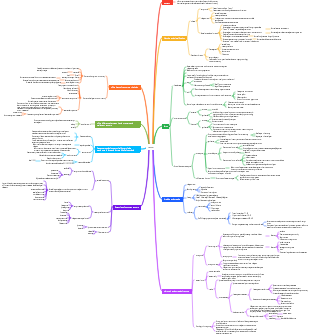
This is a mind map about pathology, inflammation and tumors, including an overview of inflammation, acute inflammation, tumor spread, the difference between benign tumors and malignant tumors, etc.
Edited at 2023-11-03 01:29:55This is a mind map about bacteria, and its main contents include: overview, morphology, types, structure, reproduction, distribution, application, and expansion. The summary is comprehensive and meticulous, suitable as review materials.

This is a mind map about plant asexual reproduction, and its main contents include: concept, spore reproduction, vegetative reproduction, tissue culture, and buds. The summary is comprehensive and meticulous, suitable as review materials.
This is a mind map about the reproductive development of animals, and its main contents include: insects, frogs, birds, sexual reproduction, and asexual reproduction. The summary is comprehensive and meticulous, suitable as review materials.
This is a mind map about bacteria, and its main contents include: overview, morphology, types, structure, reproduction, distribution, application, and expansion. The summary is comprehensive and meticulous, suitable as review materials.
This is a mind map about plant asexual reproduction, and its main contents include: concept, spore reproduction, vegetative reproduction, tissue culture, and buds. The summary is comprehensive and meticulous, suitable as review materials.
This is a mind map about the reproductive development of animals, and its main contents include: insects, frogs, birds, sexual reproduction, and asexual reproduction. The summary is comprehensive and meticulous, suitable as review materials.
pathology
1. Overview of inflammation
Inflammation concept
The defense-based response of living tissues with vascular systems to damage caused by various inflammatory factors manifests as basic pathological changes such as deterioration, exudation and proliferation locally.
causes of inflammation
Biological factors (the most common cause), physical factors, chemical factors, immune response, foreign matter
Basic pathological changes of inflammation
Deterioration: The tissues and cells in the inflammation area undergo degeneration and necrosis. Viral hepatitis
Exudation: the process in which plasma components and cellular components in the blood vessels of local inflammatory tissues enter tissue spaces, body cavities, body surfaces, and mucosal surfaces through blood vessels. This is the most characteristic change of inflammation and an important feature of acute inflammation. Purulent inflammation
Proliferation: Reactive proliferation of inflammatory local parenchymal cells, interstitial cells and inflammatory cells (mainly macrophages, lymphocytes and plasma cells) under the stimulation of inflammatory factors or tissue disintegration products
2. acute inflammation
vascular changes
Changes in blood vessel caliber and blood flow
1. Transient spasm of small arteries 2. Dilation of blood vessels and acceleration of blood flow 3. Slowing of blood flow
Increased blood vessel wall permeability
fluid oozing
Leakage: blood circulation disorder, imbalance of osmotic pressure inside and outside blood vessels, causing fluid leakage
Leukocyte extravasation
White blood cell reaction during acute inflammation (white blood cells that leak out of blood vessels are called inflammatory cells, and the phenomenon of inflammatory cells gathering in the inflammatory focus area is called inflammatory cell infiltration
Edge gathering, rolling, sticking, swimming out (amoeba-like movements)
Chemotaxis: leukocytes move directionally along a concentration gradient toward the site of chemical stimulation. The most common exogenous factor is bacteriocins. Endogenous chemokines include complement components, leukotrienes, and cytokines.
The role of white blood cells: Phagocytosis (1. Recognition and adhesion 2. Phagocytosis 3. Killing and degradation)
inflammatory mediators
Chemical factors that mediate and participate in the reaction process
Morphological type of acute inflammation (exudative inflammation)
serous inflammation
Mainly serous exudation, mainly albumin, such as skin burns and mucous membranes, also known as catarrhal inflammation
fibrinitis
Mucous membranes (pseudomembranous inflammation): diphtheria, bacillary dysentery
Serous membrane is more common in the pleura and pericardium. Heart of villi: A large amount of fibrin leaks out. The beating of the heart makes the fibrin exuded from the two layers of the visceral wall of the pericardium appear in the form of villi.
Pulmonary lobar pneumonia
suppurative inflammation
Concept: Localized massive exudation of neutrophils, accompanied by varying degrees of tissue necrosis and pus
Abscess 1. Localized suppurative inflammation 2. The pathogen is Staphylococcus aureus 3. Furuncle, carbuncle
Cellulitis 1. Diffuse purulent inflammation of loose connective tissue 2. Hemolytic streptococcus infection 3. Common in subcutaneous tissue, muscles, and appendix
Surface suppuration and pus accumulation 1. Mucoseroserous surface
Hemorrhagic inflammation characterized by bleeding
proliferative inflammation
3. chronic inflammation
Basic Features
Local lesions are dominated by proliferation of monocytes and lymphocytes
nonspecific chronic inflammation
Inflammatory polyps are common in the nasal mucosa and cervix
Inflammatory pseudotumor is a well-defined tumor-like mass formed during chronic inflammation and proliferation.
chronic granulomatous inflammation
Concept: Local inflammation is a chronic inflammation characterized by the proliferation of macrophages and the formation of well-defined nodular lesions.
Type 1. Infectious granuloma with caseous necrosis in the center 2. Foreign body granuloma
Composition 1. Epithelioid cells 2. Multinucleated giant cells 3. Foreign body multinucleated giant cells
4. The course and outcome of inflammation
Hematogenous dissemination
1. Bacteremia bacteria enter the bloodstream from local lesions through lymphatic vessels or blood vessels, and there are no symptoms of systemic poisoning. 2. Toxins or toxic metabolites produced by toxemia bacteria are absorbed into the blood, causing systemic poisoning symptoms. 3. Septicemia bacteria enter the bloodstream from local lesions. After the lesions enter the blood, they multiply in large quantities and produce toxins in the blood, causing symptoms of systemic poisoning. 4. Septicemia Sepsis caused by pyogenic bacteria
5. Common tumors
epithelial tumors
benign tumors of epithelial tissue
1. Papilloma: common in skin, bladder, urothelium 2. Fibroadenoma, common in female breasts 3. Pleomorphic adenoma, occurring in parotid gland 4. Polypoidal adenoma
Epithelial malignant tumors
1. Squamous cell carcinoma: Under the microscope, cancer cells are distributed in clusters, forming cancer nests, and have clear boundaries with the stroma. Well-differentiated squamous cells may be completely damaged and ulcer-like; in the cancer nests, intercellular bridges can be seen between cancer cells in the cut section, and lamellar or massed keratin can be seen in the center of the cancer nests, called keratin pearls or cancer pearls. Poorly differentiated squamous cell carcinoma has no keratinized beads or even intercellular bridges, and has obvious cell atypia and more mitotic figures.
Precancerous lesions
Definition: Lesions with the potential to become cancerous. These lesions persist and evolve over time and may turn into cancer.
eg: 1. Leukoplakia 2. Cervical erosion 3. Hyperplastic fibrocystic change of the breast 4. Colorectal polypoidoma 5. Chronic atrophic gastritis and gastric ulcer 6. Chronic skin ulcer 7. Liver cirrhosis
dysplasia
Manifestation: Proliferated cells vary in size, with large and deeply stained nuclei, increased nucleocytoplasmic ratio, and increased mitotic figures, but generally no pathological mitoses are seen.
carcinoma in situ
The cells with dysplasia have involved the entire thickness of the epithelium, but have not yet invaded the basement membrane and infiltrated downward.
mesenchymal tissue tumors
benign mesenchymal tumors
1. Fibroma 2. Lipoma 3. Hemangioma 4. Leiomyomas
mesenchymal malignant tumors
Osteosarcoma The most common malignant bone tumor, common in adolescents
neuroepithelial neoplasm
1. Teratoma, a common disease in men and women 2. Carcinosarcoma, the same tumor contains both cancer and sarcoma components
6. The difference between benign tumors and malignant tumors
7. spread of tumor
diffusion method
invade
Along the tissue gaps, lymphatic and vascular peripheral spaces, perineurium infiltrates, destroys adjacent normal organs and tissues, and continues to grow.
transfer
Malignant tumors invade lymphatic vessels, blood vessels or body cavities from the original site, migrate to other places and continue to grow, forming tumors of the same type as the primary tumor
transfer pathway
lymphatic metastasis
Cancer (malignant epithelial tumor), the most common cancer metastasis lymph node found clinically is the left supraclavicular lymph node, the most common way of metastasis
Hematogenous metastasis
Sarcoma (early stage) and some cancers (late stage), common in lungs, liver and bones
Sometimes due to central bleeding, necrosis and subsidence of the cancer nodule, a cancerous umbilicus can be formed.
Implantation transfer
Tumor cells shed to other organs, Krukenberg tumor
Tumor grading and staging
TNM staging system T stands for primary tumor site N stands for regional lymph node involvement M stands for hematogenous metastasis
8. tumor growth
Expansive growth
Most benign tumors grow in such a way that they are less likely to recur after removal, such as uterine fibroids, lipomas
exophytic growth
Both benign and malignant tumors can appear papillary, polypoid, cauliflower-like
infiltrative growth
The growth pattern of most malignant tumors, but hemangioma is a benign tumor
There is no capsule and no obvious boundaries. The tumor has poor mobility or is fixed. The scope of surgical resection should be expanded. Incomplete resection is prone to recurrence after surgery.
9. tumor atypia
Atypia of tumor tissue structure
Differences in the spatial arrangement of tumor tissue and the normal tissue from which it originates
The main basis for diagnosing benign tumors
tumor cell atypia
Pleomorphism of tumor cells
Larger cells are called tumor giant cells
Tumor cell nuclear atypia
The ratio of nucleus to cytoplasm of malignant tumor cells is close to 1:1
Characteristics of tumor cytoplasm
Ultrastructural characteristics of tumor cells
Benign tumors generally do not have pathological mitoses
10. The concept and general morphology of tumors
concept
It is a new organism produced by the body due to excessive proliferation of local tissue cells or accompanied by differentiation disorders under various tumorigenic factors.
structure
parenchymal tumor cells Interstitial connective tissue and blood vessels of tumors--supporting and nutrient functions
central theme