MindMap Gallery Fundamentals of Toxicology Chapter 5
Fundamentals of Toxicology Chapter 5 Mind Map of Factors Influencing Toxic Effects, such as poisons can enter the body through different ways. Due to different pathways, poisons undergo different processes in the body, which also has a significant impact on the effects of poisons.
Edited at 2023-10-30 10:40:50This is a mind map about bacteria, and its main contents include: overview, morphology, types, structure, reproduction, distribution, application, and expansion. The summary is comprehensive and meticulous, suitable as review materials.

This is a mind map about plant asexual reproduction, and its main contents include: concept, spore reproduction, vegetative reproduction, tissue culture, and buds. The summary is comprehensive and meticulous, suitable as review materials.
This is a mind map about the reproductive development of animals, and its main contents include: insects, frogs, birds, sexual reproduction, and asexual reproduction. The summary is comprehensive and meticulous, suitable as review materials.
This is a mind map about bacteria, and its main contents include: overview, morphology, types, structure, reproduction, distribution, application, and expansion. The summary is comprehensive and meticulous, suitable as review materials.
This is a mind map about plant asexual reproduction, and its main contents include: concept, spore reproduction, vegetative reproduction, tissue culture, and buds. The summary is comprehensive and meticulous, suitable as review materials.
This is a mind map about the reproductive development of animals, and its main contents include: insects, frogs, birds, sexual reproduction, and asexual reproduction. The summary is comprehensive and meticulous, suitable as review materials.
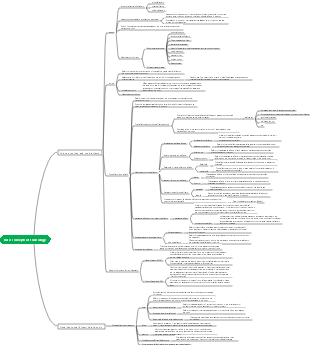
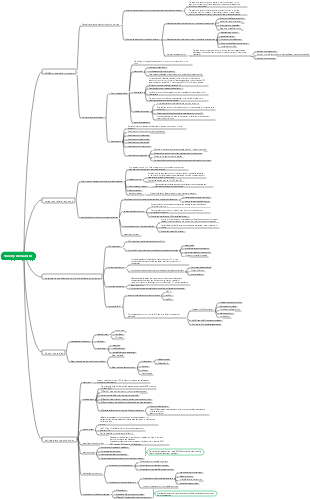
Factors influencing toxic effects
chemical factors
chemical structure
Effect of substituent groups on toxicity
benzene
Alkanes
Effects of isomers and stereoconfiguration on toxicity
When racemic mixtures of chemicals are given to animals, Either metabolize stereoselectively to form two or more different identical isomeric products, or only one isomer is metabolism.
Effect of carbon number and structure of homologues on toxicity
molecular saturation
When the number of carbon atoms is the same, the unsaturated bonds increase and their toxicity increases. Increase.
Ethane < Ethylene < Acetylene
Similarity to nutrients and endogenous substances
Exogenous chemicals are structurally similar to substrates of active transport carriers and can Absorbed with the help of these specific carrier systems.
Fluorouracil is carried by the pyrimidine transport system;
Chromium and manganese are absorbed through iron transport mechanisms;
Lead is actively absorbed in the intestine via the calcium transport system;
Paraquat enters lung tissue through active absorption
Physical and chemical properties
Solubility
solid chemicals
Arsenic (As,O3) and realgar (AsS,)
Lead compounds
Gaseous chemicals
Hydrogen fluoride (HF), ammonia;
Nitrogen dioxide (NO2)
size
Hydrophilic small molecules (<200): can pass through membrane pores (diameter 0.4n m) Cross the membrane by filtration;
Ionic compounds (small ions): sodium ions are hydrates, It cannot pass through the membrane pores.
Dispersion
The greater the dispersion, the smaller the particles, and the greater their specific surface area. The greater the surface activity
Cause metal heat;
Affects the depth of entry into the respiratory tract;
Affects solubility into respiratory tract
Effect of lipid/water partition coefficient on toxicity
Large lipid/water partition coefficient: simple diffusion, easy to pass through biological membranes Accumulate in adipose tissue and invade the nervous system;
Small lipid/water partition coefficient: ionized group, usually at physiological pH It is highly water-soluble, not easily absorbed through the membrane, and is easily excreted in the urine.
volatility
Liquid chemicals with high volatility tend to form large vapor pressures and Inhaled through respiratory tract.
Volatile chemicals can be added to feed to reduce exposure due to volatilization dose.
Liquid chemicals absorbed through the skin are more volatile than less volatile chemicals. It is less harmful if it is sticky and difficult to remove.
Effects of molecular weight, particle size and specific gravity on toxicity
In a closed space with long-term air tightness, toxic gases The body may be stratified due to differences in specific gravity. The toxic smoke of a fire is relatively light, so you should crawl on your stomach to escape.
Ionization and chargeability
Chemicals with different pKa values in local environments with different pH Different degrees of ionization affect its transmembrane transport;
The charge of particles affects their settling and respiration in the air channel retention rate.
Impurities and Chemical Stability
Impurities include raw materials, impurities, by-products, solvents, and additives Forming agents, stabilizers and colorants, etc.
Impurities may affect the toxicity of the tested chemicals and affect the Correct evaluation of the toxicity of the chemicals tested.
The instability of poisons may affect toxicity.
How poisons enter the body
Toxins can enter the body through different routes. Because there are no ways. At the same time, poisons undergo different processes in the body, so poisons. It also has a significant impact.
body factors
Genetic differences between species
Anatomical and physiological differences
The liver is divided into lobes;
Estrus;
number of somatic chromosomes
Pulse rate (beats/minute)
Metabolic differences
quantitative difference
Different dominant metabolic pathways can lead to toxic reactions s difference.
qualitative difference
Differences in metabolic enzymes
The influence of genetic factors between species
In 1990, the United States officially launched the Human Genome Project (Human Genome Project). Genome Project, HGP). In February 2001, six countries, the United States, Britain, Japan, France, Germany and China, Scientists and the American company Celera respectively released detailed maps of the human genome Spectrum
genetic differences between individuals
Metabolic enzyme polymorphisms
Phase I enzyme
1. Oxidative metabolic enzyme (cytochrome P-450)
2.Esterase
3. Epoxide hydratase (EH)
Phase II enzyme
1. Glutathione transferase (GST)
2. Other phase II enzymes
Sulfotransferase (ST), methyltransferase (MT), acetyltransferase (NAT)
Individual differences in repair ability
All macromolecules in the body will undergo corresponding changes after damage Repair system, its function is to remove the damaged part and then empty it The outgoing part is synthesized into a new part as it is and filled in, so that the original Some structures and functions have been restored. These processes are due to different Functional enzymes involved. Polymorphisms may also occur in various repair enzymes, There are obvious individual differences in repair function.
Individual differences in receptors
The influence of other factors in the body on toxic effects
The body’s health status, immune status, age, gender Factors such as gender, nutritional status, and lifestyle have important effects on toxic effects sensitivity can have varying degrees of impact
Health and immune status
High susceptibility to toxic effects from genetic defects or genetic diseases
When the damage of a disease has the same effect as a certain chemical, exposure to the chemical will often intensify or accelerate the onset of the toxic effects.
Immune status that is too low or too high can have adverse consequences.
Adverse environmental conditions or stimuli that cause stress in animals can affect drug metabolism and distribution
age
1. Differences in biological transport.
Newborns and the elderly produce less gastric acid, which can alter the absorption of certain chemicals;
Intestinal motility can also be affected by age, changing the location of chemical absorption;
Lack of intestinal flora in infants can affect the transformation of chemicals before absorption;
Infants and the elderly have lower plasma protein and plasma albumin levels, which may reduce the binding of chemicals and increase the concentration of free chemicals.
Decreased infant plasma pH will also affect the binding, distribution and excretion of certain chemicals to proteins
The blood-cerebrospinal fluid barrier of newborns is not perfect and has high permeability, which is prone to neurotoxicity.
Infants and the elderly have lower glomerular filtration and tubular secretion, which weakens chemical clearance and prolongs exposure, resulting in increased cumulative toxicity.
2.Drug metabolizing enzyme system
① Infants' drug metabolizing enzymes are imperfect, and the composition ratio of isoenzymes is different from that of Adult animals can vary greatly.
②Old animals are less capable of metabolizing certain chemicals. Low in young adult animals.
3. Nervous system
CS2 converts dopamine by inhibiting dopamine beta-hydroxylase Decreased ability to generate epinephrine and act on the extrapyramidal nervous system Tie. The synthesis ability of neurotransmitters in the elderly decreases, and the adrenal glands are affected by The body also tends to decrease, and the sensitivity to the neurotoxicant CS2 increases significantly. add.
gender
1. Generally, males metabolize chemicals faster than females.
2. Gender differences in excretion
3. Gender differences are affected by hormones and genetic factors
Nutritional status and lifestyle
The nutritional status of animals is recognized to have important effects on drug metabolism, distribution and. Toxicity has important consequences.
protein deficiency
fatty acid deficiency
Mineral and vitamin deficiencies
animal cage form
envirnmental factor
Meteorological factors
temperature
Changes in ambient temperature can cause varying degrees of physiological, Changes in biochemical systems and homeostasis systems, e.g. Ventilation, circulation, body fluids, intermediary metabolism, etc. and affect chemistry. Absorption, metabolism, and toxicity of substances.
58 compounds at different ambient temperatures (8°C, 26°C and 36°C C) Effect on rat LD50
55 compounds are most toxic at 36°C and 26°C Minimal toxicity in the environment;
Poisons that cause increased metabolism such as pentachlorophenol, 2,4-dinitrophenol Minimum toxicity at 8°C;
Poisons that cause hypothermia, such as chlorpromazine, are most toxic at 8°C. high.
Humidity
air pressure
Generally little change. Increased air pressure often affects the atmosphere Concentration of pollutants, reduced air pressure can result from lower oxygen partial pressure And increase the toxicity of CO.
Circadian and seasonal rhythms
Many functional activities of living organisms often have periodic waves move. Such as 24h (circadian rhythm) or longer period (seasonal fluctuations in rhythm
Circadian rhythm is controlled by certain regulatory factors in the body;
It is regulated by external environmental factors such as eating, sleep, light, temperature, etc.;
It is related to the rhythm of hepatic glutathione concentration, and the circadian rhythm of glutathione concentration is related to feeding activity;
Seasonal differences are related to the hibernation response of animals or the climate of different geographical areas.
combination of chemicals
Two or more. Exogenous chemicals are introduced simultaneously or successively. Entering the body, the toxic effects produced are called combined effects.
non-interaction
Additive effect
If every chemical acts in the same way, the same mechanism They act on the same target, but have different toxic effects. they The toxic effect on the body is equal to that of each chemical alone The arithmetic sum of the effects on the organism.
independent effect
The chemicals do not affect each other's toxic effects, The mode of action and site of action may be different, and each chemical substances exhibit their own toxic effects. The summation of effects is caused by mixing summation determined by the sum of the reactions of each compound in the compound effect.
interaction
Two or more chemicals cause a stronger (synergistic, enhanced) or weaker (antagonistic) combined effect than the expected additive effect, which is called the interaction of chemicals on the body in toxicology
synergy
The total toxic effect of chemicals on the body is greater than the The sum of the toxic effects of individual chemicals on the body increases the toxicity. Strong, called synergy
When the temperature is above 30°C, the combined toxic effects of phenol and formaldehyde increase. powerful;
Insufficient ultraviolet irradiation and high temperature can make the body resistant to hexachlorobenzene. The body's resistance is reduced; and the optimal dose of ultraviolet rays can improve the body's Tolerance to hexachlorobenzene;
Noise can increase the damage of ototoxic drugs such as kanamycin to the cochlea effect.
Reinforcement
A chemical is not toxic to an organ or system Sexual, but concurrently or sequentially with another chemical When the toxic effect is enhanced, it is called potentiation.
Antagonism
The combined toxic effects of chemicals on the body are low The sum of the individual toxic effects of each chemical is the antagonist Anti-effect.
The mechanism can be functional antagonism, chemical antagonism or killing Activity, disposal antagonism, receptor antagonism.