MindMap Gallery sense organs
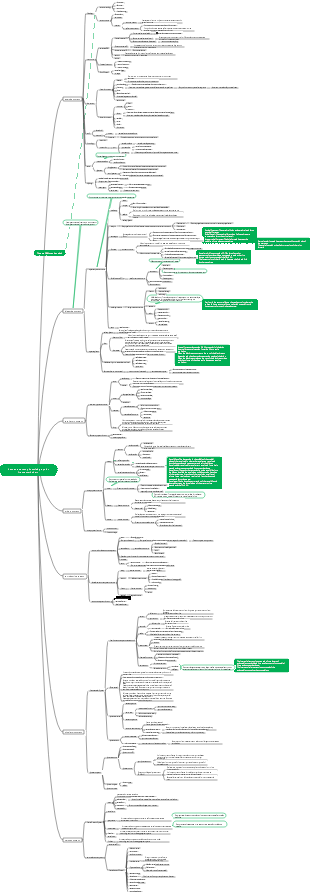
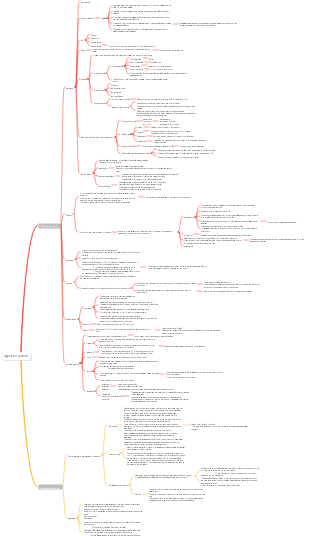
This is a mind map about sense organs, which are the physiological devices that enable sensory processes. This mind map summarizes the visual , vestibular cochlear organ The skin has three parts.
Edited at 2024-01-20 08:45:11This is a mind map about bacteria, and its main contents include: overview, morphology, types, structure, reproduction, distribution, application, and expansion. The summary is comprehensive and meticulous, suitable as review materials.

This is a mind map about plant asexual reproduction, and its main contents include: concept, spore reproduction, vegetative reproduction, tissue culture, and buds. The summary is comprehensive and meticulous, suitable as review materials.
This is a mind map about the reproductive development of animals, and its main contents include: insects, frogs, birds, sexual reproduction, and asexual reproduction. The summary is comprehensive and meticulous, suitable as review materials.
This is a mind map about bacteria, and its main contents include: overview, morphology, types, structure, reproduction, distribution, application, and expansion. The summary is comprehensive and meticulous, suitable as review materials.
This is a mind map about plant asexual reproduction, and its main contents include: concept, spore reproduction, vegetative reproduction, tissue culture, and buds. The summary is comprehensive and meticulous, suitable as review materials.
This is a mind map about the reproductive development of animals, and its main contents include: insects, frogs, birds, sexual reproduction, and asexual reproduction. The summary is comprehensive and meticulous, suitable as review materials.
sense organs
monitor
Eye
composition
eyeball
constitute
eyeball wall
layered
outside → inside
adventitia
fibrous membrane of eyeball
branch
Front part
cornea
Location
Occupies the first 1/6 of the fibrous membrane of the eyeball
Features
Colorless and transparent
Flexible
Avascular but rich in sensory nerve endings
The cornea has a large curvature, convex outside and concave inside, and has a refractive effect.
rear
sclera
Location
Occupies the posterior 5/6 of the fibrous membrane of the eyeball
form
scleral parenchyma
Location
near the limbus
microstructure
scleral sinus
form
ring
Location
Deep at the transition point between sclera and cornea
Function
aqueous fluid outflow channel
Structural features
Made of tough fibrous connective tissue, thick and tough
tunica media
vascular membrane
branch
front→back
iris
microstructure
central
pupil
form
round
Function
In low light or when looking at distant objects
pupils dilated
Under strong light or when looking at close objects
Pupils constrict to regulate the amount of light entering
between cornea and lens
eye room
branch
Anterior chamber
Features
Larger
special structure
iridocorneal angle
also known as
anterior chamber angle
Location
Surroundings of the anterior chamber
The junction of iris and cornea
form
ring area
back room
Features
smaller
around pupil
Peripheral arrangement
pupillary sphincter
radial arrangement
pupillary dilator muscle
ciliary body
Choroid
Structural features
Contains rich blood vessels, nerves and pigment cells, and is brown-black in color
retina
branch
front→back
Retina iris part
ciliary body
choroidal pars
also known as
retinal vision
layered
Outer layer
potential gap
Function
Anatomical basis of retinal detachment
inner layer
neural layer
composition
3 layers of nerve cells
Outer layer
cones
Function
Feeling the stimulation of strong light and color, which plays a major role in seeing objects during the day or in bright places
rod cells
Function
Feel the stimulation of low light, which plays an important role in seeing things at night or in dark places.
microstructure
optic disc
also known as
optic nerve head
Location
posterior retina slightly medial
origin of optic nerve
form
A clear, slightly white oval disk-shaped structure
central depression
Optic disc pit
also known as
physiological blind spots
microstructure
There are central retinal arteries and veins passing through, but no photoreceptor cells
About 3.5mm slightly inferior to the temporal side
macula
form
yellow community
constitute
Dense cones
form
central depression
fovea
Features
There are no blood vessels in this area
The most sensitive part of light sensitivity and color discrimination
Structural features
Close to the inner surface of the blood vessel membrane
contents of eyeball
composition
Aqueous humor
form
colorless transparent liquid
Location
Fill in the eye chamber
source
produced by ciliary body
From the posterior chamber of the eye to the pupil
Infiltration into scleral sinus inflow vein
Aqueous humor circulation system
way
The ciliary body generates aqueous humor → posterior chamber → pupil → anterior chamber → iridocorneal angle → scleral sinus → ophthalmic vein
Injury manifestations
Under pathological conditions, disordered aqueous humor metabolism or poor circulation can cause increased intraocular pressure, which is clinically called secondary glaucoma.
Function
Provides nutrients to the cornea and lens and maintains normal intraocular pressure
lens
form
The curvature changes depending on the distance of the object viewed
When looking at near objects
The ciliary muscle contracts (key), causing the ciliary process to extend inward and the ciliary zonules to relax.
The lens becomes convex due to its own elasticity
So that the light entering the eyeball can be focused on the retina
When looking at distant objects
The ciliary muscle relaxes, the ciliary process extends, and the ciliary zonules strengthen the traction on the lens.
The curvature of the lens becomes smaller
Image distant objects clearly.
Injury manifestations
cataract
If the lens becomes cloudy due to disease or trauma, it is called a cataract. Clinically, diabetic patients often suffer from cataracts and retinopathy.
Shortsighted
If the eye axis is long or the refractive power of the refractive device is too strong, the object image will fall in front of the retina.
Farsightedness
If the eye axis is short or the refractive power of the refractive device is too weak, the object image will fall behind the retina.
Presbyopia
As we age, the lens nucleus gradually enlarges, hardens, and loses elasticity, the ciliary muscle gradually atrophies, the lens's adjustment ability gradually weakens, making it difficult to see at close range, and presbyopia occurs.
Vitreous body
Injury manifestations
Floaters
Vaporization of the vitreous body
refractive system of eye
composition
Aqueous humor
lens
Vitreous body
cornea
Features
avascular
Colorless and transparent
Function
Has refractive effect
If this type of refractive structure is abnormal, the eyes will suffer from refractive problems such as myopia, hyperopia, and astigmatism.
light propagation path
Cornea→Aqueous humor→Lens→vitreous body→ visual cells ↓ retinal bipolar cells ↓ Ganglion cells → optic nerve
Eye accessories
composition
tear organ
The drainage pathway of tears
Tears are produced in the lacrimal gland → pass through the excretory duct → superior conjunctival fornix → tear lake → puncta → lacrimal canaliculus → lacrimal sac → nasolacrimal duct → inferior meatus
vestibular cochlear apparatus
also known as
Ear
composition
external ear
composition
eardrum
status
The boundary between the outer ear and the middle ear
Function
When an adult examines the eardrum, the auricle must be pulled back and upward
middle ear
composition
tympanum
surrounded
wall of tympanum
lateral wall
also known as
tympanic membrane wall
medial wall
also known as
labyrinth wall
adjacent to
There is a convex facial nerve canal through which the facial nerve passes.
upper wall
also known as
cover wall
lower wall
also known as
jugular vein wall
front wall
also known as
carotid artery wall
adjacent to
Eustachian tube opening above
back wall
mastoid wall
adjacent to
The mastoid antrum communicates with the mastoid chamber
structures within the tympanum
composition
ossicle chain
composition
It consists of the malleus, incus and stapes connected by joints
Function
Pass sound waves felt by the eardrum into the inner ear
Eustachian tube
status
Channel connecting the nasopharynx and tympanum
Features
Eustachian tube in young children
It is shorter and flatter than adults, and has a larger diameter and is closer to the horizontal position. Therefore, pharyngeal infection can easily invade the tympanum through the Eustachian tube and cause otitis media.
Function
Make the air pressure in the tympanic cavity equal to the external atmospheric pressure to maintain a balance between the tympanic membrane and external pressure
inner ear
Features
Irregular shape and complex structure
also known as
get lost
composition
bony labyrinth
composition
Cochlea
vestibule
bony semicircular canals
membranous labyrinth
composition
cochlear duct
branch
upper wall
lateral wall
lower wall
microstructure
auditory receptors
spiralizer
utricle and saccule
microstructure
position receptor
composition
utricle macula
Location
on the utricle
glomus macula
Location
on the balloon
Function
接受直线加速或减速运动的刺激
membrane semicircular canals
microstructure
position receptor
crista ampullae
Location
Corresponding membranous ampullar wall
Function
Receive stimulation from changes in head position and the start and end of rotational movements
sound conduction
air conduction
status
Under normal circumstances, air conduction is the main
path
Sound waves → auricle → external auditory canal → tympanic membrane → ossicular chain → vestibular window → scala tympani perilymph → cochlear endolymph → spiral organ → auditory nerve → auditory center of the brain
bone conduction
path
Sound waves and vibrations of the eardrum → Skull and bony labyrinth → Cochlear endolymph → Spiral organ → Hearing
other receptors
skin
composition
Shallow layer
epidermis
layered
basal layer cells
Function
Has strong ability to divide and grow
Deep
Genuine Leather
microstructure
within the skin
subsidiary structure
hair
Function
The growth point is the hair ball
Function
intradermal injection
It is to inject the medicinal liquid between the epidermis and dermis
subcutaneous injection
Inject the drug solution into the subcutaneous tissue