 Wondershare EdrawMind
MindMap Gallery vasculature
- 54
vasculature
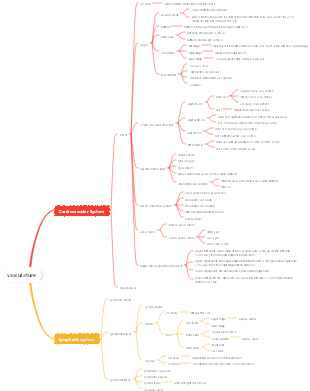
This is a mind map about the vasculature system. The vasculature system is a closed tube system composed of the cardiovascular system and the lymphatic system, which is distributed in various parts of the human body.
Edited at 2024-01-20 08:46:27
- bacteria
This is a mind map about bacteria, and its main contents include: overview, morphology, types, structure, reproduction, distribution, application, and expansion. The summary is comprehensive and meticulous, suitable as review materials.
- Plant asexual reproduction
This is a mind map about plant asexual reproduction, and its main contents include: concept, spore reproduction, vegetative reproduction, tissue culture, and buds. The summary is comprehensive and meticulous, suitable as review materials.
- Reproductive development of animals
This is a mind map about the reproductive development of animals, and its main contents include: insects, frogs, birds, sexual reproduction, and asexual reproduction. The summary is comprehensive and meticulous, suitable as review materials.
vasculature
- bacteria
This is a mind map about bacteria, and its main contents include: overview, morphology, types, structure, reproduction, distribution, application, and expansion. The summary is comprehensive and meticulous, suitable as review materials.
- Plant asexual reproduction
This is a mind map about plant asexual reproduction, and its main contents include: concept, spore reproduction, vegetative reproduction, tissue culture, and buds. The summary is comprehensive and meticulous, suitable as review materials.
- Reproductive development of animals
This is a mind map about the reproductive development of animals, and its main contents include: insects, frogs, birds, sexual reproduction, and asexual reproduction. The summary is comprehensive and meticulous, suitable as review materials.
- Recommended to you
- Outline


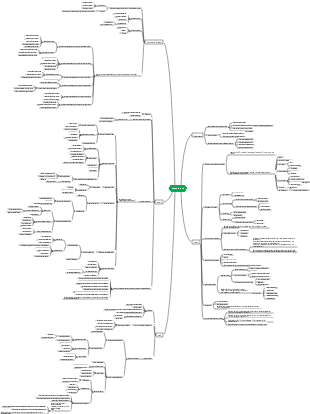


vasculature
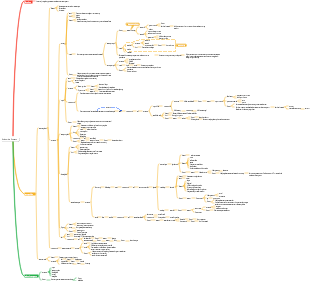
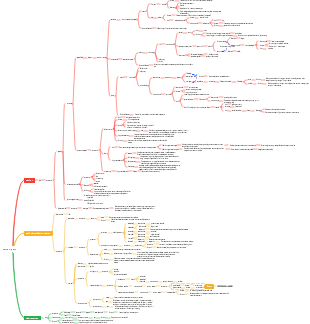
Cardiovascular System
composition
Heart
location, shape and proximity
Location
midline
2/3 is to the left of the midline
1/3 is on the right side of the midline
In the middle mediastinum of the chest
shape
Features
hollow
muscle fibers
composition
A sharp point
towards
lower left front
other
The apical pulse can be palpated 1 to 2 cm medial to the midclavicular line in the left fifth intercostal space.
bottom
towards
upper right rear
Function
It is the part where the great blood vessels enter and exit
both sides
Thoraxocostal surface (front)
towards
Front and top
Diaphragm surface (lower side)
towards
below and slightly towards the rear
Three fates
4 ditches
composition
coronal sulcus
Function
Boundary between atrial and ventricular surfaces
interventricular groove
composition
interventricular groove
posterior interventricular groove
Function
The boundary between the left and right ventricles on the heart surface
back room trench
Function
The boundary between the left and right atria on the heart surface
Function
Surface demarcation of the 4 cardiac chambers
heart chamber
right atrium
Location
upper right part of heart
branch
Front part
constitute
proper atrium
boundary ditch
rear
constitute
vena cava sinus
microstructure
Superior vena cava orifice
sinoatrial node
Location
Subepicardial 1/3 of the superior sulcus
Function
When surgically stripping the root of the superior vena cava, damage to the sinoatrial node and its blood vessels should be avoided
inferior vena cava orifice
fossa ovale
source
Remains of foramen ovale closure during embryonic period
Location
Lower part of the interatrial septum of the right atrium
Function
Prevalent sites for atrial septal defect
Right atrium into left atrium ideal site for cardiac catheterization
Entrance and exit related
Entrance
superior vena cava
inferior vena cava
coronary sinus
exit
Right atrioventricular orifice
peri-exit valve
Tricuspid valve (right atrioventricular valve)
valve action
Prevent blood from flowing backward to the right atrium
right ventricle
Function
Intracardiac injection is performed in the 4th parasternal intercostal space near the left edge of the sternum, mostly into the right atrium.
Entrance and exit related
Entrance
Right atrioventricular orifice
outflow
also known as
Flexible cone or funnel
Location
Located anterior and superior to the right ventricle
exit
The upper end leads to the pulmonary trunk through the pulmonary artery orifice
peri-exit valve
pulmonary valve
valve action
Prevent blood from flowing backward to the right ventricle
tricuspid valve complex
composition
The tricuspid annulus, tricuspid valve, chordae tendineae, and papillary muscles are structurally and functionally a unit
Function
Ensure one-way flow of blood
Left atrium
Entrance and exit related
Entrance
Pulmonary vein orifice (4)
exit
left atrioventricular orifice
peri-exit valve
Mitral valve (left atrioventricular valve)
valve action
Prevent blood from flowing backward to the left atrium
left ventricle
Entrance and exit related
Entrance
left atrioventricular orifice
entrance microstructure
Separate meat column
mitral valve complex
composition
Mitral annulus, mitral valve, chordae tendineae, and papillary muscles
Function
Ensure one-way flow of blood
exit
aortic orifice
peri-exit valve
aortic valve
valve action
Prevent blood from flowing backward to the left ventricle
Function
The driving force of systemic blood flow
The structure of the heart
heart wall
composition
endocardium
Related structures
heart valve
source
The endocardium folds into the cardiac chambers
myocardium
Epicardium
cardiac interval
Classification
Heart
separate
The left half of the heart that contains arterial blood
The right half of the heart that contains venous blood
Features
Incomprehensible to each other
Left and right atria are not connected
Left and right ventricles are not communicating
The atria and ventricles on the same side communicate with each other
room separation
separate
Left atrium
right atrium
interventricular septum
separate
left ventricle
right ventricle
atrioventricular septum
separate
right atrium
left ventricle
cardiac conduction system
Cardiomyocytes
Classification
Ordinary cardiomyocytes
Function
Makes up the main part of the atrial and ventricular walls
The main function is to shrink
Special cardiomyocytes
Features
Self-disciplined and conductive
Function
generate and conduct excitement
Controls the rhythmic activity of the heart
constitute
Special cardiomyocytes
include
sinoatrial node
status
normal pacemaker of the heart
atrioventricular node
Atrioventricular bundle and branches
Purkinje fiber mesh
Location
located within the heart wall
Function
generate and conduct impulses
Maintain normal rhythm of heartbeat and contraction
heart blood vessels
coronary artery
composition
left coronary artery
branch
anterior interventricular branch
Function
Myocardial infarction of the anterior left ventricular wall and anterior ventricular septum, blood vessels that may be embolized
right coronary artery
branch
posterior interventricular branch
Function
heart blood supply
pericardium
Features
The roots of the great blood vessels surrounding the heart and entering and exiting the heart
Conical fibroserosal sac
layered
Outer layer
fibrous pericardium
source
Continuous with the adventitia of large blood vessels
inner layer
Serosal pericardium
layered
dirty layer
Location
Wraps around the surface of the myocardium to form the epicardium
pericardial cavity
wall layer
Location
Lining the inner surface of the fibrous pericardium and closely adhering to the fibrous pericardium
Function
Compression sites during cardiopulmonary resuscitation
The junction of the middle and lower 1/3 of the sternum, that is, the junction between the line connecting the two nipples and the middle of the sternum
artery
definition
The blood vessels that carry blood away from the heart. The heart contracts and blood flows into the arteries.
transport blood
arterial blood
parts
The aorta and branches at all levels arising from the left ventricle
venous blood
parts
Pulmonary artery trunk and its branches arising from the right ventricle
Classification
aorta
also known as
elastic arteries
composition
tunica media
constitute
Made of elastic fiber
Function
The blood ejected from the heart intermittently becomes a continuous blood flow in the blood vessels, reducing blood pressure fluctuations during the cardiac cycle.
middle artery
also known as
muscular arteries
composition
tunica media
constitute
by smooth muscle
Function
Transport blood to various organs and tissues
arteriole
also known as
resistance vessels
Function
Responsible for the distribution of blood flow to various organs
arteries of pulmonary circulation
pulmonary trunk
branch
left pulmonary artery
right pulmonary artery
other
ligamentum arteriosum
Features
fibrous connective tissue cords
Location
Connected to the slightly left side of the bifurcation of the pulmonary trunk to the lower edge of the aortic arch
source
Relics of ductus arteriosus atresia in the embryo
Function
If the ductus arteriosus has not closed 6 months after birth, it is called patent ductus arteriosus, which is a common congenital heart disease.
systemic arteries
main artery
aorta
source
issue
left ventricle
start section
ascending aorta
2nd sternocostal joint on the thoracic side
aortic arch
Branch (right → left)
brachiocephalic trunk
left common carotid artery
left subclavian artery
The lower edge of the 4th thoracic vertebra is downward
Descending aorta
Aortic hiatus through the diaphragm at the height of the 12th thoracic vertebra
branch
above
Thoracic aorta
below
abdominal aorta
status
abdominal artery branches
Lower edge of the 4th lumbar vertebra
branch
left common iliac artery
right common iliac artery
branch
wall branch
visceral branch
in pairs
middle adrenal artery
renal artery
Testicular artery (male) or ovarian artery (female)
Not paired
celiac trunk
branch
left gastric artery
common hepatic artery
branch
proper hepatic artery
gastroduodenal artery
branch
right gastroepiploic artery
superior pancreaticoduodenal artery
splenic artery
superior mesenteric artery
inferior mesenteric artery
other
Head and neck
common carotid artery
status
main artery
source
from
The left common carotid artery originates from the aortic arch
The right common carotid artery arises from the brachiocephalic trunk
upper end of common carotid artery
The location is superficial and its pulsation can be felt in a living body.
important structures
carotid sinus
Location
The enlarged portion between the end of the common carotid artery and the beginning of the internal carotid artery
Function
Baroreceptors, which sense changes in blood pressure
Its sensory nerve comes from the glossopharyngeal nerve
carotid glomerulus
also known as
carotid body
Location
Connected by connective tissue behind the bifurcation of the internal and external carotid arteries
form
A flat oval body
Function
Chemoreceptors, which sense changes in the partial pressure of carbon dioxide, partial pressure of oxygen, and hydrogen ion concentration in the blood
branch
internal carotid artery
branch
No branches in the neck
monitor and brain
Function
Nutrition for brain and vision
external carotid artery
branch
superior thyroid artery
lingual artery
facial artery
superficial temporal artery
maxillary artery
subclavian artery
branch
vertebral artery
source
from
medial aspect of anterior scalene muscle
wear upward
Transverse process foramen of the 6th to 1st cervical vertebrae
through
Foramen magnum enters cranial cavity
Function
Branches nourish the brain and spinal cord
internal thoracic artery
Thyrocervical trunk
other
brachial artery
Function
Blood pressure
Radial artery
Function
Take pulse
Systemic arterial distribution
Function
Arterial pulses that can be felt throughout the body
common carotid artery
facial artery
superficial temporal artery
subclavian artery
brachial artery
Radial artery
femoral artery
dorsalis pedis artery
Common compression and hemostasis points
common carotid artery
Press posteriorly and medially on the transverse process of the 6th cervical vertebra
facial artery
The junction between the anterior edge of the masseter muscle and the lower edge of the mandible presses the mandible
superficial temporal artery
In front of the external ear door
brachial artery
arteries of hand
Refer to both sides of the base
femoral artery
The midpoint of the inguinal ligament compresses the femoral artery against the superior pubic ramus
capillaries
Features
a large amount
Thin tube wall
High permeability
Slow blood flow in the tube
Classification
True capillaries
open capillaries
Function
exchange material
vein
definition
blood vessels that carry blood back to the heart
Overview
Features
form
Compared with accompanying arteries, veins have thin and soft walls, larger diameters, less elasticity, lower pressure, and slower blood flow.
structure and layout
The free edge of the venous valve faces toward the heart. Venous valves ensure the centripetal flow of blood and prevent blood from flowing backward. The veins in the limbs that are more affected by gravity have more valves, while the larger veins in the trunk have fewer or no valves.
Systemic veins are divided into superficial and deep veins
deep vein
Accompany arteries and nerves
The anastomotic branches of veins are relatively abundant
Classification
veins of pulmonary circulation
Classification
left side
composition
left superior pulmonary vein
left inferior pulmonary vein
Right
composition
right superior pulmonary vein
right inferior pulmonary vein
systemic veins
composition
superior vena cava system
collect blood
Venous blood in the upper body such as head and neck, upper limbs and chest (except heart and lungs)
composition
head and neck veins
composition
superficial vein
composition
facial vein
Features
No venous valves
transportation
cavernous sinus
important areas
Danger triangle
Features
triangle area
Location
From the root of the nose to the corners of the mouth on both sides
Function
When purulent infection occurs on the face, if it is not handled properly (such as squeezing, etc.), it can lead to intracranial infection.
subclavian vein
important part
venous angle
source
Converge
internal jugular vein and subclavian vein
Function
Lymphatic duct injection site
internal jugular vein
Extracranial branches
facial vein
Function
Commonly used for puncture
Scalp vein network
external jugular vein
subclavian vein
upper limb veins
composition
Superficial veins of upper limbs
Function
Commonly used for puncture
Cephalic vein
median cubital vein
Dorsal hand venous network
Chest veins
composition
superior vena cava
Converge
From the left and right brachiocephalic veins
source
Before fibropericardial piercing
Azygos vein injection
inferior vena cava system
collect blood
blood in lower body
composition
Lower limb veins
composition
Superficial veins of lower limbs
composition
small saphenous vein
source
Originates from the dorsal venous arch on the outside of the foot
Behind the lateral malleolus
Go up through the back of the calf
Inject into popliteal vein
great saphenous vein
source
through
anterior to medial malleolus
injection
femoral vein
status
The thickest and longest superficial vein in the human body
deep veins of lower limbs
Function
The most vulnerable site for embolism when a blood clot breaks off is the lungs
abdominal and pelvic veins
composition
hepatic portal vein system
collect blood
Venous blood from unpaired organs (except liver) in the abdominal cavity
composition
hepatic portal vein
source
Converge
superior mesenteric vein and splenic vein
collect blood
The digestive tract from the abdominal section of the esophagus to the upper part of the rectum and the pancreas, spleen, and gallbladder
Features
Multiple anastomoses with the superior and inferior vena cava
Does not contain static valve
Function
hepatic portal hypertension
Phenomenon
Vomiting blood, blood in stool, abdominal varicose veins
principle
When the hepatic portal vein reflux is blocked, because there are no venous valves in the hepatic portal vein and its branches, blood can flow back to the superior and inferior vena cava through the anastomotic branches. In this case, the anastomotic branches expand, causing the abdominal wall veins, esophageal venous plexus, and rectal venous plexus. If the dilated veins of varicose veins rupture, vomiting blood or blood in the stool may occur.
branches of hepatic portal vein
composition
superior mesenteric vein
splenic vein
inferior mesenteric vein
left gastric vein
right gastric vein
gallbladder vein
attached umbilical vein
Anastomosis with superior and inferior vena cava
anastomosis with the superior vena cava
The hepatic portal vein forms through the esophageal venous plexus
anastomosis with the inferior vena cava
The hepatic portal vein forms through the rectal venous plexus
Anastomosis between the superior and inferior vena cava
The hepatic portal vein is formed by the periumbilical venous network
inferior vena cava
status
The largest vein in the human body
source
Converge
It is formed by the confluence of the left and right common iliac veins on the right front of the fifth lumbar vertebra.
along
The right side of the abdominal aorta and the right front of the spine ascend
through
vena cava groove of liver
wear
The vena cava opening of the diaphragm enters the chest
branch
wall branch
composition
Subdiaphragmatic veins (1 pair)
Lumbar veins (4 pairs)
visceral branch
composition
testicular (ovarian) veins
renal vein
right adrenal vein
hepatic vein
Cardiovenous system
Systemic venous return overview table
systemic circulation
also known as
big cycle
way
Function
substance exchange, gas exchange
Pulmonary circulation
also known as
small loop
way
Function
gas exchange
Venous blood with little oxygen and dark red color changes to arterial blood with more oxygen and bright red color
lymphatic system
composition
Lymphatic ducts
composition
lymphatic duct
Converge
by lymphatic trunk
thoracic duct
source
injection
left venous angle
from
cisterna chyli
form
cystic structure
Location
Front of 1st lumbar vertebra
source
Converge
Intestinal trunk and left and right lumbar trunk
Collect lymph
Lower limbs, pelvis, abdomen, left upper limb, left chest and left head and neck
Function
metastasize cancer cells
Gastric or esophageal cancer cells
to
left supraclavicular lymph node
breast cancer cells
to
Axillary lymph nodes
right lymphatic duct
source
injection
right venous angle
Lymphoid tissue
lymphoid organs
composition
Lymph nodes
Function
filtering lymph
produce lymphocytes
Participate in immunity
Thymus
spleen
Function
In splenomegaly, the splenic notch is a sign of palpation of the spleen
Location
Located in Zuojili District
Opposite ribs 9-11
form
Under normal circumstances, the lower edge of the left costal arch cannot be touched
tonsil
Classification
time and function
central lymphoid organ
peripheral lymphoid organs