MindMap Gallery Section 5 Quality Design Methods and Tools
Section 5 Quality design methods and tools, including product quality advance planning, Quality function deployment, reliability design, task decomposition method, etc.
Edited at 2024-01-19 10:21:12This is a mind map about bacteria, and its main contents include: overview, morphology, types, structure, reproduction, distribution, application, and expansion. The summary is comprehensive and meticulous, suitable as review materials.

This is a mind map about plant asexual reproduction, and its main contents include: concept, spore reproduction, vegetative reproduction, tissue culture, and buds. The summary is comprehensive and meticulous, suitable as review materials.
This is a mind map about the reproductive development of animals, and its main contents include: insects, frogs, birds, sexual reproduction, and asexual reproduction. The summary is comprehensive and meticulous, suitable as review materials.
This is a mind map about bacteria, and its main contents include: overview, morphology, types, structure, reproduction, distribution, application, and expansion. The summary is comprehensive and meticulous, suitable as review materials.
This is a mind map about plant asexual reproduction, and its main contents include: concept, spore reproduction, vegetative reproduction, tissue culture, and buds. The summary is comprehensive and meticulous, suitable as review materials.
This is a mind map about the reproductive development of animals, and its main contents include: insects, frogs, birds, sexual reproduction, and asexual reproduction. The summary is comprehensive and meticulous, suitable as review materials.
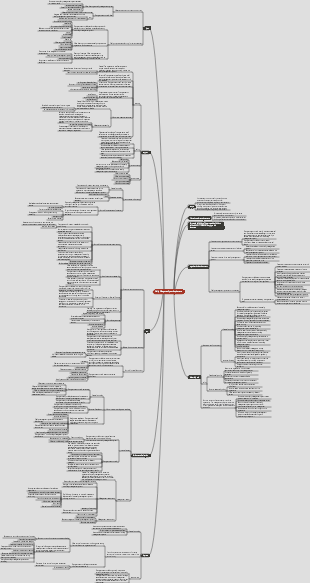
Section 5 Quality Design Methods and Tools
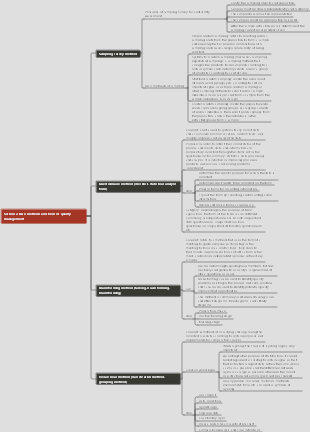
Task decomposition method (work breakdown structure WBS)
concept
WBS refers to a deliverable-oriented hierarchical decomposition of the work performed by the project team to achieve project goals and complete specified deliverables.
The WBS details the deliverables and scope of the project, that is, the specific content of the project, but does not describe the process or schedule. It does not define how or when the deliverables will be produced, but is specifically limited to describing and breaking down the project results and scope.
The WBS method can decompose complex tasks into multiple simple tasks, decompose projects into manageable activities, and serve as the basis for project planning and tracking.
WBS function
Facilitate effective control of projects
Facilitate communication among stakeholders
Basic framework for reporting project status
Structural design tools that clarify the interconnections between project work
WBS features
The 100% principle is the core feature of WBS. It reflects that WBS includes all work content defined by project services and all deliverables, including internal, external and intermediate tasks, as well as project management.
The 100% principle is one of the most important principles guiding the preparation, decomposition and evaluation of WBS and applies to all levels of WBS: the sum of all work on the "child" level should be 100% exactly equal to the work on the "parent" level
The WBS should not include any work outside the scope of the project, i.e. it cannot exceed 100% of the scope of work
The 100% principle also applies to the activity level
In each work package, the sum of the work represented by activities should be 100% equal to all the work required to complete this work package
Expression
Hierarchy chart, outline
Tabular structure
Decomposition principles of WBS
Task Hierarchy Principle
minimum time principle
The principle of assigning responsibility to the individual and the principle of risk decomposition
step-by-step segmentation principle
risk decomposition principle
Teamwork Principles
WBS method
analogy method
top-down approach
bottom-up approach
Brainstorming
Advanced Product Quality Planning (APQP)
definition
APQP is an important requirement in the technical specification IATF16949 of the International Advanced Automotive Enterprise Group
The content of APQP includes how to control product design and development to ensure product quality meets requirements, improve efficiency and reduce costs.
effect
APQP is a structured method to ensure product quality meets requirements and enhance customer satisfaction.
APQP is an orderly arrangement of the four stages of a typical PDCA management cycle, which runs through the entire life cycle of the product.
Stage division: Each stage has a time overlap in the implementation sequence. It is not that one process is completely completed before proceeding to the next process, but that the required activities are carried out in a timely manner according to the specific process points.
Plan and determine project phases - from product concept to project approval phase: understanding customer needs and expectations to plan and decide on the projects to be developed and the phases of the project development plan
Product design and development stage - from project approval to sample completion stage: all product drawings and design documents need to be completed, and through sample trial production and testing, the correctness of the product drawings and design documents, product applicability and reliability, product The extent to which customer requirements are met
Process design and development stage - from prototype completion to pilot production stage: develop an effective manufacturing system and ensure that this manufacturing system meets customer requirements, needs and expectations
Product and process qualification stage - from sample completion to trial production stage: verify whether the control plan and process flow chart are followed during the trial production run, whether the product meets customer requirements, and investigate and resolve relevant concerns before formal production run
Feedback, assessment and corrective action stage - from trial production to formal mass production stage: based on information feedback obtained from the production process, product use, and delivery services, improve deficiencies in product quality planning and provide customer satisfaction
Quality Function Deployment (QFD)
Definition: QFD refers to a multi-level quality deduction analysis method that transforms customer or market requirements into design requirements, manufacturing requirements, test inspection requirements, after-sales service requirements, etc.
content
Determine target customers
Investigate customer requirements and determine the importance of customer requirements
Determine the characteristics that the final product should have based on customer requirements
Analyze the correlation between each feature of the product and meeting customer needs
Evaluate the market competitiveness of the product, and accordingly understand the product's advantages, disadvantages and areas for improvement in the market, and ask customers to evaluate the degree to which the company's products and competitors' products meet their requirements, and determine the direction for improvement of each product's characteristics.
Select product characteristics that need improvement and determine their target values
Stage (AST): Taking customer needs as the starting point, through four stages or four steps, four matrices are used to obtain the product's process and production control parameters.
Product planning stage: Transform customer needs into quality characteristics through the product planning matrix, and determine the target values of each quality characteristic based on the results of customer competitiveness assessment and technology competitiveness assessment.
Part configuration stage: Use the quality characteristics defined in the previous stage to select the best solution from multiple design solutions and convert it into key part features through the part configuration matrix
Process design stage: Through the process design matrix, determine the key process parameters that must be guaranteed to achieve key quality characteristics and part characteristics.
Production control stage: Convert key part characteristics and process parameters into specific production control methods or standards through the production control matrix
Design of Experiments (Design of Experiments DOE)
basic concept
Experimental design is a sequential process in which a series of experiments are designed in advance for the purpose of in-depth understanding of the inherent operating characteristics of the analysis object, and valuable information is extracted through the analysis of the test results.
Factor (influence factor): Factors that affect the output
Controllable factors (control factors): refers to factors that can be adjusted by the experimenter
Uncontrollable factors (noise factors): refers to factors that cannot be actively adjusted by the experimenter due to technology, cost or subjective will.
effect
filter
Select factors that have a relatively significant impact on the response value from a large number of factors
Reducing the number of factors can reduce the number of tests for subsequent work, and can also provide the necessary conditions for more effective monitoring of the process.
From a technical and cost perspective, monitoring high-dimensional processes is much more difficult than low-dimensional processes.
optimization
Find the best configuration of controllable factors that optimize the response value
Optimal type of response value
Look at large size, look at small size, look at eye type
The larger the expected large response value, the better; the smaller the small response value, the better; the expected value means the closer the expected value is to the target value, the better.
Robustness: Find a reasonable configuration of controllable factors that minimizes the impact of uncontrollable factors on the response value
Reliability design
Connotation: Reliability refers to the ability of a product to complete specified functions under specified conditions and within a specified time.
Specified conditions: refers to the stress conditions, environmental conditions, storage conditions, operating techniques, maintenance conditions, etc. when using the product.
Specified time: refers to the working time of the product
Specified functions: refers to the technical indicators that the product should have
Reliability (R(t)): refers to the probability of the product completing the specified function under specified conditions and within the specified time.
design
Reliability design means to meet the qualitative and quantitative requirements of reliability, based on reliability theories and methods, combined with the design experience and lessons of previous products, and using mature reliability design technology to make the design of product parts and complete machines meet or achieve Reliability Index Process
Reliability design is the most important component of reliability engineering and the basic measure to improve the inherent reliability level of products.
Key Process Stages of Reliability Design
identify
design
analyze
verify
confirm
monitor
Distribution: Reasonably allocate the system reliability indicators specified in the design specifications to the various units that make up the system, and determine the quantitative requirements for the reliability indicators of each component unit of the system, so that the reliability indicators of the entire system are guaranteed.
Equal distribution method
AGREE allocation method
ARINC allocation method
score allocation method