MindMap Gallery Section 4 Basic tools for quality non-data analysis
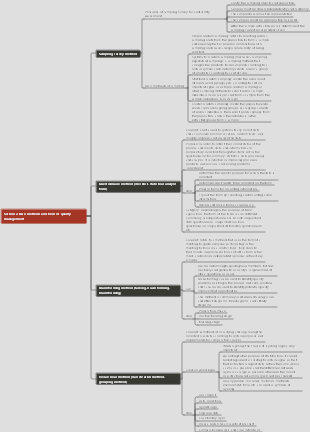
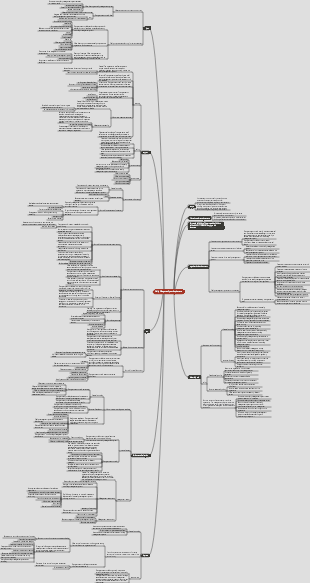
Section 4 Basic tools for quality non-data analysis, including matrix diagrams, affinity diagrams, KT decision-making methods, correlation diagrams, system diagrams, process decision-making degree diagrams, Network diagram, etc.
Edited at 2024-01-19 10:14:26This is a mind map about bacteria, and its main contents include: overview, morphology, types, structure, reproduction, distribution, application, and expansion. The summary is comprehensive and meticulous, suitable as review materials.

This is a mind map about plant asexual reproduction, and its main contents include: concept, spore reproduction, vegetative reproduction, tissue culture, and buds. The summary is comprehensive and meticulous, suitable as review materials.
This is a mind map about the reproductive development of animals, and its main contents include: insects, frogs, birds, sexual reproduction, and asexual reproduction. The summary is comprehensive and meticulous, suitable as review materials.
This is a mind map about bacteria, and its main contents include: overview, morphology, types, structure, reproduction, distribution, application, and expansion. The summary is comprehensive and meticulous, suitable as review materials.
This is a mind map about plant asexual reproduction, and its main contents include: concept, spore reproduction, vegetative reproduction, tissue culture, and buds. The summary is comprehensive and meticulous, suitable as review materials.
This is a mind map about the reproductive development of animals, and its main contents include: insects, frogs, birds, sexual reproduction, and asexual reproduction. The summary is comprehensive and meticulous, suitable as review materials.
Section 4 Basic tools for quality non-data analysis
Association diagram
concept
A correlation diagram is a diagram that uses arrows to logically connect the causal relationships between elements based on the cause-result or purpose-means relationship to clarify complex and intertwined problems and organize language and written materials.
Correlation diagrams are suitable for analyzing and sorting out problems where various complex factors are intertwined.
After many revisions and drawings, the key to solving the problem can be clarified and the key points can be accurately grasped.
Application steps
The questions clearly analyzed are circled with graphics.
Organize relevant personnel to fully discuss the problem and propose relevant factors that lead to the problem.
Name the factors causing the problem in clear language
Identify cause-and-effect relationships between problems and factors
Organize graphics to minimize or eliminate cross arrows
Find and identify important causes
Find the end cause on the correlation diagram. The end cause is the reason for which measures can be taken directly. It is shown as an arrow in the diagram that can only go out but not in.
Confirmed important reasons are reflected with special marks
In the correlation diagram, the arrows that only go in and out are problems, and the arrows that go in and out are intermediate factors.
The main purpose
Develop various management plans
Develop various policies and goals
Develop various improvement measures
Analyze various reasons
Improve the daily management activities of the enterprise
System diagram (tree diagram)
concept
A system diagram is to systematically develop the goals to be achieved and the measures or means that need to be taken, and draw them into a diagram to clarify the focus of the problem and find the best means or measures.
In the process of planning and decision-making, in order to achieve a certain goal, it is necessary to select and consider a certain means; and in order to adopt this means, it is necessary to consider its corresponding means at the next level.
The upper level means becomes the action purpose of the lower level means.
By unfolding the goals and means required in order until measures can be taken, and drawing them into a tree diagram, you can have a comprehensive understanding of the problem, and then find out the key points of the problem from the diagram and propose solutions. The best way to set goals
type
Factor expansion tree diagram (component factor expansion diagram): systematically expand the factors that constitute the system object
Measure expansion tree diagram (method expansion tree diagram): Systematically expand the means and measures to solve problems or achieve goals and objectives.
The main purpose
The development of design quality in the new product development process
Develop a quality assurance plan and carry out quality assurance activities
Used in conjunction with cause and effect diagrams
Development of goals, policies, and implementation matters
Clarify departmental and management functions
Develop creative ideas to solve corporate problems related to quality, cost, delivery time, etc.
Process Decision Level Chart (PDPC Method)
concept
The process decision-making process diagram method is that when conducting quality management activities, in order to achieve goals or solve problems, always design plans in advance, predict possible problems and corresponding countermeasures or procedures, so as to lead things to the ideal results.
The process decision-making process diagram method refers to a method that predicts possible obstacles and results when formulating an action plan or designing a program in order to complete a task or achieve a certain goal, and propose multiple contingency plans accordingly.
Using the process decision-making program diagram method, the system status can be grasped from an overall perspective to make overall judgments, and the progress of the system can be grasped in chronological order.
Application steps
Determine the topic and convene relevant personnel to discuss the topic
Determine the means and measures to achieve the goals from the discussion
For the identified measures, list the predicted results and the measures and plans to be taken when encountering difficulties.
According to each research measure, determine the order of implementation of each measure according to the urgency, required work hours, possibility and difficulty of implementation, and use arrows to connect the ideal state directions.
Identify the person responsible for the implementation and the implementation deadline
During the implementation process, collect information and continuously revise the process decision-making procedure chart
The main purpose
Develop implementation plans in policy and objective management
Develop implementation plans for research and development projects
Predict major accidents across the entire system
Formulate measures to prevent adverse factors from occurring in the process
Network diagram (arrow diagram, vector diagram)
concept
Network diagram is a scientific management method to arrange and prepare the best daily plan and effectively implement progress management.
A network diagram is a "vector diagram" that expresses the various tasks necessary to advance the plan in chronological order and subordinate relationships in the form of a network.
A task or project can be decomposed into many operations. These operations are interdependent and restrictive in terms of production technology and production organization. The network diagram can clearly show this dependence and restriction relationship between various operations.
Through the network diagram, we can find out the key and non-key factors that affect the progress of the project. Myolie can make overall coordination and rationally utilize resources to improve effectiveness and efficiency.
The composition of a network diagram
node
A node represents the start or end of a job. It does not consume resources or take up time. It is just a connection point in time, also called an event.
A node marks the end of the tasks before it and the beginning of the tasks after it, usually represented by a circle.
Operation
An activity is any action that consumes resources or time
Virtual homework refers to a type of homework with zero homework time, represented by a virtual arrow. It does not take up time. Its function is to link successive homework, indicate the logical relationship between them, and indicate the direction of the homework.
Routes and Critical Routes
A route is a road in the network diagram that is composed of various operations from the initial node to the final node. There can be different roads from the initial node to the final node in the network diagram. The length of the road refers to the duration of completing each operation on the road. length and
The critical path refers to the path with the longest cumulative time for each operation. It determines the shortest time required to complete all operations on the network diagram.
Matrix diagram
concept
The matrix diagram method is a method that uses pluralistic thinking to gradually clarify the problem.
The matrix diagram method is to find pairs of quality factors in complex quality problems, arrange them in rows and columns, and indicate the degree of their relationship at their intersections. Based on this, we can find out what problems exist and the form of the problems, and then find solutions. The idea of the question
By giving the relationship and degree of the corresponding elements of rows and columns at the intersection, we can explore the problems and forms in the binary arrangement, and get the focus of solving the problem from the binary relationship.
When looking for solutions to problems, if the purpose (result) can be expanded into a unitary means (cause), the tree diagram method can be used
If there are more than two purposes (results), it is more appropriate to use the matrix diagram method to expand them
type
L type
L-shaped matrix chart is the most basic matrix chart
The L-shaped matrix diagram is a matrix diagram that represents a number of pairs of items (purpose-means, result-cause) in the form of a binary table arranged in rows and columns.
The L-shaped matrix diagram is a matrix diagram composed of binary configurations of type A factors and type B factors.
T type
A matrix diagram that combines an L-shaped matrix diagram composed of type A factors and type B factors and an L-shaped matrix diagram composed of type A factors and type C factors.
That is, a matrix diagram representing type A factors corresponding to type B factors and type C factors respectively.
Y type
Three L-shaped matrix diagrams composed of type A factors and type B factors, type B factors and type C factors, type C factors and type A factors
That is, it represents the matrix diagram corresponding to the three factors A and B, B and C, and C and A.
X type
A matrix diagram composed of an L-shaped matrix diagram composed of type A factors and type B factors, type B factors and type D factors, type A factors and type C factors, and type D factors and type C factors.
That is to say, the matrix diagram corresponding to the four pairs of factors A and B and C, B and A and D, D and B and C, and C and A and D.
Application steps
Clarify the research object and list relevant factors
Arrange pairs of factors into rows and columns to express their corresponding relationships
Choose the appropriate matrix plot type
Express the degree of relationship at the intersection point of paired factors
Determine key factors that must be controlled based on the closeness of the relationship
Make countermeasures table for key factors
The main purpose
Determine the focus of product development or improvement
Expansion of quality functions of raw materials and products
Determine the relationship between product quality characteristics and responsible departments
Investigate the causes of poor product implementation processes
Understand the correlation analysis between market and products, and formulate market development strategic plans
Affinity diagram (KJ method)
concept
The affinity diagram method is a method pioneered by Jiro Kawakita of Japan.
Affinity diagramming is to focus on a certain problem, fully collect various language and written data such as experience, knowledge, ideas and opinions, summarize and organize these data according to their mutual affinities, clarify the problem from the complex phenomenon, and then solve the problem. question
Affinity diagrams are close to association diagrams, but association diagrams use logical reasoning to clarify cause-and-effect relationships, while affinity diagrams are classified based on rationality.
Application steps
Determine the topic: Choose those things that are out of order or thoughts that are in a state of chaos as research topics
Collect audio and text data
direct observation method
interview
Check information
Use brainstorming
Language data in cards
Organize comprehensive cards
Drawing: Graphicalizing the classification process
The main purpose
Summarize thoughts and understand things
Break the constraints of the status quo and the possible
Staff planning
implement policy
KT decision-making method
concept
The KT method is a thinking system that clearly distinguishes situations where problems occur and situations where problems do not occur based on the respective procedures of things, according to time, place, etc., and thereby finds out the reasons and the methods that should be decided.
The KT decision-making method is the most famous decision-making model. It was researched and invented by Americans Kepner and Trego, which divides the problem into two steps: defining the problem and analyzing the cause.
Application steps
Prepare a decision statement with a plan of action and consequences of the action
Confirm strategic needs (requirements), action goals (expectations), and constraints (limitations)
Each project is assigned a weight and sorted one by one.
generate alternatives
Score options on an objective basis
Calculate the weighted scores of each option and find the top two or top three options with the highest scores
Identify the negative impacts of these high-scoring options and assess the likelihood and severity of these impacts
Based on the above evaluation results, make the final and only choice from these high-scoring options.
The main purpose
KT method can provide unbiased decision analysis
As a structured decision-making method, it identifies and sorts the various factors related to decision-making one by one.
As a past tool, the value of the KT decision-making method lies in its ability to effectively limit intentional or unintentional biases that can mislead decisions.
Users of the KT decision-making method can evaluate options based on clear objectives to optimize the final decision result.