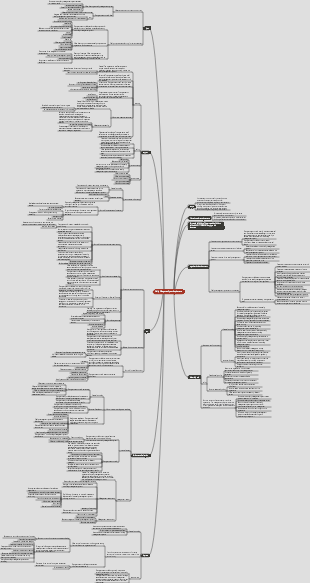
MindMap Gallery Section 3 Basic Tools for Quality Data Analysis (Two Figures and One Table Pareto Chart, Cause and Effect Diagram, Countermeasure Table)
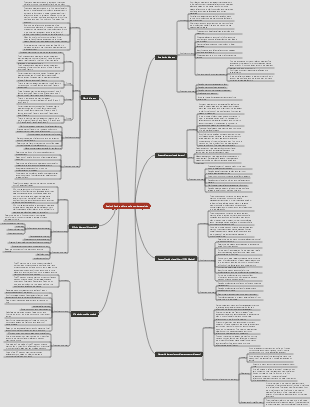
Section 3: Mind map, the basic tool for quality data analysis, including arrangement charts, cause and effect diagrams, countermeasure tables, histograms, Scatter plots, matrix data analysis methods, etc.
Edited at 2024-01-19 10:13:11This is a mind map about bacteria, and its main contents include: overview, morphology, types, structure, reproduction, distribution, application, and expansion. The summary is comprehensive and meticulous, suitable as review materials.

This is a mind map about plant asexual reproduction, and its main contents include: concept, spore reproduction, vegetative reproduction, tissue culture, and buds. The summary is comprehensive and meticulous, suitable as review materials.
This is a mind map about the reproductive development of animals, and its main contents include: insects, frogs, birds, sexual reproduction, and asexual reproduction. The summary is comprehensive and meticulous, suitable as review materials.
This is a mind map about bacteria, and its main contents include: overview, morphology, types, structure, reproduction, distribution, application, and expansion. The summary is comprehensive and meticulous, suitable as review materials.
This is a mind map about plant asexual reproduction, and its main contents include: concept, spore reproduction, vegetative reproduction, tissue culture, and buds. The summary is comprehensive and meticulous, suitable as review materials.
This is a mind map about the reproductive development of animals, and its main contents include: insects, frogs, birds, sexual reproduction, and asexual reproduction. The summary is comprehensive and meticulous, suitable as review materials.
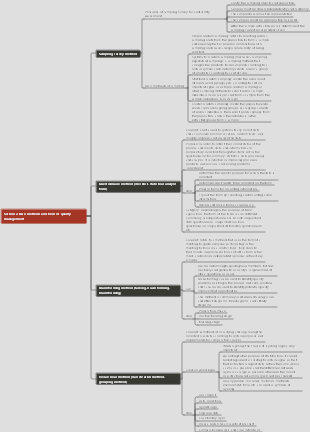
Section 3 Basic Tools for Quality Data Analysis (Two Figures and One Table: Pareto Chart, Cause and Effect Diagram, Countermeasure Table)
Pareto chart (Pareto chart)
concept
Pareto charts are based on the Pareto principle, which means that 80% of results come from 20% of the causes.
The purpose of the Pareto Chart is to compare the results or impact on customers of different defect types in order to identify the most important issues that need to be resolved first.
Pareto is a diagram that arranges quality improvement projects from the most important to the least important. It is a diagram used to find major problems or major factors affecting quality.
Application steps
Clarify the analysis object, collect data within a certain period of time, and identify defective items
Arrange the frequency of each defect from large to small, and calculate the proportion and cumulative proportion of each defect to the total number of defects.
List the various defect items on the abscissa in order from large to small. Group the item or items with the smallest value into "other" items and place them at the far right. The number can exceed the second item from the bottom.
The ordinate on the left is the frequency of defect occurrence, and the ordinate on the right is the ratio. The total frequency scale on the left is the same height as the total frequency scale (100%) on the right
At each defect on the abscissa, draw a bar chart corresponding to its frequency of occurrence.
Accumulate the proportion of each defect item from left to right and draw a cumulative frequency curve.
Cause and effect diagram (Ishikawa Kaoru diagram, fishbone diagram)
concept
A cause-and-effect diagram is a tool used to analyze quality characteristics (results) and factors that may affect the quality characteristics (causes)
A cause-and-effect diagram is a diagram that reveals the relationship between a process output defect or problem and its potential causes. It is also an important tool and document for expressing and analyzing its cause-and-effect relationship.
Application steps
Identify the quality characteristics and fill in the boxes to the right of the cause and effect diagram
Determine the main categories of possible causes and draw each "main branch" of the cause-and-effect diagram. A typical classification method (5M1E classification method) can be used: personnel, machinery and equipment, materials, methods, measurement, environment
Use brainstorming to fill in all possible causes of the problem into each main branch according to their different classifications
Identify the key factors (3-5) that affect quality problems, enclose them in circles or boxes, and use them as key considerations for implementing quality improvement measures.
Countermeasure table (measure plan table)
concept
The countermeasure list generally includes the current status of important reasons, countermeasures, goals, measures, completion location, completion time and person in charge, etc.
The countermeasure table is not only a table for the implementation of the improvement measure plan, but also a basis for checking whether the improvement measure plan has been completed.
Application steps
Identify important causes to correct
Clarify the current status of important causes, countermeasures and measures to be taken, personnel to complete the work and completion time, etc.
Tabulate the above
Histogram (frequency histogram)
concept
A histogram is a graph that divides the data into a number of equally spaced groups in order. On the abscissa, the distance between the groups is the base and the frequency of falling into each group is the highest.
A histogram is often used to understand the distribution of data. It is a graphical representation of a set of data. This method of displaying data can clearly reflect the dispersion and central trend of the data and compare it with the required distribution.
type
Standard type (symmetric type): The average value of the data is the same as or close to the middle value of the maximum value and the minimum value. The frequency of data near the average value is the highest. The frequency starts from the middle value and slowly decreases to both sides. The average value is symmetrical, which is the most common shape
Zigzag shape: This shape will appear if there are too many groups when making a frequency distribution table; this shape will also appear when there is a problem with the measurement method or the measurement data is misread.
Skewed peak type: the average value of the data is located to the left (right side) of the middle value, from left to right (right to left), the frequency of the data distribution increases and then suddenly decreases, and the shape is asymmetrical; the lower limit (upper line) is subject to tolerance When other factors are limited, this shape often appears due to psychological factors
Steep wall type: the average value is far away from the middle value of the histogram, the frequency decreases (increases) from left to right, and the histogram is asymmetrical; when the process capacity is insufficient, use qualified product data or processes after full inspection This shape often appears when there is automatic feedback adjustment in
Flat-top type: This shape often occurs when several distributions with different average values are mixed together, or when a process deteriorates slowly.
Bimodal: There are fewer frequencies near the middle value of the histogram, and there is a "peak" on each side; this shape often occurs when two different distributions with widely different average values are mixed together.
Island type: There is an "island" on one side of the standard histogram.
Steps to create a histogram
Collect and record data required for analysis
Determine the maximum and minimum values of data and calculate the range
Determine the number of groups and group spacing
Determine group boundaries
Make a frequency distribution table
Draw a histogram
Scatter plot (scatter plot)
concept
Scatter plot is a graphing method used to analyze and study whether there is a correlation between two corresponding variables.
Scatter plots draw the data points of two corresponding variables on plane coordinates to determine whether there is a correlation between the two sets of variables and the degree of correlation.
Scatter plots can only qualitatively and approximately determine whether there is a linear correlation between two variables. In order to quantitatively and accurately measure the degree of linear correlation between two variables, their correlation coefficients need to be calculated.
Application steps
Clarify the research object, collect paired data and organize it into a data table. The data should generally be more than 30 groups.
Establish a plane rectangular coordinate system on the graph paper. In order to facilitate the analysis of the correlation, the range between the maximum and minimum values of the two coordinate values should be basically equal.
Mark the data groups at the corresponding positions of the rectangular coordinates of the plane.
When there are outliers on the scatter plot that clearly deviate from other data points, the reasons should be identified so that you can decide whether to delete or correct them.
If necessary, relevant information can be noted on the scatter chart
Strong positive correlation: y increases as x increases, and the point dispersion is small
Weak positive correlation: y increases as x increases, and the point dispersion is large
Strong negative correlation: y decreases as x increases, and the point dispersion is small
Weak negative correlation: y decreases as x increases, and the point dispersion is large
Irrelevant: There is no obvious pattern between x and y
Nonlinear correlation: x and y have a curvilinear relationship
Matrix data analysis method (principal component analysis method)
Concept: Express the relationship between various factors with a certain amount through a matrix diagram, that is, numerical data can be marked on their intersection points, and the corresponding relationships between multiple quality factors or multiple variables can be expressed quantitatively, thereby A method of predicting, calculating, organizing and analyzing large amounts of data is a method of multi-parameter analysis.
Application steps
Identify the various aspects that require analysis
form data matrix
Determine the comparison score
Main purpose: can be applied to all aspects of product realization, including the entire process
for prediction
For process quality analysis
Used to understand customer satisfaction during the product design process