MindMap Gallery bacteria
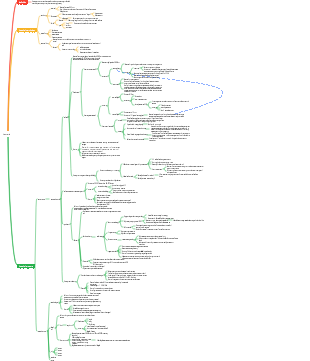
This mind map of microorganisms and plant pathogens introduces the basic morphology, factors affecting bacterial morphology, cell structure, etc. The level of logic is clear and the content is detailed. Interested friends can save it~
Edited at 2024-10-13 16:55:23Questo è il capitolo 5 del libro dell'insegnante Zhao Zhou "Questo è abbastanza da leggere", che parla principalmente di questi aspetti: ① L'importanza dell'abilità di apprendimento ② Come aggiungere contesto alle informazioni ③ Come distinguere la conoscenza e le informazioni Non mi affretta a mettere in discussione e sfidare ⑤Come usare note appiccicose per aggiornare la capacità di apprendimento ⑥ Perché inseguire i "merci secche" uno pseudo-apprendimento?
Per aiutare tutti a usare DeepSeek in modo più efficiente, è stata compilata una raccolta di Map Mind Mind Guide DeepSeek! Questa mappa mentale riassume il contenuto principale: collegamenti correlati a Yitu, analisi del profilo DS, confronto tra rotte tecnologiche DeepSeek e Chatgpt, Guida di distribuzione del modello DeepSeek e Qwen, come fare più soldi con DeepSeek, come giocare a DeepSeek, DeepSeek Scientific Research Application Aspetta, permettendoti di cogliere rapidamente l'essenza dell'interazione AI. Che si tratti di creazione di contenuti, pianificazione del piano, generazione di codice o miglioramento dell'apprendimento, DeepSeek può aiutarti a ottenere il doppio del risultato con metà dello sforzo!
Questa è una mappa mentale sulle 30 istruzioni a livello di alimentazione di DeepSeek.
Questo è il capitolo 5 del libro dell'insegnante Zhao Zhou "Questo è abbastanza da leggere", che parla principalmente di questi aspetti: ① L'importanza dell'abilità di apprendimento ② Come aggiungere contesto alle informazioni ③ Come distinguere la conoscenza e le informazioni Non mi affretta a mettere in discussione e sfidare ⑤Come usare note appiccicose per aggiornare la capacità di apprendimento ⑥ Perché inseguire i "merci secche" uno pseudo-apprendimento?
Per aiutare tutti a usare DeepSeek in modo più efficiente, è stata compilata una raccolta di Map Mind Mind Guide DeepSeek! Questa mappa mentale riassume il contenuto principale: collegamenti correlati a Yitu, analisi del profilo DS, confronto tra rotte tecnologiche DeepSeek e Chatgpt, Guida di distribuzione del modello DeepSeek e Qwen, come fare più soldi con DeepSeek, come giocare a DeepSeek, DeepSeek Scientific Research Application Aspetta, permettendoti di cogliere rapidamente l'essenza dell'interazione AI. Che si tratti di creazione di contenuti, pianificazione del piano, generazione di codice o miglioramento dell'apprendimento, DeepSeek può aiutarti a ottenere il doppio del risultato con metà dello sforzo!
Questa è una mappa mentale sulle 30 istruzioni a livello di alimentazione di DeepSeek.
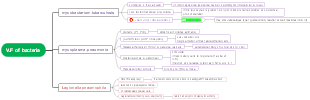
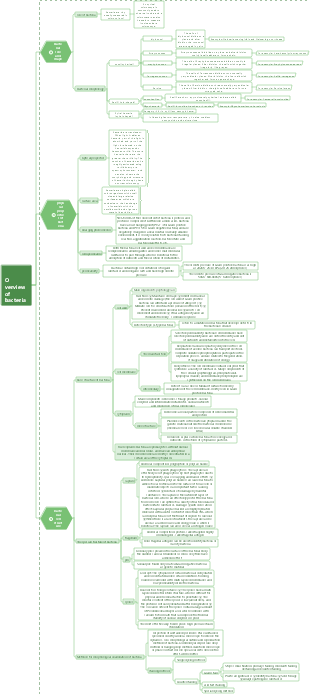
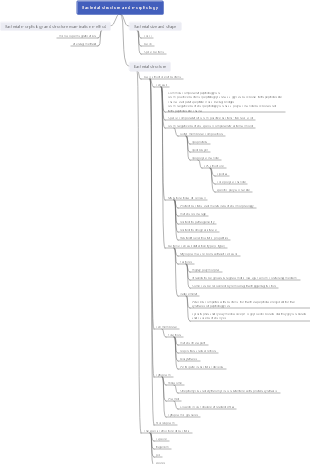
bacteria
basic form
cocci
Bacilli (most)
short rod
Rod-shaped
fusiform
spindle-shaped
Spirobacter
According to the degree of curvature of the bacteria, they are divided into
Vibrio: less than a circle, c-shaped
Spiral bacteria: 2 to 6 rings, rigid cell wall, flagella
Spirochete: more than 6 turns, soft cell wall, no flagella
Factors affecting bacterial morphology
external environment
temperature
time
Medium composition and concentration
bacterial age
cell structure
General structure
cell wall
Function
a. Maintain cell shape; b. Protective effect (inhibiting mechanical and osmotic damage); c. Assist flagellar movement; d.Related to material transportation; e. Determine the antigenicity, pathogenicity, and resistance to antibiotics of bacteria and phage susceptibility.
Main ingredients
peptidoglycan
Main chemical composition: ✓ N-acetylglucosamine (NAG) ✓ N-acetylmuramic acid (NAM) Short peptides A multi-layer network macromolecular compound polymerized from the above components.
teichoic acid
An acidic polysaccharide bound to the cell wall of G bacteria, also known as Tannic acid; unique to G bacteria
Divided according to binding parts
teichoic acid
membrane teichoic acid
Function
1. Helps peptidoglycan to strengthen the cell wall and increases the stability of the bacterial surface structure; 2 Improve the activity of membrane-bound enzymes. Teichoic acid is negatively charged, which strengthens the attraction of cells to metal ions; 3. Teichoic acid is an important surface antigen of G bacteria and an adsorption site for some bacteriophages; 4 Membrane teichoic acid has an adhesion effect and is related to bacterial pathogenicity; 5. Store phosphorus.
lipopolysaccharide
G-bacteria are membrane-shaped outside the peptidoglycan layer and are composed of phospholipid molecules, Outer wall (membrane) layer composed of lipoproteins and lipopolysaccharides; unique to G-bacteria;
Function
1 Has similar functions to teichoic acid; 2 Lipid A is the material basis of endotoxin, the pathogenic substance of G-bacteria; 3. It has a partial selective barrier function that controls the entry and exit of substances into cells; 4 The variable chemical structure determines the diversity of antigenic determinants on the surface of G-bacteria; 5 Adsorption receptors for phages.
Gram stain reaction
General procedure
Primary dyeing, mordant dyeing, decolorization, counter dyeing
G and G-bacterial cell wall structure
G bacterial cell wall
√Thickness: 20~25 nm, thick; √Main ingredients: 90% peptidoglycan, 10% teichoic acid
structure
Cell wall (peptidoglycan, teichoic acid)
Periplasmic space
plasma membrane
G-bacterial cell wall
√Thickness: 10~15nm, thin; √Main ingredients: peptidoglycan and other lipid and protein components
structure
Cell wall (outer membrane layer <lipopolysaccharide, phospholipid>, peptidoglycan)
Periplasmic space
cell membrane
cell membrane
A layer attached to the inside of the cell wall and surrounding the protoplasm Soft and elastic semi-permeable membrane.
Main ingredients
Phospholipids (20% to 30%)
Protein (50% to 70%)
Function
1. Selectively control the transport and exchange of materials inside and outside cells; 2. Maintain the barrier of normal intracellular osmotic pressure; 3. A place where various components of the cell wall and sugar coat (macromolecules such as lipopolysaccharide, peptidoglycan, teichoic acid and capsule) are synthesized; 4 Home to many enzymes and components of the electron transport chain; 5. Energy production base for oxidative phosphorylation or photosynthetic phosphorylation; 6 The insertion site of the flagellum and provides it with the energy required for movement
Cytoplasm and its contents
cytoplasm
A colorless, transparent, viscous gelatinous substance surrounded by cell membranes.
inclusions
Ribosomes
Most of them are connected in series on mRNA and exist in the form of polymers; It is the place where proteins are synthesized.
granular inclusions
Pseudo-nucleus
Bacteria are unique in that they have no nuclear membrane coating and no fixed morphological primitive nucleus.
No nuclear membrane and nucleolus Does not contain histones;
endomembrane system
Many prokaryotic groups have evolved a special layered, tubular or sac-like structure formed by the invagination and folding of the cell membrane.
intermediate
formed by invagination of the cytoplasmic membrane a sac-like structure filled with layers shaped or tubular vesicles.
More common in G bacteria
Intermediate body located in the center of the cell: Promotes the formation of cell compartments, is related to DNA replication, distribution and cell division;
Intermediates located around cells: Relevant to the secretion of extracellular enzymes (such as penicillinase); center of oxidative phosphorylation (~eukaryotic mitochondria).
Thylakoid
formed by invagination of the cytoplasmic membrane Lamellar structure, containing green leaves Photosynthetic colors such as pigments and phycobilichromes proteins and photosynthetic enzymes.
A place where cyanobacteria perform photosynthesis.
carboxy media
A polyhedral structure of autotrophic bacteria
Where bacteria fix CO2
bubble
Physiological function
Adjust the position of bacteria in the water When inflated, the bacteria float up; When exhausting, the bacteria sink;
special structure
sugar quilt
A layer of glue of varying thickness surrounding the bacterial cell wall shape, viscous substance.
type
capsule
Phytopathogenic bacterial cells are less likely to have capsules.
mucus layer
Main components
polysaccharide, polypeptide
Function
1 Protection function: Rich in water, protecting cells from drought damage; Positively charged, hydrophilic, resisting phagocytosis by phagocytes; Protect bacteria from phages and other substances (lysozyme, antibiotics); 2. Store polysaccharides as nutrients; 3 Pathogenic functions: It is the main surface antigen and virulence factor of some pathogenic bacteria, such as Diplococcus pneumoniae.
flagellum
Insertion site: Produced from the granular flagellar base under the cytoplasmic membrane.
type
Flagella: flagella attached to one or both ends of the bacterial body;
Periflagellate: the flagellum that grows around the bacterial body;
structure
flagellar filament
flagellar hook
The part that connects the basal body of the flagellum to the flagellar filament.
Flagellar basal body
Function
Movement of bacteria: Counterclockwise rotation: move forward; Clockwise rotation: tremor; Bacterial chemotaxis and phototaxis; Identification of bacteria and hosts (relevant to pathogenicity); secretory function;
cilia/pilus
type
Attachmentpilus: Helps bacteria adhere to various surfaces
Sexual cilia (conjugationpilus): Provides a channel for the transfer of genetic material;
Entry point: the ciliary matrix on the inside of the cell membrane
Main ingredient: ciliary protein.
Function
Nothing to do with swimming; Plays an adhesion role and causes bacteria to gather; Related to the pathogenicity of bacteria; Sex cilia are involved in the transfer of genetic material from donor bacteria to recipient bacteria.
spores
A round/elliptical dormant body with thick walls, low water content, and extremely high stress resistance formed within cells.
Most spores are produced by G bacteria; Spores are not reproductive structures; Plant pathogens are usually spores-free
effect
Protective against bacteria: Spores are dormant bodies with strong resistance Indicators for disinfection and sterilization.
Plasmid
In some bacteria, independent of the nucleoplasm, usually in the form of a ring Genetic factors with a similar structure are called plasmids;
Function
Improve the adaptability of bacteria to special environments;
coding gene
Periplasmic space
Easily observed in G-bacteria;
Refers to the periplasmic space, which refers to the periplasmic space and is an important transfer station and reaction site for substances entering and exiting the cell. There are important extraplasmic enzymes: Hydrolytic enzymes: lytic enzymes produced by pathogenic bacteria; Synthetic enzymes: peptidoglycan synthase;