MindMap Gallery Histology Chapter 3 Connective Tissue Intrinsic Connective Tissue
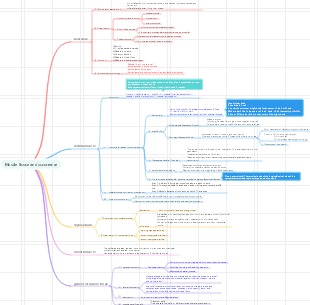
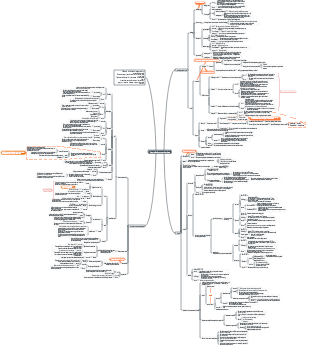
The map of "Histology and Embryology" summarizes that intrinsic connective tissue is widely distributed in the body and has multiple functions such as connection, support, nutrition, and protection. The following is a detailed overview of intrinsic connective tissue, I hope it is useful to everyone!
Edited at 2024-11-27 19:03:03Lezione 12 della storia, l'ascesa della democrazia nazionale in Asia, Africa e America Latina, questa mappa del cervello ti aiuta a familiarizzare con i punti chiave della conoscenza e rafforzare la memoria. Gli studenti bisognosi possono aggiungere un segnalibro.
Questa è una mappa mentale sull'introduzione alla competenza di Chat GPT.
Questa è una mappa mentale sulla condivisione di profonde abilità di utilizzo.
Lezione 12 della storia, l'ascesa della democrazia nazionale in Asia, Africa e America Latina, questa mappa del cervello ti aiuta a familiarizzare con i punti chiave della conoscenza e rafforzare la memoria. Gli studenti bisognosi possono aggiungere un segnalibro.
Questa è una mappa mentale sull'introduzione alla competenza di Chat GPT.
Questa è una mappa mentale sulla condivisione di profonde abilità di utilizzo.
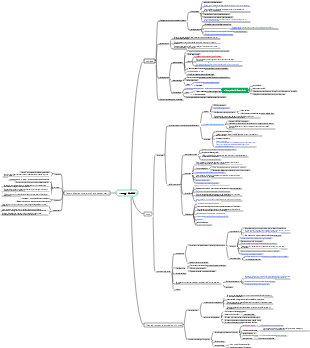
intrinsic connective tissue
loose connective tissue
also called cellular tissue
Function
Connect, Support, Defend, Repair
Features
Few cells, more types; less fibers, more matrix
Sparse structure
Widely distributed
between tissues, organs
composition
cell
fibroblasts
Light microscopy: flat, multi-cylindrical, weakly basophilic cytoplasm, large nuclei, light coloration, and obvious nucleoli
Electron microscopy: Abundant rough endoplasmic reticulum RER and well-developed Golgi complex Gc
Function: Secrete fibers and matrix
macrophages
Shape: Many irregular shapes
Light microscope: irregular, pseudopodia; small nucleus, dark color: eosinophilic, may contain foreign particles and vacuoles.
Electron microscope: a large number of lysosomes, phagosomes, phagophore, microtubules, microfilaments, and pseudopods.
Source: Monocytes
Widely distributed, located in LCT
tissue cells
Function: Phagocytosis, antigen presentation, secretion
plasma cells
Light microscopy: round/oval, basophilic cytoplasm, light staining area next to the nucleus, nuclear deviation, and nuclear chromatin in a radial shape (carriage shape)
Electron microscope: rough endoplasmic reticulum RER, free ribosomes, centrosomes, Golgi complex
Source: B lymphocytes
Function: Synthesize and secrete immunoglobulins (antibodies) and participate in humoral immunity
mast cells
Light microscope: round/oval; thick, uniform metachromatic granules.
Electron microscopy: membrane-coated particles
Distribution: Widely distributed along small blood vessels
Function
synthesis and secretion
leukotrienes
histamine
Dilate small blood vessels and contract bronchial smooth muscle
ECF-A
attract eosinophils
heparin
Anticoagulation
Involved in allergic reactions
Intragranular: heparin, histamine, eosinophilic chemoattractant Intracytoplasm: leukotrienes
fat cells
Light microscope: The body is large, round or polygonal; the nucleus is oblate and tilted to one side; the cytoplasm contains a large lipid droplet.
Function: synthesize and store fat; participate in lipid (energy) metabolism
undifferentiated mesenchymal cells
stem cells
Distribution: around small blood vessels
Shape: Fibrocyte-like, small, spindle-shaped
Function: It has multi-directional differentiation potential and can proliferate and differentiate into fibroblasts, endothelial cells, smooth muscle cells, etc.
leukocyte
Source: blood, including neutrophils, eosinophils, lymphocytes, etc.
Function: immune defense
extracellular matrix
fiber
collagen fibers
Also known as white fiber
Electron microscope: composed of collagen fibrils with 64nm periodic striations
Light microscope: HE staining, eosinophilic, varying thickness, striped, wavy, branches intertwined into a network
Characteristics: high toughness, strong tensile strength
Chemical composition: Type I collagen
spandex
Light microscope: small amount, HE staining shows light red and refractive; aldehyde-fuchsin or lichen red staining shows purple or tan; filaments, branches intertwined into a network
Electron microscope: composed of elastin (located in the core) and microfibrils (located in the periphery), without periodic striations
Chemical composition: elastin, fibrillin
Features: Great flexibility
mesh fiber
argyrophilic fibers
Electron microscope: collagen fibrils with 64nm periodic striations
Light microscope: HE staining is difficult to distinguish, silver staining is brown-black; thin, many branches, intertwined into a network
Ingredients: Type III collagen, surface covered with glycoprotein
PAS reaction positive
Scaffold: mesh tissue, basement membrane mesh
matrix
Amorphous gel composed of biological macromolecules
composition
Proteoglycans (Proteoglycans)
A polymer composed of covalently bonded aminoglycans and proteins.
Molecular sieves mainly composed of aminoglycans
Glycosaminoglycans (aminoglycans)
Sulfation
Chondroitin Sulfate A\C
Keratan sulfate
Dermatan sulfate
Heparan sulfate
Not sulfated
hyaluronic acid
molecular sieve
Has a barrier effect, facilitating the passage of tissue fluid; limiting the spread of bacteria
polyglucoprotein
fibronectin
Found around collagen fibers and connective tissue cells
Organically combine cells, collagen and proteoglycans
Mainly protein
tissue fluid
Source: Plasma components that infiltrate into the matrix from the arterial end of capillaries: return to blood via the venous end of capillaries (90%) and lymphatic capillaries (10%).
Function: exchange of substances, forming a microenvironment (internal environment of body fluids) for tissues and cells to survive
Dynamic balance breakdown - edema/dehydration
dense connective tissue
Features
The fibers are thick and tightly arranged
Function
support, connect
Classification
regular dense connective tissue
Features
Collagen fibers are arranged parallel to the direction of stress
distributed
tendon, aponeurosis
Irregular dense connective tissue
elastic tissue
reticular tissue
adipose tissue
floating theme
fiber cells
Functionally quiescent fibroblasts
Light microscope: spindle shape, small nucleus, dark color, eosinophilic cytoplasm
Electron microscope: rough endoplasmic reticulum and Golgi complex are underdeveloped
During wound repair, fibroblasts can transform into fibroblasts.
largest quantity